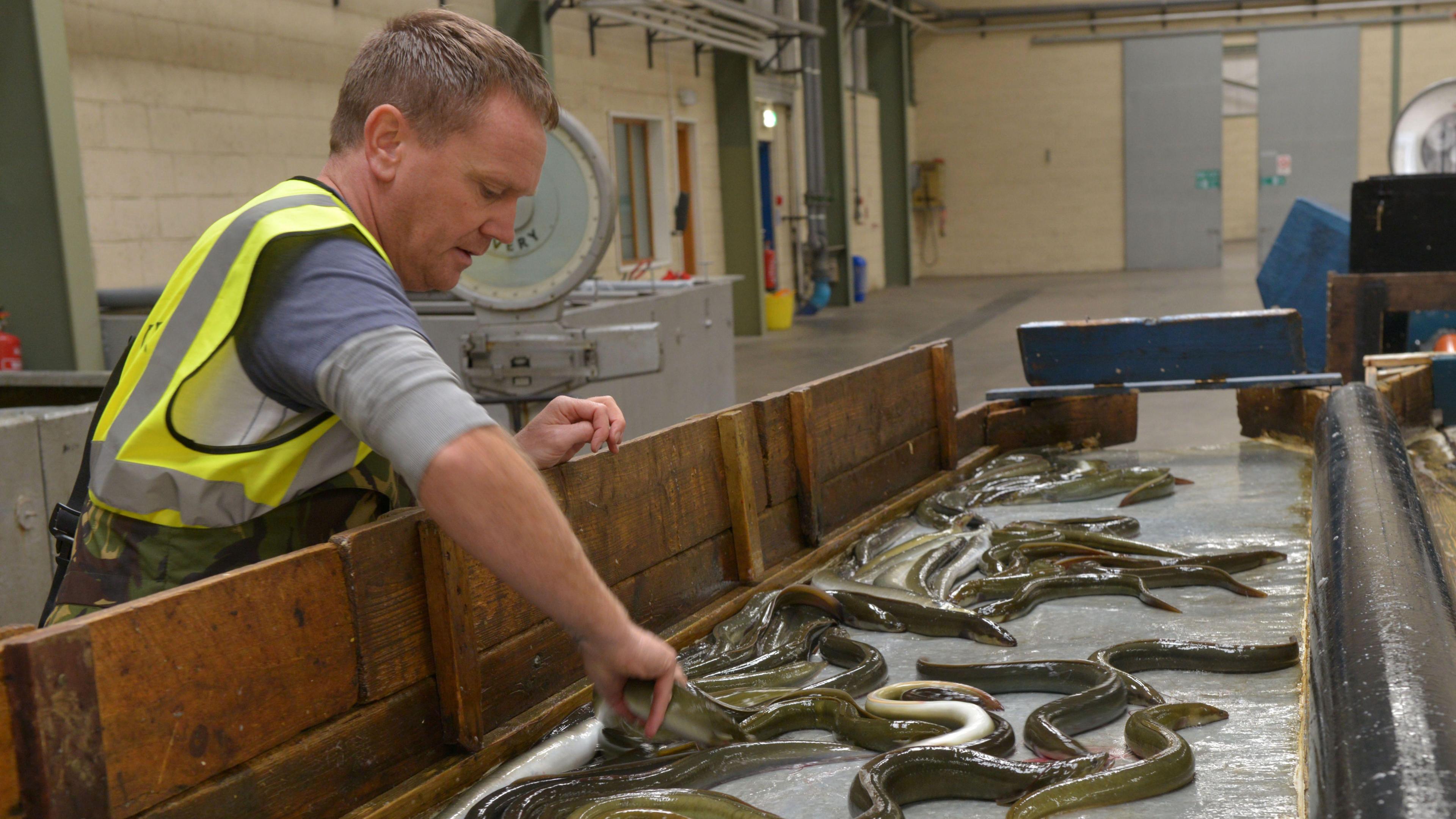
A financial package to support eel fishers on Lough Neagh has been unveiled. A small number of specialist hauliers will also be eligible.
It follows the closure of the yellow/brown eel fishery, announced earlier this year.
The £700,000 Lough Neagh Eel Fishery Transition Scheme will run for three years.
The Agriculture, Environment and Rural Affairs Minister, Andrew Muir, said it was designed to support a long-term sustainable industry while conserving eel stocks, which have been in decline since the early eighties.
Muir acknowledged that the required conservation measures "will have a significant impact" on those involved in the industry.
But he added that it was "not a decommissioning scheme".
How will the scheme work?
Up to 81 permit holders will be eligible for partial, time-limited support, along with five specialist eel hauliers.
They can apply to have 50% of the income they have lost reimbursed.
That income will be based on being commercially active in 2022, 2023 or 2024.
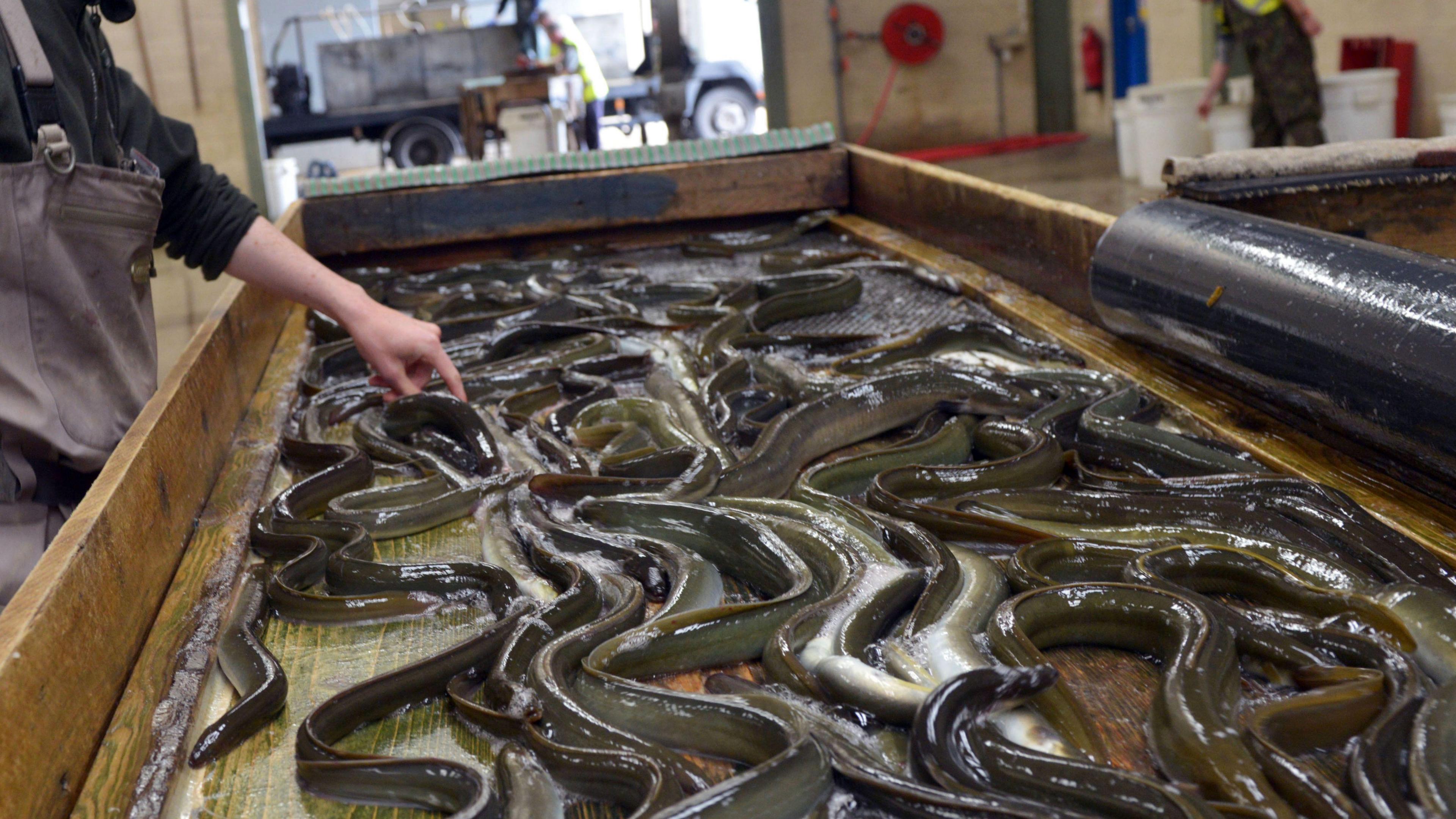
The scheme is designed to give businesses time to adapt to reduced fishing opportunities, maintain vessels and explore more sustainable practices or diversification.
Eel-fishing on Lough Neagh is regarded as a heritage business, with many families involved for generations.
Around 80 licences are currently issued for eel fishing, but not all are used.
For those who do fish commercially for eels, they may rely on the catch for as much as 70% of their income.
There are two seasons that overlap - one in which which yellow/brown eels are fished, and a later one when silver eels are caught as they leave the Lough.
Long-term challenge
The collapse in the eel population was first detected in 1983.
Since then, numbers have not recovered.
The reasons are not fully known, but habitat loss, climate change and over-fishing are thought to play a part.
Fisheries across Europe have been reducing or closing their eel businesses on advice from international monitoring body ICES - International Council for the Exploration of the Sea .
On Lough Neagh, there has been a sustained fall in the number of mature silver eels escaping back to the Atlantic to spawn in the Sargasso Sea.
The yellow/brown eel fishery has been closed for three years from 2026 to try to increase the number of eels reaching maturity and going on to breed.
A limit of 25 tonnes of silver eels with a maximum length of 90cms was introduced this year as part of conservation measures.
Muir said it was "a much wider international conservation challenge" that was not specific to Lough Neagh, but that the lough had a role to play in conservation.
"We need to give the eel stock the opportunity to recover while recognising the importance of retaining the skilled workforce that has sustained this fishery for generations.
"This scheme is about transition and sustainability, not decommissioning.
"Future management decisions will remain dependent on the scientific evidence and statutory obligations, but we want to preserve the skills and capacity needed for a sustainable fishery in the future."