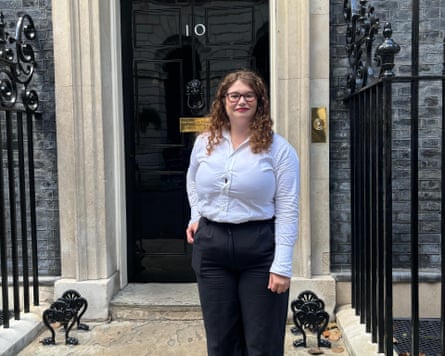
"It started as a trickle in 2024 and now it's an onslaught." Hollie Wickens, a senior caseworker in a Labour MP's office, is explaining the daily reality of dealing with surging volumes of artificial intelligence-generated correspondence.
"Half the emails we receive are some form of AI," she says, adding that this has made requests and complaints much more complex and time-consuming to read and deal with, despite her decade of experience in the role. "It is definitely more taxing."
At the start of this decade, applying for a job, writing a complaint or objecting to a local planning application typically required considerable effort: time to research a topic, fill in a form or write a formal-sounding email, with specialist knowledge often also required.
That was until the rapid growth of ChatGPT – which turns four later this month – Claude, Copilot, Gemini and other generative AI tools over the past couple of years. These chatbots are helping turn laypeople into experts by giving access to a free – albeit sometimes unreliable – legal adviser, administrator or personal assistant.
The developers of AI tools promised huge productivity gains for employers and their staff: dull, routine tasks could be automated and carried out far more quickly, giving the human workforce more time for creative endeavours. There are signs of those gains in parts of the economy, with AI credited for some of this year's better than expected UK GDP growth.
However, UK businesses, local authorities, courts, schools and other public bodies are reporting being swamped by a flood of AI-generated complaints, letters and legal challenges that are massively increasing their workload, at a time of already stretched resources.
This phenomenon has been called "AI clog" by commenters.
'Everyone's got a free lawyer'
With the concept of low-quality "AI slop" now mainstream, organisations are sounding the alarm that their operations are being gummed up by ever greater volumes of correspondence.
These only take moments for users to create, but huge amounts of time for human employees to sift through and respond to. Bombarding public bodies with AI-generated requests has been labelled "agentic flooding" by researchers at the centre for digital governance at the Hertie School in Berlin, the Cooperative AI Foundation and GovAI.
"Every sector is experiencing very similar issues," says Deborah Evans, the chief executive of Lawyers in Local Government (LLG), an organisation that represents 5,600 lawyers working in local authorities. "Obviously AI is a wonderful tool that enables people to do things very, very quickly and it can make a complaint sound incredibly professional, very formal."
Local authorities are experiencing surging numbers of complaints, which can relate to issues from adult social care services to missed bin collections or objections to planning applications. "Local authorities have one pot of money and don't get extra money because of more complaints," Evans says.
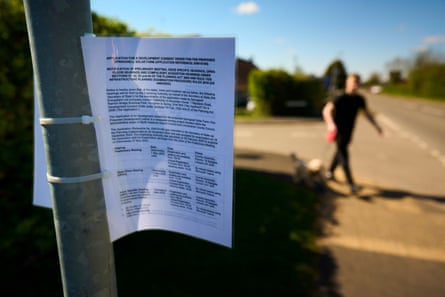
Local authorities believe the length of correspondence is an indication that it has been artificially generated, as does the inclusion of certain phrases or use of bullet points.
"It's a real problem," says councillor Alessandro Georgiou, the leader of Enfield council. "More and more residents are using it to appeal decisions of the council, such as a significant uptick in parking appeals."
The information rights watchdog, the Information Commissioner's Office (ICO), found that many public authorities received more requests in 2025. It noted that AI-generated requests can be "very long, repetitive and contain unrelated comments or misdirected demands", have a greater scope, and be written in a way that makes it harder to identify what information is being requested.
Before the widespread use of chatbots, the average length of complaints received by local authorities was about two pages. The majority are now 10 times longer, says Evans. "You get some huge ones. The worst one I'm aware of at the moment is about 200 pages long," she says.
Despite this, the ICO cautions that requests that appear to be drafted using AI and contain inaccuracies still need to be answered by humans.
AI tools can often treat complaints as a legal claim, Evans says. "It will start referring to statute and pull out case law, but not necessarily tied to the jurisdictional boundaries in which you operate. It might find some great case law from Canada or somewhere. [AI] is also slightly prone to hallucinations so it does occasionally make things up."

Some business owners worry that AI's tendency to be overly supportive and validating can give people misplaced confidence to pursue a legal case.
"Everyone's got a free lawyer now," complains the founder of one technology start-up. One of its former employees, who was let go on performance grounds, is challenging their dismissal through an employment tribunal, although the entrepreneur insists the process was handled correctly. "You can tell by the wording [that the complaint is AI-generated] and it has a different tone."
Amid a long backlog of employment tribunal cases, the founder expects they will have spent £30,000 on legal fees by the time the case is heard.
The number of employment tribunal claims opened between April and June soared by 28% compared with a year earlier, representing 14,000 cases from single claimants, according to the most recent government figures. The number of concluded cases also fell during the quarter, resulting in 70,000 open single claims at the end of June.
The founder's experience is by no means unique, according to Jim Moore, an employee relations expert at Hamilton Nash. Many of his clients are receiving correspondence that is either entirely AI-generated or relies heavily on wording from AI tools.
The complaints received by employers are described as "unnecessarily verbose" and containing "embellished or exaggerated claims that portray relatively minor incidents as major offences".
Moore says many AI-generated complaints "miss out on the most important point of a complaint – what resolution are you looking for? Most of the time, they're worded to sound intimidating but forget to set out what solution the complainant wants."

The statutory response times for some requests are putting further pressure on public bodies clogged up by AI-generated correspondence.
Transport for London (TfL), the public body responsible for the capital's public transport system, received a record 4,769 freedom of information (FoI) requests in 2025-26, a 5% increase on the previous peak in 2023-24.
The number of appeals sent to TfL is also rising, according to the minutes of a recent meeting of its audit and assurance committee. It reported a "noted increase" in appeals that appeared to be generated by AI "which often contain highly technical and often inaccurate assertions and assumptions".
Westminster inundated
The offices of some MPs are also struggling to cope.
Vonnie Sandlan, the head of office for Graeme Downie, the Labour MP for Dunfermline and Dollar, says dealing with a surge in AI-generated requests has left her staff "exhausted". "They are stretched to the limits and working more hours than they are paid," she says.
She notes that AI agents could aid those who would struggle to draft correspondence without help, but says her office has recently decided to stop responding to automated "click to email your MP" campaigns, to allow them to focus on constituents' requests.
The GMB union, which represents MPs' office staff, has found soaring casework levels to be widespread. "AI is not lightening the load in MPs' offices," says Lisa Gillmore, the president of the MPs' and peers' staff branch. "Where offices keep their own figures, that casework has doubled or more and staff are carrying it with no let-up."

Evans warns that every pound spent by local authorities on dealing with complaints "is a pound that's not being spent on something else, which is why getting things under control is important". Some ombudsman services are now imposing word limits for complaints, she says, or designing online templates to restrict how much information can be attached.
Others fear that organisations might start using AI tools to sift through AI-generated correspondence, with machine talking to machine. But this doesn't come without cost and "losing the human touch", as Evans puts it.
Wiltshire council has said it is exploring using AI tools to summarise long emails and draft initial responses, while a committee at Stroud district council in Gloucestershire has discussed how it uses Microsoft's Copilot to help with writing reports and presenting information.
Researchers have also suggested authorities could attempt to stem the AI flood by making it harder for people to complete applications, by charging fees for submitting requests or blocking bots from government websites.
The UK government has issued civil servants with advice on using AI tools, including verifying facts provided, not inputting personal data and making sure humans review the work and take final decisions.
The technology journalist Jamie Bartlett has been approached by many people sharing their experiences of AI clog. "Public bodies and companies are probably going to have to use some form of AI to start filtering things out, or set stricter rules on what they'll accept and what they won't," he says. "Otherwise I worry they're going to get completely overwhelmed."