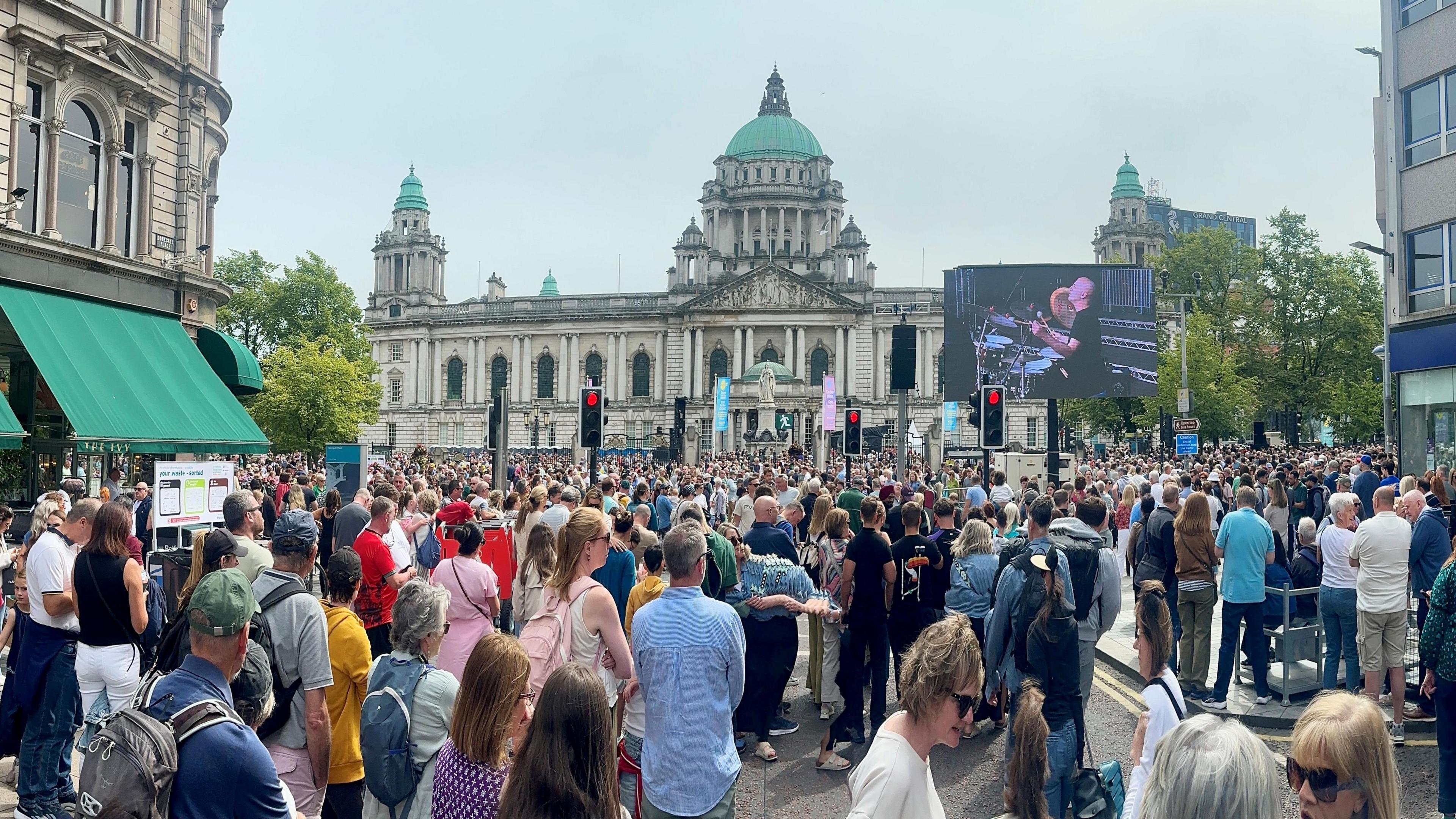
For those involved in Belfast's Irish traditional music scene through the 1970s, '80s and '90s, the idea of the Fleadh Cheoil na hÉireann [All-Ireland Fleadh] one day coming to the city was one too ridiculous to even contemplate.
Veteran folk singer Neil Martin said nobody during the Troubles would have "thought it would have been safe".
"It could have been targeted in a way that could have endangered life, you could have been sure of that," he said.
The 2026 festival exceeded expectations, bringing 1.6m visits to the city over eight days of celebrations.
For Martin, the Fleadh showed him how far Belfast has come over the last few decades and also served as a reminder that, even after 60 years of playing music, there are still some surprises left.
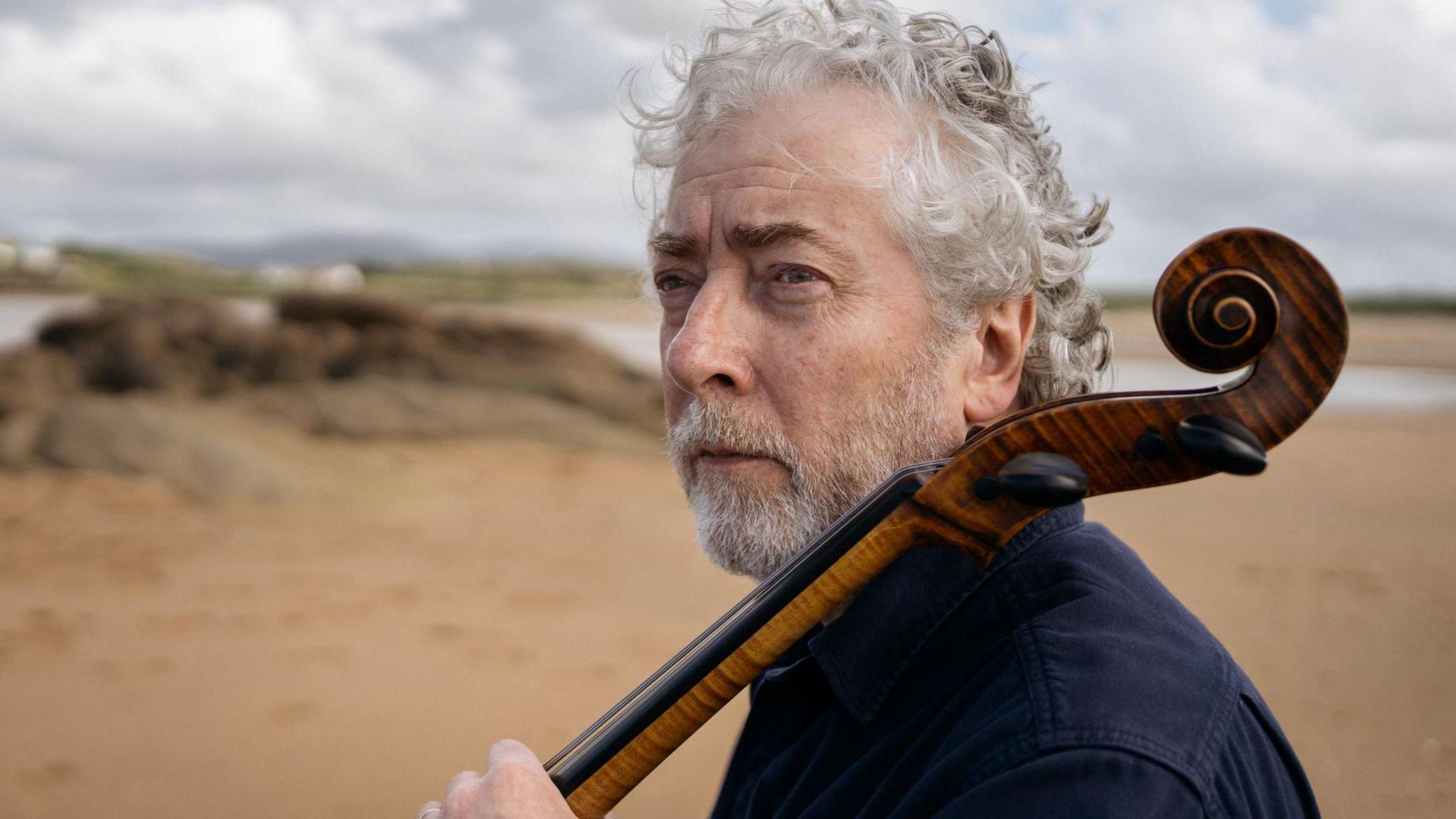
Martin recalled his first All-Ireland Fleadh in Listowel in 1973, but said the prospect of the festival coming north was not a realistic aspiration then.
"It's not something I thought I'd ever see, to be honest," he said.
"But because of the political unrest here and the Troubles, I just couldn't have imagined that it would have been accepted by all sections of the community here."
But Northern Ireland is not the same place it was then.
Much has changed, including, Martin said, the idea that traditional music is "only for Catholics and nationalists".
For this he gives credit to the organisers of Belfast Trad Fest.
International language
Reviewing his experience of the week, he said it was like he was "in a dream walking through the town" and the mood all week was one of joy and "bonhomie".
"The overriding feeling was the layers of happiness and people at ease."
"People were there for music and to celebrate music, and that's when music comes into its own: when it goes beyond nationality or religion, when it just travels on another plane, and it becomes this international language that we can all appreciate and understand."
He described loving being part of an atmosphere of multiculturalism and global inclusiveness that defined much of the celebrations.
"What I really really enjoyed as well was the microcosm here at home, of the Belfast Bands Forum, for example, accepting the Fleadh and coming into the Fleadh and embracing it.
"I just thought some of that was very, very brave, and very true to what music is."
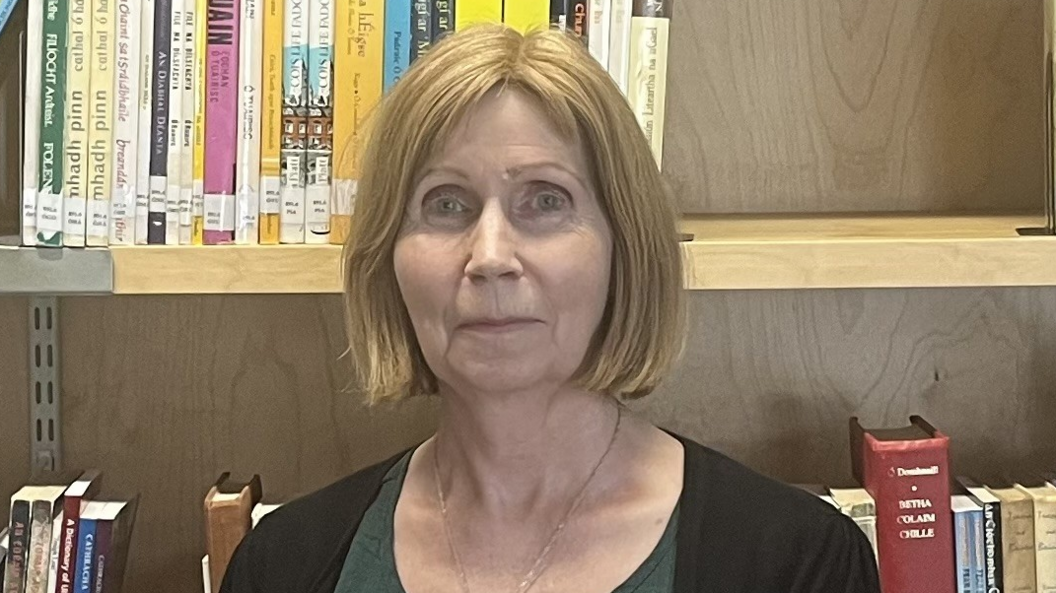
Linda Ervine - an Irish language activist who hails from a unionist background - said she did not recognise her native city during the Fleadh.
A city centre, once so scarred by sectarian violence that it was barricaded off every night, was turned into one big, pedestrianised stage to showcase all its traditions.
"How different things felt this week - just music and joy everywhere really," she told BBC News NI.
"I actually felt very emotional, and I didn't expect that and I think it was because how much Belfast has changed."
Ervine was seven years old when the Troubles began in the late 1960s.
Years of bombings, shootings and arson attacks meant Belfast city centre was locked down every night behind metal security barriers known as the "ring of steel".
'We put our arms out to be searched'
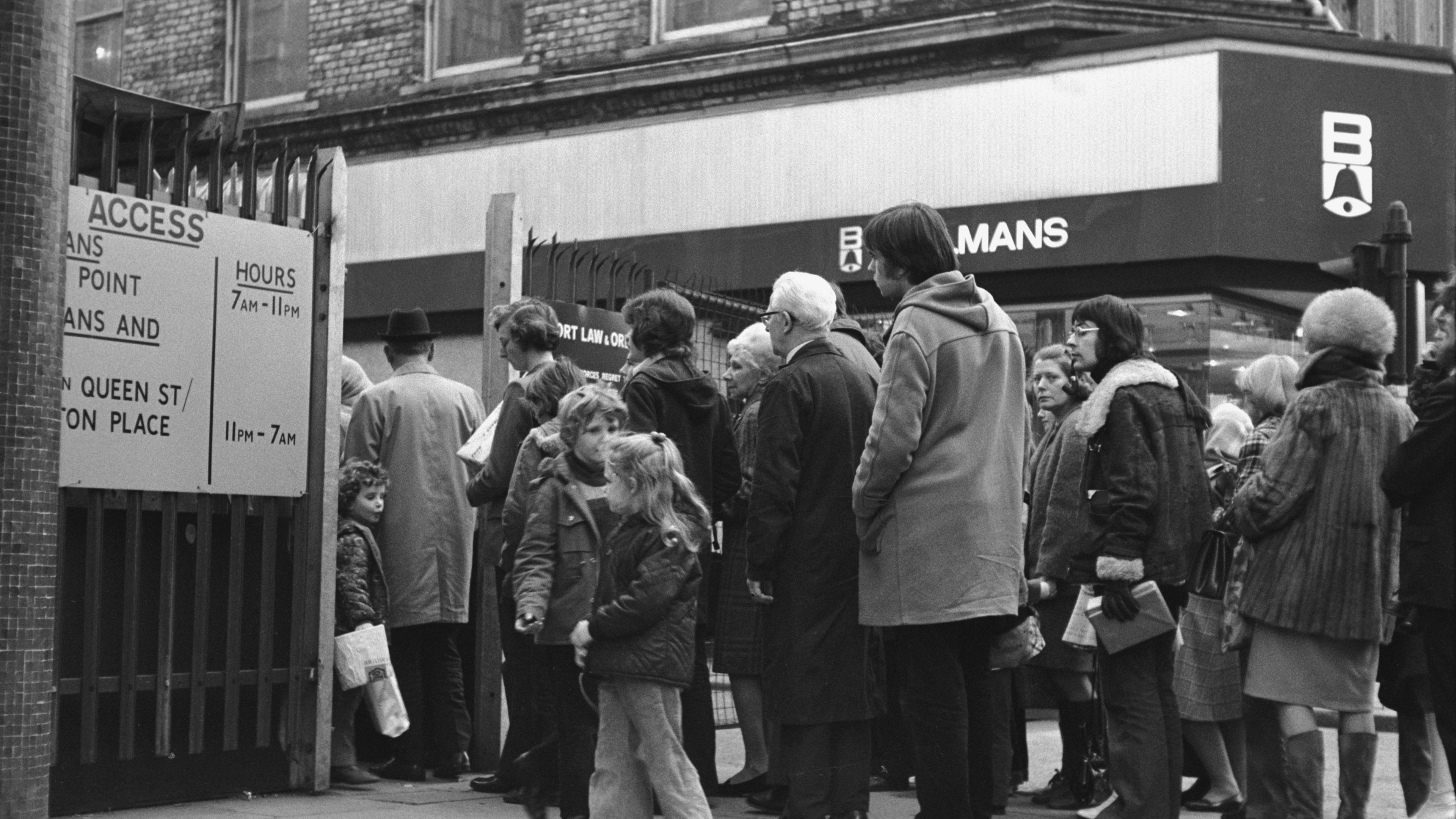
During the day, shoppers had to queue up for bag searches - a custom that Ervine grew up believing was the norm.
"I remember my mummy taking us over to her sister's in Liverpool and I think I was probably about 10 or 11 at the time," she recalled.
"When they took us into a shop, the first thing myself and my brother did was we put our arms out to be searched.
"I remember her saying: 'No, no, we don't do that here'," she laughed.
Ervine, whose husband is an ex-leader of the Progressive Unionist Party (PUP), now works for an organisation which promotes the "shared history" of the Irish language.
She acknowledged that Belfast's security barriers were removed many years ago as a result of the peace process.
But she hopes the cross-community efforts of fleadh organisers and the "carnival atmosphere" they created helps break down cultural barriers that still persist.
"How welcoming it was to hear so much Irish spoken just around the city centre - it was just wonderful," she said.
'Created a monster for next year?'
The Duke of York's Willie Jack, who, along with fellow directors of Commercial Inns Ltd also runs the Harp Bar and the Dark Horse, said the "scenes that we had and experienced over the last eight days were just out of this world".
"It was such a friendly city," Jack said, adding "there was not one incident in any of our establishments that would cause to get anyone involved, not even any bad words, it was just such a positive image of Belfast.
"I've lost my voice, I talked non-stop."
His visitors ranged from Snow Patrol frontman Gary Lightbody to Jimmy Nesbitt and the taoiseach (Irish prime minster).
"The number of people I've had from Cork who didn't know we existed like this and how much Belfast has moved on," he added.
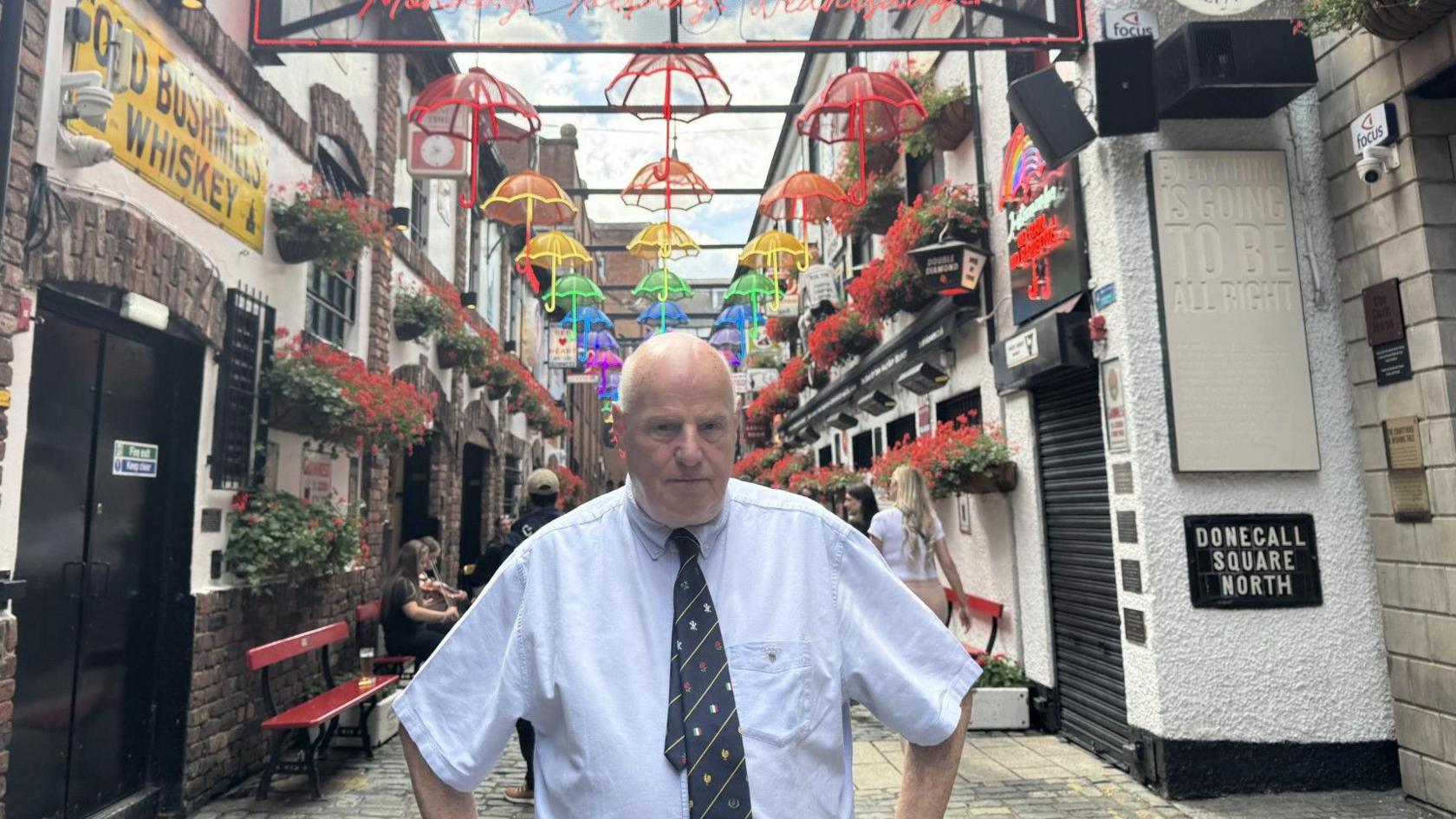
Jack agrees Belfast is now a different place.
"During the Troubles the streets were dark but even then we've had 27 years of peace since the Good Friday Agreement. Never have I seen a city so vibrant and so positive in 40 years", Jack said.
"The last eight days have probably been the nicest time, the safest streets, the most positive. The legacy of this will be tremendous."
As someone who has been in the industry for more than 40 years, Jack feels it would have been unimaginable 20, 30 years ago and that the city has gone "exponentially upwards".
"It's like a rocket, have we created a monster for next year? Perhaps. It proves the city can cope."
'Beyond my wildest dreams'
Maurice Brown, director of the Ulster Bands showcase, said his involvement this week was "beyond my wildest dreams".
"To deliver Northern Irish unionist Ulster-Scots marching band culture not only to the Fleadh, but to open it, to close it, have our own event in Titanic slipways, play with the Ulster Orchestra, it's beyond my wildest dreams.
"It genuinely feels like I'm living in a parallel universe.
"Let's keep that buzz going, lets see where this can take us, it's been groundbreaking for everyone."
Brown said the week was the "greatest Belfast has ever had in living memory".
"Every culture has been represented, every tradition. Everybody who has wanted to take part in the Fleadh has been afforded the luxury to do so in a safe and comfortable environment.
"Nobody could ask for more," he said.
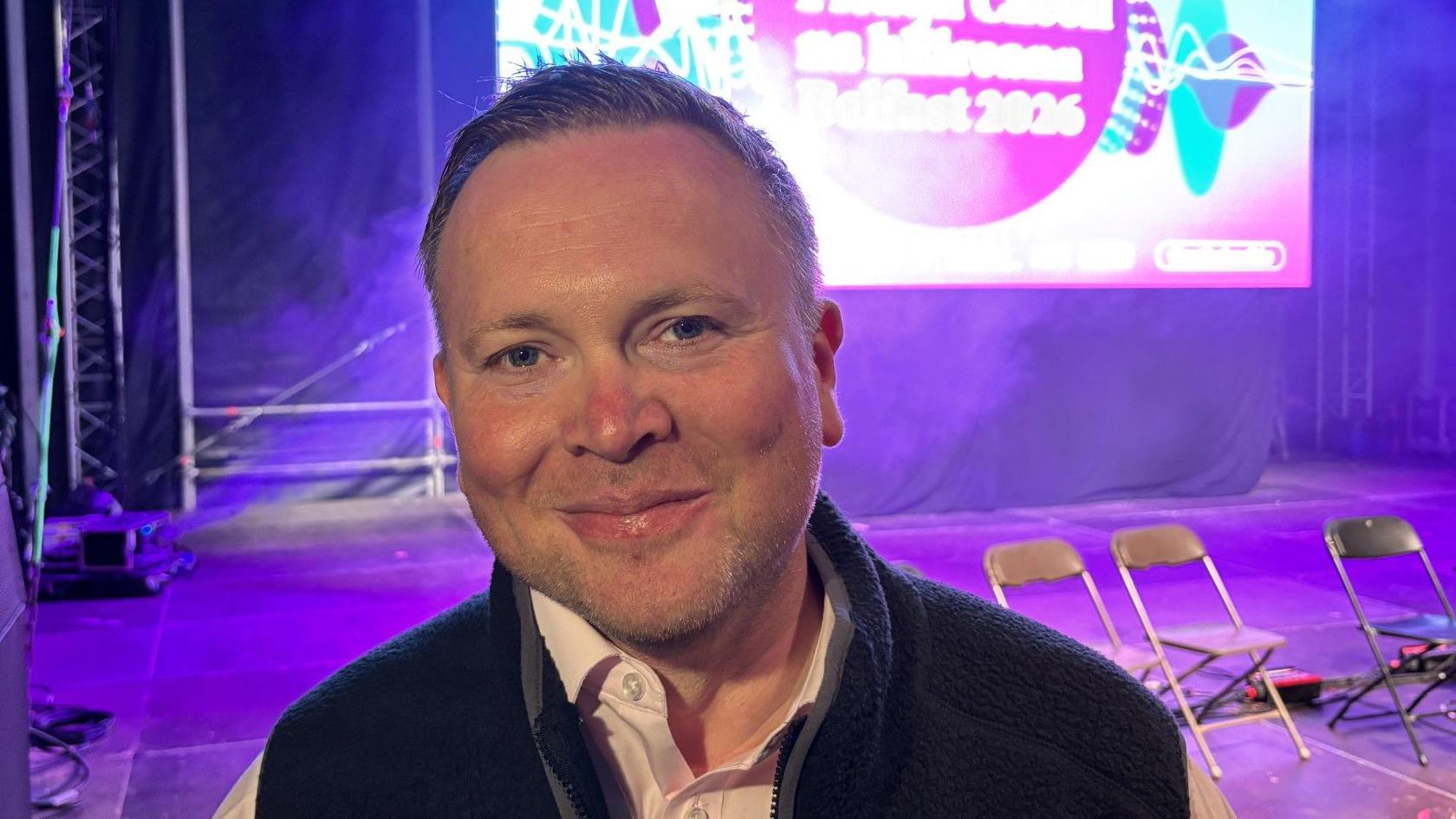
Brown praised the inclusiveness of the festival.
"Those that stayed away, that's their choice to stay away, that opinion is absolutely valid, but those that wanted to come in, wanted to get involved have been able to do so."
He said he felt being a unionist should not exclude him from putting his culture on display for the city's natives and visitors.
Brown, a former member of the UK military, said the Fleadh highlighted how much Northern Ireland has changed over the past few decades.
"I'm not afraid to say it but I spent 23 years in Her Majesty's armed forces, and Belfast whenever I left in 1996 was a different place.
"I came home in 2019 to make some sort of difference, more as a father and citizen of the city and here we are seven years later and you just need to look around you, what more could we ask for?"
A Sinn Féin Lord Mayor. An Irish presidential visit - and no serious security risk. Lambeg drums booming from the main stage at the Fleadh Cheoil na hÉireann.
"It says it all. Inclusive, Belfast, one place," said Brown.
'Milestone event'
For Gerry Lennon, the Fleadh was a "watershed moment" for a city he has championed for the past 25 years as chief executive of Visit Belfast.
"It put Belfast on a global stage, promoting our world-class culture; our world-class music, hospitality and welcome."
He added feedback has been overwhelmingly positive with visitors telling his staff: "You should be very proud of your city."
He hopes such reviews will boost tourism from the Republic of Ireland which is a "core" market for his organisation.
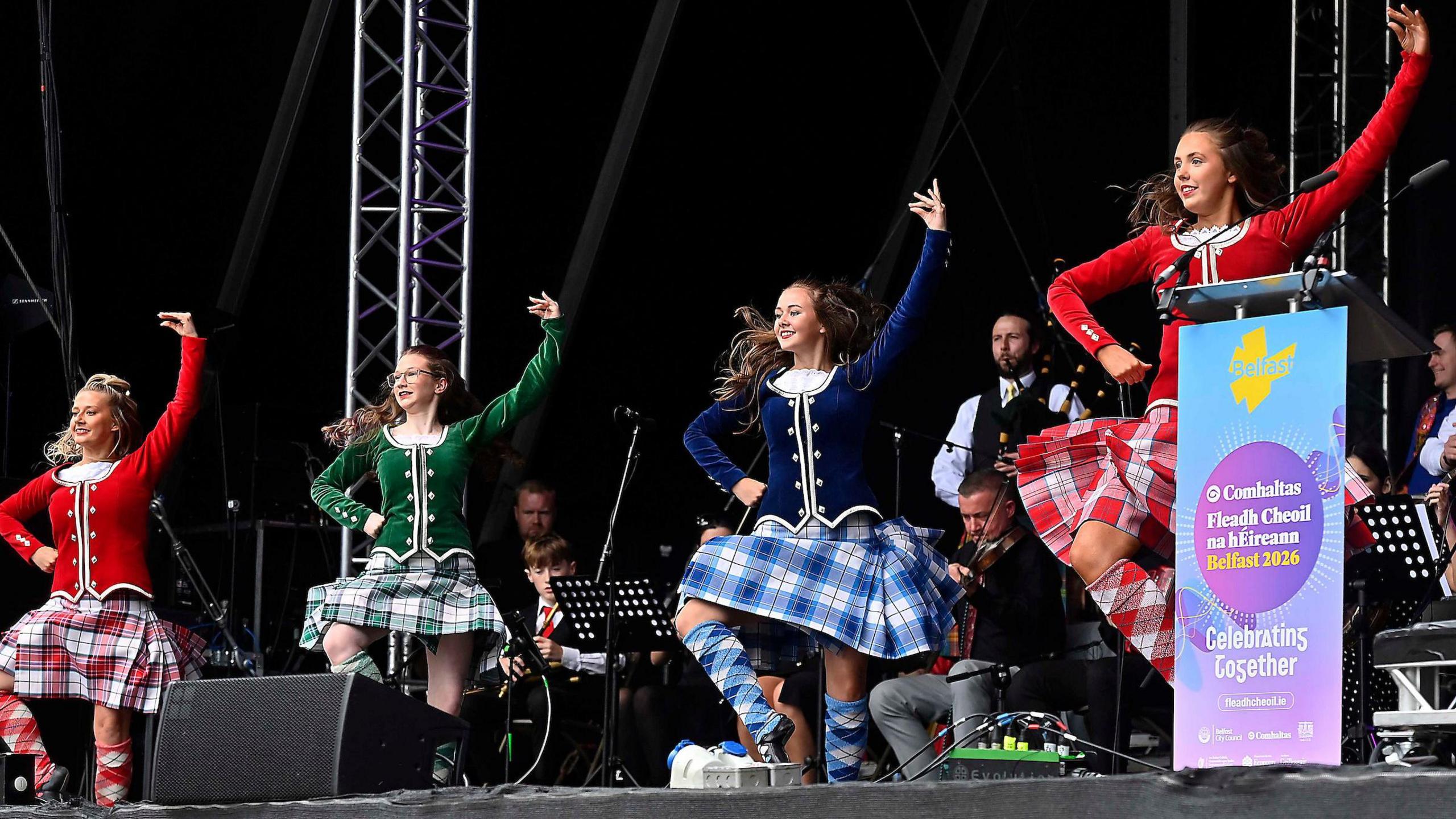
But for a city that was once home to the most-bombed hotel in Europe, Belfast was not always the easiest destination to sell.
Lennon acknowledged the "narrative of our city" had already changed significantly since the early days of the peace process, but he added the Fleadh has been "transformational" in dismantling preconceptions about Belfast.
"There's always that 'legacy negativity' sitting there in places and events like this - and this event in particular - has probably just smashed through that."
He attributes the success of the festival to its "totally inclusive" nature and its sole focus on "the celebration of music and culture and dance and song".
"When that is the focus, there's more that we have in common than we have that separates us," he said.
"That's why I think this is a truly milestone event."