The arrival of the Bayeux Tapestry in the UK is “a moment in our national history” and “an enormous act of diplomacy”, and the masterpiece will be kept in “the securest case we’ve got” to ensure its safety, a curator of the British Museum exhibition has said.
The 70-metre artefact will be unveiled to the public on Thursday as part of a blockbuster show at the London institution.
The tapestry – the woven record of the Norman conquest – has returned to the UK for the first time in almost 1,000 years, on loan until September 2027 as part of a special trilateral agreement between the UK, France and the museum.
Special conservation and security measures are in place to ensure its safety while it is in the UK.
Michael Lewis, one of the four curators of the exhibition, told the Press Association: “One thing that’s really important here is that the tapestry is laying flat, and speaking to my colleagues, they’ve noticed how that’s kind of levelled out the tapestry; it’s more relaxed.
“In France, in Bayeux, it’s hanging up a bit like a curtain, and that was putting pressure on certain parts of the tapestry.”
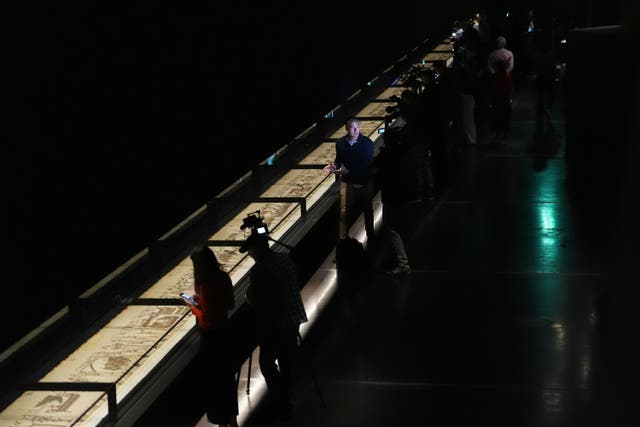
He said: “Of course, it’s a very secure case that we’ve got here. It’s designed to minimise accidental damage from people knocking the case and such like, but also from liquids and things like that.
“It’s the securest case that we think we’ve got, and obviously I can’t go into details but there’s other security aspects to ensure that the tapestry is as safe as possible here.”
Asked if there were concerns about deliberate damage to the tapestry, he said: “I’m obviously hopeful that no-one thinks that’s a good idea.
“The British Museum is a very secure place and obviously things are in place to ensure that that doesn’t happen.
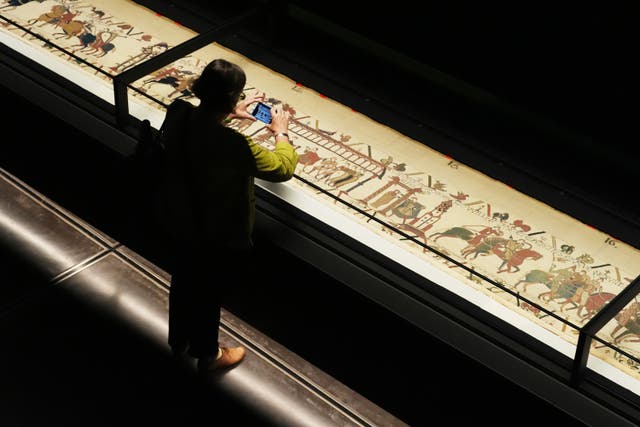
“But obviously this is a really precious work of art. So I really hope that people understand that and recognise that and think about that.”
The tapestry is considered to be one of the wonders of the medieval world and offers an insight into life in 11th century England both before and after the conquest – from castles, warfare and ships to clothing, food and furniture.
It was likely to have been commissioned by a Norman patron and made by English embroiderers, using manuscript drawings from Canterbury.
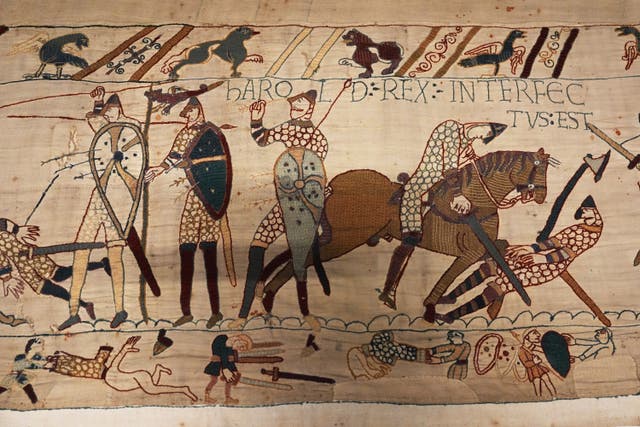
Mr Lewis said: “1066 is, of course, one of the most important events in English history, and the tapestry is the ultimate reflection of that in terms of a visual narrative.
“Some people see it as akin to a graphic novel or a cartoon or something like that, it’s immediately recognisable.
“When they look at it, they can get it straight away. It’s not like a dusty history book where it’s quite hard to decipher.
“There’s action going on, and even if you don’t understand all of the story, you enjoy it.
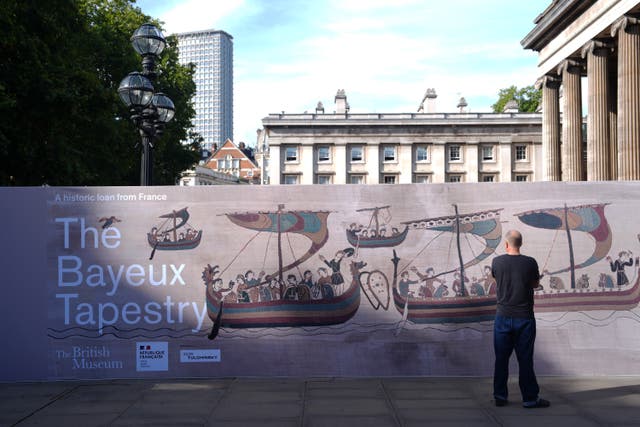
“So I think that’s what makes the Bayeux Tapestry such an important thing. And of course, the fact that the French state has allowed it to come to the UK and be displayed at the British Museum is an enormous act of diplomacy.
“So it’s a fantastic thing to have happened, and I’m just so happy that it’s happened in my lifetime.
“I think people will be talking about this for generations and generations, that they were there in London to see the Bayeux Tapestry when it came to this country, and hopefully they’ll be inspired to go to Bayeux as well.”
Tickets to the exhibition are sold out until the next release on October 21 and Mr Lewis urged visitors to be patient.
He said: “There’s a lot of people coming to this show, so it’s important that they are (patient).
“But I think people will soon realise that they’re at a moment of history themselves.
“1066 is a moment in our national history, but actually, the coming of the Bayeux Tapestry here is also another moment.
“Probably not as profound in many ways, but it’s a cultural moment that many, many people are going to remember for many, many generations.”
The Bayeux Tapestry is at the British Museum from September 10 to July 11 2027.