
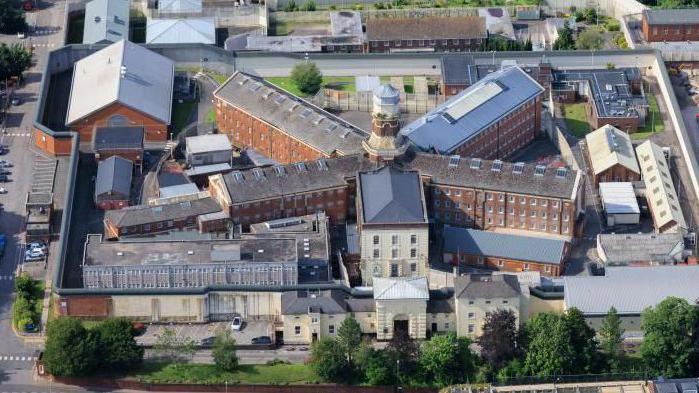
Drug seizures at an English prison have more than doubled over a year, as staff continue to battle against "widespread" substance abuse.
A report by independent monitors has revealed that in February, half of all prisoners subjected to mandatory drug tests at HMP Winchester in Hampshire tested positive.
Prisoners are also brewing "hooch", a potent alcohol made by fermenting foods such as fruit and sugar. Hundreds of litres were confiscated in the 12 months up to the end of May.
The Ministry of Justice (MoJ) announced new measures to tackle prisoner drug use earlier this week, after saying it had "inherited a prison system in crisis".
It said specialist "incentivised substance-free living" would be expanded to a further 12 prisons across the country by 2028.
The units provide dedicated accommodation for prisoners who commit to living without illicit drugs, the MoJ said.
At HMP Winchester, a unit is already up and running but a report by the Prison Inspectorate earlier this year found it was "not yet functioning effectively".

This week's Independent Monitoring Board (IMB) report paints a stark picture of the increasing lengths those incarcerated at the prison go to in order to get "high".
The prison is overcrowded, understaffed and inmates are confined to their cells for about 21 hours a day.
In the year up to the end of May, 331 litres of "hooch" were discovered and seized - up from 276 litres in the previous 12 months.
Despite concerted efforts to "work more closely with the police", reports of drugs being dropped by drones or thrown over prison walls have increased.
Drugs found during searches rose by 114% and equated to 1.56kg per 1,000 prisoners over the year, which the IMB said is "generally higher" than that of many comparative prisons.
It believes the scale of the problem is reflected by recorded "code blue" emergencies, a prison term used when an inmate is found not breathing.
Many of these medically critical incidents were thought to be the result of substance abuse.
Drugs being smuggled in by prisoners remains a possibility, even though the IMB reported that "nearly all" inmates underwent an x-ray body scan on entry.
It noted that intelligence has also indicated a need to search them when they leave.
Drug-soaked paper is an increasingly common way to smuggle illegal substances into prisons and when the BBC was previously allowed to film inside HMP Winchester, it watched as staff swabbed letters to prisoners.
The prison officers described how they used an itemiser machine to check "random or suspicious" letters to make sure the ink used had not been "infused" with the synthetic drug, spice or other illicit substances.
The practice was mentioned in this week's report, along with other smuggling methods and the "coercion of vulnerable" prisoners known as "cuckooing".
While HMP Winchester now has an "incentivised substance-free living" unit, the IMB said those on it were able to mix with other prisoners on the wing thereby reducing its "effectiveness".
A barrier has been installed but was "still not fully operational" at the end of the reporting period.
The report also noted that other illicit items discovered through searches continued to include mobile phones, smoking paraphernalia and improvised weapons.
'Overwhelming'
While the IMB report focuses on the situation inside HMP Winchester, the trade and use of illicit drugs in prisons across England and Wales has reached "endemic levels".
A Justice Committee report concluded a "persistent lack of purposeful activity and boredom" drives prisoners to use drugs, which in turn endangers lives, fuels violence and exacerbates existing mental health conditions.
The Chief Inspector of Prison's has warned that the "overwhelming" amount of drugs being smuggled into prisons nationally was "destabilising" the system and hindering efforts to stop reoffending.
In a statement, the MoJ said: "We inherited a prison system in crisis but this report recognises the hard work of staff at HMP Winchester, whose efforts are helping to put this prison on a more stable footing."
"We know more must be done, which is why former Home Secretary Amber Rudd is leading an independent review of the prison system, which will help develop a long-term plan to deliver safer prisons, reduce reoffending, and better protect the public."