Best places in London to watch solar eclipse on August 12

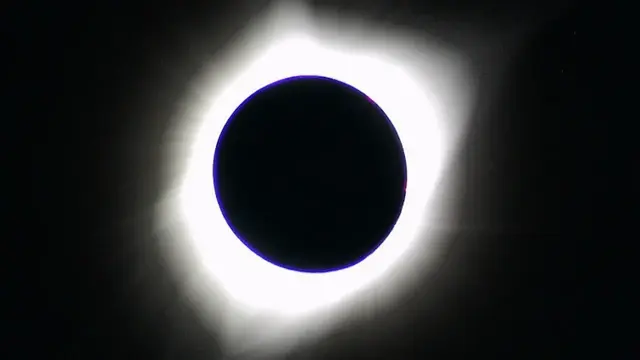

A rare solar eclipse will darken London’s skies this month. It will be the largest partial solar eclipse — when the moon moves to cover the sun — in over a quarter of a century to be witnessed in the UK.
It is estimated that around 90% of the sun will be obscured by the moon, triggering a rare and stunning natural phenomenon.
According to Royal Museums Greenwich, which includes the Royal Observatory: “A solar eclipse occurs when the Earth, moon and sun align. The moon passes in front of the sun and blocks its light, casting a small shadow on Earth.”
The observatory said it will be a 64-year wait until 2090 for the next total solar eclipse visible from the UK, meaning it is worth seizing the opportunity in 2026 to see a natural phenomenon.
Just as was the case in 1999, Cornwall, which experienced a total eclipse 27 years ago, is forecast to be the best place in the UK to watch the eclipse. Spectators gathering in popular spots such as Land’s End and The Lizard Peninsula are to be treated to 95% coverage.
For those wanting to watch, there are strict safety guidelines to follow when it comes to eyesight protection. The Royal Observatory states that a person should never look directly at the sun without the appropriate filters, providing information on how to watch it safely.

Where to watch the solar eclipse in London
London’s hills and open spaces will be the best places to watch the solar eclipse on August 12.
The eclipse will begin at 6:17pm and the height of the eclipse is expected at 7:13pm. From London, it will last around 1 hour and 49 minutes until 8:06pm.
Here are some of the best vantage points in the capital.

Why not watch it where the experts are based? With the Royal Observatory and the Prime Meridian line on one side and the view of the London skyline the other, this London beauty spot is sure to have not only a great view of the partial eclipse, but also a vibrant atmosphere to match. Situated in the south-east of the city, it should offer a wide vista as the sun comes down in the west.
For those in south-east London less fond of crowds, Telegraph Hill, situated near Nunhead, could prove the ideal place to set up camp on August 12. It still offers that east-to-west angle while being slightly further from the tourist hub of Greenwich.
Offering views over London Zoo and well beyond, Primrose Hill, part of Regent’s Park in north London, is sure to be popular among those looking to catch a glimpse of the powerful solar display.
Rising to 98 metres, Parliament Hill is one of London's highest natural points, offering panoramic views of the city skyline.
Visitors to this part of Hampstead Heath on August 12 will be able to contrast man made brilliance with natural beauty as they take in the effect of the eclipse while also spotting St Paul’s Cathedral, the Gherkin and other major London landmarks on the horizon.

Slightly further out of London, the hill between Muswell Hill and Wood Green that Alexandra Palace sits on was chosen for its high vantage point by the BBC when first transmitting television signals in 1936.
For that same reason, it should be a fine place to watch the partial solar eclipse, with the palace’s perch situated well above the tree canopy line, giving clear views of the sky over London.
The high elevation of Crystal Palace on the Norwood Ridge will provide an open, elevated view toward the west where the eclipse will peak.
The upper Italian terraces of the south London landmark and the open grass areas of its park should provide plenty of space to locate a spot to watch the sun and moon fusion without tall buildings blocking the view.