
Want to bookmark your favourite articles and stories to read or reference later? Start your Independent Membership today.
Join todayAlready a member? Log in
Drivers will be able to see live pump prices around them on their phones for the first time as the government announces a new partnership with Google.
Using data from the government’s Fuel Finder, drivers will be able to see near-real-time fuel prices at stations around them on Google Maps and Waze.
This will save households with cars an average £40 a year, the Department for Energy Security and Net Zero (DESNZ) estimates, coming at a time when fuel prices continue to rise.
Minister for energy consumers Polly Billington said: “Tackling the affordability crisis is our first responsibility and for so many families and businesses, petrol and diesel are essential goods, not luxuries.
“Accessing the cheapest fuel should be simple, which is why it is a game-changer for near-real-time fuel prices to be shown on Google Maps for the first time in the UK, helping drivers find the best deal and save money at the pump.”
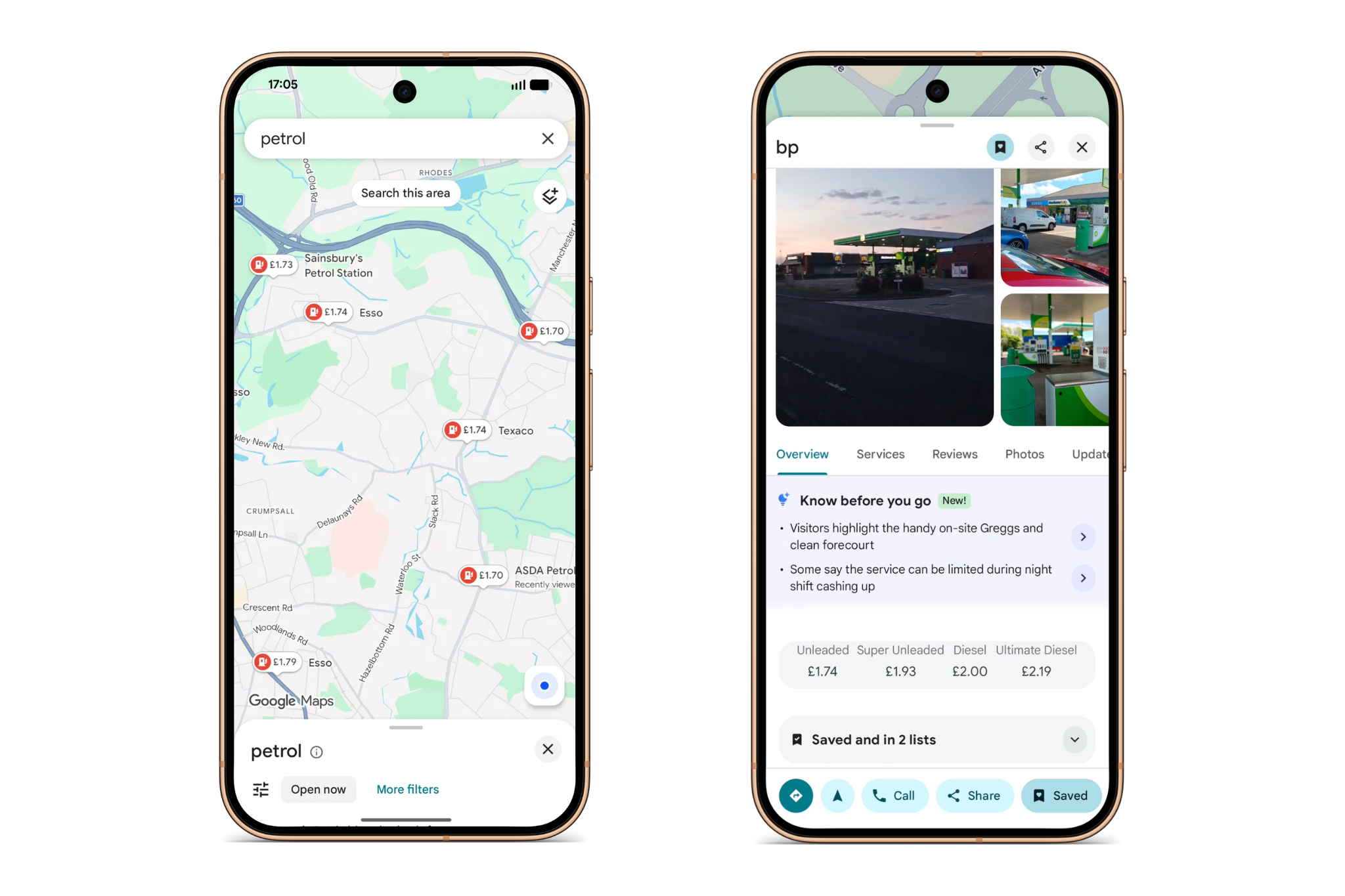
The announcement comes as the price of diesel continues to reach record highs, hitting 200.11p on Wednesday. The average price of petrol was 174.89p at the same time according to RAC data.
Since February, it has been compulsory for petrol stations in the UK to report the price of their fuel within 30 minutes of changing it or risk a fine.
The Competition and Markets Authority (CMA) is able to step in where the rules are not followed, with around 99 per cent of stations now fully participating.
Sarah-Jayne Williams, director of global product partnerships for Geo at Google, said: “Navigating fuel rising costs shouldn’t add stress to everyday journeys.
“Integrating Fuel Finder data into Google Maps and Waze gives drivers visibility on nearby pump prices, helping drivers make intentional choices to help their budgets go further this winter.”
Fuel prices worldwide have seen a sharp increase since the US launched attacks on Iran in February, with faltering peace talks continuing to hit oil and gas shipments in the Strait of Hormuz.
The cost of diesel has been hit especially hard as refiners struggle to ship the product through the besieged waterway, through which around 20 per cent of world’s gas and oil is usually shipped.
Russian exports of diesel have also dropped sharply following its invasion of Ukraine in 2022, with economic sanctions and damage to its oil refineries hitting production.
Ahead of the Budget later this month, chancellor John Healey is reportedly considering announcing a delay to the scheduled partial reversal of the 5p cut to fuel duty, which will add an extra 3p per litre from January 2027.