Even his fiercest critics would struggle to argue that Andy Burnham's first conference as Labour party leader was anything but a success. There was the requisite rapture among the Labour faithful after his deeply-personal speech, delivered without a tie or a lectern and, at times, with tears in his eyes. But even figures on the right, such as the broadcaster Piers Morgan, described it as "one of the best, and most powerfully delivered, by a British politician in a very long time".
The prime minister's policy offering packed a punch too. He put forward radical progressive policies on social care, promising to "rip the plaster off" and make changes to the pensions triple lock, electoral reform and Europe.
A YouGov poll after the conference showed that it had boosted the "Burnham bounce", with Labour opening up a five-point lead over Reform UK in the polls. The upcoming budget, and next year's spending review, will sorely test whether he can keep that momentum going and make good on his promises. Burnham's success at the Labour conference was capped by a victory at the Holborn and St Pancras byelection a few days later seeing off a challenge by the leader of the Green party Zack Polanski.
This time last year, Kemi Badenoch was hanging on to her role as leader of the opposition by a thread. But in the past 12 months her personal favourability ratings have continued to improve, according to More in Common research. This was a conference where she tightened her grip over the Conservative party and leaned hard into her own brand, telling GB News's Christopher Hope: "We are under new management. There's a new captain, there's a new coach, there's a new owner, effectively, which is all me."
While Badenoch's speech lacked the emotional firepower of Burnham's, she was assured and disciplined in her focus on the economy – not mentioning small boats or other elements of the culture wars which have energised her in the past. Promised giveaways to wealthy individuals, such as free childcare for those earning more than £100,000 and abolishing inheritance tax on family homes for the 5% of households that pay it, were designed to appeal to the Conservative's traditional base, one of the first indications of a resolve to win back the "blue wall".
The most powerful moment of the speech came as she drew a line in the sand between the Tories and Reform, thunderously telling her audience there would be no uniting the right: "I don't want to live in a country run by people who threaten journalists, call veterans traitors and debate whether my mixed-race children are English." Whether she will reject any deal with Reform if the electoral circumstances dictate remains to be seen.
Online, all the time, communications
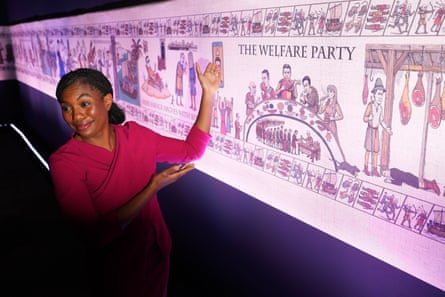
Both the Conservative and Labour communications teams can congratulate themselves on a job vigorously done in the past few weeks. The coup of the conference season came in the guise of a 27-metre (88ft) graphical retelling of the past two years in British politics in the style of the Bayeux tapestry, as seen through Conservative eyes. Senior party figures and members alike enjoyed the "Birmingham tapestry", for its pointed jabs at defector Robert Jenrick, but the canniest move was including depictions of high-profile journalists, most of whom duly posted images of the propaganda to their sizeable social media followings.
The team at the Labour party conference successfully projected the "hopey-changey" vibes they had intended, mainly by producing as many posters and placards declaring there was "hope again" as there were participants at the conference. But special mention should also be given to the socials team at Labour HQ, whose snipes during their rivals' conferences ("Who was less sure whether he'd finished, the shadow chancellor or the audience?", they asked after Andrew Griffith's less than assured end of speech exit) was a masterclass in side-eye.
The battle of political ideas
This conference season saw the most sharply defined battle lines between right and left in a generation. Burnham used his speech to attack neoliberalism, saying: "Britain has been on the wrong path for a long time. Deindustrialisation. Deregulation. Privatisation. Austerity. Brexit."
He was instantly accused by the Conservatives of indulging in a "socialist fever dream" of the 1970s who went on to proclaim a love of Thatcher while simultaneously belting out the national anthem. In her speech, Badenoch pitched the fight against Labour as "a battle for the soul of this nation", trotting out the well-worn Tory treatise that "what people earn belongs to them, not government".
Sidekicks with main character energy
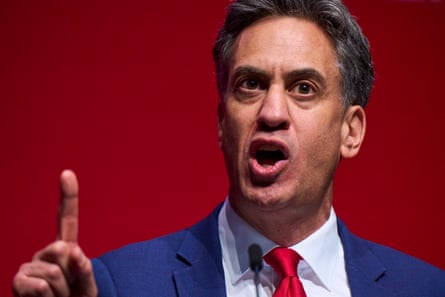
Ed Miliband lolloped through Liverpool's conference centre with the ease of a man who appears to be very much enjoying his time as foreign secretary. In a lineup easily swallowed by the gravitational pull of the leader's speech, Miliband delivered a deft piece of politics, telling assembled members they were "right" to be moved by the plight of the Palestinian people.
Over at the Conservative conclave, the Conservatives' candidate for mayor of London, James Cleverly, also had a jolly time away from the main stage. "[Kemi Badenoch] knows, as I do, that our best bet of getting her into No 10 is getting me into City Hall," he told a panel convened by the Centre for Policy Studies (CPS).
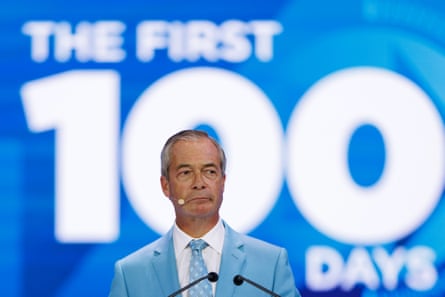
Reform UK billed its largest ever gathering at the National Exhibition Centre in Birmingham as "the most talked about event of 2026". Its leader, Nigel Farage, wanted to use the conference to outline a series of policy pledges for a Reform government's first 100 days in office.
Instead the opening was overshadowed by the suspension of his close aides Dan Jukes and head of policy James Orr, after an undercover investigation by reporters from a group called Verbatim. Reform UK cleared them of breaking laws that ban foreign donations on Wednesday, but the matter remains under police investigation.
Farage's own speech was interrupted by protesters, who appeared to be roughed up as they were thrown out of the hall. A man was later given a police caution after footage appeared to show one woman having her hair pulled and being hit with a walking stick.
Zack Polanski started his run in to the Green party of England and Wales's conference by asking, unsuccessfully, if it could be delayed so he could focus on campaigning in the Holborn and St Pancras byelection. He may now wish it had been cancelled altogether.
The party's gathering in Brighton was consumed by controversy, after members voted in favour of an official policy stating that Zionism, the movement for a Jewish state, is a type of racism. Polanski absented himself from the most toxic internal debate the party has faced for years, choosing instead to leave to campaign, and the party is still reeling from the fallout.
Shortly after the Greens' triumph in February's Gorton and Denton byelection it was polling above 20%; it now stands on 11%.
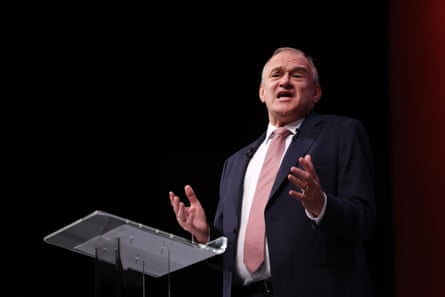
At first it seemed as if the Liberal Democrat leader, Ed Davey, had come through his party's conference in Brighton relatively unscathed, despite going unexpectedly viral for a speech in which he enthusiastically, if not entirely successfully, attempted to rally a chant of "We care! We fight!". But his opposition to Labour's proposals to change the pension triple lock was met with opposition by senior and backbench Lib Dems, with one saying his defence of the current policy "gaslights an entire generation into believing it's for our benefit".
The chancellor used the word hope 21 times in his personal conference speech that, while warmly welcomed by Labour party members, managed to say very little about actual policy over quite a long period of time. In the days that followed, senior Labour figures privately voiced unease about Healey's approach to his crucial first budget this month, noting it lacked detail about policy on investment and growth or any pitch-rolling for possible tax rises.
Among all the gaffes, the spills, the wrong names and forgotten policy details of this season of party conferences, one performance really did stand out.
Griffith, the shadow chancellor, was described by Badenoch as having "more business experience than the entire Labour cabinet combined" – attenders at Conservative party conference were left wondering if any of it had involved public speaking. After an address variously described as "an historic clunker", "curious" and "the worst speech ever heard", Griffith's speech appeared to simply peter out and the shadow chancellor wandering awkwardly off stage, leaving the audience not knowing whether to clap, or simply follow him out of the room.