Good morning. Chances are you woke this morning to news of two momentous election results. In Serbia, a student-led movement has ousted the country's long-serving leader, Aleksandar Vučić (which you can read more about here). And just hours ago, Brazil's president staged a sensational turnaround against his far-right opponent after a nail-biting vote.
Luiz Inácio Lula da Silva, known as Lula, won a forth nonconsecutive term as president, seeing off far-right senator Flávio Bolsonaro, who spearheaded the radical populist movement built by his father and former president, Jair. Jair Bolsonaro is serving a 27-year prison sentence for plotting a coup after he lost the 2022 election.
After Bolsonaro's surprise first-round victory earlier this month, the Workers' party incumbent Lula pulled off a historic fightback – a consolidation of the democratic resurgence the country has enjoyed since he took office – and an early birthday present for the veteran leftist, who turns 81 on Tuesday.
But with Bolsonaro refusing to accept the result, the victory is a tense one. I spoke to the Guardian's Latin America correspondent Tom Phillips, who was in São Paulo at the Workers' party vote count, to find out what the result means and what may lie ahead.
Weekend roundup
In depth: 'This is the crescendo of Lula's incredible, if sometimes controversial, 50-year political career'
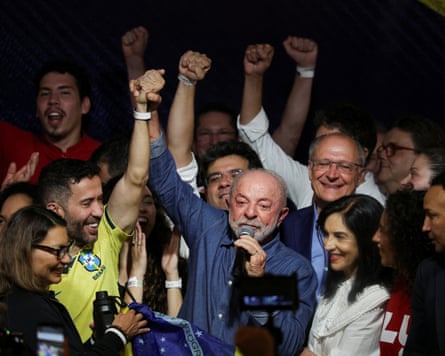
When the results were declared just after midnight UK time, the choice of Brazil's 159 million voters was narrow, but clear. The 80-year-old leftist received 51.79% of the vote to his rival's 48.21% – about 4.3m votes – in what Lula called "a defeat for denialism".
A visibly angry Bolsonaro has already refused to concede, citing a decision to extend voting for an extra two hours – although both sides had called for it, for different reasons.
The outcome was an unprecedented turnaround after a populist surge in first-round voting at the beginning of the month left Brazil's progressives reeling.
In those early October elections, Flávio Bolsonaro received 56.1m votes to Lula's 53.8m – 47.03% to 45.16% – putting the 45-year-old scion of the authoritarian clan in pole position: not once, since the return of democracy toBrazil in 1985, has the first-round runner-up managed to turn the game around and win the second ballot.
In the intervening weeks, the polls tightened dramatically, putting Bolsonaro ahead by only fractions of a percentage point.
"This is the crescendo of an incredible, if sometimes controversial, 50-year political career," Tom says. I can hear crowds of Lula supporters cheering in the background as we speak, and fireworks exploding. "It saw Lula go from rural poverty to union leader to the first elected working-class leader of Brazil, who has helped millions of people escape poverty and rode a commodities boom in his first two terms".
For Brazil, a Lula win represents stability and the assurance that the country's democratic future is secure, at least in the short term. "Over the past four years, Lula has reduced deforestation in the Amazon by more than 70%. He's come to the help of the Indigenous people who live there. He's cracked down on illegal mining," Tom tells me. "It's very positive news is that all this will continue."
How did Lula turn things around?
"Bolsonarismo is a far-right movement … that has put down deep roots in Brazilian society," Bernardo Mello Franco, a political columnist for the Rio broadsheet O Globo, told Tom earlier this month, pointing to a series of societal shifts have contributed to this.
Evangelical Christianity has expanded across Brazil in recent decades, with church leaders throwing their support behind the socially conservative policies favoured by Bolsanaro Sr and Jr.
Pro-gun Flavio Bolsonaro harnessed voter frustration at chronic levels of urban crime and violence. Despite being embedded in Brazilian politics for decades, he successfully portrayed himself as an anti-establishment outsider, using social media far more effectively than his rival.
And others believe he had significant help: a dozen watchdogs and research groups have published reports alleging that Meta may have favoured the senator's campaign. The controversy grew after Brazils' electoral court ordered Meta not to give the candidates "unequal treatment", while the company called the allegations "false and unfounded".
Progressives were galvanised after the first-round results revealed a record abstention rate of 21%, more common among Lula-supporting groups such as lower-income voters, and their focus sharpened on mobilisation. Millions joined a WhatsApp channel called "Lula's army", which sent out daily instructions on how to make supportive content go viral. The 80-year-old incumbent, who only took ownership of his first smartphone in recent days, started posting to Instagram and TikTok. For the first time, the president's digital reach overtook that of Bolsonaro.
Meanwhile, the Bolsonaro campaign was hit by a succession of scandals. In a revelation that made the UK's partygate seem tame by comparison, last week the Brazilian magazine Piauí claimed that at the height of the 2020 coronavirus outbreak, Flávio Bolsonaro attended a boat party along with sex workers and vaccine lobbyists hoping to cut deals with his father's government.
Amid speculation that a comeback might be possible, at a million-strong rally on Copacabana beach in Rio on Saturday, activists unfurled an enormous yellow and green banner declaring: "We are going to turn this around!"
And so he did.
What role did Trump play in the election?
The US president has boasted about "lots of people that I got elected" in Latin America, styling himself as a kingmaker after a succession of right-wing candidates aligned with Washington have won power.
Although Donald Trump did not openly endorse Flávio Bolsonaro, his influence loomed large. Last year, he denounced the supreme court trial of his ally Jair Bolsonaro as a "witch-hunt", imposing extraordinary 50% tariffs on Brazilian imports as retribution for what he claimed was political persecution.
Lula has styled himself as the country's defender against Trump's "colonial" designs. His victory consolidates a multilateral foreign policy and pragmatic approach to relations with the US, China and Russia. He has rejected invitations to join the controversial coalition of Latin American countries conducting military operations against drug cartels alongside the Pentagon, which would have resulted in much greater US involvement on Brazilian soil.
Furthermore, a win for pro-democracy campaigners in one country may serve to bolster international counterparts. As our senior international correspondent Julian Borger sets out in this compelling piece, along with the Brazil vote, a series of high-stakes elections in Serbia yesterday, Israel on Tuesday and the US next week are closely interlinked, and Lula's win may have global ramifications, as leaders across Latin America and the world congratulate him this morning.
What does the result mean for the environment, in Brazil and beyond?
Last week, Tom travelled to Roraima, the northern state where Bolsonaro registered his best result nationwide. On his trip, he heard first-hand from Indigenous leaders and conservationists on why the populist's success was causing panic.
His father's environmentally devastating administration facilitated an illegal gold rush – turbo-charged by record global gold prices – that ravaged the Yanomami Indigenous reserve on the northern reaches of the Amazon.
When Lula beat Jair Bolsonaro in 2022, the left-winger launched an environmentalist mission to expel the illegal miners, taking on the multibillion dollar extraction industry. Alongside wider green policies, he reduced deforestation in the Amazon to record lows.
"Tragically," says Tom, "the environment only came up in the final presidential debate of this campaign."
"Given that the Amazon makes up such a large portion of Brazil, and how important that region is to the global climate crisis, it's amazing that it's not been debated more. But people were voting more on economy, public security and culture war issues."
In that final debate last Friday, Tom says that Lula "tried to show off the excellent, if incomplete, work that his government's done in protecting the environment".
Many will be relieved at Bolsonaro's loss, as his vision for the Amazon was almost identical to his father's.
While a Lula victory brings hope that these policies will continue, he will be working with a newly elected congress that features a record number of rightwing politicians hostile to Indigenous rights and environmental issues.
How will Bolsonaro respond?
The immediate aftermath of the election results is likely to be fraught, warns Tom, with Flávio Bolsonaro saying it was "impossible to concede the election result".
"The Bolsonaro response is exactly as I feared but I don't think it will mean very much," Tom says. "All these world leaders are now recognising Lula's win and I don't think Bolsonaro has a hope of overturning this result".
Tom suspects that in the coming days Bolsonaro will head to the States, to avoid ongoing criminal investigations. "That's not to say there might not be violence from his supporters, but his political career is done. The fact they've lost is a sign that the name 'Bolsonaro' is toxic for a slight majority of Brazilian people."
The week to come
-
| Israel goes to the polls on Tuesday, amid orders from prime minister Benjamin Netanyahu for a full lockdown of the occupied West Bank after recent checkpoint attacks. His government will be fighting for its survival.
-
| On Wednesday Chancellor John Healey will deliver his first budget statement in the House of Commons, which is expected to give local authorities more spending powers, as a means to promote growth
-
Thursday and Friday | European and Canadian leaders will meet in Montreal for the 21st EU-Canada summit, to discuss security and strategic cooperation. It will be the first opportunity for leaders to iron out details over a proposed invitation for Canada to become the EU's first ever "associate member"
What else we've been enjoying
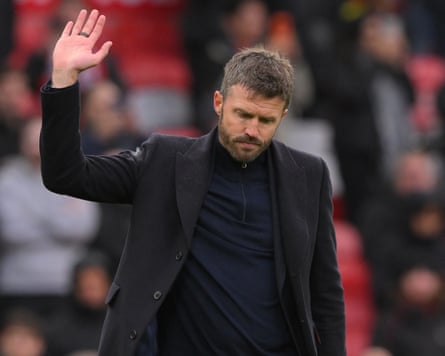
| Manchester United's hierarchy are in crisis talks over whether or not to sack Michael Carrick as head coach after he oversaw another torrid defeat, against Bournemouth at Old Trafford on Sunday, that left his job in the balance.
| The 20-year-old Kimi Antonelli won from Charles Leclerc and Max Verstappen and should become F1's youngest world champion next week in Mexico
| Shadab Khan made an unbeaten 113 in a thrilling last-wicket stand with Haris Rauf as Pakistan, chasing 242, beat England in a thriller
The front pages

"'Red Wall' MPs wary as Burnham calls for EU free movement debate", is the 's front page today, while writes "Get Brexit Redone".
The has "Streeting vows UK will 'lead from the front' as billions planned for defence boost", the writes "Budget set to offer tax reprieve for pensioners" while the Express says "PM's betrayal may 'open door' to EU migrants".
Elsewhere, the has "BBC's £400k payout over anti-Semitism" and the has "Luxury houses shed €250bn in value as China's shoppers tighten their belts". The leads on "Meghan Dad 'net will widen'" and the has "Markle 'abuser of worst kind'".
Today in Focus
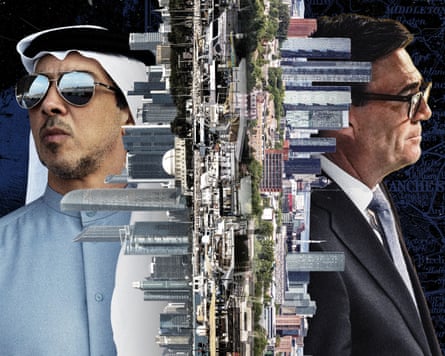
How Abu Dhabi bought Andy Burnham's Manchester
Today in Focus presenter and city resident walks through modern Manchester – where Burnham was mayor for nearly a decade – and charts its transformation wrought by Emirati money.
Helen talks to North of England editor too about how Abu Dhabi came to Manchester, alleged "sweetheart deals" it struck to own so much land, and a lack of transparency about it all even now.
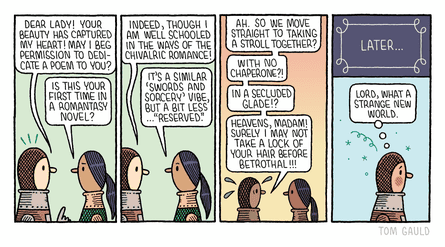
Cartoon of the day | Tom Gauld
A bit of good news to remind you that the world's not all bad
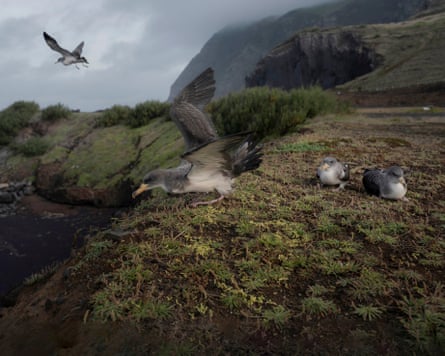
Every autumn, Corvo Island in the Azores turns off its public lighting for a few key days to help fledgling seabirds fly to the ocean guided by the stars.
Since 2019, the 450 or so inhabitants of the smallest and most northerly island of Portugal's Azores archipelago have switched off the lights for five nights to tackle the disastrous effects of artificial light on Cory's shearwaters. The campaign started after the community noticed huge numbers of deaths among young shearwaters, who spend three months in their nests before attempting their first flight to the ocean. Many are fatally confused by the artificial glow of streetlights, and end up crashing on the streets of the island's only village, Vila do Corvo. By going dark, the stars can be seen clearly, allowing the juvenile birds safe passage to the ocean.
Sign up here for a weekly roundup of The Upside, sent to you every Sunday
Bored at work?
And finally, the Guardian's puzzles are here to keep you entertained throughout the day. Until tomorrow.