A 34-year-old British man who has lived in Sweden since he was 10 has been deported in the latest of a series of Brexit-induced catastrophes for UK citizens in the country.
John Sellers was told to leave despite living in Sweden for 24 years, having been educated in the country and newly married to his Swedish partner, Caroline.
"It is time people know how people are being treated here, and it is time to show what Brexit has caused," he said, as he described his near seven-year struggle to remain in the country.
"Quite frankly, we have been holding our tongues too long. I am very well aware that different countries have different rules on immigration, but none of this would have happened were it not for Brexit," he said.
His parents moved to Sweden from Essex under the free movement rights that came with the UK's membership of the EU because they liked the education system and thought it was a "good place to bring up children".
His father died when he was 16, and his mother moved back to England once he finished a college course to become a teacher.
He was deported in January after three failed attempts to remain in the country and is still fighting to return to Gothenburg, where he was hoping to build a family with his new wife.
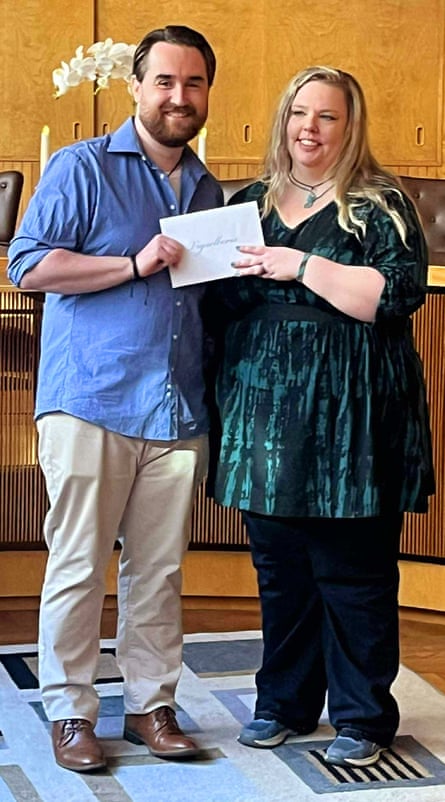
"Whenever I come to England, I feel like a tourist. Sweden is my home," Sellers said.
"It is horrible. Not only do I feel like I've let down Caroline, I've let down my family, let down myself. I've been ripped from the love of my life, my other half.
"The pain is … I wish people wouldn't have to go through this kind of pain, because you're not whole. You're broken."
Hit with the cost of fighting deportation, and lack of work due to the deportation, he said he does not know how long it will be before he can physically hold his wife in his arms again.
Caroline, who has chronic conditions including fibromyalgia and symptoms of long Covid, including chronic fatigue, is trying to get back on her feet to return to teaching, but the case has caused a huge level of stress and upset.
She said: "It's just horrible – the feeling of finally having someone to help you with things, someone to lean on and someone who is always there for you and then having to spend so much time, effort and money on fighting the government just to be able to continue that relationship.
"There are so many things we want to do. We just want to spend our lives together, and it's so hard having to fight for that, especially when I am not well to begin with."
Sweden's migration minister, Johan Forssell, is poised to respond to Swedish MP Håkan Svenneling's demand for a review of the approach to British residents in the country post-Brexit.
Svenneling intervened last month after it emerged one of his constituents, 78-year-old widow Joyce Thomas, who has been in the country for 21 years, was told to leave.
Thomas has until 7 September to leave, but her friends and supporters are pleading with Forssell to freeze removals and review a policy critics have said is not consistent with the Brexit withdrawal agreement.
Another elderly British citizen, George Mason, who is in full-time dementia care, was told to leave the country in August but has won a stay of execution until 28 September while the migration authorities consider the "obstacles to enforcement", his son said.
The Guardian is aware of another British man detained by police on Tuesday and told he will be deported.
Caroline Sellers said she and John decided to go to the media because it was important for politicians and officials in Brussels to see how Sweden's interpretation of Brexit was "crushing people, crushing families" rather than protecting them, as politicians promised.
Eurostat data shows that Sweden has the highest number of Brexit-related deportations of Britons of all EU member states. About 2,500 British nationals have been ordered to leave the country since Brexit, one-third of the entire number of removal orders issued across the 27-member bloc since Brexit in 2021.
The problem centres on the Migration Agency's apparent refusal to allow late applications from people who were not aware they had to formally apply to remain post-Brexit – a process used in only 12 other EU countries.
Before, Brexit deportation of an EU national to another member state was only permitted in exceptional circumstances involving threats to national security.
But in the post-Brexit scenario in Sweden, deportations of Britons have been ordered even when no crime is involved.
The UK Foreign Office has expressed concern on multiple occasions about Sweden's approach to late applications. It is understood that senior officials at the European Commission are also watching with interest.
David Milstead, an activist with the Brits in Sweden group, wrote in the Guardian last month that complaints about the Swedish approach had first been made years ago.
Part of the problem, he says, stems from the lack of communication to registered British people living in the country, causing missed deadline applications.
He said the Sellers' case was "yet another example of systemic failings in Sweden's implementation of the withdrawal agreement".
He added: "There are welcome signs that the Swedish government is taking these problems more seriously, although it is too early to know what will follow. Any remedial action needs to come soon, because people are suffering now."
Sellers was aware that Brexit might affect his right to stay in the country and, without any communication from government authorities, he considered his best option was to apply for Swedish citizenship.
This he did in September 2021, before the Brexit deadline of 31 December that year.
Not only was his citizenship rejected, but two subsequent attempts to remain in the country under family rights in national migration laws via his partner, now his wife, were also turned down.
The latest adjudication, after he appealed against the first decision to refuse him residency on the grounds of a family relationship with Caroline, whom he had yet to marry, was that they had "not lived together abroad for an extended period of time".
The migration court had noted that other evidence of a durable relationship was "insufficient".
The Sellers are now appealing for a review of the judgment with fresh evidence.