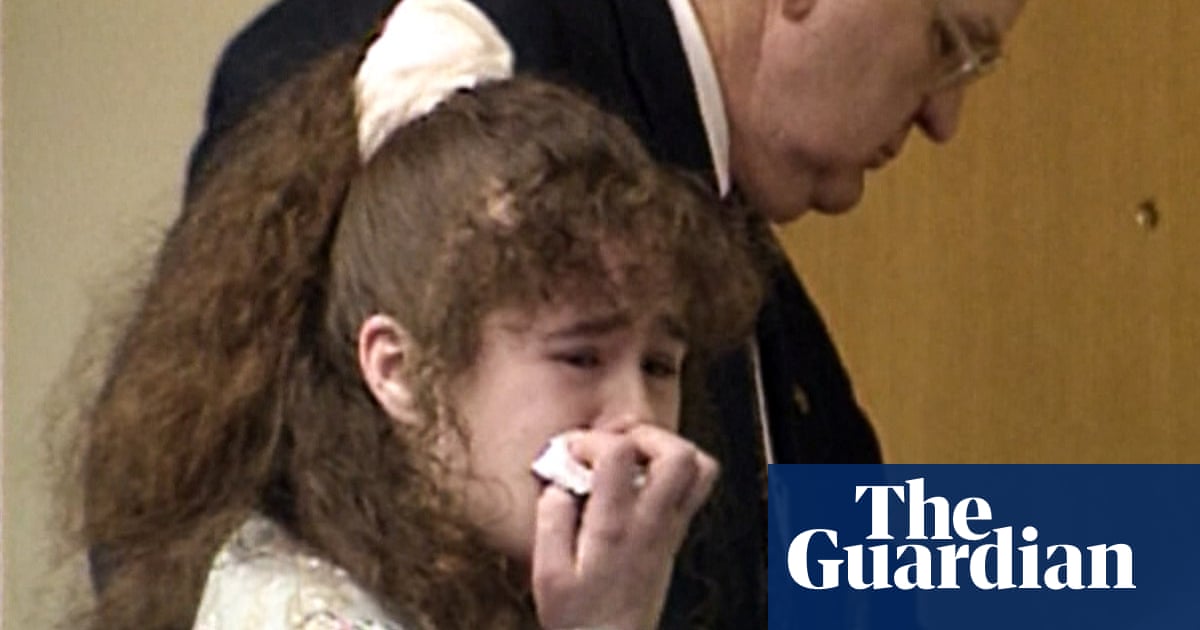
Christa Pike has been discharged from the hospital after surviving Tennessee's botched 30 September attempt to execute her by lethal injection and is back in prison, her lawyers said on Saturday.
Pike, 50, returned to the Deborah K Johnson rehabilitation center, where she has been imprisoned for the last three decades, her attorneys, Stephen Ferrell, Luke Ihnen, Randy Spivey and Kelly Gleason, said in a statement.
"She is grateful to the first responders and her medical team for their care in these extraordinary circumstances," Pike's lawyers added. "She is continuing to receive medical care at the prison, and we will continue to track her recovery."
Saturday's update about Pike came 10 days after the death row prisoner was given two doses of pentobarbital, a lethal injection drug, in what proved to be a failed execution attempt. She was hospitalized after surviving the botched execution and was declared brain dead on Monday.
But in a shocking turnaround, on Thursday her lawyer said that she was "up and walking" – though she remained "somewhat foggy" and wasn't able to use her arms very much.
Pike said that her arms were burning during the failed execution and asked if it was supposed to feel that way. Witnesses present in the chamber said that "nothing was normal" while officials have maintained that they followed every step of Tennessee's approved execution protocol.
There has been no official explanation about why Pike survived the execution. Medical experts speculate that perhaps some or much of the drug missed her vein and went into surrounding tissue, that one of her veins blew, that the drug was faulty, or a combination of such factors.
Her lawyers months earlier had flagged that Pike's veins were problematic.
Pike was convicted in 1995 for the torture and murder of Colleen Slemmer, then 18 and her classmate at Knoxville Job Corps. According to court filings, Pike, who was also 19 at the time, was worried Slemmer was trying to take her boyfriend, Tadaryl Shipp, then 17.
Shipp and Pike were convicted of taking Slemmer into a wooded part of the University of Tennessee campus and murdering her. She was given the death penalty, and Shipp was sentenced to life in prison because he was younger than 18.
After Slemmer's murder, Pike was diagnosed with bipolar and post-traumatic stress disorders, her attorneys said.
"It took me numerous years to even realize the gravity of what I'd done," Pike said in an earlier petition for clemency. "Even more to accept how many lives I affected. I took the life of someone's child, sister, friend. It sickens me now to think I had the ability to commit such a crime."
Pike's survival of the botched execution has shocked many in the US and overseas and galvanized critics of the death penalty.
Tennessee's top prison official has announced his resignation.
Meanwhile, the state's governor, Bill Lee, has paused executions in Tennessee for the rest of the year. And Florida's governor, Ron DeSantis, on Friday canceled a planned lethal injection execution in the state.
But they continue elsewhere.
For instance, the Pentagon confirmed on Thursday that it planned to livestream the execution by firing squad in December of former army psychiatrist Nidal Hassan, who killed 13 people at Texas's Fort Hood, prompting condemnation from the United Nations.
Donald Trump on Saturday said Hassan "was vicious – he was violent" and that he would "make a decision" about the plans to livestream his execution.
"There are two thoughts: don't show it and show," the president remarked. "Because you know by showing it, maybe other people won't be doing what he did. So I'll make a decision ultimately. I know what the military would like to do, but we'll make a decision."