otched executions are nothing new in US history. In the era when hangings were common, some condemned people were decapitated. Later, when the electric chair was in vogue, every now and again, someone would catch fire during an electrocution. And nitrogen hypoxia, the US's newest execution method, has already proven notoriously unreliable.
But, of all of the ways we have tried to execute people, lethal injection has the worst track record. More than 8% of all lethal injection executions have been botched. Most of them resulted when those charged with carrying them out could not find a usable vein.
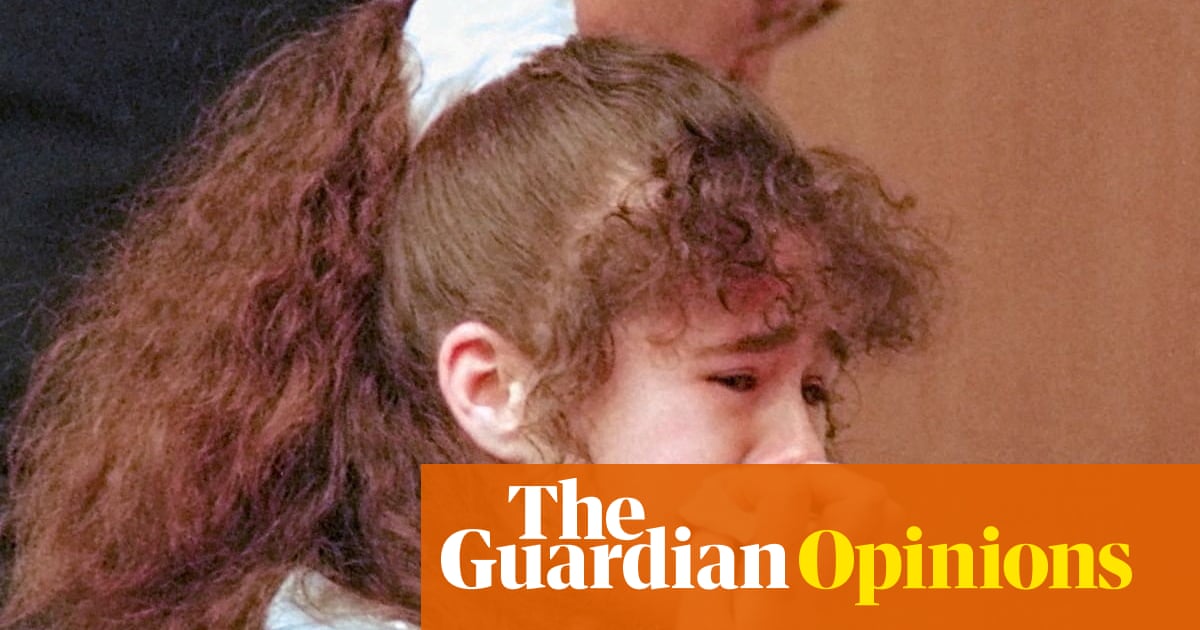
Last night, we entered uncharted territory when Christa Pike survived Tennessee's effort to execute her with lethal doses of pentobarbital. It was the first time someone received a drug intended to kill them but did not die.
Robin Maher, the executive director of the Death Penalty Information Center, told the New York Times: "This event is the worst we've seen and unlike any other botched execution in the modern era … There is no precedent."
Moreover, there is almost no precedent for what should happen next.
Whatever fate awaits Christa Pike, one thing is clear. The state of Tennessee should not be allowed to try to execute her again.
Beyond that, it is time to give up on the fantasy that this country will ever be able to find an execution technology that is safe, reliable and humane. We have not found one yet, and we never will.
What happened to Pike was gruesome. No one deserves what she went through, not even those who commit horrible crimes.
Pike was sent to death row for one such crime. The Tennessean describes her crime this way. "Pike lured Slemmer to a wooded area near the University of Tennessee's Agricultural Campus with the promise of marijuana. With the help of … [her boyfriend], Pike tortured Slemmer before beating her to death with a chunk of asphalt. A pentagram was also carved into her body."
Pike was barely 18 years old at the time. She was herself the victim of violence and abuse throughout her life.
As the date of her execution drew near, Pike claimed that it should not go forward, because using lethal injection on her would be cruel. Little did she know what would be in store for her.
As allowed by its execution protocol, state officials in Tennessee administered two doses of pentobarbital that were supposed to be enough to end her life. However, as NBC notes, instead of killing her, it left her "snoring" and complaining about pain, as well as "kicking her feet so often that she knocked off the sheets laid on her".
After the Tennessee governor, Bill Lee, was contacted, he authorized the execution team to stand down, and Pike was taken to a hospital.
This is not the first time that Lee has received a call about an execution gone awry. In May, he had also agreed to stop the execution of Tony Carruthers when officials couldn't find a vein for a backup IV.
Lee granted him a one-year reprieve.
Now he and his colleagues in Tennessee will have to decide what to do about Pike. So far, he has only called a halt to the one other execution scheduled in the state this year and ordered a review of what happened during Pike's execution.
That is not enough.
The last time someone survived when a method of execution that was supposed to kill them failed to do so was in 1946, when Louisiana tried to put a man named Willie Francis to death in the electric chair. Francis survived because the electric chair malfunctioned and the current wasn't strong enough to kill him.
He sued the state to prevent it from trying again. But to no avail. The United States supreme court allowed Louisiana to put him in the electric chair again.
Writing for the court, Justice Stanley Reed said: "Even the fact that petitioner has already been subjected to a current of electricity does not make his subsequent execution any more cruel in the constitutional sense than any other execution … The fact that an unforeseeable accident prevented the prompt consummation of the sentence cannot, it seems to us, add an element of cruelty to a subsequent execution."
Francis was executed soon after.
Since then, many other executions have been botched, but few have lived to tell about them.
Between 1946 and today, that has happened only nine other times, including with Pike. Four of those execution survivors were killed by a second execution attempt, while others escaped that fate. Some died on death row.
In another case, the state agreed not to try to execute the person a second time, and now three of them are still alive.
Tennessee had its chance to execute Christa Pike. It shouldn't get to try again.
To do so would be a form of double jeopardy that is prohibited by the constitution. And it would be cruel.
Justice Harold Burton, who dissented in the Francis case, got it right when he said that no one should be subject to a second execution. "The intent of the executioner," Burton wrote, "cannot lessen the torture or excuse the result." In his view, when the state seeks to execute someone, they have a duty "to make sure that there … [is] no failure".
It doesn't get a do-over.
In the end, this is not just a matter of what the law says. It is a matter of simple human decency.
-
Austin Sarat, associate dean of the faculty and William Nelson Cromwell professor of jurisprudence and political science at Amherst College, is the author of Gruesome Spectacles: Botched Executions and America's Death Penalty