From the outside, it looked like the sort of happy family home a child might draw. Red brick, surrounded by rolling countryside, in Curdridge, near Winchester. Here lived the true crime writer Christopher Berry-Dee, with his second wife, Tracey Dee, and their two young daughters, Zoe and Sasha, in the early 1990s. Inside, it was a house of horrors, full of murder memorabilia. In a wardrobe were the clothes a nine-year-old girl had been murdered in. One afternoon, Zoe was playing when she found them. The now 38-year-old council worker from Romsey says she remembers "putting it all on … going downstairs and everyone being absolutely traumatised". Later, another gruesome memento was added to the collection: the Austin Metro that convicted murderer Michael Sams had used to transport a body in 1991. Bloodied sections of the seatbelts had been cut out for forensic tests.
Berry-Dee was the serial killer man. He wrote to convicted murderers in jail and befriended them. They told him everything. Through them he saw the terror in their victims' eyes, watched their anguished death throes, heard their final screams. He listened to tapes of their confessions in his study. Zoe grew used to hearing them echo through the house. "It would always be on," she says. "At the time, it felt normal."
The writer would go on to channel his unique insights into the psyches of these murderous criminals into a three decade-long career. With total sales of nearly 1m, Berry-Dee is the UK's bestselling true crime author since records began, according to NielsenIQ BookData; a self-styled "investigative criminologist" who routinely appears on TV documentaries and podcasts, and at true crime conferences.
His fascination with serial killers is underpinned, he says, by a profound sympathy with their victims. "I speak," Berry-Dee wrote in 2002, "for the victims who have suffered at the hands of the monsters with two faces … for the next of kin who have lost loved ones."

But to his friends, family, former associates and the families of the murder victims he writes about, Berry-Dee's intentions are not noble. They say he is a violent abuser of women and children, a man with criminal convictions, who has been reported to the police multiple times for child sexual abuse. They allege that he takes perverse satisfaction in restaging the violent rapes and murders of women and children through his writing. Over the course of a six-month investigation, the Guardian spoke with multiple alleged victims and witnesses to Berry-Dee's abuse, some of whom, despite the incidents being described taking place decades ago, remain too frightened of the author to speak publicly.
"I've always thought he gets off over it," says Sasha, 35, a physically slight woman with tattoos, who lives on the south-west coast. When Sasha talks about her father, whom she calls Chris rather than Dad, she shakes uncontrollably. "There's something about hurting women, hurting children and violent crimes. That's why he's in the job that he does, because it's his."
Berry-Dee, who is 78, declined to be interviewed for this article, citing a recent near-death stroke and medical advice to avoid heavy stress, but insists, "I have not once committed any of the crimes you accuse me of."
Friends and acquaintances alike all agree on one thing: Berry-Dee is a highly memorable person. "Once met," says the writer and editor Paul Woods, who knew Berry-Dee in the 90s when Woods ran a small true crime press, "never forgotten."
Berry-Dee's former agent, Derek Block, recalls visiting the writer at his home in Shedfield, Hampshire, in the mid-90s. He says his house "was absolutely pitch black, then he opened the front door and the light came out through the door" – he was in silhouette – "and it was like Psycho or something".
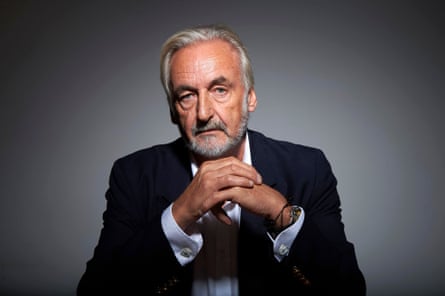
Born Christopher Dee in Winchester in 1948, Berry-Dee proudly traces his lineage to John Dee, the Elizabethan occultist and alchemist. He is a tall, physically imposing presence, who wears a masonic ring, favours a cravat and has been known to seal his letters with a wax stamp. Before he became a true crime writer, Berry-Dee was an artist, known for painting naval scenes around his home town of Portsmouth. He was also a convicted fraudster, having served a one-year sentence in Ford open prison, West Sussex, after a 1982 conviction for forgery, in addition to a separate 1988 conviction for obtaining credit and evading liability while an undischarged bankrupt.
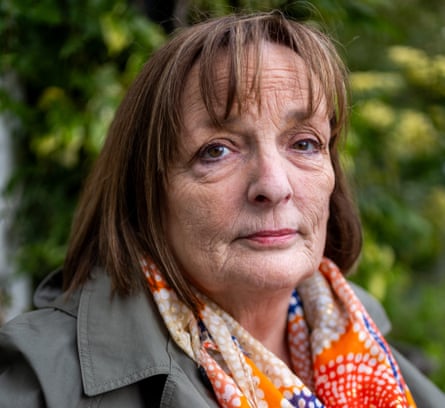
By the time the journalist Eileen Fairweather met Berry-Dee in 1990, he had reinvented himself as a true crime writer. Both were investigating the then unsolved murders of two schoolgirls, Karen Hadaway and Nicola Fellows, in Brighton's Wild Park in 1986. The Babes in the Wood murders, as they came to be known, convulsed Brighton throughout the late 80s, particularly after the man long believed to be the killer, Russell Bishop, was acquitted following a botched prosecution in 1987.
Fairweather recalls her first meeting with Berry-Dee, in a cafe. "He suddenly slammed on the table photos of the girls' dead bodies," she says. "It was a real gut feeling as a woman: you're not doing this because you care about little girls." She felt that he got a "kick" out of showing her the photographs. A true crime writer who met Berry-Dee in the 2000s likewise recalls Berry-Dee showing him a photograph of a dead child. "It was a horrible picture," he shudders.
Tracey Dee is an elegant, softly spoken woman with thick, dark hair and candy-pink lipstick. She also has a small scar on her face. Tracey, who works in healthcare and lives in West End, near Southampton, says that once, during an argument when she was pregnant, Berry-Dee put out a cigar on her face.
Tracey and her daughters allege that the author beat Tracey often. Once, she says, Berry-Dee knocked her unconscious. She woke up in the bath, covered in her own blood. Another time he stood over her, holding a butcher's knife. "He was shaking so much that I could actually see he was struggling to control himself."
On another occasion, during an argument, Tracey says he pointed a loaded shotgun at her. Her fear was so intense, "I wet myself." She alleges that Berry-Dee threatened to send his friends round to rape her, to teach her how to have sex "properly". "I was terrified," Tracey says, "because I actually believed they would do that."
Tracey would send the children out of the house when she felt a beating was imminent. But there was a limit to what she could do. Sasha says she remembers coming downstairs one morning to find her mother with two black eyes. Zoe alleges that she washed blood from her mother after Berry-Dee ripped out her earrings, and watched him punch her in the leg when she stalled the car. Friends and relatives of Tracey likewise recall seeing her with injuries around the time of her marriage to Berry-Dee, including black eyes. "I saw domestic violence so many times," Zoe says. "He was just absolute evil."
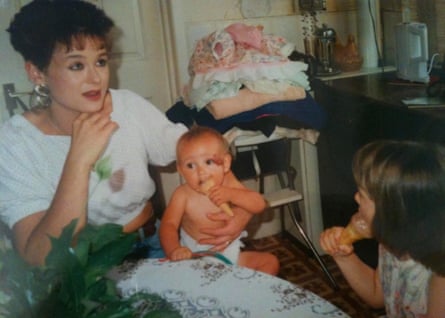
In a lengthy, discursive email responding to the allegations in this article, punctuated by anecdotes about his many interactions with grateful police officers and notorious serial killers, Berry-Dee denies abusing his former wife. He claims the small scar on her face predated their marriage, and that he never heard her complain of waking up in a pool of blood. He doesn't recall the family even owning a butcher's knife. "Never once during our marriage did I threaten her," he says.
Tracey fled Berry-Dee while he was on a work trip to the US in 1994, interviewing murderers for the pioneering documentary series The Serial Killers. She obtained a court order preventing Berry-Dee from removing their children from her care. He had only sporadic contact with his daughters as they grew up. Zoe last saw her father around 2008, when she was 20. Walking past a bookshop in Winchester, she saw he was doing a book signing and joined the queue. At the front, Zoe gave her first name, wondering if it would spark any recognition, but, she says, "He didn't recognise me."
Berry-Dee is open about how he secures his interviews with murderers. "Tell them straight off that you think they are innocent," he writes in his 2023 book Talking With Psychopaths and Savages: Letters from Serial Killers. "Tell them you intend to write a book about the miscarriage of justice they are suffering; go as far as saying that a major UK TV broadcaster is interested, with maybe even some cash in it for them at the end of the day, and they cannot fail to rise to the surface and take your literary bait as fast as a mousetrap snaps shut. Of course, you are telling them a bucketful of lies."
Berry-Dee claims to have "interviewed and interrogated over 30 of the world's most notorious killers", including Ted Bundy, one of the most famous serial killers of all time. In 2019's Talking With Psychopaths and Savages: Beyond Evil, Berry-Dee quotes Bundy saying, "We serial killers are your sons, we are your husbands … we are everywhere. And there will be more of your children dead tomorrow. What's one less person on the face of the Earth anyways?"
Bundy experts dispute these quotes. "They seem to be kind of a mash-up," observes Margaret Vandiver, a retired professor of criminal justice at the University of Memphis, who was with Bundy in his final weeks. Some "sound like Ted", she says, but others "don't sound like him at all. It sounds like someone's imagination of what he would have said."
"My quotes are drawn from open sources and most carefully checked," Berry-Dee says. He was not able to provide a link to any verifiable Bundy interview in which these quotes appeared.
Living serial killers also allege that Berry-Dee invents quotes, which he attributes to them in his books. "They are complete fabrications by CBD," says Kenneth Bianchi, now Anthony D'Amato, the convicted US serial killer widely known as the Hillside Strangler. "He is one very twisted pathological liar. I never, on paper, in email or tape, 'confessed' those things to him."
The Bafta-winning documentary film-maker David Monaghan, who has been investigating Bianchi's claims of wrongful conviction since 2016, argues that one either believes facts are important for everyone, or no one at all. "Some may say they would play the world's smallest violin for lying to serial killers," he says. "But this is a man being published as a 'world-renowned investigative criminologist', whose ethics start with deception and continue into outright fraud by inventing quotes."
Lucian Randall, Berry-Dee's former commissioning editor at his publisher John Blake in the 2000s, says it would not be normal practice in a publishing house to ask authors to provide their source materials, such as interview transcripts or tapes, if the author was already a successful writer, as Berry-Dee was when they started working together. "There's a certain amount of checking that goes on," Randall says. "But I think if someone comes and they've already done a book, I wouldn't normally ask to see source material." For an established, bestselling author, "I'm not sure anyone else would be saying at that point, where is your information for all of this? That feels like you're doubting the book."
Berry-Dee does not deny he lies to secure interviews. "So what?" he writes in his response to the Guardian. "If I need to get inside a serial killer's head, I use any tools I can. These murderous people are not angels, you know."
By 2000, Berry-Dee had become an established crime writer, who taught art on the side. It was this reputation that reassured Sally, when she dropped off her 13-year-old daughter, Helen (both pseudonyms), at his Castle School of Art in Portsmouth's Venture Tower, she was in safe hands. "The fact that he was investigating criminals gave me confidence," Sally says. "He seemed on the side of the good guys."
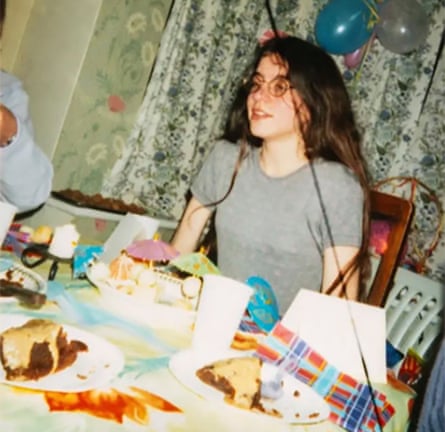
An academically gifted child with a talent for art, Helen had a sheltered upbringing: she'd never even held hands with a boy. Berry-Dee, she would later write in a submission to the Criminal Injuries Compensation Authority (CICA), presented as "intensely charismatic", with "an amiable rogue personality".
Within a month of her starting at the school in August 2000, Helen says Berry-Dee, then 52, kissed her. She did not tell her parents. He then began "slowly turning up the pressure gauge", says Helen, now a 39-year-old artist.
She documented what she says happened next in her diary, which she handed over to Hampshire constabulary in 2006. A formal statement drawn up by police investigators quoted its contents: on 2 October 2000, she wrote that Berry-Dee had asked her to perform oral sex. She did not know what this meant, so he explained it to her. By December, he was making her do it. "It was always aggressive and he was constantly reiterating that I was leading him on," she says.
Berry-Dee was insistent, she says, that they should have sex before she turned 14. "He would say he would leave me if I wouldn't have sex with him," she says. The day before her 14th birthday, in February 2001, he got what he wanted. "After that," she says, "there was a pattern of him having sex with me about five times a week for the next 10 months." (Helen refers to these incidents as "sex" to differentiate them from a later time when she says Berry-Dee raped her, but under UK law any sex with a child is defined as statutory rape.)

On weekdays, it would happen during class. Berry-Dee would look up at the ceiling, or down at the floor, to signal whether he wanted Helen to meet him in the upstairs or downstairs toilets. On Saturday afternoons, when her mother dropped her off for private art classes with Berry-Dee, she says the abuse happened multiple times. In between, they'd talk about his crime writing. "When he spoke about the things he was writing about," Helen says, "he didn't speak about them with horror. He spoke about them with admiring fascination."
She says Berry-Dee was a "sadist" who appeared to enjoy causing her pain: "The sex was very violent and I was still a developing girl, so it was incredibly painful." As the abuse went on, she developed vaginal infections and began self-harming. She says when she told him about her self-harm, he said it was "kinky".
Helen was not the only student Berry-Dee targeted. Gina Hutton, 41, a family support worker from Portsmouth, began attending the school at 15 – the only other teenager in the class. In 2001, when she was 16, she says, Berry-Dee kissed her on the lips. "I remember the bristles because he had a moustache and a beard," Hutton says. She made an excuse and quickly left.
Helen says her relationship with Berry-Dee ended in 2001. But in January 2002, at his request, she reluctantly agreed to meet with him one last time. At this meeting, when she was still only 14, she says he violently raped her against a wall. According to medical records, in October that year, when Helen was 15, she visited a sexual health clinic, where she was tested for HIV and prescribed a pessary for cervical thrush.
In 2002, Berry-Dee also published his breakout hit, Talking With Serial Killers: The Most Evil Men in the World Tell Their Own Stories, which he researched and wrote during the period Helen says he abused her. She read it as an adult and realised, to her horror, that some of the extreme sexual practices Berry-Dee had inflicted upon her as a child were included in the book. Like the US serial killer Harvey Carignan, Helen says, Berry-Dee inserted foreign objects into her body. She says he would often accuse her of playing mind games with him, a term also favoured by Carignan. She says Berry-Dee liked to have violent oral sex, a practice favoured by another US serial killer, Kenneth McDuff, whom Berry-Dee writes about in the book. "It's shocking," Helen says, "to see elements of my abuse mirrored in his books, for the inspiration for his sick perversions to be hidden under the guise of 'serious research'."
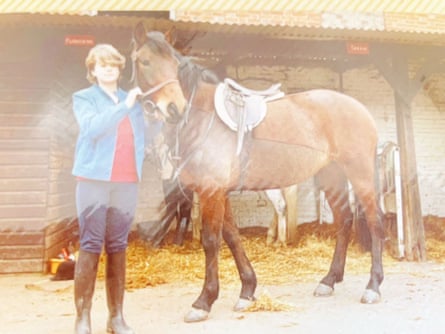
Helen is not the first woman to report Berry-Dee to the police for child sexual abuse. In 1983, Tracy Hurdle, his stepdaughter from his first marriage, went to the police, alleging Berry-Dee raped her when she was 12. In 1984, Berry-Dee was arrested and charged with having unlawful sexual intercourse with a girl under 13, but the case was dropped when the prosecution offered no evidence. Berry-Dee says Hurdle had in fact been raped by somebody else, but declined to say who.
Hurdle was a popular girl who loved horse riding. In photos from the time, she peeks out from behind a sweeping blond fringe, her smile revealing her dimples. She died in a car crash at the age of 16. A family member who was at her funeral remembers, "The whole of her school year went. It was absolutely packed with young people in dark clothing, sobbing." Also in attendance, they recall, was Berry-Dee.
It was reading an article about Berry-Dee appearing in court over Hurdle's allegations that made Helen realise she wasn't alone and finally, on 11 September 2006, prompted her to go to the police. On 26 September, she was interviewed by Hampshire officers. As well as her diaries, which documented the alleged abuse in real time, she brought them the physical evidence she had: a tissue that she spat Berry-Dee's semen into, and a sanitary towel stained with his semen and her blood.
Berry-Dee was arrested in January 2007 and denied having had a sexual relationship with her. In June 2007, an officer called Helen with bad news. According to the law at the time, Section 6 of the Sexual Offences Act 1956, allegations of unlawful sex involving children aged 13 to 16 had to be reported within a year. "Spoke to [Helen] and updated her that [Berry-Dee] would NOT be charged as there are no offences," reads a police report from 6 June 2007. "She was crying."
Helen's parents hired a lawyer to write to the Crown Prosecution Service (CPS) and ask them to reconsider their decision, including whether they could pursue alternative charges, such as rape, that are not time-barred. Helen had extensive contemporaneous evidence, in the form of diaries and the people she told about the abuse soon afterwards, in addition to the forensic material. But in an October 2008 letter, the CPS said there was still "insufficient evidence to have a realistic prospect of conviction".
Since 2007, Helen has tried to get Hampshire police to reopen the case, give her a copy of the forensic report and return her potential evidence, to no avail. When Helen asked one detective whether she could have her forensic evidence back, she says she was told, "What do you want with that? It's a dirty old piece of tissue."
Although she did not get to see Berry-Dee appear in court, in 2009 the CICA found that, on the balance of probabilities, she was a victim of violent crime, awarding Helen £18,480.
When contacted for comment, Berry-Dee did not admit to a sexual relationship with Helen and denied taking inspiration for his conduct from the serial killers he interviewed: "Quite how and why Helen has transposed this on to me regarding her is total fiction … Indeed I was arrested and questioned, and the matter was apparently dropped," he says. He claims to have met Helen several times since, even bumping into her in a supermarket where they "chatted amicably", a claim Helen vehemently denies.
Over the last 20 years, Helen has tried to move on from Berry-Dee's crimes, but she cannot escape the nightmares about those months in the art school. "I'm in a strange, dilapidated version of the Venture Tower," Helen says, "and he's in there somewhere, trying to get me, and I'm trying to get out, and can't."
'As my loyal readers will know," Berry-Dee wrote in 2023, "I always treat the relatives, close friends and work colleagues of the deceased … with the deepest respect, for they are victims too." But throughout his career, Berry-Dee has been repeatedly accused of mistreating the families of the victims of crimes.
In November 1995, Diana Lamplugh, mother of the missing estate agent Suzy Lamplugh, told the Guardian she was appalled to see her daughter's photo on the cover of Berry-Dee's book Unmasking Mr Kipper: Who Really Killed Suzy Lamplugh, without her permission. "I looked at it and said, 'How could this be allowed?' But you have no rights when someone goes missing. Your daughter doesn't belong to you."
Berry-Dee's entanglement with the families of the Babes in the Wood murder victims led to a two-decade feud that ended up in court. The family of Nicola Fellows, one of the nine-year-old girls killed, agreed to provide Berry-Dee with police files and crime scene photographs for a book. But Berry-Dee did not try to help bring Russell Bishop, the prime suspect who was eventually convicted of the murders, to justice. Instead, he enthusiastically championed Bishop's innocence. And Berry-Dee had his own theory about who might have murdered the schoolgirls: Nicola's father, Barrie Fellows.
In 2007, Ian Heffron, Barrie's brother and Nicola's uncle (who changed his surname from Fellows at 18), sued Berry-Dee for libel, after complaining that the author, writing on his blog, had accused Nicola's family of being involved in a cover-up in relation to the then still unsolved murders. "He said," Heffron says, "that he will expose and name the killers of the girls, and said it was a close family member." Two years later Heffron recovered his legal costs from Berry-Dee's book royalties, directly through his publisher, John Blake, through a third-party debt order.
However, John Blake, founder of the eponymous publishing house, said he had no recollection of Berry-Dee being required to pay court-ordered damages out of his royalties. He stated he "looked into it and I was satisfied obviously with the explanations [from Berry-Dee]." Before ringing off, Blake added, "Don't be too hard on him; he's not a bad man."
In 2019, Heffron was interviewed by the former Evening Standard courts correspondent Paul Cheston for his book on the Babes in the Wood murders. It was to be published by John Blake, by then an imprint of the larger Bonnier Books. Heffron told Cheston about Berry-Dee's mistreatment of Nicola's family, and Cheston included these allegations in a draft of his book, though they were later cut. The Bonnier editor explained why in an email to Cheston, sent on 3 April 2019: "As for the Chris Berry-Dee stuff – that may have to come out even if the claims can be substantiated, purely due to the obvious conflict of interest. He is our author and, as dreadful an author as he is, we can't really be seen to be dragging him through the mud, even in this case." (A spokesperson for Bonnier said the firm was not currently working with Berry-Dee and that "publishing decisions made at the time were based on legal advice".)
Berry-Dee has a further curious tie to the Babes in the Wood case. In 1991, the BBC journalist Martin Bashir obtained the clothes that Karen Hadaway was wearing when she was murdered, only for the clothes to subsequently go missing. Prior to Bashir, however, at least one other person seems to have had the clothes: Berry-Dee, who wrote in one of his books about the Hadaways giving him the clothes "with tears in their eyes", apparently for the purposes of securing DNA testing. The clothes seem to have been returned shortly before Bashir began investigating.
More strangely, however, four sources recall Berry-Dee boasting about having the clothes, or saw what they believed were the clothes, after Bashir and the BBC had apparently misplaced them. His daughter Zoe even believes they were the bloodied clothes she discovered and put on as a child. Her mother agrees, recalling Zoe wearing them when she was four or five. Berry-Dee says it is "100% correct" that he obtained the clothes, but denied Zoe ever wore them. He declined to elaborate on whether, or how, he had obtained them a second time. He claims to have since burned them.
Besides Helen and Hurdle, at least one other woman is known to have reported Berry-Dee to Hampshire police for child sexual abuse: his own daughter, Sasha. Sasha says she has memories of her father touching her inappropriately in the shower when she was three or four years old. These recollections resurfaced in 2024, prompting a mental health crisis. She confided in her mother and sister at the time, and went to the police the following year.
Whether children so young can recall traumatic events is highly controversial. Two academics who specialise in childhood memory formation, consulted for this piece, said that Sasha not having received therapy makes her a more credible source, as therapists have been known to implant false memories. But they also said children seldom recall incidents in as much detail as Sasha, and her awareness of the sexual abuse allegations involving Hurdle could have influenced her memories. Berry-Dee denounced the suggestion that he molested Sasha as "unfounded" and a "very spiteful allegation, probably engineered by her mother".
With no corroborating evidence, only a police investigation could assess the credibility of Sasha's allegations. But almost a year after contacting the police, Sasha was still having to chase them even to take her statement. The case by then had been referred to Devon & Cornwall Police (DC), so Sasha could be interviewed closer to where she lives, but it did not progress further for months, with interviews cancelled at short notice due to paperwork issues.
"DC are still claiming they haven't received the information for the interview?" Sasha texted her police contact on 12 January 2026, nearly nine months after she first contacted them. On 29 January, she followed up: "Still nothing?" On 10 February: "Is this happening?"
In February 2026, Devon & Cornwall police attempted to arrange a video-recorded interview, but Sasha says she was told she would not be allowed to speak with a therapist for support as she prepared, because it could undermine her credibility. "I could not sit in that room for three and a half hours with cameras on me without having any sort of coping mechanism," she says. Disheartened, Sasha requested to pause her interview.
In 2024, Bonnier rebranded Berry-Dee for a younger, TikToking and true crime podcast-loving audience. His books are reviewed often on BookTok, TikTok's literary subcommunity. But not all his reviews are positive. He "berate[s] female victims for not taking his advice, implying their stupidity was to blame for their murders", writes one Goodreads reviewer. A second points to the way he describes "the rape of young girls as 'sex' or 'three-ways'".
Even when not lascivious, Berry-Dee's prose can be mercilessly cruel. One murder victim is described as a "nagging bag of wind" whose "good looks and figure had long abandoned her". The convicted US murderer Carol Bundy is "a common slut" who "would have cheap sex with any man who looked just the once at her". An 11-year-old rape victim is a "sexually advanced youngster"; another 11-year-old sexual abuse victim is "physically well-developed". The mentally ill are residents of the "nuthouse"; women are "into lesbianism"; and a gay murder victim is a "deviant".
But Berry-Dee's books remain most shocking for their orgiastic depiction of violence. In 2011's Talking With Serial Killers: Dead Men Talking, Berry-Dee writes, "I started to play a little death game with her, use her like a toy, an amusement," quoting the serial killer Keith Hunter Jesperson. "I choked her, let her wake up, choked her again, let her wake up again ... finally she caught on and just accepted the game." In 2019's Talking With Psychopaths and Savages: Beyond Evil, he directs readers "with more than a particular fascination for the macabre" to online photos of a 20-year-old murder victim's decapitated head, which Berry-Dee jocularly describes as resembling "an ugly Barbie doll".
"What are people getting out of reading this voyeuristic, sensationalist stuff?" Helen asks. "Who is it helping? For sure, not the victims, nor the victim's families. I can only think that it feeds some people's basest desires."