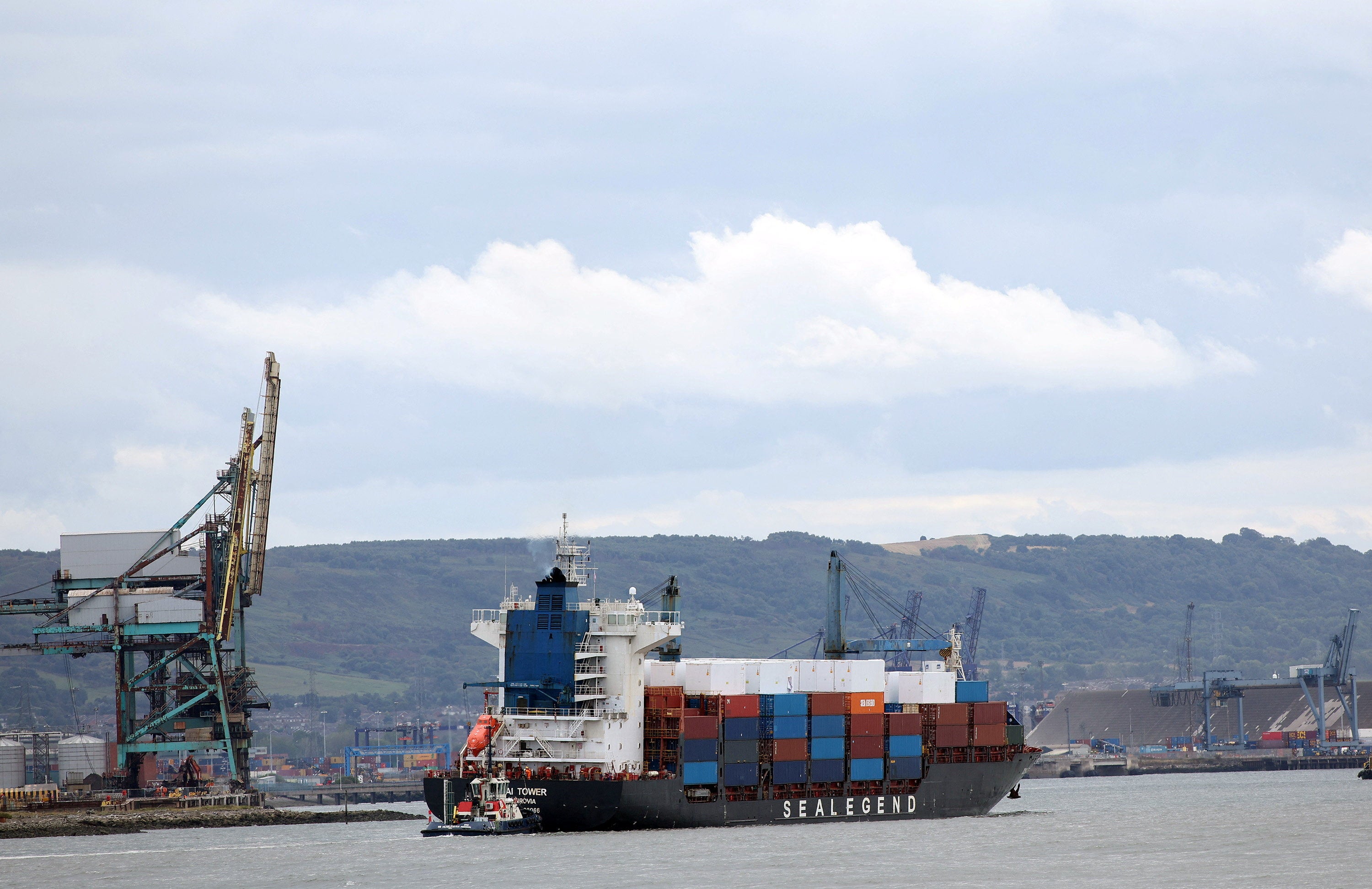
A container ship has arrived in Britain following a landmark voyage from China via the Arctic, as part of plans for more vessels to use the route as a shorter and potentially safer alternative to the Suez Canal.
The Dubai Tower arrived at Teesport off England's northeast coast on Wednesday after leaving Ningbo Zhoushan Port in eastern China on August 15.
The Arctic voyage, which is significantly quicker than going through the Suez Canal or around the Cape of Good Hope, is intended to kick off a regular container service to Europe via the so-called North Sea Route.
A South Korean container ship is also currently making a similar voyage, joining China and Russia in having shipping firms test cargo services along the route, which is more feasible due to faster melting of Arctic sea ice.
On August 22, the PanStar Acro set sail for Europe in the nation's first commercial voyage via the Northern Sea Route to test its viability, with the hope of turning the southeastern port of Busan into a global maritime hub.
The PanStar Acro sailed north, hugging eastern Russia's Kamchatka peninsula, crossing the Bering Sea, and taking the Northern Sea Route, stopping in Felixstowe in Britain, Rotterdam in the Netherlands and Poland's Gdansk before returning on a journey expected to take 40 to 45 days.
President Lee Jae Myung has made Arctic shipping a priority for South Korea.
Last year, 88 vessels made 103 transits through the route, up from 97 in 2024 and 43 in 2022, chiefly from nations such as Russia and China, according to Norway's Centre for High North Logistics.
Chinese battery manufacturer EVE Energy, which had cargo aboard the MV Dubai Tower, said the Arctic Express service shortened its maritime transit time to Hamburg by nearly half and cut carbon emissions per shipment by around 50 per cent.
After arriving in Hamburg, the battery cargo will be distributed to major European markets, including Germany and Hungary.