
A North Sea offshore worker who later died from Covid had to be evacuated ashore by rescue helicopter as his condition deteriorated, an inquiry has heard.
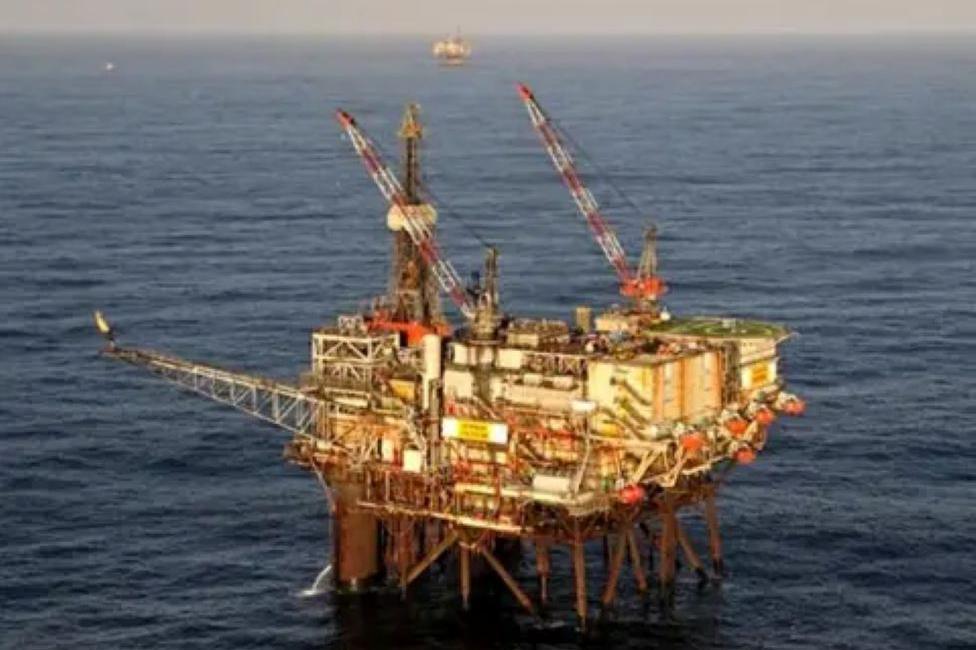
Donald Singer, 66, from Aberdeen, was a crane operator working on the Ninian Southern platform off Shetland.
He was airlifted by helicopter on 3 April 2020, and died a month later on 4 May at Aberdeen Royal Infirmary.
Witness Adam Whittaker told the first day of a fatal accident inquiry (FAI) that his colleague had been in insolation on the platform as a precaution with some, but not all, of the symptoms of Covid.
The first Covid lockdown in the UK was announced on 23 March 2020, which was after Singer had flown offshore.
The Ninian Southern installation is 75 miles (120km) east of Shetland.
The FAI heard Singer went into an isolation cabin in a special corridor on the platform as a precaution for about a week with a raised temperature.
He was due to be flown home on a crew-change flight when his temperature dropped, but the flight was cancelled due to bad weather.
Offshore electrician Whittaker told Catriona Dow, for the Crown, that Singer later became more ill.
A Coastguard search and rescue helicopter was summoned for an evacuation, and Whittaker helped Singer on board via a stretcher chair.
Whittaker said there was "still the assumption" that Singer did not have Covid. However, they later heard he tested positive for the virus.
He added concerns were then raised about what if other workers started presenting symptoms and potentially took Covid back home to families.
Whittaker said they were told they could stay offshore for longer than normal to see if they developed any symptoms.
Crane mechanic Andrew Henderson, who was also in isolation, described a "slow and steady decline" in Singer.
Henderson said he himself was "disappointed" with the lack of support he got when back onshore, after flying back wearing a mask and gloves.
He found himself a holiday let for three weeks to try to recover.
A Covid test he took showed previous evidence of infection.
Colleague Mark Connor, a team leader, told the inquiry that at the time he did not think they "realised what Covid actually was" as it was in the early days of the pandemic.
'Took a bad turn'
Michael Feathersone, who is now retired, was a deck foreman and said he had a good friendship with Singer.
He said Singer had "taken a bad turn" and was in an oxygen mask before being flown ashore.
He said he kept in touch by phone, but later learned Singer had been placed on a ventilator, and then died.
It is the first discretionary inquiry into a Covid death, over and above mandatory ones.
A discretionary FAI is ordered when the lord advocate - Scotland's senior law officer - concludes that a death raises "serious public concern" and that an inquiry is in the public interest.
The inquiry, before Sheriff Christine McCrossan, continues.