Few things conjure a sense of achievement quite like a clearout or bringing order to that cupboard of doom you've been ignoring for months. But how best to tackle this beast of a job?
To help you make a start, we asked professional organisers and declutterers for their tips and tricks, as well as the products they recommend to help streamline the areas everyone struggles with. From never buying round storage containers to getting the kids to help tidy up, these are the solutions they swear by.
How to keep your home tidy
Have a simple system to organise toys
I have a one-year-old, and a lack of toy storage meant our living room was becoming increasingly chaotic. I finally got some fabric baskets from Amazon that fit perfectly in our built-in cupboards – they've been a revelation. Each one is loosely categorised into things such as blocks and cuddly toys, which makes tidying up super easy. My daughter often plays in our kitchen while we prepare food, so I also got a seagrass basket from Dunelm for that space – every night, I swoop everything up and chuck it in.
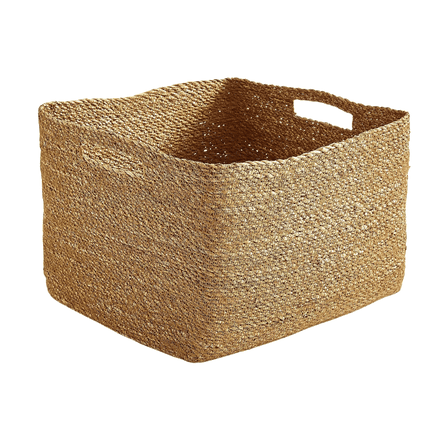
Seagrass storage basket
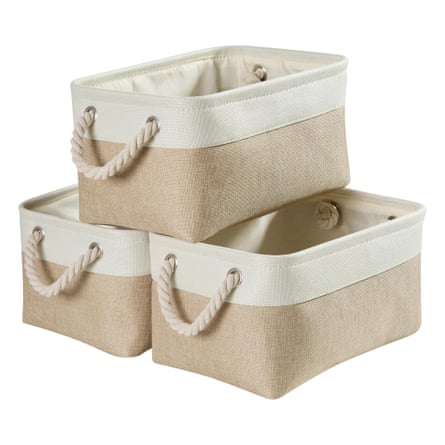
Mangata large storage box, set of
Create a donation station
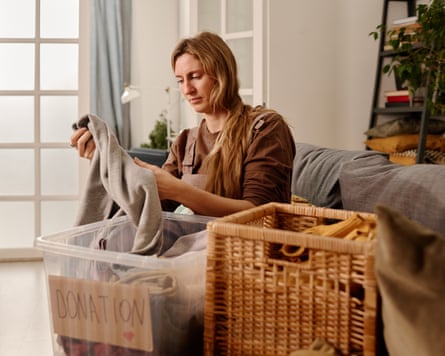
Donating things you no longer need is a great way to declutter sustainably, but you need a system so that you don't end up with random charity shop piles around your home. "If you've got a designated space where you can gather things until you've got enough to go to the charity shop, that's super helpful," says Lesley Spellman, who, with Ingrid Jansen, is co-founder of the Declutter Hub, host of the Declutter Hub podcast and co-author of Reset Your Home. "Have a donation station – a box or basket somewhere easily accessible where you can put things."
Stack your Tupperware
If you've got a food storage container drawer or cupboard that's in a constant state of disarray, you're not alone. "The worst thing in the kitchen is Tupperware," says Simon Wigzell, founder of Let's Get It Sorted. "I put the lids on everything and stack them. It's not the best use of space, but you can see exactly what you need and get it out easily."
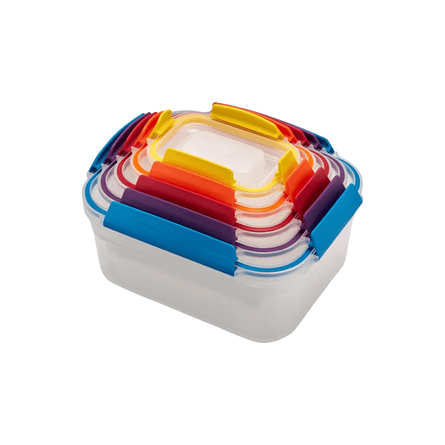
Vicky Silverthorn, founder of You Need A Vicky, also stores her food storage containers with the lids on. If that's not for you, she recommends Joseph Joseph's nesting system, which neatly stacks together.
Make tidying toys into a game
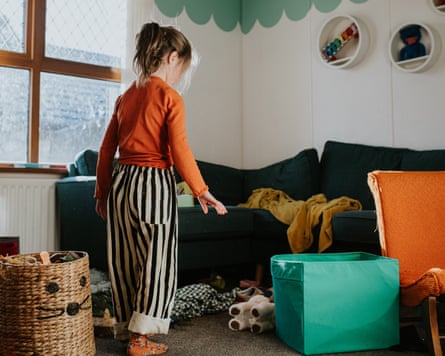
If your children are old enough to help, get them involved in the tidying too, says Wigzell, who has a four- and six-year-old: "Before bed, we put on a song and make it so it's fun to put everything away."
Lucy Mansey, founder of Organised by Lucy, makes decluttering toys into a game, too. "I encourage my kids to think about 10 things they're currently playing with, 10 things they haven't thought about in a while and 10 things they're happy to let go of." She'll then work out what to take to a charity shop or pass on to friends and family.
Decant your most used ingredients into containers
Don't get sucked in by picture-perfect pantries on Instagram, says Silverthorn. "Everyone gets carried away with storage containers and buys 100 of them for every bit of dried food they've got. My tip would be to use them only for products you use frequently. Never buy round ones. It's all about square edges that slot together. The Organizing Warehouse has a range called Fitt – they're really good quality. I don't put labels on mine – they're clear, so you don't need to." If you have containers of easily confused items – such as plain and self-raising flour – just label those, says Silverthorn.
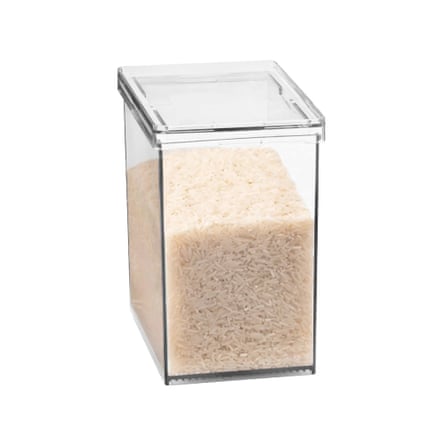
Fitt airtight food storage canister, medium
Upgrade your wardrobe hangers
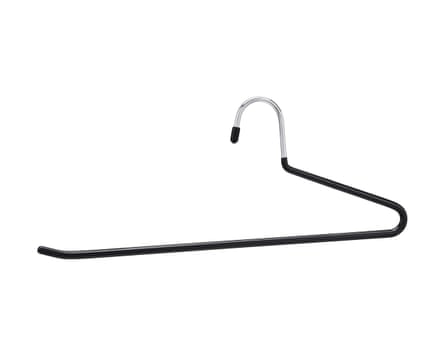
To maximise space in your wardrobe, Silverthorn recommends slimline, non-slip rubberised hangers. "[You can get them] for knitwear, which is a hanger with a curved shape that protects the shape of the garment. Traditional hangers are typically made for a broader shoulder, which can stretch the fabric of smaller sizes. You can use nonslip hangers for everything in your wardrobe, including items such as silk camisoles, which would slide off a normal hanger on to the floor. The other brilliant ones are trouser hangers with an open side – they lift everything higher than your normal triangular hanger, because the hanger itself is shorter, giving you more space underneath. And because they've got one side missing, you don't have to thread your trousers through," she says.
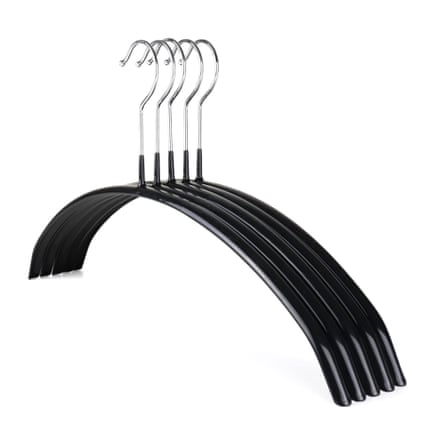
The Hanger Store non
Streamline your shoes in the hallway (and put them away)
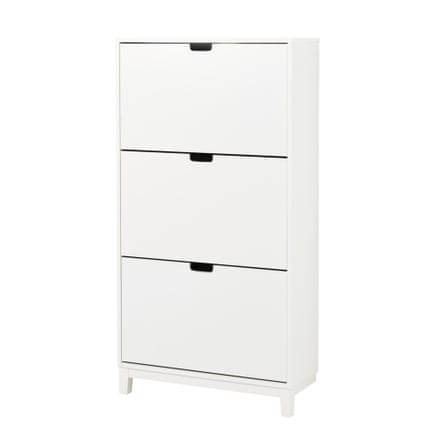
"Have a minimal amount of shoes in your hall – only what you're wearing day-to-day needs to live downstairs," says Mansey. All other shoes should be stored elsewhere (under the bed is a good spot). When it comes to hallway storage, Wigzell recommends a slimline shoe cabinet. "A lot of people think they can't fit furniture in, but you can get slimline shoe racks where you open the front drawers and your shoes slot in. You can probably get about 12 to 15 pairs in a standard one. Ikea has one that's reasonably priced."
Bring some order to your wires
Got a box of miscellaneous wires? First, sort through them and work out which ones you need and recycle the rest. "They shouldn't go in the bin – you can recycle any wires, not just electrical goods. There's a website called Recycle Your Electricals which is great," says Silverthorn. Wigzell suggests organising the remaining ones with Velcro cable tidies to keep them in place so they don't unravel. If you want to be super organised, you can get specific cable labels, too. For cables and extension leads that are being used every day, try organisers that cover up the plugs and separate wires to stop them from becoming a tangled mess.
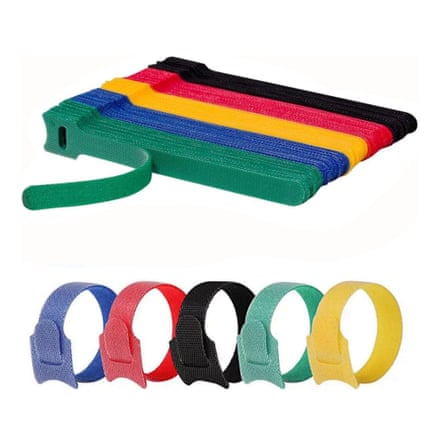
Reusable cable ties, 50 pack
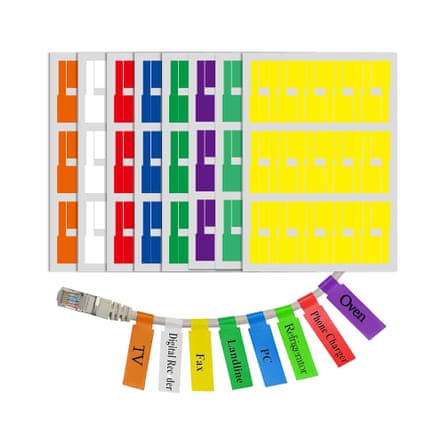
Cable labels, 240 pack
Make your spices accessible
"If space allows, the best way to store spice jars is in a drawer, by using an organiser – this one is brilliant. Or you could put a large turntable in a cupboard, so you can see them all and you're not having to reach into the back," says Mansey. Another option Wigzell recommends is a spice rack with different levels. "You can get spice steps where they're elevated on each level so you can see what you've got," he says.
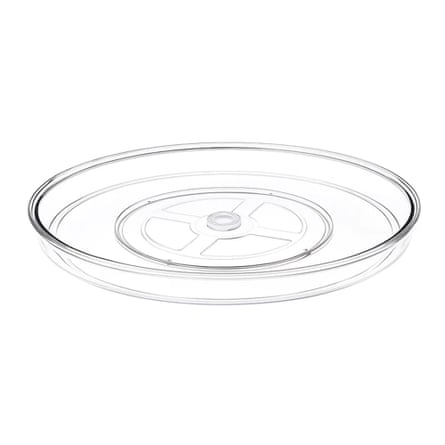
, 28.5cm
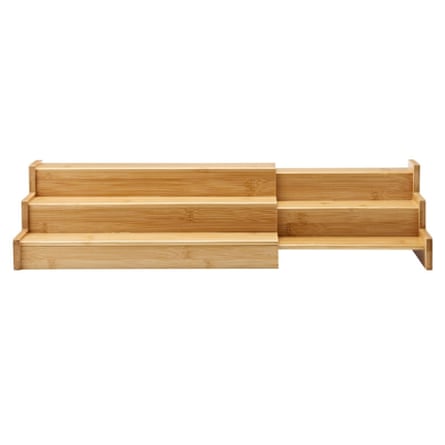
Extendable bamboo shelf organiser
Find a home for your water bottles
Reusable water bottles tend to hang around on your kitchen worktops or in random spots about your house. The key is to have a place for them, says Spellman. "Typically, people have multiple bottles, and if you try to stack them all upright in a cupboard, they can fall over. Instead, keep water bottle lids separate from the bottles themselves, ideally in their own box or tub," she says. "Lids left screwed on can trap moisture and lead to mould, and it's much easier to rummage through a separate box to find the right match."
For more, read our guide to the best water bottles for leaks, looks and sustainability
Rethink how you store pots and pans
"Don't keep pots and pans with the lids on; store the lids separately," says Mansey. "Joseph Joseph does great lid organisers that stick on the inside of your drawer or cupboard, so you're not using up any space." Another option is a drawer divider with plastic spikes that you can position to create designated places for pots and prop up pan lids on their sides. Do an audit, too. "Do you really need six frying pans?" says Wigzell.
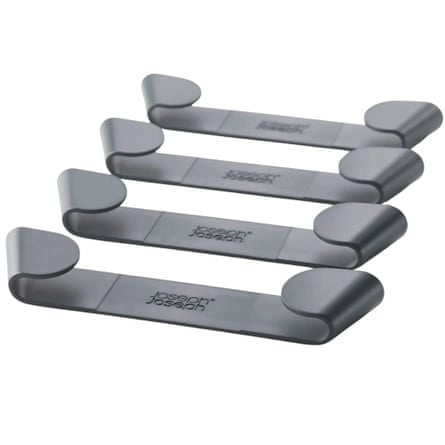
grey pan lid holders, set of 4
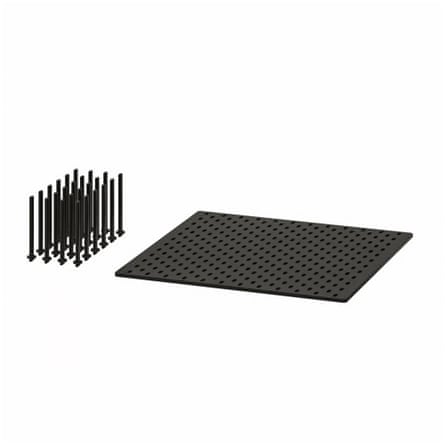
Uppdatera pegboard drawer organiser
Use the dead space in your kitchen cupboards
When cupboards get crammed with tins and packets, it can be easy to lose track of what's in there. Wigzell recommends Ikea's metal shelving inserts. "If you've got deep enough shelving, you can put in an additional layer, which means you can see exactly what you've got. It does clip-on metal baskets too," he says. "Joseph Joseph also does something that hooks underneath a shelf, and you put your clingfilm and tinfoil on that."
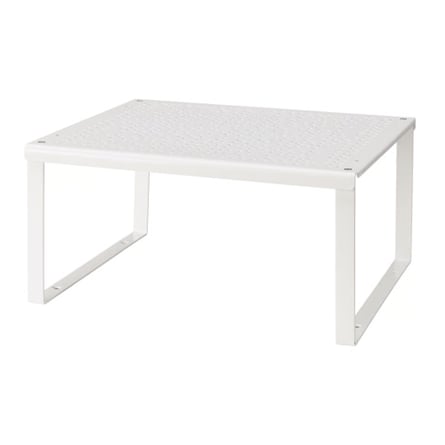
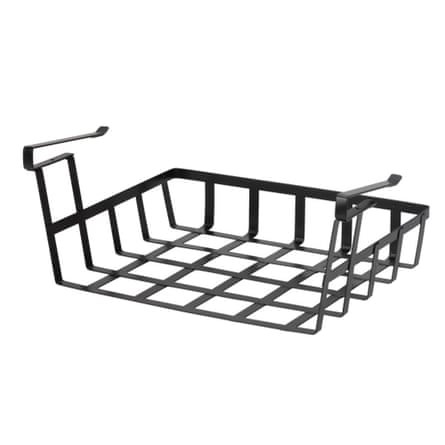
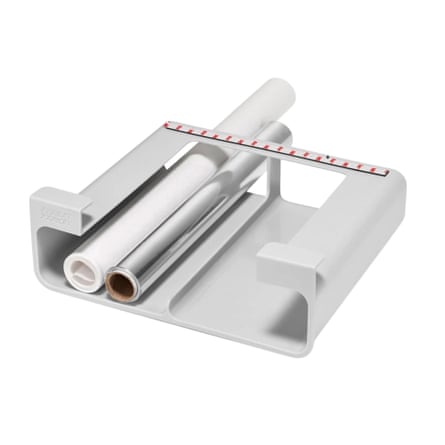
CupboardStore film, foil
Get creative with home office storage
Many of us now work from home in communal living spaces, but no one wants to look at their work stuff when they're not on the clock. "Stackers has a product called Office in a Box – you have it on your desk or table, and you open it up, and it has your laptop, notepad and other things in there. Then at the end of the day, you just close it all back up," says Mansey.
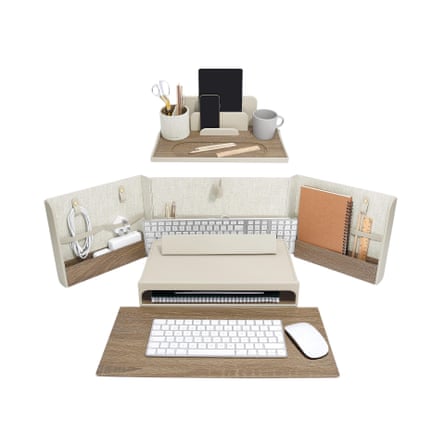
Office in a
Swap vacuum bags for fabric boxes
People often swap out their clothes seasonally and store the excess on the top shelves of their wardrobes. While vacuum bags might seem like the obvious solution, they can end up being an awkward shape and a bit of an eyesore. "I don't love a vacuum bag in plain sight, or even in a wardrobe. I think they should be for giant coats and ski-wear only," says Silverthorn. Instead, she recommends Muji's fabric storage boxes. "They're a plain beige colour, and they come in different sizes. They're good-quality and sturdy. And they look so much nicer. Total Wardrobe Care has some fantastic mothproof options, too."
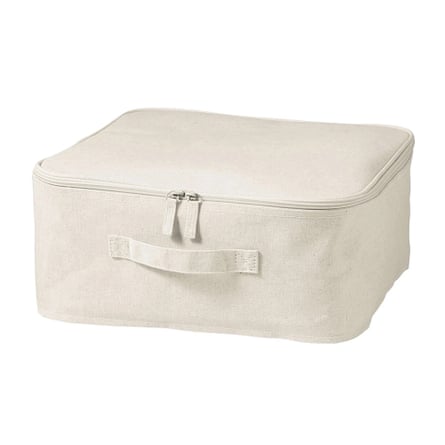
Muji fabric storage box with lid
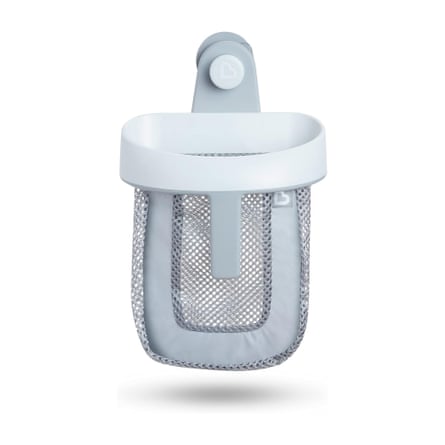
Keep bath toys contained
Kids love bath toys, but parents often struggle to keep them dry and mould-free, and with where to put them. This basket from Munchkin can help with that. "It's a toy basket that sticks on the inside of the bath, so the toys can drip dry into the bath after use and not end up on the side in a bucket of mouldy, gross water," says Mansey.
Don't overbuy toiletries
"If you've got three drawers full of spare toiletries, you need to have a word with yourself," says Silverthorn. It's OK to have some spares, but keep them somewhere that isn't a prime space for everyday products, perhaps in a bottom drawer in the bathroom, or a cupboard that's somewhere else in your home. Depending on what built-in storage you have, a caddy can also be useful for everyday items to free up cluttered sink space. Dunelm makes a great slimline rattan caddy.
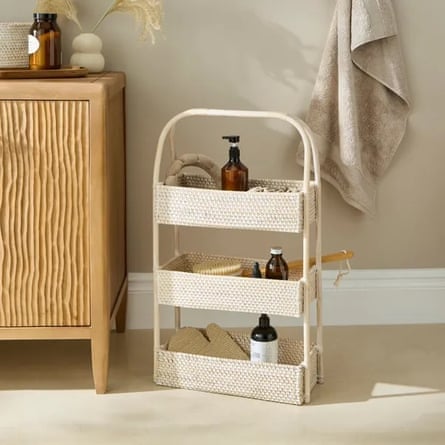
The Edited Life Rattan caddy
Be ruthless with paperwork

"A lot of people don't need all their paperwork," says Wigzell. "You can scan it and save it in the cloud or on a hard drive. With bank statements, I always say: keep two years' worth. Go through your household manuals – you'll find you don't have that lawnmower any more, or do you really need a manual for a toaster or kettle?" If you want to keep physical copies, he suggests using box or lever-arch files, and labelling them to keep things organised.
"Have a place to put your post when it comes in. This could be an open in-tray by the front door, on your desk in the study, or next to the fruit bowl in the kitchen," says Wigzell. "Then, spend half an hour once a week processing the paperwork, getting it into a filing cabinet or expandable folder. Once you get into that routine, paperwork becomes easy."
Store your baking trays vertically
"One of the things I always recommend to clients is an upright baking tray holder. If your trays are stacked vertically, not horizontally, you can get them out much more easily. You can put other things in them like cake tins, too," says Spellman.
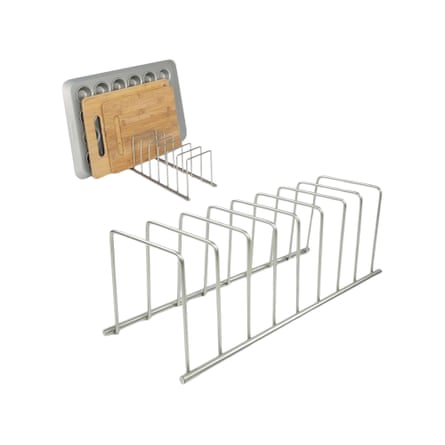
Spectrum kitchen organi
Create a makeshift gallery for your children's artwork
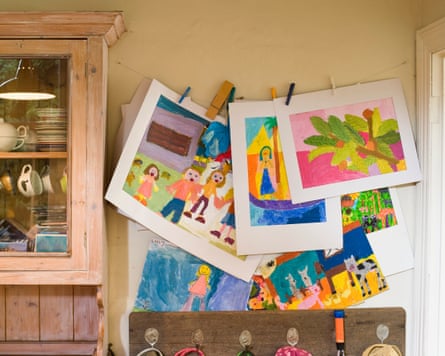
"If a child's created a piece of artwork and it's sitting on the side for weeks, that can be disheartening for them," says Mansey. "Get a pegboard or pinboard and put it up. I've used a shower curtain wire that went across the length of the wall, and wooden pegs – it became a gallery of what they had created. Even if it changes week on week, at least they're seeing the fruits of their labour being celebrated." They're also useful for hanging up your children's creations while they dry.
For more, read the best home storage hacks and how to get rid of household clutter – without sending it to landfill
Do you have any ingenious ways to keep your home tidy, stay on top of cluttered drawers, or organise your cupboards? Let us know by writing to thefilter@theguardian.com