t last Tuesday's all-staff meeting for Women's Aid there was an unfamiliar undercurrent of optimism. It is a feeling that is very unusual when you have about 85 people working in the domestic violence sector gathered in one room.
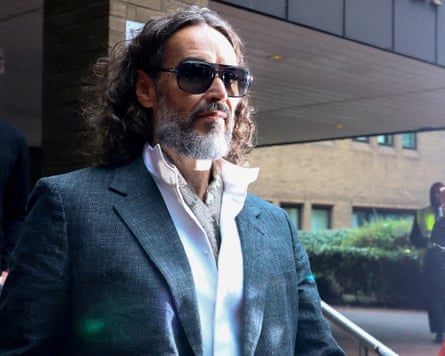
Staff were feeling encouraged by the sentencing of Russell Brand a day earlier, and also cheered by Channel 4's announcement at the start of the month that it would stop making Married at First Sight, a programme the charity had campaigned against, calling out "multiple incidents where women have [been] subjected to abuse and manipulation" on these kinds of reality dating shows. In the breaks between meetings, employees were following the breaking news about sexual misconduct allegations against David Walliams.
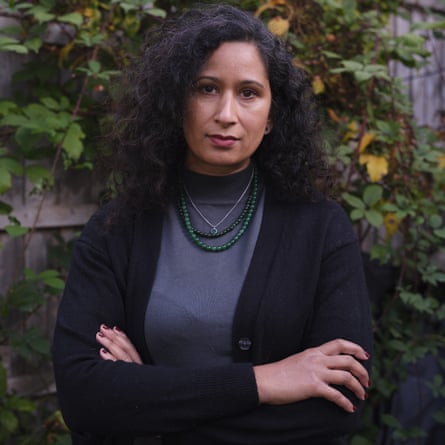
"It has been very reassuring," Farah Nazeer, CEO of Women's Aid, says cautiously over the phone. "What this tells us is that the entertainment industry is beginning to pay heed, and that famous perpetrators are beginning to be brought to justice. These are no doubt small steps, but they're steps in the right direction."
But Nazeer is already worrying about what form the next wave of threats to women will take. "Powerful men – we're beginning to be more on to them now," she says. "It's the online space and the misogynistic content that it contains that we now need to be very vigilant to. It's developing so fast, and no one is responding quickly enough to address the consequences it will cause down the line."
Her provisional list comprises the uncontrolled rise of explicit deepfake imagery, the way GPS tracking devices and smart devices in the home (smart locks, smart doorbells) are facilitating coercive controlling behaviours; smart glasses, and the growing use of chemical coercion – when women are drugged and raped, and the footage is shared and sometimes sold by the abuser online. "This stuff is coming at a rate of knots. Technology is creating a whole new world, partly offering enablement and empowerment, but also providing new mechanisms of abuse," she says. "Part of the challenge is that there are so many different issues, so many different fronts."
In any case, the charity's employees have no time for relief at the belated but high-profile conviction of a rapist in the entertainment industry, because the wider picture remains so concerning. Women's Aid, which is a federation of about 170 domestic abuse service providers in England is at the frontline of the crisis facing the sector, where funding cuts have made essential support impossible. "We're seeing services that are having to turn away 50% of the women and children that come to them," Nazeer says. Referring to Labour's manifesto commitment to halve violence against women and girls by 2034, she says this goal is a fantasy unless the government starts funding these services properly.
hen I first interview Nazeer, it is in person, towards the end of October. She is stuck on a call as I arrive at her home in London; she has texted to ask me to wait, so I sit on a bench outside her front door, admiring the autumn roses in a neighbouring garden.
When she comes out to find me 10 minutes later, she is apologetic, but explains that she has been on a call with colleagues, finalising plans to help domestic abuse survivors whose former partners are about to be released from prison under the government's much-criticised early release scheme – aimed at resolving the overcrowding crisis that is about to bring the criminal justice system to a halt. Hour by hour in her role, the stakes feel far higher than in most people's jobs. As we sit at her kitchen table, she says: "We're trying to work through how we ensure that survivors have the support that they need and are able to keep themselves safe."
Nazeer is furious that women are being exposed to danger – especially as she says domestic abusers are understood to make up one of the largest groups of prisoners who will now be serving curtailed sentences. The charity believes that as many as 5,000 women could be affected by the early release of abusive partners. "A lot of the perpetrators being released have sentences that are shorter and a lot of domestic abuse crimes carry shorter sentences, sadly," Nazeer says. "Those perpetrators often have several victims, not all of whom will necessarily be informed about the early release." Women's Aid is working with Victim Support and Rape Crisis England & Wales to help women handle the potential premature reappearance in their lives of an abuser they helped to convict in the first place – often at great personal cost. "Offenders of violence against women and girls often aren't convicted. A survivor has gone through a lot to ensure that a conviction happens, so this decision does feel very difficult. These women feel let down by the system."
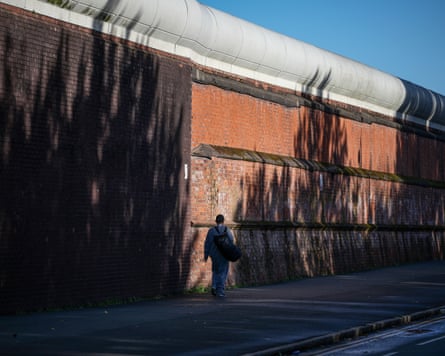
The early-release scheme, which began in October, will see prisoners released in 10 phased groups until June 2027, by which time an estimated 4,500 prisoners will have been let out before they were due to be. While it is not clear what proportion of those released will have convictions for domestic violence, the fact that between 30% and 40% of the probation service's caseload concerns domestic abuse provides an indication.
Nazeer believes that the sentencing of Brand has sent a strong message to men in positions of power, namely: "Don't assume you can get away with it". She also hopes his conviction shows "that women will be met with belief when they come forward", and that it will "provide courage to survivors who are considering what to do". However, she points to the contradictory message that is simultaneously being sent by the early release of domestic abusers.
Although rapists were belatedly excluded from the scheme, after widespread outrage, "The message is essentially: 'You can commit these crimes, but you won't serve a full sentence.' It suggests these offences still aren't taken as seriously as they need to be," she says. "Survivors may choose not to pursue criminal justice outcomes when they see that perpetrators won't serve the minimum expected term. No criminal justice process is easy, but when it comes to domestic abuse, you're talking about your whole family, your whole life, your children, often your children's parent. So it's very, very difficult, it's very messy, it's very personal."
Nazeer is also puzzled by how the government's commitment to halving violence against women and girls coexists with the decision to release these offenders. "What we're seeing is the passing on of the disorder and overcrowding of violent men in prisons on to the community, and particularly on to women and children – and that feels misogynistic," she says. "The system is misogynistic. The fact that women's sector services – the services that ministers are now relying on to handle the consequences of early release – are so underfunded, that's a political choice," she says.
"I don't want to cast aspersions on individual intentions at all, because I know there are a lot of people in government and a lot of ministers that really care about this issue, but if you step back and look at the decisions that the government makes, the amount that it puts into refuge provision and community services for women and children experiencing these crimes is minuscule in comparison with other parts of public spending," she says. "If this is truly a priority, then it needs to be prioritised in a meaningful sense."
She is frustrated, too, that discussions about violence against women and girls continue to be dominated by women (although she concedes that at a recent relaunch of Enough, a government drive to improve public awareness of abuse, there were a few more men than usual). "There are still huge numbers of decision-makers who just don't think it's their problem. They don't really understand what all the fuss is about, they turn a blind eye to it, and yet this is primarily an issue of men – male violence against women and girls."
When she started her job in 2021 (having held roles at ActionAid UK, the Women's Institute and the Motor Neurone Disease Association), she noticed that some male acquaintances were less inclined to talk to her about her work. "I'm not blind to the fact that some men actively avoid me," she says, with a wry laugh. "There is a discomfort when I'm talking about male violence, how it has been perpetrated, tolerated, not been called out as much as it should have been."
She wants to be optimistic that things are improving, but is confused by the disconnect between what she sees as a greater awareness of some of the key issues that impact violence against women, while at the same time the statistics on the frequency of the most serious crimes remain worryingly static.
"We're in a really strange time because we all talk about misogyny a lot more, we talk about violence against women and girls a lot more. We also talk about things such as consent a lot more, about coercive control, about healthy relationships – so that's all great. But equally, if you look at the number of women being murdered in the UK by a current or former partner every year – a really important indicator – it is still approximately one a week; that number has not really changed for the past 15 years," she says.
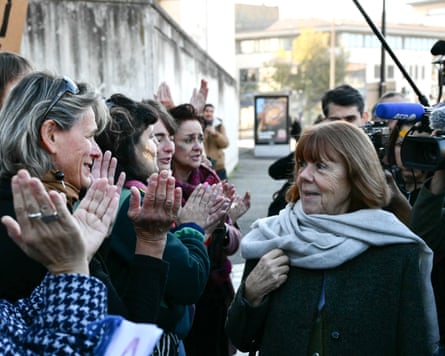
How does she explain this? "On the one hand the awareness is becoming greater and our responses are becoming more powerful, but the harms are becoming more extreme, the pornography is becoming darker, and online spaces give perpetrators the ability to come together in a way that they haven't had before." Gisèle Pelicot's husband found men online to rape his wife; in other cases where men have drugged their partner and invited other men to assault them, the crimes have also been "profit driven", Nazeer notes, with perpetrators selling recordings of the abuse on the internet. "It's deeply worrying; it's so dark."
She also worries about research that suggests that the fastest growing cohort of perpetrators of domestic abuse are younger men. "We're still trying to understand why it's happening, but it's not rocket science: there seems to be a direct correlation between what children are viewing online and their understanding of healthy relationships. So a child that has been exposed to misogynistic content online is more likely to think that it's OK to hit your partner if you say sorry afterwards." She wonders if schools, parents and society in general could do more to make sure that girls, as well as boys, develop a clear sense of what consent means. "There's a huge amount of misogyny that women can internalise, so there's a need to support them to be clear about what they think is right for themselves."
These are tough topics for Nazeer to grapple with daily and themes that seep into her every day life – the television she watches, the way she listens to music with her teenage daughter. "So many of the songs we all listen to feature some form of harm or violence towards women, or women who've experienced that," she says. If she can, she avoids watching television dramas where the plot involves women being killed. "Otherwise I'll immediately be thinking: 'What can we do about this? How should we respond?', but the reality is, it's there in so much of what we watch, in some form – as banter, or as a throwaway comment about how women should behave."
Nazeer isn't complaining. "Working on women's rights has always been a lifelong ambition for me. We can make a difference," she says. "And I feel incredibly privileged to be able to do it."