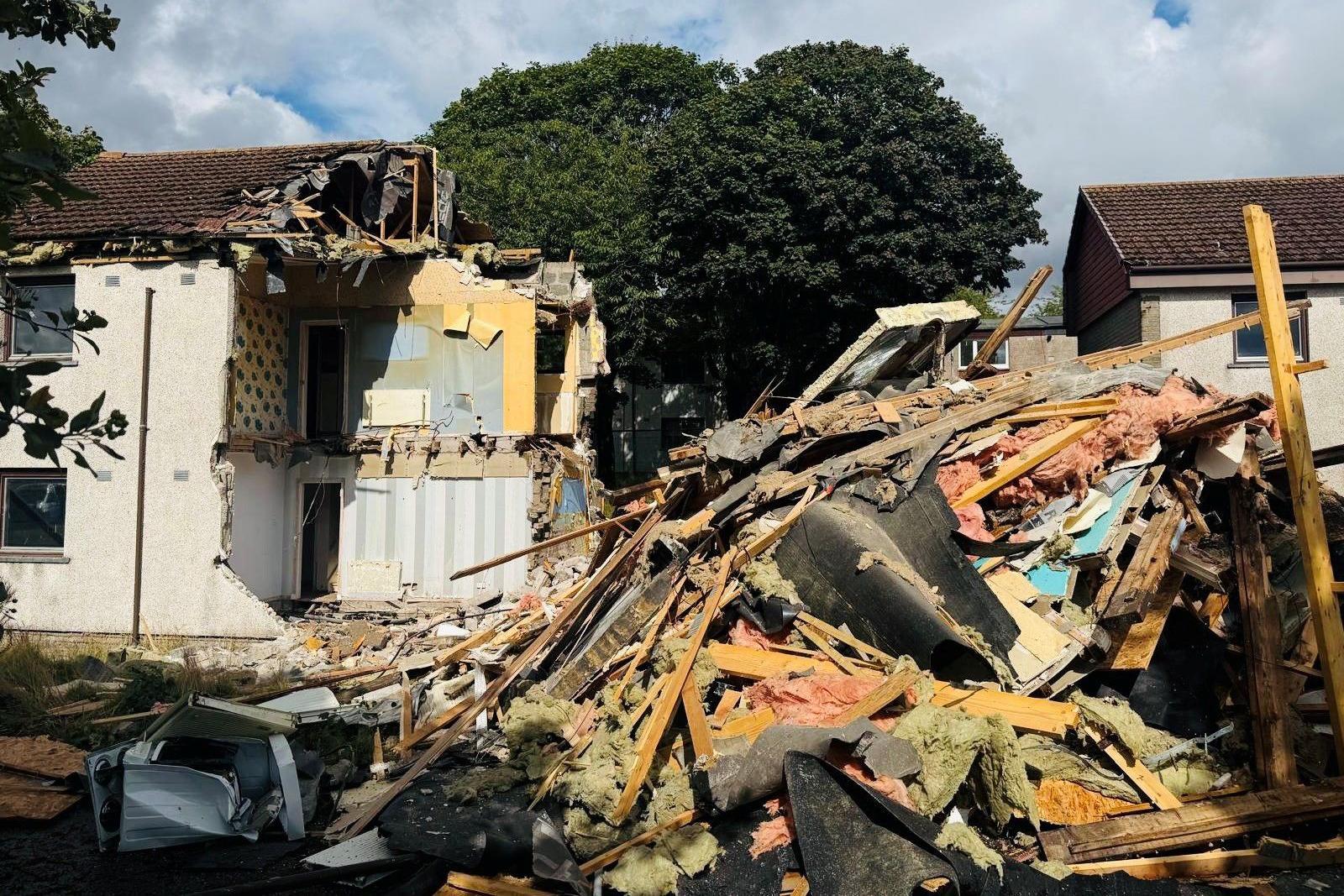
Demolition of homes in Aberdeen affected by potentially dangerous Raac is now under way.
More than 500 properties - most of them council-owned - were found to contain reinforced autoclaved aerated concrete in 2023.
Signs warning of demolition in progress have been put on fencing that has been erected around properties, some of which have already been knocked down.
It is understood the work began on Monday, and residents told BBC Scotland News it was "upsetting" to see homes finally starting to disappear.
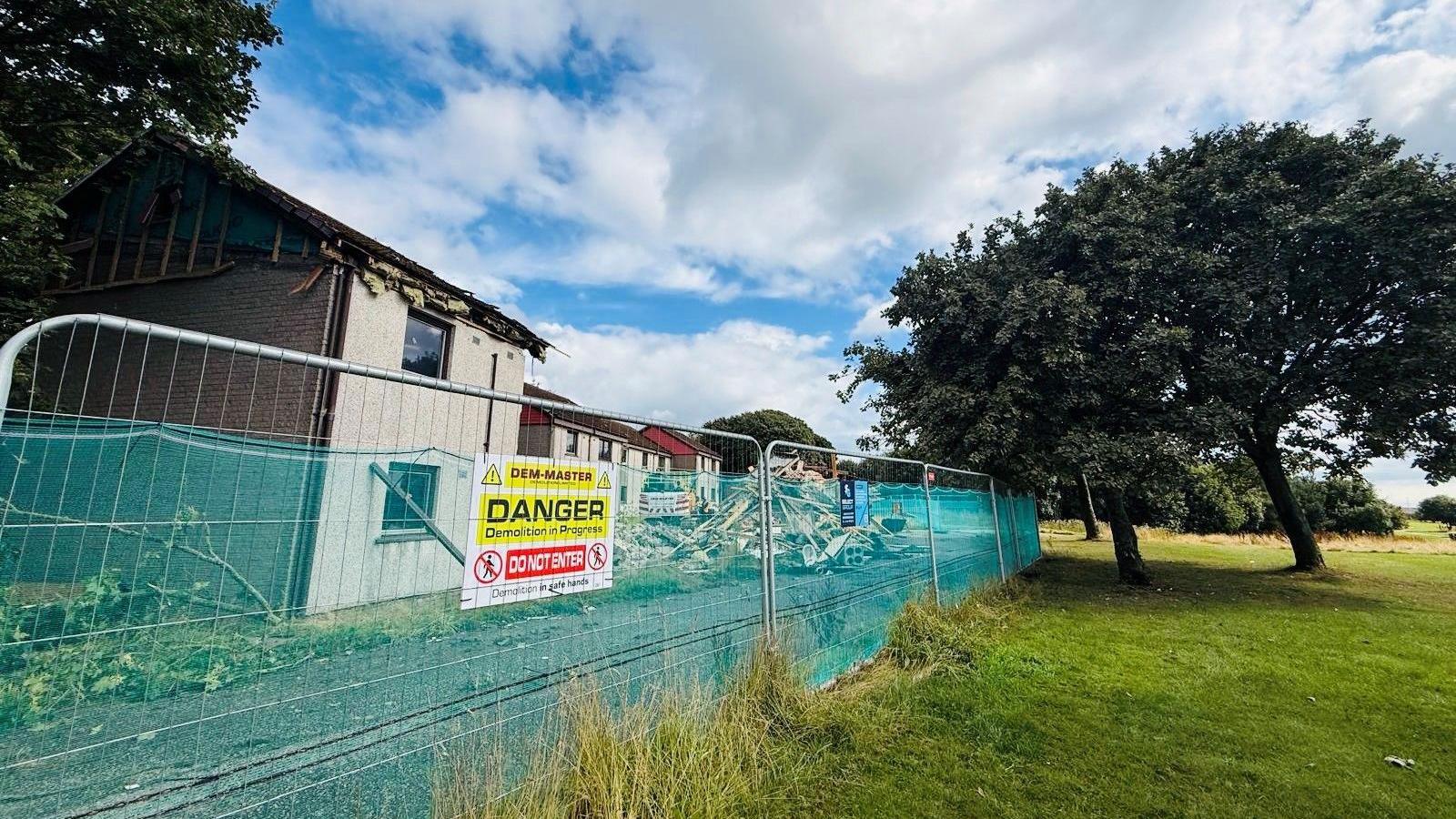
A total of 138 private properties and 366 council homes were found to have Raac in their roof panels.
It was previously announced that the plan to demolish and rebuild the properties is expected to cost more than £150m.
A number of homes have already been purchased by the council through voluntary acquisition.
Some residents are still negotiating the sale of their property, and others are still trying to buy a new home.
The Scottish government and council agreed a funding deal worth £10m to help support residents last year.
Aberdeen City Council confirmed demolition work was under way.
"The demolition of an initial block is being undertaken prior to wider demolition taking place across the site which is due to commence in early September," a spokesperson said.
"These works will be monitored in line with approved health and safety and demolition methodology."
Hannah Corr moved out of one of the impacted properties nearly two years ago.
Asked if she was sad to see the houses being demolished, she said: "Of course, that's the one thing we have here is a community and it being slowly chipped away at is, of course, upsetting."
Another local, Nat Jankowska, said: "I think it's going to be a lot of mess and a lot of noise and it's going to affect not only people who live here but also the wildlife.
"I mean they've been sitting empty for so long, something has to be done with them. But it is sad to see everything getting demolished."
Wayne Youngson said that progress could not be stopped.
"If they're faulty and they're falling apart then get rid of them and put new ones up," he said.
"It would be more upsetting if it falls on somebody.
"Houses go down and houses go up, that's just life. The community's still going to be here after it."
What is Raac?
Raac stands for reinforced autoclaved aerated concrete.
It is a lightweight material that was used mostly in flat roofing, but also in floors and walls, between the 1950s and 1990s.
It is a cheaper alternative to standard concrete, is quicker to produce and easier to install.
It is aerated - or "bubbly" - like an Aero chocolate bar.
But it is less durable than other types of concrete and has a lifespan of about 30 years.
Its structural behaviour differs significantly from traditional reinforced concrete.
It is susceptible to structural failure when exposed to moisture as the bubbles can allow water to enter the material.
Raac is often coated with another material, such as bitumen on roofing panels. But this material can also degrade.
The Health and Safety Executive (HSE) said Raac was now beyond its lifespan and could "collapse with little or no notice".