Videos of brutal beatings, blatant drug deals, and racial violence in the centre of Scotland's biggest city have become a common sight on social media.
Posts claim that parts of Glasgow's city centre are a "no-go zone" where it's not safe for unsuspecting members of the public, especially women, to enter.
Angry protests have spilled on to the streets - but is it as bad as some say?
For a week in June, BBC Disclosure filmed in the city centre to see for ourselves.
A taxi driver who regularly drives into the area told us so many people were off their head on drugs and that it was sometimes like the "zombie apocalypse".
And a convenience store manager said he was racially abused at least 20 times a day and his shop was under constant attack from drug addicts.
This all played out just a stone's throw away from the famous Central Station, where many tourists are first welcomed to Glasgow.
Welcome to Glasgow
Disclosure investigates claims that parts of Scotland’s biggest city have become a no-go zone because of crime, homelessness and antisocial behaviour.
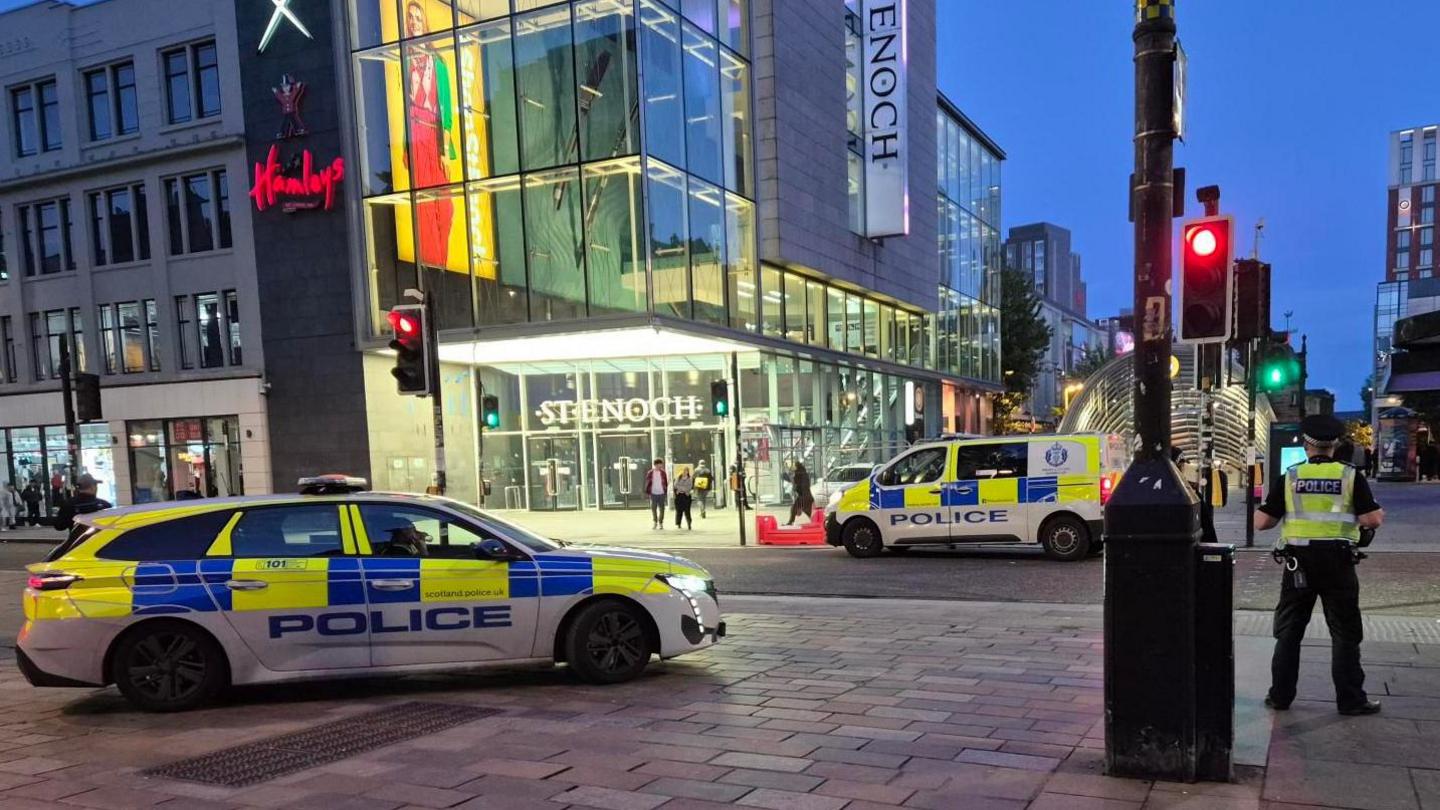
Crime and anti-social behaviour in the city centre have become such an issue that earlier this year police were given special powers to temporarily ban people from the hotspot area around St Enoch Square and the infamous Four Corners.
More than 1,500 notices have been issued since the introduction of the "dispersal zone" in March but the problems in the city centre persist.
Most evenings as we were filming there was a visible police presence - but one night, when there were few officers around, we saw a group of young men throwing traffic cones at a man who responded by chasing them with his dog.
Later, our film crew were verbally abused and threatened by a group of young men hanging around near the shopping centre.
It was an intimidating atmosphere and it made us consider what it must be like for someone vulnerable walking on their own.
Last year, according to freedom of information requests made by the BBC, there were more than 400 violent assaults in the main streets and square at the heart of the dispersal zone.
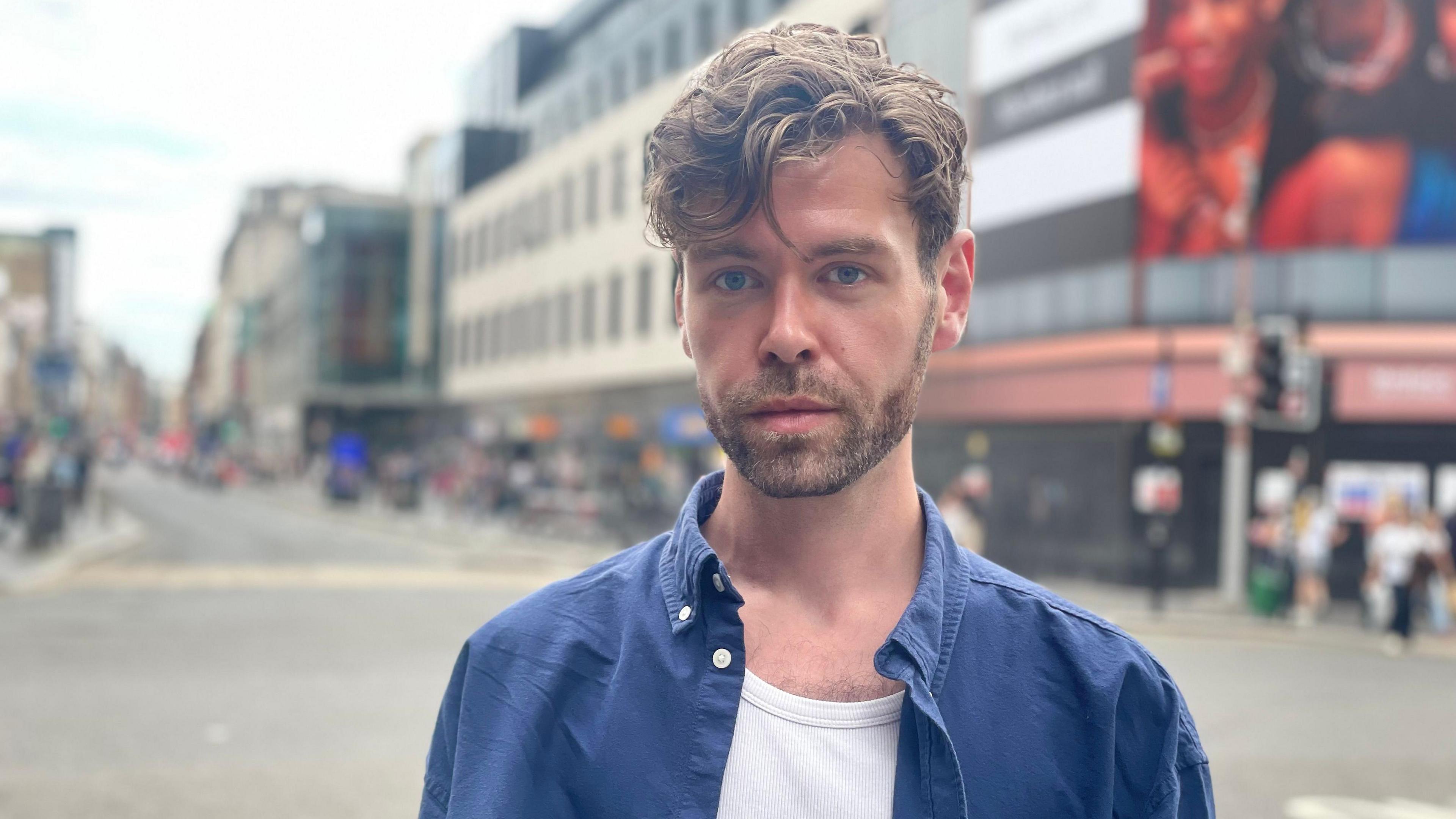
Kip Lawson was beaten so badly his lip was ripped open and he lost part of a front tooth.
He says he was approached by a group of drunk white men while walking home at night.
"I had never been involved in a violent altercation and then suddenly, you're getting battered," Lawson says.
Just four months later, he says he was assaulted again, this time by a black man who attacked him for his phone.
"I can't even walk through my gorgeous town without feeling like something bad is going to happen," he says.
'This street is the hub of drug dealers'
According to another BBC FOI request, since 2023 police have recorded almost 2,800 crimes on Union Street alone.
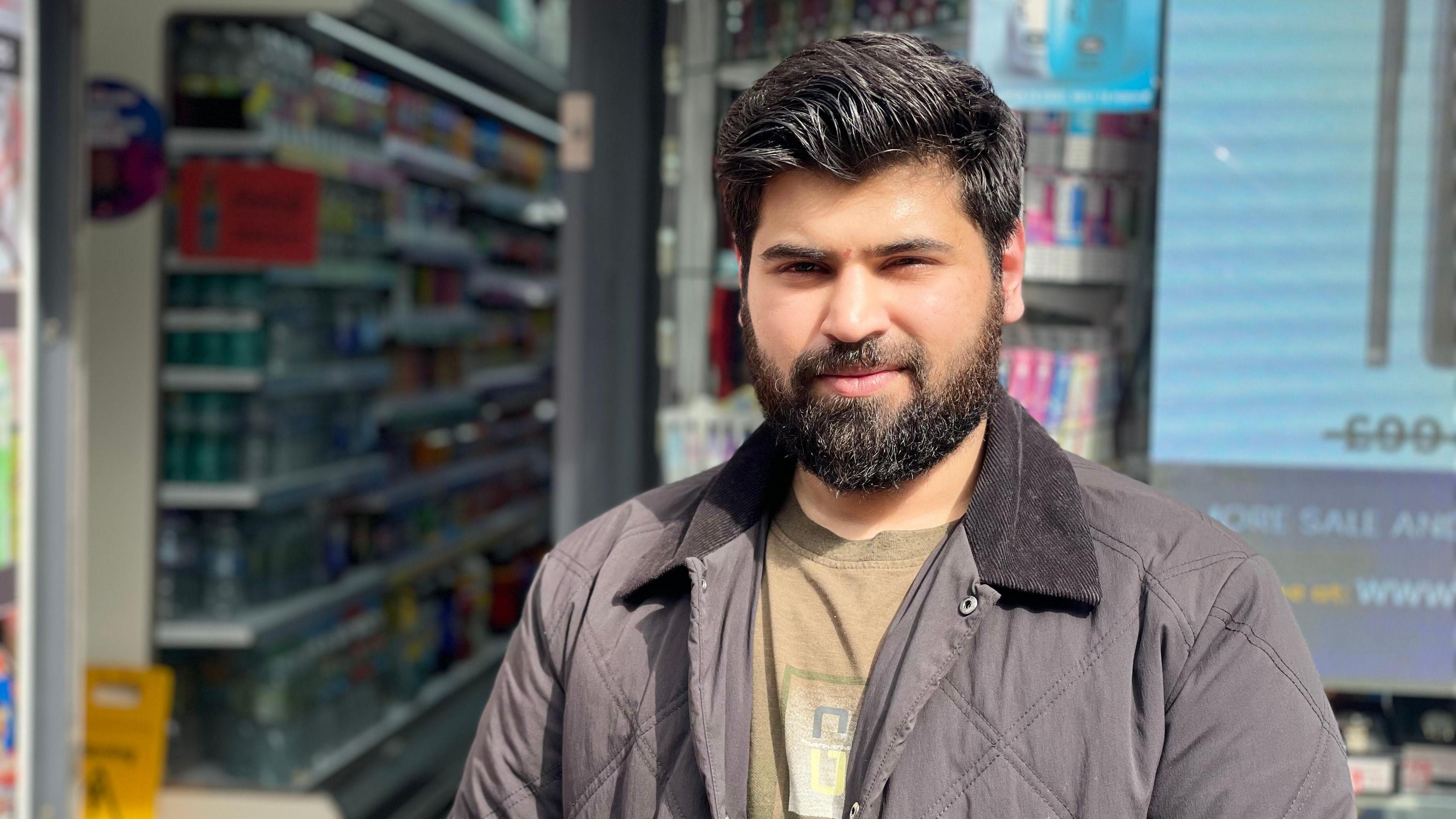
Faisal Umar manages a 24-hour convenience store on the street, which sits in the heart of the dispersal zone.
He told BBC Scotland his shop was regularly robbed by drug addicts or young kids and he constantly faced racist abuse.
Across the road from his shop is a hotel that houses homeless people, one of three such places within a very small area.
Many of the residents are addicts, and dealers use underage kids to sell drugs to them.
"This street is the hub of drug dealers and the police know this," Umar says.
But he says because the dealers are under age the police can't do anything.
"It's just a routine of every day, we need to call the police and they come and say: 'What can we do?'," he adds.
As part of our time in the city centre, we went on patrol with the police.
PC Steven Gemmell confirmed there was "a lot of child exploitation" and the young people involved in drug-running rarely saw the inside of a cell.
Instead, he says they carry small amounts of drugs at any one time and come up with creative ways to avoid being hit with a possession charge.
Gemmell says: "If they have a few wraps of drugs, a lot of the time they'll conceal it in their mouth.
"So, if I walk up to someone tonight, maybe one of the younger dealers, they'll noticeably swallow.
"It's a risk they're willing to take even if that bursts in their stomach," he says.
Sure enough, later in the week, a dealer sold drugs right in front of our cameras, licking the wraps out of his inner lip before handing them out to a buyer.
During our time in the city centre, we witnessed other transactions on the streets that appeared to be drug deals.
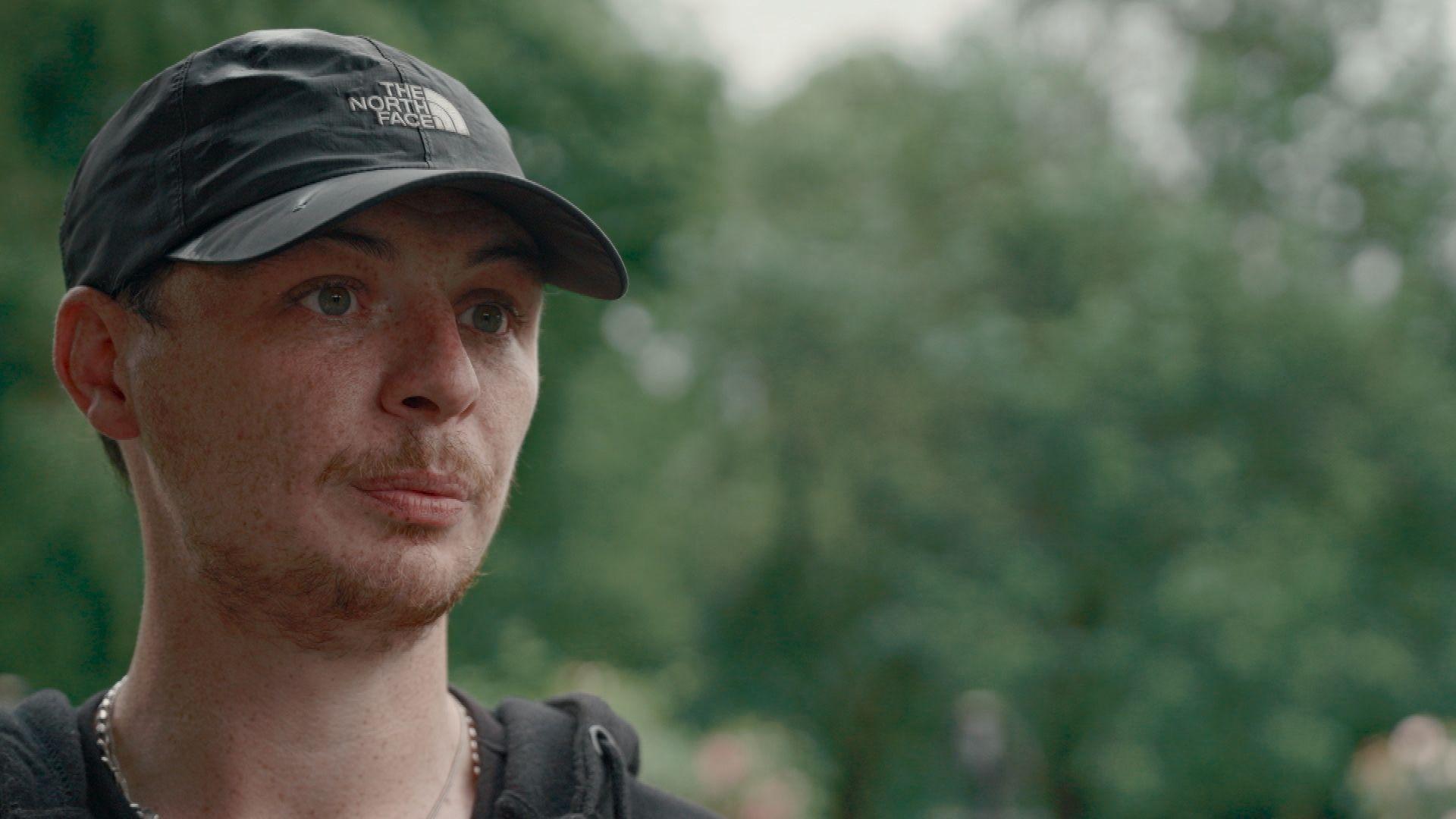
Darren Docherty, leader of vigilante group Scots Active, says drugs are being openly sold by what he calls "new people", though he does not define exactly who he means by this.
Critics say Scots Active's members are racist and far-right extremists.
Many wear balaclavas as they patrol the city centre streets.
They deny it is to intimidate but say it is to protect themselves and their families.
Docherty, who chooses not to cover his face when out on patrol, denies to the BBC that he is a racist but confirms his group often clash with young black and Asian drug dealers in the city centre.
"They don't like us patrolling the area because we expose them selling their drugs," he says.
Police Scotland are not required to record the ethnicity of suspects in crime reports, therefore a breakdown is not available.
In recent years, Glasgow has accepted more asylum seekers than anywhere in the UK, as part of a Home Office scheme.
However, once they are granted refugee status, support from the UK government stops and many turn to the council for assistance, ending up in temporary or homeless accommodation.
"It's nothing other than two cultures do not align, and that's what's causing a lot of friction," Docherty says.
He says this has led members of Scots Active to join recent anti-immigration demonstrations that turned violent.
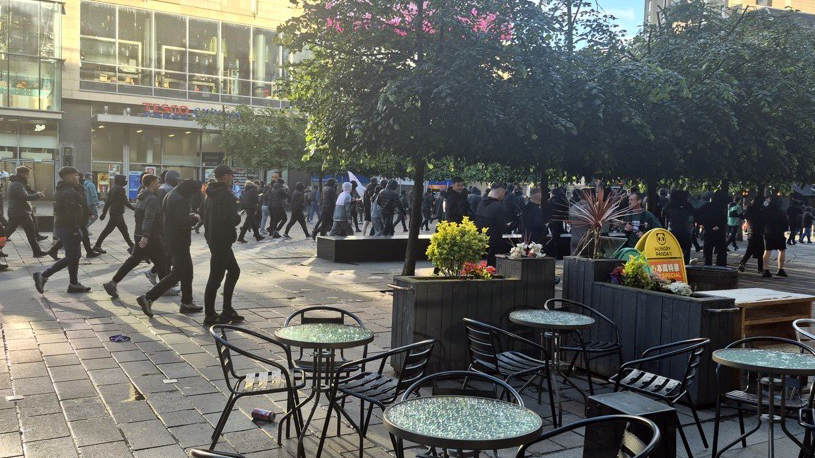
On our first day of filming a masked mob of hundreds of people rampaged through the city in response to a shocking knife attack in Belfast for which a Sudanese man was arrested.
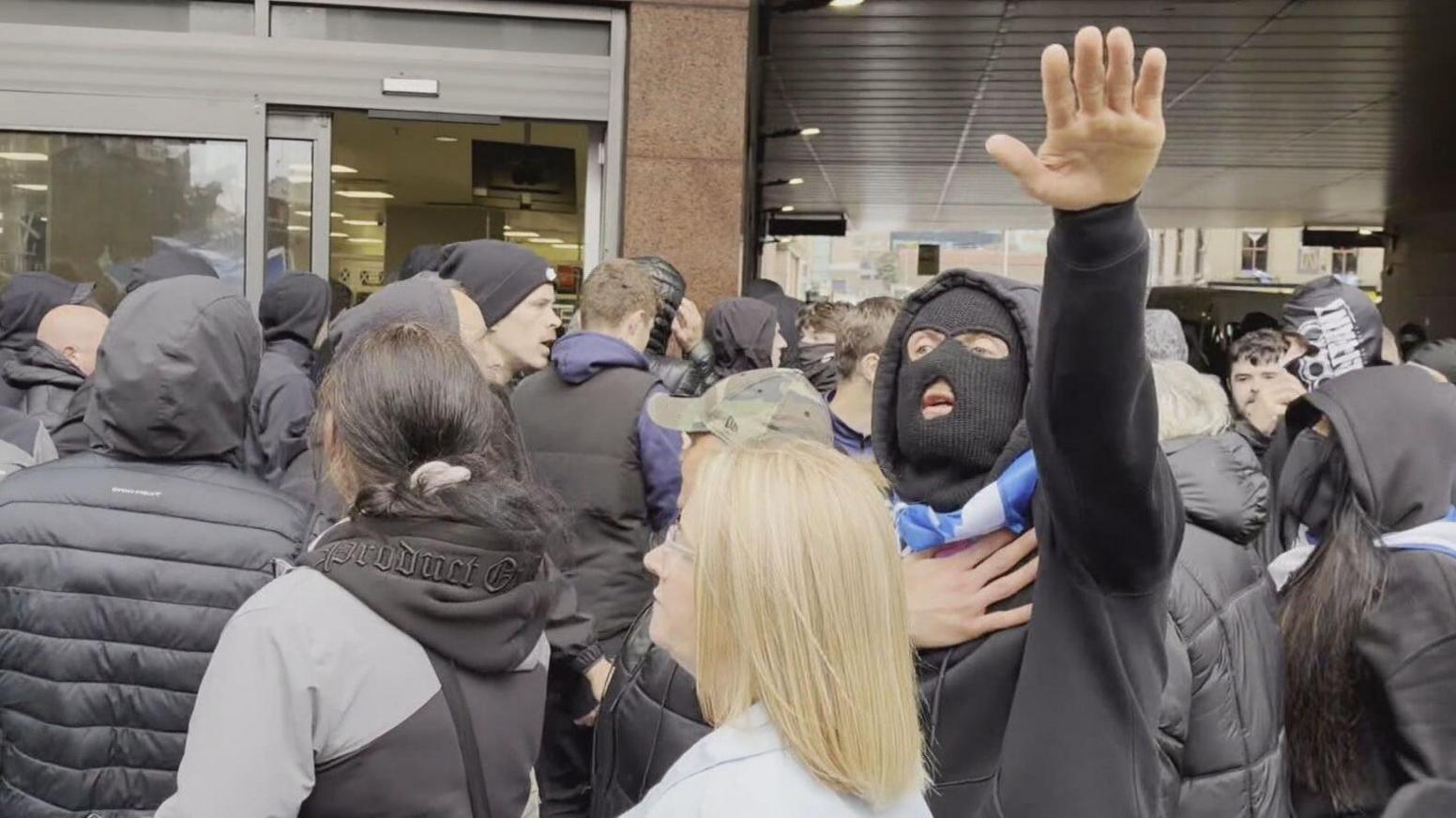
Four days later, an anti-racism rally was met by dozens of far-right demonstrators who clashed with police.
The black-clad group - including at least one performing a Nazi-style salute - scuffled with police officers as they tried to keep the group away from the much larger protest against racism.
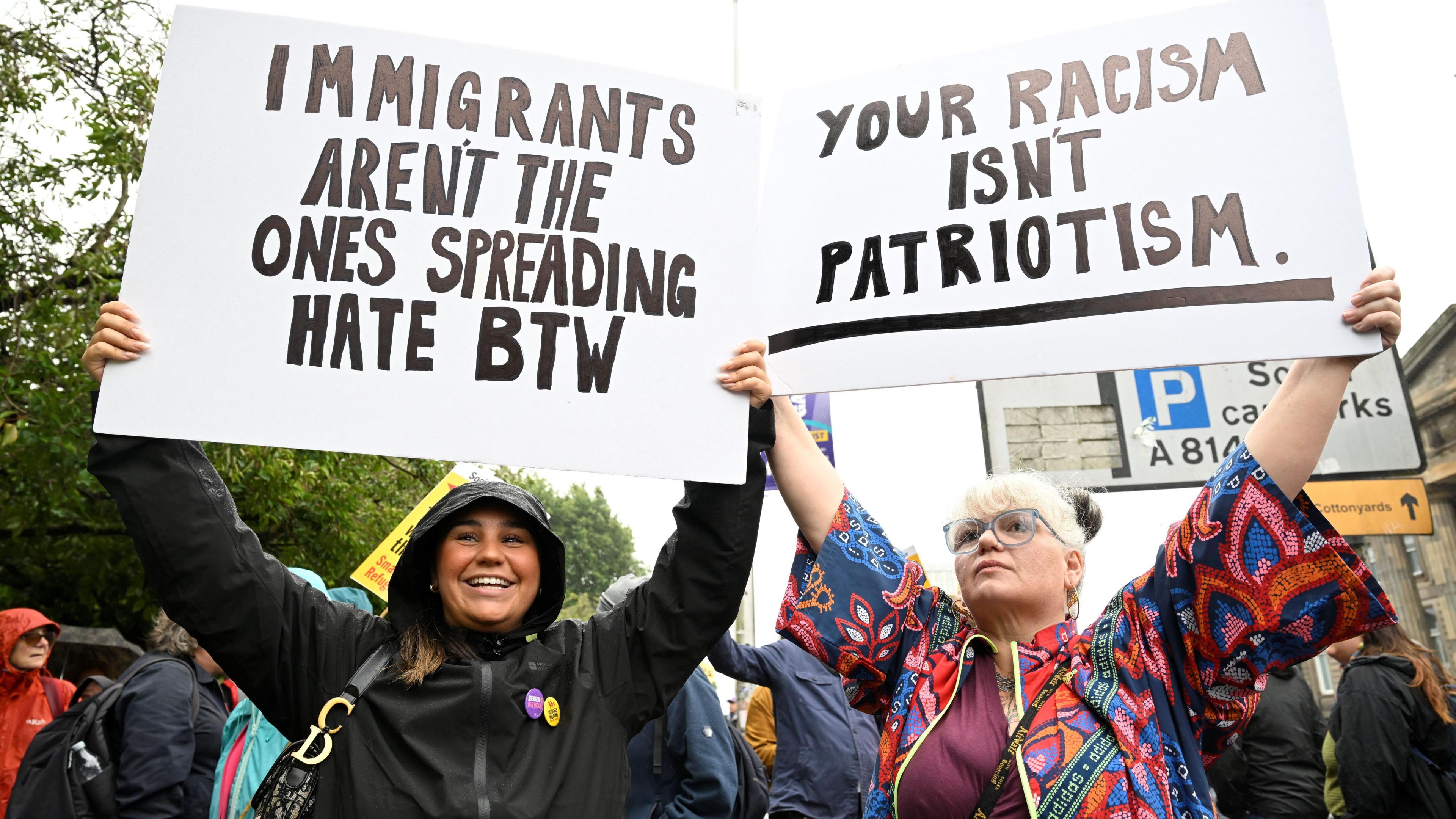
Thousands of anti-racist campaigners marched along Buchanan Street in the city centre with banners such as "refugees welcome " and "hate has no place here".
Some were angry that the much smaller group of anti-immigration protesters were attracting media attention and hijacking their message.
One told us: "These people, the far-right thugs dressed in masks, say that they are doing it over concern for women and girls.
"Actually, women from Scotland and across the UK know exactly who the threat is."
Docherty was in the middle of the scuffles that day and the BBC has since seen a video where he talks about hitting a police officer.
We asked him about this and he claimed he was acting in self-defence.
We also asked Docherty what he made of the Nazi salutes we witnessed during one of the protests.
"That's just stupidity. That's making us all look like idiots," he replies.
"I wanted to punch the boy, but if I punch him, that's making us look even worse than what he's doing."
'A level of intolerance is creeping in'
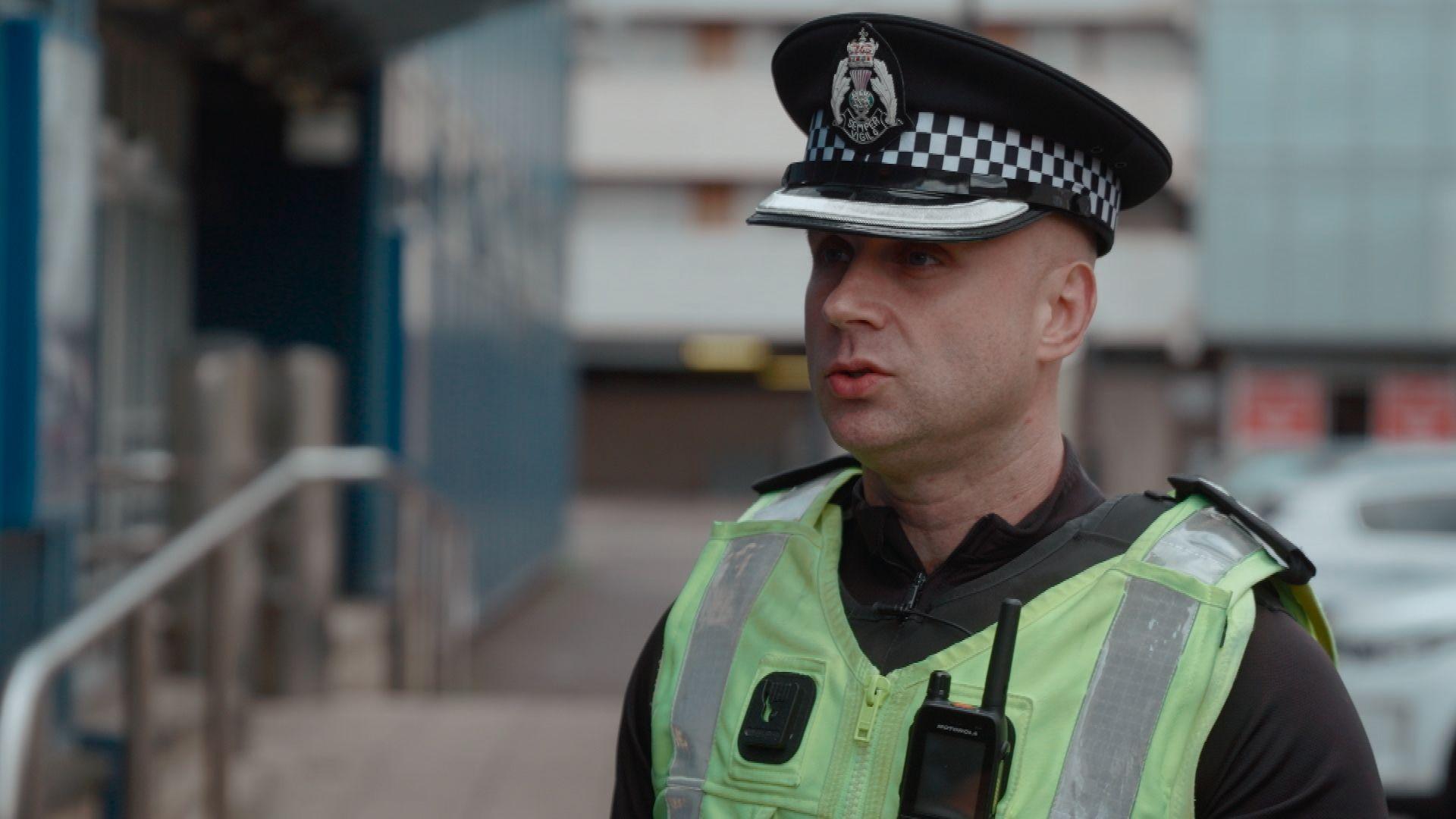
Ch Insp Stephen McManus, of Police Scotland, admits that racial tensions have become a bigger part of the job.
"Glasgow is a multicultural and diverse city, and there is usually a high level of tolerance," he says.
"There is undoubtedly a level of intolerance creeping in which has become included in protest."
In the three months of making the Disclosure documentary, there were six serious sexual assaults reported in Glasgow city centre.
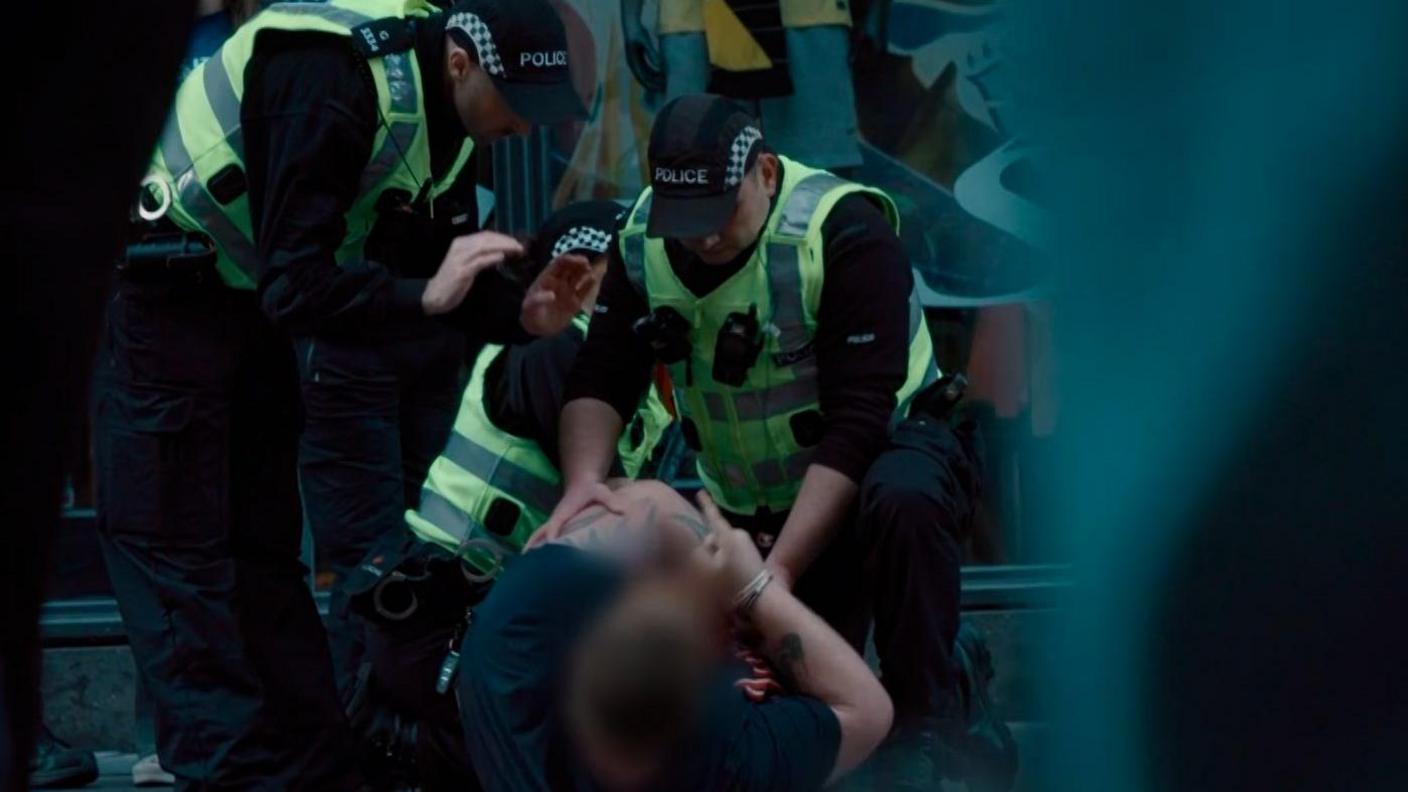
Anti-immigration influencers have taken to social media in anger, speculating on the ethnicity of the attackers if not stated by the police.
Scots Active say they patrol the streets to protect women and girls from sexual predators.
McManus says there could be many reasons why a person's ethnicity is not put out in the media.
He says police need to "protect the integrity of the inquiries" when sharing information about a crime.
"I think what we need to be very careful of is misinformation that's circulating on social media, as that rhetoric absolutely fuels community tensions and can lead to protests as we've seen recently," he says.
In the documentary, the BBC spoke to Zoe, not her real name, who was sexually harassed on a bus as she travelled through the city centre.
Zoe, who is in her 20s, says the man who sexually harassed her was possibly Middle Eastern but she challenges those who link Glasgow's sexual crimes to race.
She says it is terrifying how often these attacks are happening to women but is deeply sceptical of what the anti-immigration groups say motivates them to take to the streets.
"They say it's about protecting women and children, but it's not," Zoe says.
"It's about being racist, causing public disorder, and being aggressive and violent and just going out and causing it really."
According to Scottish government figures, there has been an 11% increase in reported rapes, attempted rapes and sexual assaults across Glasgow in the past five years.
There's no requirement for police to record the ethnicity of suspects, but this was recorded in 113 of the 170 rapes reported in Glasgow.
Figures released under freedom of information showed that where it was recorded, 89 of the suspects were white and 24 were Asian, African or from another ethnic group.
As the sun set on our last day of filming, we approached a group of drug addicts near the River Clyde.
After scoring what appeared to be crack cocaine, one of the group unfolded their paper "dispersal notice", barring them from the zone for 24 hours, before going on to use the letter to help split up the drug.
Taxi driver Iain, who took us into the city centre, said the drug problem had got much worse in recent years.
He said the dispersal orders often moved people from one area of the city to another, such as Sauchiehall Street.
"It's like the zombie apocalypse sometimes and you can see they are completely away with it," he says.
"I've lost count of the amount of times I have seen police taking people and putting them into the back of the wagon. They do quite a good job but that's generally at the weekends."
'A welcoming and attractive place'
Ch Insp McManus told us: "High-visibility policing works and we regularly look at demand and crime data to deploy our officers to areas of increased demand and need.
"Within Glasgow city centre we have got a dedicated community policing team and at the weekends - Friday and Saturday nights - we have got a dedicated policing plan which draws on officers from across greater Glasgow."
We wanted to speak to the Glasgow City Council leader Susan Aitken about the underlying causes of what we witnessed in the city centre but she wasn't available to be interviewed.
Instead, a spokesman said: "Antisocial behaviour and criminality are, in the first instance, police matters - but we are committed to working with Police Scotland and other partners to ensure the city centre continues to be a welcoming and attractive place for everyone.
"Earlier this year, the council agreed additional investment to expand CCTV security monitoring in the city centre, enabling officers and police colleagues to work together to respond to issues."