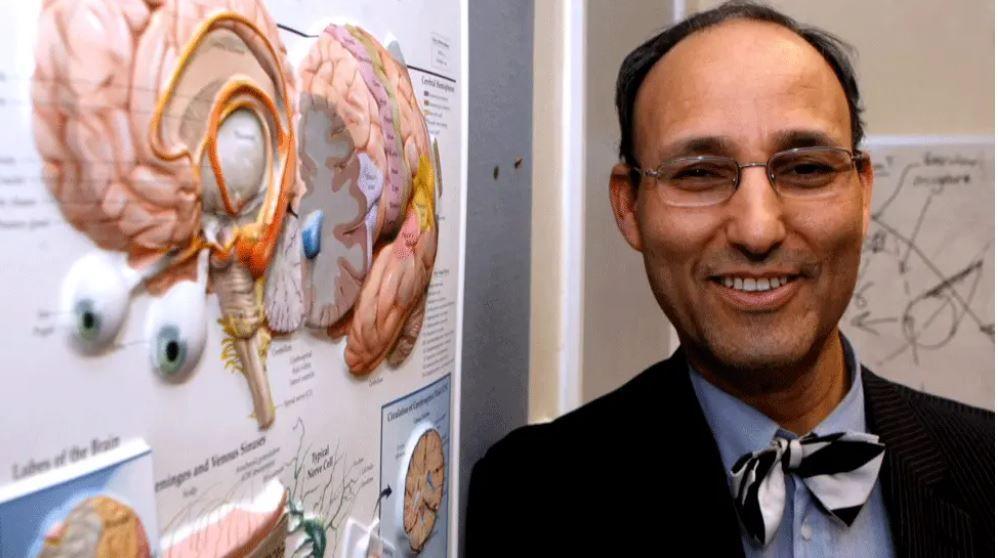
The inquiry into disgraced brain surgeon Sam Eljamel has reached a "watershed moment" as its first public evidence sessions begin, its chairman has said.
Eljamel was a consultant neurosurgeon at Ninewells Hospital in Dundee from 1995 until his suspension in December 2013.
A public inquiry is taking place after patients of Eljamel raised concerns that he had harmed as many as 200 people.
The first phase of hearings this week will include the broad trajectory of Eljamel's career, evidence relating to him being placed under supervision in 2013, and NHS Tayside's document management and retention systems.
Following his suspension, Eljamel resigned from his post in May 2014 and removed himself from the General Medical Register in 2015.
He is now believed to be working as a surgeon in Libya.
Numerous attempts by the public inquiry to contact him have been unsuccessful.
'Watershed moment'
The first day of proceedings will begin with an opening address from Jamie Dawson KC, the inquiry's senior counsel.
The first witness will be Liz Smith, former MSP for Mid-Scotland and Fife, who represented a number of Eljamel's former patients and helped to campaign for a public inquiry.
Nicky Connor, the current chief executive of NHS Tayside, is due to give evidence on Wednesday.
Lord Weir, chairman of the inquiry, said he was committed to conducting a "robust, thorough and impartial" investigation.
He said: "Today marks another important milestone in the progress of this inquiry, and a watershed moment for all those who campaigned for it.
"Everyone engaged in the work of the inquiry has an interest in finding out what happened and what lessons can be learned."
The inquiry heard opening statements last November.
These included the revelation that NHS Tayside destroyed 40 theatre logbooks potentially relating to Eljamel, despite being ordered not to do so.

Former patient Jules Rose led the campaign for a public inquiry.
In 2013, Eljamel removed a tear duct instead of her brain tumour.
Eljamel performed a second operation on her later that year, the day before he was suspended by the health board.
Rose said: "It's been a long, arduous, harrowing process for over 10 years.
"We're ready now to sit down and listen to what's going to unfold.
"For us, it's been Groundhog Day, repeatedly standing up there shouting and screaming for our voices to be heard."
Rose said the impact of Eljamel's actions on her fellow patients was hard to describe.
She said: "We've had patients who have bravely spoken up in the media, they've wanted to take their own life because they cannot live with the pain.
"We have patients that are being diagnosed with trauma, PTSD - that never goes away.
"The lasting pain, whether its physical or mental, is there with the patient for the rest of their life."

Eljamel was the head of the neurosurgery department in Ninewells - one of just four specialist centres in Scotland.
He was also an adviser to the Scottish government and worked at Fernbrae private hospital in Dundee.
A BBC Disclosure investigation in 2018 found that Eljamel had harmed patients for years at NHS Tayside.
He was allowed to continue operating even after an external investigation found he was injuring patients.
A police probe into Eljamel's actions, called Operation Stringent, was launched in 2018.
The inquiry will hold evidential hearings in six sections.
During the first phase of hearings the inquiry will hear from witnesses including representatives of NHS Tayside, the Scottish government, Dundee University, and regulatory or professional bodies.
The second phase, in December, will hear evidence from former patients of Eljamel, while the third will cover evidence from medical and other professionals.
Section four will hear evidence from other organisations which could or should have had a role in oversight in the interests of Eljamel's patients.
Section five will hear evidence from representatives of NHS Tayside and the Scottish government, with the inquiry concluding in section six by considering what lessons could be learned from the evidence gathered.