rowing up in Utah, I was so active that my parents nicknamed me "The Blur". My older siblings introduced me to rock climbing while I was still at primary school. By the time I was 15, I was hauling myself up cliff faces.
One summer's day in 2014, when I was 17, my friends and I went paddleboarding on a lake. My friend Trevor and I decided to climb one of the rocky boulders overlooking the water, and jump in.
The rock was about 12 metres tall. I had climbed and jumped from higher. What we hadn't counted on was a layer of moss that made the boulder slippery. Neither of us had our grippy climbing shoes with us. When I nearly fell, I thought about turning back, but I convinced myself that it was safer to keep going.
From the top, we discovered the water didn't come right up to the boulder. Instead, there was a swathe of black volcanic rock we would have to clear first. I watched as Trevor took a run-up and hurled himself over the edge. The splash told me he'd safely made it down and into the water.
Normally I'd be excited, but the earlier slip had rattled me. Jumping still felt safer than climbing down, though. I backed up and started to run. As I reached the edge, I hesitated. It was the tiniest pause, but enough to slow my momentum. Instead of leaping outwards, I twisted sideways and started plummeting straight down.
I didn't have time to scream, but I registered that I was about to die. I closed my eyes, slamming so hard into the rock that a friend heard my bones break. During the fall, I'd curled my arm up to protect my head, landing on my left side.
Adrenaline and shock blurred those first moments after impact. I was about to try to move when a man appeared. He was an emergency medical technician who had been fishing nearby and had seen me fall. Suspecting a broken pelvis and spinal injuries, he held my head and neck still.
It took 30 minutes for the paramedics to reach me. It was clear my pelvis was broken. I could feel the bones grinding together as they strapped me to a gurney.
At the hospital, X-rays showed my spine was intact, but my pelvis was in pieces. I was flown by air ambulance to a better equipped hospital. Doctors there found my left arm and heel were broken too. Most dangerously, my shattered pelvic bones had cut into my organs. I was bleeding internally.
I underwent 13 hours of surgery to rebuild my pelvis with pins and metal plates. I was in hospital for two weeks before going home for six months of bed rest.
My family were amazing and gave me round-the-clock care. As an active person, it was a huge adjustment, but I just felt grateful to be alive. I also had a rota of friends who would play music and watch movies with me, which stopped me feeling sorry for myself. I'd been warned I might have permanent paralysis in my legs, but I was determined to get my life back. The fact that I was young and fit helped with my recovery. When the spinal cord swelling went down after four months, I was relieved to regain some movement.
After six months, I figured out how to pull myself out of bed and into a wheelchair. I returned to school for my senior year with some heavy-duty painkillers and a friend to push me between classes.
Ten months after the fall, I was allowed to put pressure on my feet. I had been doing hospital physical therapy, but I wasn't convinced it was right for me. Most people with hip and pelvic injuries are elderly, whereas I was an otherwise healthy teenager. I replaced it with yoga. It was gruelling – my muscles were weak and it was a year before I could walk on my own.
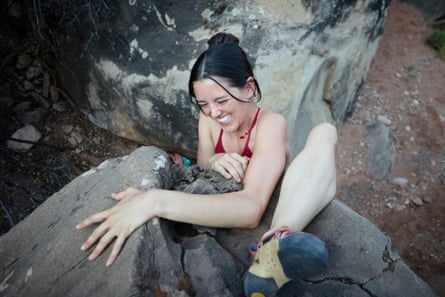
I returned to the outdoors with gentle hikes, then cautiously returned to climbing – I didn't want the accident to stop me doing something I loved. It took a couple of years to get my confidence back, but my fall made me a better climber and a stickler for safety.
I'm 29 now and a yoga teacher. People ask if I wish the accident had never happened, but the honest answer is no. It led me to this fulfilling life.
As told to Jacqui Paterson
Do you have an experience to share? Email experience@theguardian.com