hether you have never been for a run or are building up to a marathon, sometimes the biggest challenge is just getting out the door. Here, running coaches share their tips on everything from mindset to avoiding injuries – but mainly how to find joy in running.
Find your motivation
"I absolutely hate getting out of bed and going for a run," says Jo Wilkinson, a former GB and England athlete who has been a running coach for 10 years. "It takes me a good 20 minutes to get into a run, and then I quite enjoy it. Motivation ebbs and flows in all of us." Wilkinson suggests arranging to run with someone to make yourself get out – "It's much harder to let a friend down. There's a sense of obligation to turn up" – or find a running club to sign up to.
"If you're running after work, my top tip is: do not sit down," she says. "Walk in the front door and put your running clothes on. If you sit on your sofa, you will not get up again."
"There are going to be days when you don't want to do it," says Thomas Craggs, who leads the World Class Endurance Programme for UK Athletics, which includes Keely Hodgkinson and Emile Cairess. "People think these guys wake up every day and love what they do. They don't. But they do it anyway."
Craggs says he got into running as an "overweight, sedentary adult" and quickly became a mass participation marathon runner. For those who feel nervous about running in public for the first time, he says: "Being self-conscious is normal – you are not the exception. You are going to have to embrace a period of discomfort to reach the point where running feels comfortable. But one of the joys of being a new runner is that progression can be quite rapid, so you go from struggling to do 30 to 60 seconds' worth of running to being able to run for 30 minutes."
Start slow
"Couch to 5K is probably your best bet to start, because then you have a little cheerleader on your phone," says Allie Bailey, an ultrarunner, coach and the author of 31 Days: A Zero Bullsh*t Mindset Masterclass for the Modern Runner. The app involves a mixture of walking and running to get you going. "And when I say run," says Bailey, "I mean run a bit faster than walking, because everybody goes off and sprints like they are at school – you don't need to do that. If you can jog and hold a conversation, that's a good pace to start."
Don't be afraid to walk, agrees Wilkinson. "People think they have got to run continuously. I walk all the time," she says. "Most people would be less prone to injury if they took longer to build up their running." So don't feel bad about taking your time to reach 5k.
Wear sensible footwear
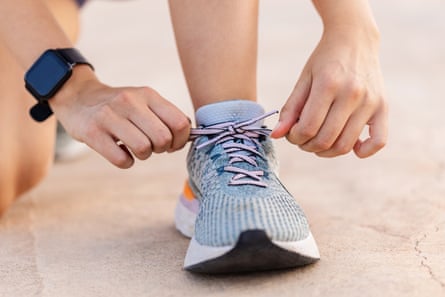
Emma Kirk-Odunubi, a running coach and author of Find Your Pace: How Running Changed My Life and How It Can Change Yours Too, recommends having your gait analysed, especially if you can get it done at an independent running store. "Then they can give you impartial advice on what shoes will work best for you."
"Find a pair of shoes that are comfortable rather than performance-enhancing," says Bailey. Don't forget: "You're a hobby runner, not a professional athlete."
If you're more of an experienced runner, is it worth buying those carbon-plated shoes – the kind favoured by record-breaking athletes – to get a PB (personal best)? "There is good evidence that they do make a significant difference," says Wilkinson. "You just have to be aware that they don't have much stability, so don't wear them for every single run, as it could create problems down the line."
Prioritise comfort
Comfort is also key with what you wear, says Kirk-Odunubi. "We can get to the nitty-gritty of synthetic materials and the breathability later on, but to start with, the more comfortable you feel when you're running, that's already one barrier broken down – you feel good before you head out the door."
You don't have to spend a fortune on kit, either. Bailey gets hers secondhand: "I buy from Preloved Sports. You can get everything – T-shirts, shorts, bras – really cheaply. The most sustainable kit you've got is the kit you're already wearing."
Sign up to races

Work out what your goal is. This could be, "I want to be able to run continuously to that lamp-post in six weeks' time, or I want to go to a parkrun in six weeks' time," says Craggs. Signing up for a race or an event can be the best motivation you need to keep training, and there is perhaps no better place to start than parkrun. Although it can seem intimidating, says Wilkinson, "There are people of all shapes and sizes, ages and levels of fitness. Walking is encouraged as much as running."
Find a running routine
Having a routine will help you to commit, and Craggs says that frequency is the first thing to focus on. Running three times a week is a good starting point to "give your body what it likes, which is a managed stimulus, mixed with appropriate recovery time". Build up the volume of continuous running slowly, so you don't have to have more days off to recover, he adds. "The surefire way of stopping is by getting injured, and the most likely way you'll get injured is by ramping up your training too hard."
It can help to use apps or training plans, but "always listen to your body", says Kirk-Odunubi. "Sometimes an app can say 'do this speed workout', and you might be absolutely exhausted, but you do it anyway, and get a niggle or injury."
When you are running regularly, "There will come a point where those fitness gains slow down, and you start to plateau," says Craggs. You can get through this by increasing the volume or intensity of your runs, or through adding interval training. "Runners can develop speed and endurance through managed doses of high intensity. This can stress your body beyond its comfort zone in a sustainable way." The key, he says, is to "tailor the intensity and recovery to your ability and build progressively".
Use a watch, but don't let it rule you

"Data is great if the watch is working for you and you're not working for the watch," says Bailey.
"Don't let yourself be emotionally abused by your watch," agrees Wilkinson. "Is it going to make you fitter? No. What will is running and training.
"One of the biggest skills you can develop as a runner is the ability to judge your pace, but not run with your eyes glued to your watch. It shouldn't suck the fun out of it."
Load up on carbohydrates
"Carbs are your friend," says Wilkinson. "They are the most efficient source of energy physiologically. You need to focus on carbohydrates regularly throughout the day."
"Before we run, it is important to fuel ourselves," says Kirk-Odunubi. "Whether it's a piece of toast with honey, a bowl of porridge or even just a banana."
And the best thing to consume after a run? "A pint of cow's milk," says Wilkinson. "You want to have a mix of protein and carbohydrate, and cow's milk is cheap, simple and highly effective."
Choose strength work over stretching
Many of us don't bother to stretch. Is this a problem? "Stretching is good if it is done well," says Wilkinson, "but often people don't hold a stretch for long enough." Ten seconds is pretty useless; there is better evidence that it will benefit you if you hold it for more like one minute. She says it is far better to do a short yoga or pilates routine than a few token stretches.
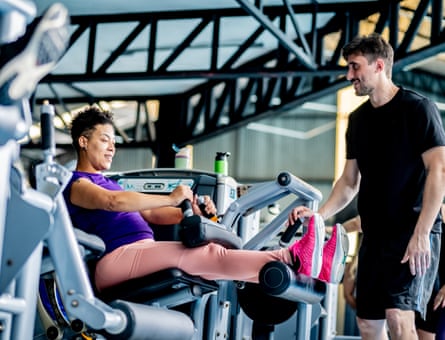
What is more important, the experts agree, is strength and conditioning work. "Join a gym and do some lower leg and lower body strength work every week," says Bailey. This is especially important as we get older, says Wilkinson, because "our muscle mass and bone density start to decline. The more strength work you can do, the more you'll maintain that for longer" – and be able to keep running.
What are the best strength exercises for runners? "We run on one leg at a time," says Kirk-Odunubi. "So go for any exercise that is unilateral, like lunges or split squats. And then look at things like single-leg calf raises, and some low-level plyometrics, like hops and pogo jumps. Adding those in will make a massive difference."
Take injuries seriously
"If running caused your injury, more running will not make it better," says Wilkinson. "So, if in doubt, stop. Even if you are a long way from home."
"Never run through pain," says Kirk-Odunubi. "If your day-to-day activities are being interrupted by discomfort, there is no way that you should be running, and that is a sign to go and seek out some help from a physiotherapist or osteopath." Without a proper diagnosis, you won't know how to respond.
Don't overdo your marathon preparation
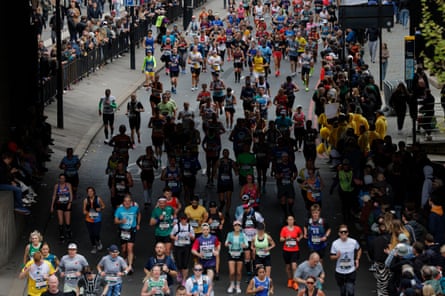
If you've got a place in a spring marathon, start training now, says Craggs. "But also make sure you "don't overcook it too early," says Wilkinson. "It is better to have done less but run consistently and continuously over the whole period up to your marathon than it is to have put in some amazing long runs and then had three weeks off because you overdid it."
"I get people to think about nutrition, hydration and sleep," says Kirk-Odunubi. "If life's got in the way, and you've been working long hours and you are fatigued, skipping one session is probably going to be more beneficial for you than pushing through."
"You don't have to get to 20 miles in training," says Craggs. "Your job is to do enough, but not so much that you come into the marathon knackered. Loads of runners run great marathons off a longest run of 16-18 miles." Doing a 10k or half-marathon first can help to rehearse race day logistics such as fuelling with gels and energy drinks.
On the day itself, leave plenty of time to get there and queue for the toilets, says Wilkinson. "Nerves are good; they make you want to do well, and they give you adrenaline." Then, when you set off, "however slowly you think you've started, start more slowly," says Wilkinson. "Have a feeling for your first few miles, and do not exceed it. If you do, even if you feel amazing, you will regret it. That is the time when you really need to use your watch."
Try to be philosophical
As a coach, Wilkinson says she prides herself on predicting people's times, but a lot of people aren't as accurate about themselves. "Afterwards, ask yourself: was the time you hoped for realistic based on the training that you did and the fitness you had? Did you have a race plan that was sensible, and did you stick to it? Did you take gels at the right time? Did you keep yourself at the pace that you planned? Were you ill, injured, stressed or overcome by the whole experience? All of those things affect you."
Whatever happens, "It's not the end of the world," says Wilkinson. "And do you know what? Ninety-nine percent of people won't judge you on your time, or won't even know what it means. My PB was 2 hours and 37 minutes. People think that is amazing. I tell them I ran 3 hours and 48 minutes last year, and they think that's equally amazing."
"It's OK to be disappointed," says Craggs, who advises focusing on other things that went well, such as spotting your family and friends in the crowd. "If sport was predictable, we wouldn't do it."