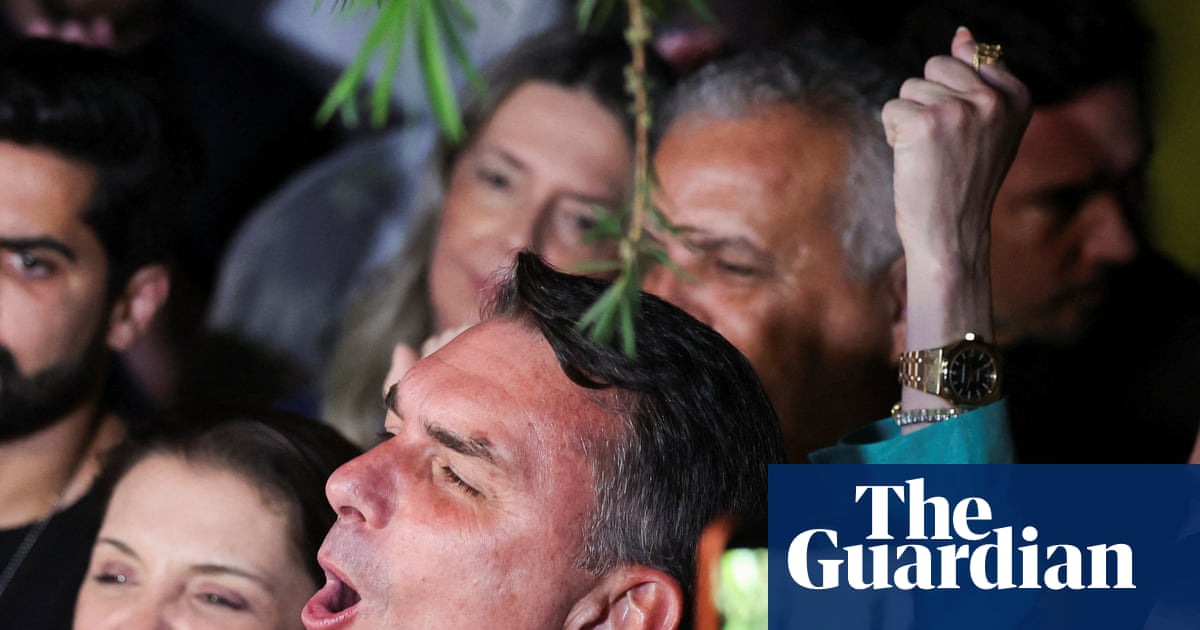
On Sunday night, as the scale of the far-right triumph in Brazil sank in, an adapted football chant rang out in one of Rio's most leftwing areas.
"Let's turn this around, Lu-laaaaa! Let's turn this around, Lu-laaaaa! Let's turn this around, Lu-laaaaa!" crestfallen progressives bellowed while drowning their sorrows after witnessing an excruciating election setback for their leader, Luiz Inácio Lula da Silva.
But the scale of the challenge facing the veteran leftist looks immense after Flávio Bolsonaro's shock first-round win, which analysts attribute to a complex lattice of social, political and religious phenomena.
"Flávio Bolsonaro's result shows that Bolsonarismo is a far-right movement … that has put down deep roots in Brazilian society," said Bernardo Mello Franco, a political columnist for the Rio broadsheet O Globo. "His father [Jair Bolsonaro] was convicted and jailed for attempting a coup d'état [in 2022-23] yet despite this, his allies won elections across the country, and his son is the frontrunner in the second round of the presidential election."
Among the main drivers behind Bolsonaro's strong showing: