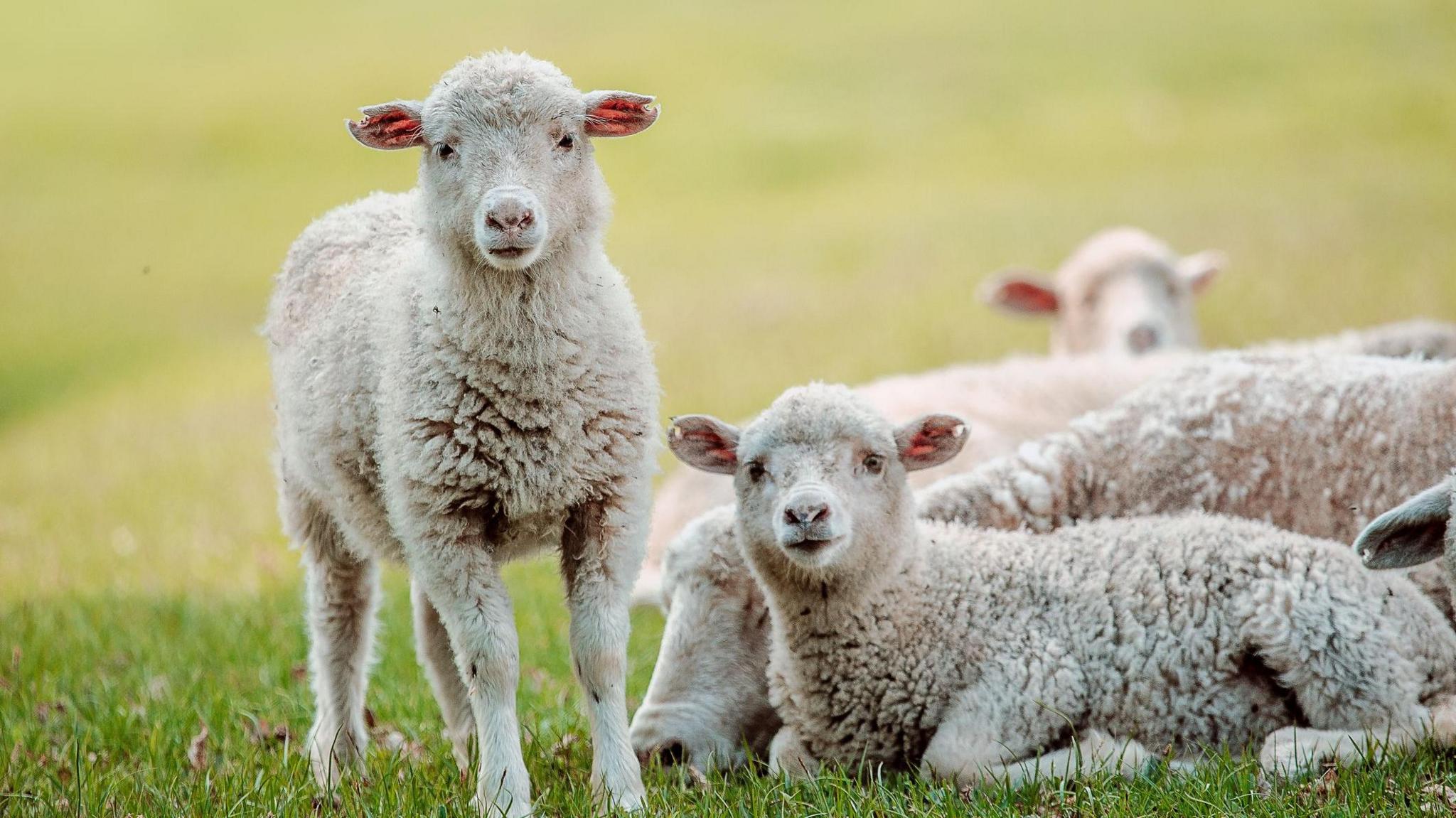
A farming family in the south of Scotland have confirmed the "awful" news that a lamb in their flock had the potentially deadly bluetongue virus.
The single case, which was the first in Scotland, was recorded at the Johnson family's Kirkmabreck Farm near Creetown in Dumfries and Galloway on Saturday.
The Scottish government said on Tuesday that the animal had been euthanised on welfare grounds and restrictions had been put on the farm.
It is one of 289 cases of bluetongue serotype 3 (BTV3) in the UK in the 2026/27 season - most of them in the south-west of England.
The Johnson family - who said they moved to Scotland from England four months ago - confirmed in a post on Facebook that all their stock had been moved indoors to reduce the risk of spread.
The post said: "I just want to clarify that all the stock we have was purchased locally, within 20 miles of where we live. Nothing came up with us from England apart from dogs and of course our children!
"I literally can not believe that we have only been here four months and this is what we are faced with. This is not at all how we wanted to introduce ourselves to the locals but like the vet said, we haven't done anything wrong and it is all a case of rather bad luck."
Sheila Voas, Scotland's chief veterinary officer, previously told BBC Scotland News it was likely that the animal picked up bluetongue from infected midges that had blown on to the farm.
"We know there's disease in Northern Ireland, the Republic of Ireland, Isle of Man and the north of England so my working assumption is a plume of infected midges blew over and infected this animal and possibly others," she added.
Signs of BTV3 include nasal discharge, redness and swelling of the lips, nose and muzzle, lameness or reluctance to stand, a decrease in milk production and diarrhoea in cattle.
It does not affect people or food safety but it causes a high rate of death in infected sheep and fertility problems in infected cattle.
The chief vet urged farmers to vaccinate their livestock against the disease.
Spike in cases blamed on hot weather
BTV3 is a notifiable disease that must be reported to the Animal and Plant Agency in Scotland.
A recent spike in cases in the south-west of England has been blamed on the hot and humid weather.
The Animal and Plant Agency has said the conditions were favourable for midge populations which can carry the virus between animals.
Get in touch
What stories would you like BBC News to cover from the south of Scotland?