On the night of 12 November 1993, a slim, young Brazilian named Royce Gracie stepped into an octagonal cage in Denver, Colorado, and found himself staring up into the eyes of a giant. Gerard Gordeau, a Dutch kickboxer, stood five inches taller, weighed almost three stone more than him, and had an extra decade of fighting experience under his belt. Now the pair were about to engage in bare-knuckle combat: no judges, no separation of opponents by size, no respite until someone either got knocked out cold or begged for mercy.
The fight lasted barely 100 seconds. In that time, Gracie calmly tripped Gordeau up, jumped on his back, and clutched at his throat, forcing the big man to hammer the floor in submission.
About 80,000 pay-per-view spectators watched Gracie's legendary victory – the finale of the first ever Ultimate Fighting Championship – live on television. Among them was an unassuming business studies student living in San Diego, California. Mesmerised by what he had seen, the student presented himself at a local martial arts academy that specialised in Brazilian jiu-jitsu – the discipline employed by Gracie to humble Gordeau in the cage – and asked to begin lessons. His classmates found it hard to take the newcomer seriously. "I was there the day he showed up," said Kid Peligro, who went on to become one of the biggest jiu-jitsu stars in the world. "He was wearing shorts, flip-flops and a tank-top; he sat in the corner and barely spoke to anybody."
The student, who introduced himself as Ben, was in his mid-20s and hailed from the Middle East, but revealed little else about his background. Peligro assumed that he served as the butler or bodyguard to the rich Englishman who sometimes accompanied him to lessons. "Ben was quiet, and he was dedicated," Peligro told me. "He would often stay behind after class to sweep the mats." Ben also took physical pain in his stride, even when it involved fractured bones. "If you trained in jiu-jitsu in the 1990s, you were going to get hurt," said Bobby Razak, a film producer and martial arts enthusiast. "It wasn't like it is now: very clean, very professional. Back then, it was raw."
After more than a year of training, Ben made a startling announcement: he was about to return home to Abu Dhabi, capital of the United Arab Emirates, and would be taking the academy's founder, Nelson Monteiro, along with him. Other invitations soon followed. Rumours spread that Ben was trying to establish his own martial arts centre on the shores of the Persian Gulf. One day, Peligro and his wife were sent a pair of first-class flight tickets to the UAE, worth $24,000 each. When they stepped off the plane, they were astonished to see pictures of a familiar-looking man – clearly Ben's father – everywhere they turned, from billboards to banknotes. "Ben's training centre turned out to be one of his family's palaces," Peligro said, still marvelling at the memory. "It's like a fairytale."
For those trying to uncover the truth behind His Highness Sheikh Tahnoon bin (or "Ben") Zayed Al Nahyan – royal fixer, reclusive spymaster, financial behemoth – fairytales are nearly all we have to go on. Tahnoon, who really did enrol in Nelson Monteiro's class under a pseudonym and eventually went on to become a jiu-jitsu black belt in his own right, now sits atop an economic fortune larger than the GDP of several major countries, and is closely entwined both personally and financially with the Trump White House. The global holdings overseen by Tahnoon span windfarms in Scotland and spaceships in Texas, Rihanna's lingerie line and Richard Caring's Ivy restaurants. From hospitals to housing blocks, solar farms to ski resorts, there is almost no place on Earth untouched by his financial firepower.
But despite his ever-growing influence on the world stage, Tahnoon prefers to remain in the shadows. He has never given a substantive interview to the press. Those who have worked closely with him are almost always made to sign non-disclosure agreements. Very few people outside the UAE even know his name. "He's quiet," says one former US national security official, "and he's always everywhere." Sheikh Tahnoon did not respond to an interview request for this article. The UAE foreign ministry did not offer any other senior government figure for interview, and declined to provide any comment.
Tahnoon's power is soon going to extend over more human lives than ever before. As one of the most important AI financiers on the planet, he is rapidly embedding himself within the infrastructure that will underpin our digital future: its information pipelines and its microchip foundries, its datacentres and the enormous energy plants needed to power and cool them. Some see him as a technological prophet and saviour. Others compare him to a Bond villain. So who is the real "Ben", and what are his plans for the rest of us?
Anyone trying to find Sheikh Tahnoon must first navigate concentric circles of gatekeepers. These include his closest business associates, as well as a cast of more colourful characters: the former Lebanese prime minister Saad Hariri, for example, or Melissa Moncada, one-time winner of the Miss Globe Colombia beauty pageant, and now a fitness entrepreneur. Even if you get this far, it may not be enough to be granted an audience, and supplicants go to extraordinary lengths to stand out from the crowd.
About a decade ago, Tom Barrack, an American private-equity tycoon who now serves as Donald Trump's ambassador to Turkey, was seeking funds for his investment firm, Colony Capital, when he decided to approach Tahnoon. Barrack's extended courtship involved sending the sheikh a rare, first-edition book from the 1950s about the breeding of Arabian horses (one of Tahnoon's passions), offering him the chance to meet Barrack's friend, the West Wing actor Rob Lowe (Tahnoon declined), and joining a gruelling bike ride across the Moroccan desert that Tahnoon had arranged with a group of professional cyclists. (Tahnoon rode twice as fast as Barrack, leaving him for dust.)
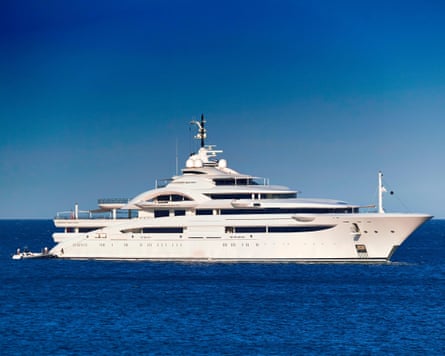
Eventually, Barrack was granted a conference with Tahnoon on the prince's $250m superyacht, which boasts a nightclub, spa, cinema and sushi bar, as well as 27 guest bedrooms serviced by 60 permanent crew. "Why was I excited to see Sheikh Tahnoon?" explained Barrack, during his federal trial in 2022 concerning alleged illegal lobbying for the UAE. (Barrack was ultimately acquitted of all charges.) "He's one of the biggest businessmen in the world. One of the wealthiest Middle Easterners of any country. One of the most powerful."
Mapping the extent of Tahnoon's power is almost as challenging as tracking down the man himself. But if you turn left off the 12-lane Sheikh Zayed highway that connects the UAE's capital, Abu Dhabi, with Dubai, and drive out across the desert before striking north along the Taweelah coastline, you can glimpse some of its building blocks. First come chimneys, tankers and low-rise workers' compounds. These form the onshore conduit of the UAE's colossal oil reserves, most of which lie far below the seabed beyond. Continue and you'll pass the high, windowless walls and forbidding gun towers of al-Sadr, the UAE's most notorious prison. Eventually you'll reach Khalifa port and its flat, grey industrial zone. Somewhere ahead, at an undisclosed location deep within a warren of container stacks, chemical drums and chain-link fences, one of the largest AI datacentres in the world is currently rising from the sand.
These scattered landmarks form the backstage of the modern Emirates. Together, they also tell the story of the six brothers who have come to dominate the country – a story that began more than half a century ago, with their father, Sheikh Zayed bin Sultan Al Nahyan, the UAE's first leader following independence from Britain in 1971. During his 33-year reign, a loose network of Bedouin tribespeople living among mud-brick forts and palm-frond houses was transformed into an oil-rich regional superpower, home to some of the tallest buildings on Earth.
Zayed married seven times and is believed to have fathered at least 30 children. But it was the offspring of his third and favourite wife, Fatima Al Ketbi, who – under her tutelage – emerged as their nation's powerbrokers. Tahnoon was one of them. Today, he and his siblings – known as the , or "sons of Fatima" – sit at the apex of arguably the wealthiest dynasty in the world.
Tahnoon and his brothers grew up steeped in a worldview that placed their family at the centre of the universe. Any form of dissent was seen as an existential threat, not just to their own power but also to the small and fragile state they were responsible for protecting. "The family is the first school of values, the authentic guardian of identity, and the truest source of trust and belonging," their mother, Fatima, once said, reflecting both the paternalistic ethics that prevail among the Emirati elite, and the Al Nahyans' visceral hostility towards alternative ideologies such as socialism or political Islam. By the time Tahnoon returned from the US in 1995, a state-sponsored crackdown on Islamist civil society groups was under way, alongside reprisals against smaller emirates that resisted it.
During this period, the UAE's leadership became increasingly conscious that money alone could not buy them international clout. Despite oil finds in the Gulf, it was the big Arab republics such as Egypt and Syria that still dominated the Middle East, both diplomatically and culturally. Military strength and strategic influence were needed to propel the Emirates into the big time. In the final years of his reign, Sheikh Zayed ensured that the bani Fatima were favourably positioned to drive this project forward.
As a younger brother, Tahnoon knew that the Abu Dhabi throne – and consequently the presidency of the UAE, which always accompanies it – was not destined for him. Instead, he was given the task of running his father's private department, which oversaw Sheikh Zayed's extensive personal assets, including palaces, farms and overseas landholdings such as London's Berkeley Square. The role demanded a blend of charm and coercion, and the deployment of hard cash. By the late 1990s Tahnoon was making the latter his speciality, founding a company called the Royal Group that became the primary investment vehicle for his family's many business interests. The group's assets are currently worth $300bn.
Following Sheikh Zayed's death in 2004, Tahnoon's reputation as the UAE's top money man grew. As comfortable in the boardrooms of Wall Street as he was in the Emirati (the traditional court of the tribal ruler), Tahnoon melded the rhetoric of Bedouin values – duty, loyalty and humility – with a new vocabulary of technocratic managerialism. Today, the country's largest sovereign wealth vehicle is run by Tahnoon; so is First Abu Dhabi Bank, its largest lender, and Alterra, the biggest climate investment fund in the world. In the UK alone, Tahnoon oversees healthcare providers and property giants, and controls investments in public utilities such as Thames Water. The economic empire he oversees is estimated to be worth about $1.5tr, as large as the entire economic output of Indonesiaor Turkey.
But the line between Tahnoon's personal fortune, the wider wealth of the Abu Dhabi royal family, and collective assets held – at least in theory – by the citizenry of the UAE, is blurry. According to the bani Fatima, that division is moot, as the wellbeing of the Al Nahyans is indistinguishable from the wellbeing of the nation at large. Not everyone agrees. "A lot of merchants in the UAE complain constantly – very quietly, very privately – about how Tahnoon crowds them out of the market," Mira Al Hussein, an Emirati sociologist based at the University of Edinburgh, told me. In healthcare, for example, sovereign wealth funds and Tahnoon's own corporate vehicles dominate the local industry; the private sector "cannot compete", one senior executive recently told the Financial Times. "The general perception is that the country is a ship," said Al Hussein, "and if that ship ever begins to sink, then the ruling family will jump off and take all of the wealth funds and investments and portfolios with them."
Tahnoon is obsessed with winning. In the late 1990s, the sheikh became so determined to beat his brothers at the newly released video game Age of Empires – in which players attempt to transform pre-modern societies into monumental civilisations by hoarding resources and overpowering opponents – that he hired one of the game's software developers to coach him. By the early 2000s, his attention had switched to chess. He personally financed the development of a refrigerator-sized supercomputer called Hydra, which soon became the most powerful chess player in the world, beating several grandmasters along the way. Hydra could only ever be used by a single person at a time. For hours at a stretch, day and night, that person was Tahnoon. In 2005, Hydra's chief architect claimed in an online chess forum that Tahnoon was the greatest computer-chess freak alive.
Tahnoon has brought all these skills – fierce competitiveness, the careful accumulation of positional advantage, and an abiding fascination with melding human ingenuity and computing intelligence – to the financial realm. They have also proved vital in his other main role: as the man in charge of national security in the Emirates, and his country's spymaster-in-chief.
Many of the individuals targeted by Tahnoon's security apparatus can't share their testimony. The UAE has a long history of enforced disappearances, secret detention sites and vicious reprisals against the family members of exiled dissidents – all extensively documented by international human rights organisations. But some survive to tell their tale.
In April 2018, Matthew Hedges, a young British academic, travelled to the UAE to conduct research for his PhD exploring the country's national security strategy, a subject that touches directly on Tahnoon's domain. By the end of his two-week visit, Hedges had started to feel uneasy. "I knew I was being followed," he told me recently.
Entering Dubai airport on his way back to the UK, Hedges got no further than passport control. There he says he found a large group of masked men waiting for him, all dressed in black and carrying guns. He alleges that he was blindfolded, handcuffed and thrown in the back of an SUV. He was accused of working as a British spy and over the months of solitary confinement that followed, he says he was subjected to interrogations lasting up to 15 hours a day and made to swallow a cocktail of medications against his will. His captors allegedly threatened him with rendition to an overseas military base, and warned that they could harm his relatives. Following seven months of maltreatment, Hedges attempted to take his own life. "I knew their threats to be meaningful, because I knew the country," he told me.
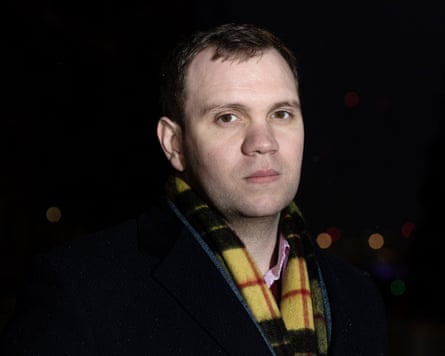
In the room where he was questioned by officials, Hedges says he saw bloodstains on the carpet and bloody footprints on the walls. "They were above my head height, and facing down," he told me. "I'm over 6ft tall, so that means someone had been lifted up there." When I asked Hedges who was ultimately responsible for his ordeal, he ran carefully up the chain of command within the Emirati security services, reciting names and job titles, before sitting quietly for a moment and taking a breath. "Then you get above the clouds," he replied, eventually. "Then there is Tahnoon." (In a government statement issued in 2023, the UAE insisted that Hedges "received entirely proper care … He was never subjected to, or threatened with, either torture or cruel, inhuman or degrading treatment of any sort.")
Hedges ultimately confessed to a series of crimes, but insists that he did so under duress. In November 2018, following a hearing that lasted only five minutes, at which there was no defence lawyer present, he was sentenced to life in jail by an Emirati court. Following a diplomatic row with the British government, he was later granted a royal pardon. After his release, the UAE government mounted a smear campaign against him that included the release of a 19-page dossier of personal information including a psychiatric report. Compared with many others who pass through the country's interrogation cells, he got off lightly. "Hedges' experience is unfortunately common in the UAE, and abuses against Emirati civil society are even more repressive," said Joey Shea, a senior Gulf researcher for Human Rights Watch.
Supporters of the Emirati regime bridle at this sort of criticism. They insist that it is grounded in western resentment at the UAE's rise, and overlooks the unique security threats the nation faces from hostile neighbours and ideological insurgents. "The UAE has become a success story, and that's led to you guys thinking, 'Wait, these were the little ducklings that we used to run and now look at what they're doing,'" said Abdulkhaleq Abdulla, an Emirati professor of political science who is well connected to ruling officials in the UAE. "I resent the claim that the UAE must 'level up' to international standards [on human rights]. You have your standard, we have ours."
The Al Nahyan dynasty has good reason to feel insecure. Located on the tip of a landmass roiled by conflict to the north and south, and staring out across the Gulf at its far larger rival Iran, the UAE's petro-riches make it an obvious target. Tahnoon and his brothers also know that their brand of autocratic monarchy is despised by political Islamists and pro-democracy Arab revolutionaries alike. Some 20 years ago, Christopher Davidson, an expert in Gulf politics at Durham University, spoke to one of the bani Fatima about the Emirates' rising prestige. "He said to me, 'You need to understand the mindset of this region. Others will try to take that away from us, or destroy us'," Davidson recalled. "'Whether it's Iran, Yemen, the Muslim Brotherhood, Al-Qaeda … they'll all be coming, one after another.'"
For the UAE's leaders, the 9/11 attacks – perpetrated by a group of extremists that included two Emiratis – were a realisation of their darkest fears about violent enemies lurking within, and helped fuel an obsession with Islamism that persists to this day. (The UAE has been linked to covert funding and political support for far-right political parties in Europe who are seen to share Abu Dhabi's perspective on this issue.) The US war on terror was also a moment of opportunity, enabling the Al Nahyans to present themselves to Washington as an island of stability within an otherwise forbidding region.
Throughout the 2000s, the Emirati regime ramped up its intelligence activities and increasingly focused on espionage technologies. The aim was to mitigate the country's most obvious vulnerability: its tiny native population of 1.4 million people, which comprises only 11% of the UAE's total residents, and makes it hard for the country to raise a significant army or to function in the absence of foreigners. By the end of the decade, it had struck a landmark security deal with the former US counterterrorism czar Richard Clarke, who was instrumental in lobbying Congress for more intrusive surveillance programmes both at home and abroad. Clarke moved out to Abu Dhabi and set up a secretive UAE spying unit, which was given the codename Project Raven.
Initially billed as a vital cog in the "war on terror", Project Raven morphed into a vast and pervasive digital wiretap operation targeting not only Emiratis accused of terrorism, but many others merely suspected of being unfriendly to the UAE's dictatorship. Although technically an Emirati initiative, much of the team running Project Raven were former US National Security Agency spies, Washington contractors and senior White House veterans. "The incentive was to help in the fight against terrorism," Clarke later insisted. "The UAE is a very good counterterrorism partner."
By 2011, when anti-government uprisings erupted across the Arab world, the focus of Project Raven's energies had become clear. After a group of prominent Emirati judges, lawyers and journalists put their names to a petition calling for mild democratic reforms, the state's response was uncompromising; over the next two years the majority of them were arrested, and dozens of signatories remain in jail today. More paranoid than ever, and harbouring fears that Emirati soldiers might refuse to turn their guns on fellow Muslims in the event of widespread street protests, the bani Fatima mobilised an 800-strong paramilitary force of Colombian and South African mercenaries to tighten their grip on power, and even greater resources were funnelled into digital hacking operations. To the Al Nahyans, mass politics was a threat: in their eyes, grateful subjects could only ever petition their leaders for concessions, never make demands of them as citizens. "The UAE's internal security structure increasingly prioritised regime protection above all else," said Mira Al Hussein.
It was against this backdrop that Tahnoon – alongside his role as the UAE's money man – began rising up the ranks of the Emirati security establishment. In 2014, he became the country's deputy national security adviser; two years later, he assumed the top job. As security chief, his new brief included some of the UAE's most sensitive diplomatic missions, among them the breaking of a decades-long taboo in the Arab world by normalising relations with Israel. As the Middle East's other leader in the field of cyber-espionage, Israeli intelligence had much to offer the Emiratis: not least access to Pegasus, the most advanced spyware ever built. With Pegasus, operatives were able to infiltrate almost any Apple or Android device without the user's knowledge, and transform it into a permanent, pocket-sized spy.
Under Tahnoon's stewardship, Project Raven – control of which had now passed into the hands of a private, state-linked Emirati company named DarkMatter – scaled up its hacking and surveillance activities. Local dissidents and suspicious foreigners on Emirati soil were targeted. But so, too, were human rights activists, journalists and politicians all over the world. Fiona Shackleton, a high-profile British divorce lawyer representing an estranged wife of the ruler of Dubai – whose other clients have included Prince Charles and Paul McCartney – was one such victim. Then UK prime minister Boris Johnson is believed to have been another. It seemed that no matter who you were, if you were deemed to threaten the interests of the Al Nahyan family and their friends, even tangentially, then you were a potential target.
In early 2019, a Reuters investigation – building on work by the Canadian research group The Citizen Lab – exposed much of Project Raven's operations, and multiple legal proceedings were launched in the US against the initiative's American contractors. Over the next year, Tahnoon officially shut down DarkMatter and broke apart its various entities. By that time, it appears he was nursing more ambitious plans.
A powerful new frontier in computing power – artificial intelligence – was just beginning to open up. To be genuinely transformative, this technology was going to require fantastical amounts of cash and data. By fusing together elements of his business and security empires, Tahnoon would be in a unique position to supply both. A company like no other was about to be born.
In Douglas Adams's The Hitchhiker's Guide to the Galaxy, a superintelligent computer programme named Deep Thought is asked "the great Question of Life, the Universe and Everything'". After seven and a half million years, it finally delivers its famous answer: 42. Deep Thought goes on to say that, in order to explain its answer, it needs to design another giant computer programme. This one will be called "Earth", and one of its core operational components will be human beings.
In this vision, the number 42 represents more than the meaning of life. It speaks to a world in which every facet of reality can ultimately be reduced to lines of code, and where ordinary people unwittingly live out their days in the service of computers rather than the other way around. In the late 2010s, when Tahnoon refashioned the ruins of DarkMatter into a new AI-focused company, he decided to honour Adams by calling it Group 42, or G42 for short.
G42 is the culmination of Tahnoon's dual identity as a financier and spymaster, and the scale of its aspirations is staggering. Like many other tech giants, it aims to reconceptualise AI as a foundational form of infrastructure like water or electricity – a concept known as the "intelligence grid". Unlike its Silicon Valley peers, however, G42's intelligence grid has grown out of an actual nation state's intelligence apparatus. The company's marketing heavily emphasises its security capabilities, promising "real-time threat defence" for governments and businesses, and predictive tools that encompass "suspect profiling", "relationship mapping" and "behavioural analysis".
The tech industry is not short on exaggeration and bombast. Compared with many of his Silicon Valley peers, however, Tahnoon – a true AI believer who claims to have designed the entirety of one of his homes via ChatGPT – is in a unique position to deliver. G42 built on the espionage talents behind Project Raven and DarkMatter: Peng Xiao, who was the head of a key DarkMatter unit, is now G42's CEO; Karim Sabbagh, DarkMatter's former boss, currently runs one of G42's main subsidiaries. One of G42's first public products was a popular messaging app called ToTok, which was later revealed by the New York Times to be a piece of spyware, designed to "track every conversation, movement, relationship, appointment, sound and image of those who install it on their phones".
In a statement to the Guardian, G42 denied that the company's origins lay in cyber-espionage operations, or that it conducts or enables unlawful surveillance. "G42 was established as an AI and technology company focused on cloud and AI infrastructure," the firm said. "Our businesses operate under applicable laws, contractual data protections, and rigorous security and compliance frameworks."
If US tech giants are wary of G42's links to cyberhacking, they are doing a good job of hiding it. Microsoft has invested $1.5bn in the company and its vice-chair, Brad Smith, now has a seat on G42's board of directors. G42 and its specialist AI investment fund – also chaired by Tahnoon – are either direct investors in or major partners of Anthropic, xAI and OpenAI. Sam Altman, the latter's CEO, calls Tahnoon "a dear personal friend". Microsoft and OpenAI were approached for comment on this article, but neither company provided a response. In its statement to the Guardian, G42 noted that its partnership with Microsoft "is governed by a binding agreement developed in consultation with the US and UAE governments, covering cybersecurity, data protection, responsible AI, export controls and business integrity".
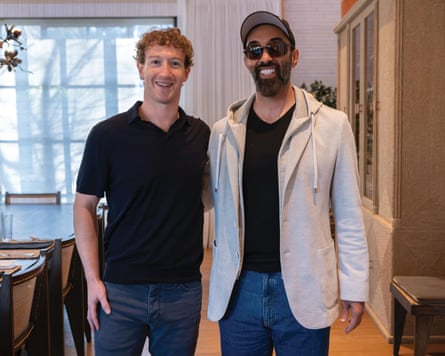
Tahnoon's appeal to Silicon Valley is obvious. After all, if you're going to go into business with a cash-laden Gulf autocrat, then picking one who presides over a heavily digitised state-security empire – and who boasts a proven track record of hoovering up humongous amounts of personal data, the raw ingredient upon which your technology depends – feels like a logical choice. Mark Zuckerberg, Sam Altman and Elon Musk may all be hugely influential AI leaders, but none of them simultaneously runs the CIA.
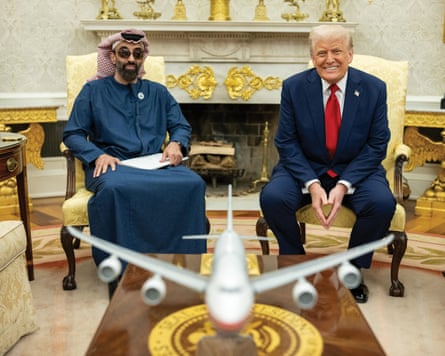
Another powerful figure to have clutched Tahnoon and G42 close to his bosom is Donald Trump, who has hosted lavish state banquets for the sheikh at the White House and posed for photos with him in the Oval Office. The American security services have long harboured fears about Emirati influence on US politics: in 2022 the National Intelligence Council produced a confidential report for Washington policymakers warning of Abu Dhabi's "illegal and legal attempts to steer US foreign policy". Joe Biden's administration restricted the export of AI chips to the UAE because of concerns over the country's close ties to China. But last year Trump reversed that decision, authorising the transfer of hundreds of thousands of Silicon Valley's most advanced chips to the Al Nahyan regime. Many of them will go straight to G42.
The deal was announced only two weeks after one of Tahnoon's investment vehicles acquired $2bn-worth of cryptocurrency issued by World Liberty, a company owned by the Trump family, who earn interest on all its reserves. Tahnoon is also a direct investor in World Liberty, having purchased 49% of the firm less than a month before Trump's second inauguration. Both the White House and World Liberty have denied any connection between Tahnoon's investments and the chip transfer. A spokesperson for G42 told the New York Times that the company was "grounded in integrity".
"Corruption, plain and simple," is how the Massachusetts senator Elizabeth Warren describes the murky entanglement of Tahnoon's money and the US White House. But the rapid ascent of Tahnoon and G42 within the AI industry reflects a sincerely held conviction on the part of both the Trump administration and the bani Fatima that AI is set to replace oil as the elemental global commodity – and ultimate determinant of global power – and that now is the time to master it.
The result is that G42, under Tahnoon's control, has successfully positioned itself at the heart of global AI infrastructure for decades to come. The "AI campus" currently being constructed on the UAE's coastline is projected to have a 5GW power capacity, up to 250 times the size of the largest hyperscale datacentres today. G42 is helping to finance a $500bn rollout of new datacentres within the US, and has now acquired several of the construction companies involved. Last year, Microsoft and G42 officially co-launched the Responsible AI Future Foundation, designed to shape "ethical development and deployment of AI systems". It is headquartered – of course – in Abu Dhabi.
Does it matter if significant chunks of our AI infrastructure sit in the hands of a man with the entire arsenal of a police state at his disposal? One person who might be able to answer that is Ahmed Mansoor, a mild-mannered Emirati electrical engineer and aspiring poet. In the early 2010s, Mansoor was among that group of public intellectuals who signed a petition calling for the creation of an elected parliament in the UAE; he also ran a website on which content critical of the Al Nahyan regime was sometimes posted. In April 2011, he was arrested on multiple charges, including the defamation of the bani Fatima, but initially released thanks to a presidential pardon.
In the years that followed, though, Mansoor was relentlessly targeted by the Emirati security services, who spent millions of dollars attempting to gain access to his electronic devices, and those of his wife. Eventually, Mansoor succumbed to a malicious email attachment, which sent all of his private data to a computer server registered to PO box 5151 in Abu Dhabi: the postal address of Sheikh Tahnoon's personal office. He later found out that his baby monitor had also been hacked, turning it into a camera and microphone that captured every moment of his family life. He was arrested again in 2017, subjected to a secret trial, and convicted of insulting the "status and prestige of the UAE and its symbols, including its leaders". Sentenced to 10 years in jail, he has remained in solitary confinement in al-Sadr, the maximum-security jail located about 10 miles south-west of G42's AI mega-campus, ever since.
We don't know if Tahnoon will use his commanding position at the heart of the AI industry to directly hack, surveil and intimidate critics, as his security services did with Mansoor. But the character of those controlling this new technology matters. Today, we don't just use major tech platforms to store files and send messages: more and more people use AI to be their therapist, friend or even lover. Tech executives assure us that our data is safe from prying eyes but ordinary citizens have very few ways of verifying this. In its pomp, the early smartphone manufacturer BlackBerry insisted that "privacy and security form the crux of everything we do". It failed to mention that BlackBerry was secretly working with the cybersecurity unit of a foreign government at the time, and helping it to carry out digital surveillance of mobile users. That cybersecurity unit was the UAE's DarkMatter group, the precursor to G42.
The potential risks of untrustworthy actors controlling AI may be more insidious than direct hacking and surveillance. A group of researchers recently revealed that AI tools – including products from Meta, Google and SpaceX – are regularly altering the meaning of texts on sensitive political topics, in ways that could reshape public opinion. "I'm very worried about Tahnoon's perception of the world," says Al Hussein. "He's the video-game prince who wants to press a button and eliminate all threats."
For a glimpse of what a world reshaped in Tahnoon's image might look like, consider the UAE. Here, political parties are nonexistent, trade unions and labour strikes prohibited, and protests and lèse-majesté met with rapid punishment. Migrant workers, who make up the vast majority of the country's residents, are kept in a state of legalised insecurity and suffer from thousands of officially unexplained deaths each year, which human rights organisations attribute to heat stress, construction accidents and other poor working conditions. Businesses, by contrast, can pick and choose the regulations that govern them from a patchwork quilt of 40-odd "freezones", all competing to lure investors with bespoke tax regimes and legal frameworks.
Beyond the UAE's borders, Abu Dhabi's dominion encompasses a vast network of ports, security partners, client regimes and financial flows spanning the Red Sea and huge swathes of north, eastern and central Africa. Often presented as a neutral , torn between rival global power blocs to the east and the west, the reality is that the UAE has always served faithfully as capital's emirate: shielding the wealth of international elites, opening up inhospitable markets, paving the way for western investors, and – as Colin Powers, a political economist specialising in the Middle East, puts it – "energetically extending the circuitry of global wealth accumulation".
Under the bani Fatima, this function has included the brutal suppression of any democratic experiment within the Emirati field of influence that might threaten the material interests of the Al Nahyans or their allies. In Egypt, the UAE has helped sustain the military dictatorship of Abdel Fattah al-Sisi, which has turned its guns upon thousands of protesters. In Yemen, Libya and Ethiopia, it has armed paramilitaries and fuelled shocking levels of state violence against civilians. In Sudan, it is accused of complicity in genocide. In response, Abu Dhabi has deployed AI tools as part of a sophisticated disinformation campaign designed to discredit the United Nations. Several dissidents wanted by other dictatorships – from Iran to Saudi Arabia and Rwanda – have also been kidnapped while transiting through Dubai airport, before being "delivered" by the Emiratis to their home country's security forces. Not all of Abu Dhabi's foreign adventures have been successful; many have led to military quagmires and reputational damage on the world stage. But for those on the receiving end of Emirati intervention, the consequences have been dire.
The imperial ambitions of Tahnoon and his brothers do not seem to rest on direct occupation of land, but rather on controlling key "nodes" outside their borders: the sites at which the movement of money, arms, trade, technology and ideas intersect. AI, the functioning of which is distributed across territories around the world, is the ideal asset for a nodal empire. Tahnoon's goal of making the UAE an AI superpower is framed domestically as part of his family's historic mission to improve the lot of the Emirati people. But the UAE's accumulation of power in recent decades has been delivered on the bani Fatima's own terms. Central to the Al Nahyan family's worldview is the notion that, amid a planet riven by the chaos and humiliation of democracy, their nation is a demonstration that things can and should work differently. According to Tahnoon's brother, President Mohamed bin Zayed Al Nahyan, "The UAE is a tangible model for the world."
With his array of spy tools, superyachts and supercomputers, his preference for remaining far from public view, his habit of always wearing dark glasses in public (even indoors), and – of course – his obsession with personal longevity (he aims to live to 150), it would be easy to characterise Tahnoon as a cartoon villain. But in truth, this is not a story about a malevolent prince plotting vile deeds from his palace in the Persian Gulf. It is a far more prosaic tale about how power and money function in the world today.
In Washington, just as in Abu Dhabi, politics is increasingly governed by personal relationships and transactional gains rather than popular demands. In the UK, as in the UAE, firms such as Palantir that offer AI-enabled surveillance and data crunching are being integrated with the basic functions of the state. All over the planet, business-friendly strongmen are the order of the day. "For the last 20 years, democracy has been in decline," said Ronald Deibert, the founder and director of The Citizen Lab. "That happens to coincide with an enormous expansion of digital surveillance capabilities for both commercial and national security purposes. The epicentre of a lot of this is the UAE. And where do all roads lead in the UAE? They lead to Sheikh Tahnoon."
On 27 February, Tahnoon chaired a board meeting at G42's AI investment fund. That night, the sky above Abu Dhabi's seafront lit up with the flashes of US and Israeli missiles raining down across the Persian Gulf, marking the start of the Iran war. One of Tehran's first acts of retaliation was to directly bomb two AI datacentres in the UAE. The Iranian government soon published an official list of what they considered "legitimate" military targets which included the Emirati offices of US technology companies such as Amazon, Google and Microsoft. Western journalists speculated that this could spell the end of Tahnoon's AI dreams. "Why did we ever think datacentres in the Gulf were a good idea?" ran one headline in the Financial Times.
Over the following months, Tahnoon shuttled around the Middle East, conducting covert diplomacy. According to Reuters, senior officials from Iran's revolutionary guards were hosted by Tahnoon in his Abu Dhabi guesthouse. By mid-June, he had reportedly struck an agreement that provided billions of dollars for the Iranian government, and brought Iran's strikes on the UAE to a halt. A few weeks later, on the same day that Trump announced that the US's ceasefire with Iran was "over", the US commerce department quietly confirmed that it was removing the last remaining export controls restricting the sale of advanced AI chips to Abu Dhabi.
As life in Abu Dhabi gradually returned to something resembling normality, Tahnoon's family members began reappearing in public. A company founded by his daughter, Sheikha Fatima bint Tahnoon, signed a memorandum of understanding with G42 last month, suggesting that she is being primed to follow in his footsteps and eventually assume a commanding role within the UAE's tech-security empire. Tahnoon's son, Sheikh Zayed bin Tahnoon, was the guest of honour at several major jiu-jitsu events this summer. Tahnoon himself, meanwhile, stayed far from the public eye. Judging when to retreat, and knowing when to strike: "Ben" had outmanoeuvred his doubters once again.