sther Rantzen's early CV reads like a chronicle of the world working as the 1960s thought it should. A smart young woman, privately educated in north London from the age of 10 (the Rantzens had previously lived in New York), then at Somerville College, Oxford, she started on the bottom rung and had exactly the right mixture of graft and luck. Having trained as a radio studio manager, she got her first TV production job as a researcher for BBC-3, Ned Sherrin's satirical show in the mid-60s. From there, she went to Braden's Week, a magazine show hosted by Bernard Braden, a serendipitous connection for two reasons – first, he put his researchers on screen, then he decided to return to his native Canada. From there, That's Life! was born, with Rantzen as the main presenter. It was 1973, and it was conceived as a new, revamped Braden's Week. In reality, it was nothing like it.
That's Life! ebbed and flowed over its 21 years, but at its various peaks, it would draw in audiences of more than 22 million. It definitely became more searching and serious as it went on, but even from the start, it would have bizarre and audacious gear changes, from an item about funny-shaped vegetables to another on lethal patio doors without skipping a beat. That is not to cast shade on the lighter material: there was a dog called Prince that could say "sausages", and a generation of us have not been able to eat sausages without saying "sausages" in Prince's voice at least once since. It was delightful to watch partly because there was so much texture to the studio audience's laughter: there's one part affection for the dog, one part affection for the owner, five parts, dude, your dog is not saying "Anthony", and then this wild overflow of excitement when the Yorkie says something that definitely sounds like "sausages". Then, wham, the next story would be a toddler with life-changing injuries from a poorly surfaced playground, then Victoria Wood would come on and be funny.
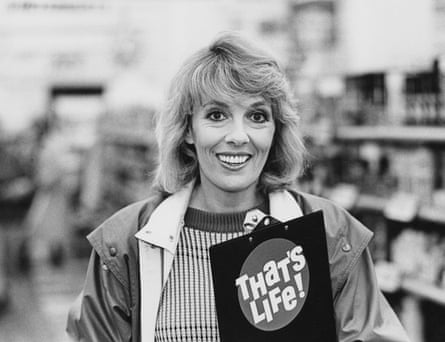
It shouldn't have worked, since surely audiences either wanted to be amused or have their heartstrings tugged, or be mobilised in outrage: how could they cope with the emotional maelstrom of all those things at once? Yet it did work, partly because it was a different era: mainstream culture was extremely macabre in the 1970s and 1980s. Kids were always being electrocuted in public information videos, there was a kind of glee to it.
These huge audiences, bombarded with consumer injustices, large and small, forced change at incredible speed. Seatbelts were made mandatory for children as a result of That's Life!; schools nationwide brought in anti-bullying policies after Rantzen's campaign inspired by the tragic death of Katharine Bamber, who took her own life as a teenager in the early 1990s.
As the impact of her investigations became more and more extraordinary, Rantzen's focus turned to issues that were more serious and systemic; fewer dodgy door-to-door salesmen and kitchen appliances that might give you an electric shock, more stark and in-depth stories on organ donation, maternity care and stillbirth, mental health problems or the dark side of food manufacturing. She became the person who lifted the lid on the tragedies nobody talked about, and it was in that spirit that Childwatch was conceived: a one-off special in 1986, in which survivors of childhood abuse talked of their experiences. The immediate consequence was Childline, Britain's first anonymous helpline for children who were being abused.
The BBC didn't have a clue about what it was about to unleash. This show was heartbreaking, as people in their 20s and 30s shared, often for the first time, their accounts of what they had endured in childhood. But it also revealed that the country simply didn't know how to have this conversation. The Childwatch set was dominated by a gigantic cake, as if the stark subject matter could be leavened by the trappings of light entertainment. What do people want when they have just said a terribly sad thing? Well, cake, obviously. For 48 hours after the show, the professionally staffed phone lines weren't operational, and calls were being taken by the production team, who were overwhelmed, not just by the numbers but by the urgency and gravity of what they were hearing – young kids in mortal fear, asking for help. Quite soon, better news stories began to surface, as the project was professionalised and the police and other agencies began to get involved, but at the outset it was necessary and stunningly naive, in the way that pioneering work probably is by definition.
More than 30 years on, far too little progress has been made on child abuse, but two things stand out: first, that nothing will change until victims of abuse have someone to tell who won't stonewall them; second, that Rantzen understood that instinctively, at a time when so many relevant institutions were making it their business not to.
It was as a result of a call to Childline that Rantzen subsequently uncovered the "nest of paedophiles" at Crookham Court boarding school. It resulted in three criminal convictions and a growing awareness of the predatory nature of abusers – that it was the result of active strategy, not tragic happenstance, to find them concentrated in boarding schools and children's homes. Again, this is taking decades to resolve, but once more Rantzen was at the frontier.
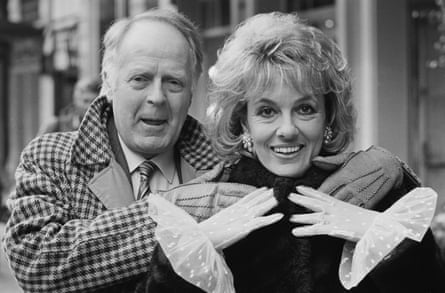
Widowed in 2000 when her husband, Desmond Wilcox, died, she also campaigned on palliative care and spoke movingly about the pain of bereavement. In 2013, The Silver Line was launched nationally, to address loneliness and isolation in old age. Having been awarded a CBE for services to children in 2006, Rantzen was made a dame in 2015, in recognition of both Childline and the Silver Line. Her legacy is complicated by the fact that our approach has changed; so many of the subjects she broached seem glaringly ill-suited to the breezy magazine TV format she favoured. But her groundbreaking approach to making television raises a question: without her interventions, would that change have come about?