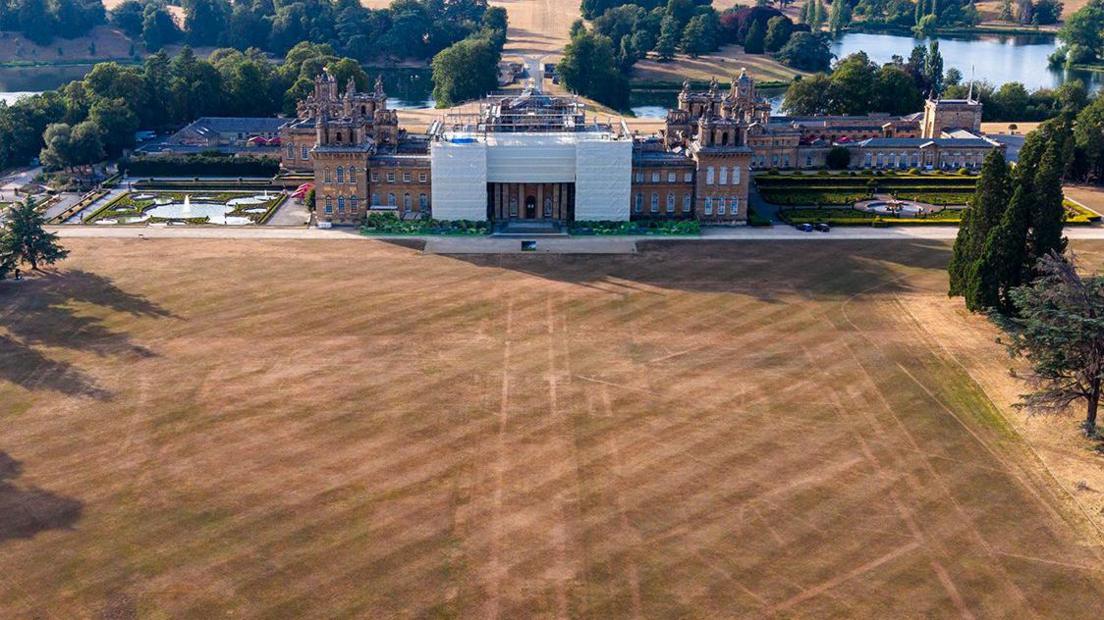
Among the sites which have seen the outlines of historic installations exposed by the hot weather are Portchester Castle and Blenheim Palace.
At Blenheim, the footprint of an 18th century garden - which had once stretched across the width of the entire palace - has revealed itself on a lawn.
Andy Mills, the Unesco World Heritage Site's head gardener, told the BBC it was "absolutely magical" to see the outlines of the historic parterre - 260 years after it was demolished.
Mills explained that the original parterre - which is a French word meaning 'on the ground' - had been constructed in 1705, and would have "cost an absolute fortune to install".
"It was a very large extravagant thing to do, but it was a way of showing your wealth and importance and that sort of thing," he said.
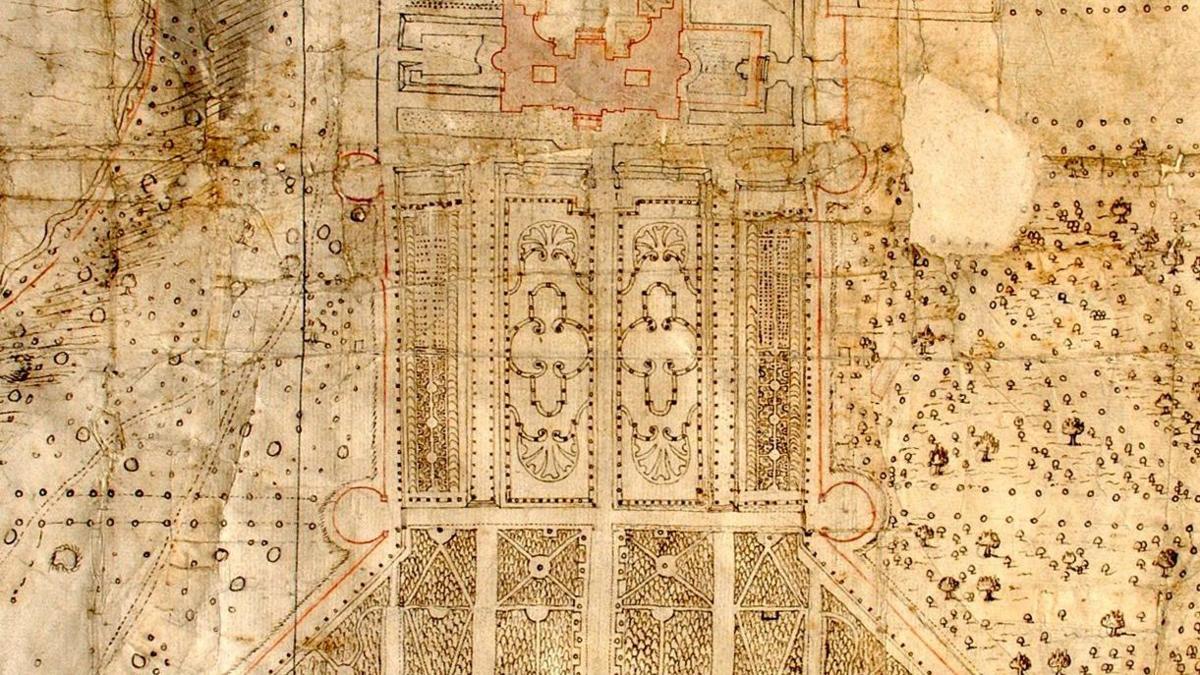
But the garden was dismantled in 1760, only leaving its outline to be revealed in spells of particularly hot weather.
"The footprint of it has appeared out on the lawn, and it is absolutely fantastic - it's a huge structure, it's just massive," Mills said.
"We know it's there, we know it's under the ground, we know the archaeology is there and it's just one of those happy coincidences of this very, very hot weather that these things appear."
"It's just superb to see - it's amazing."
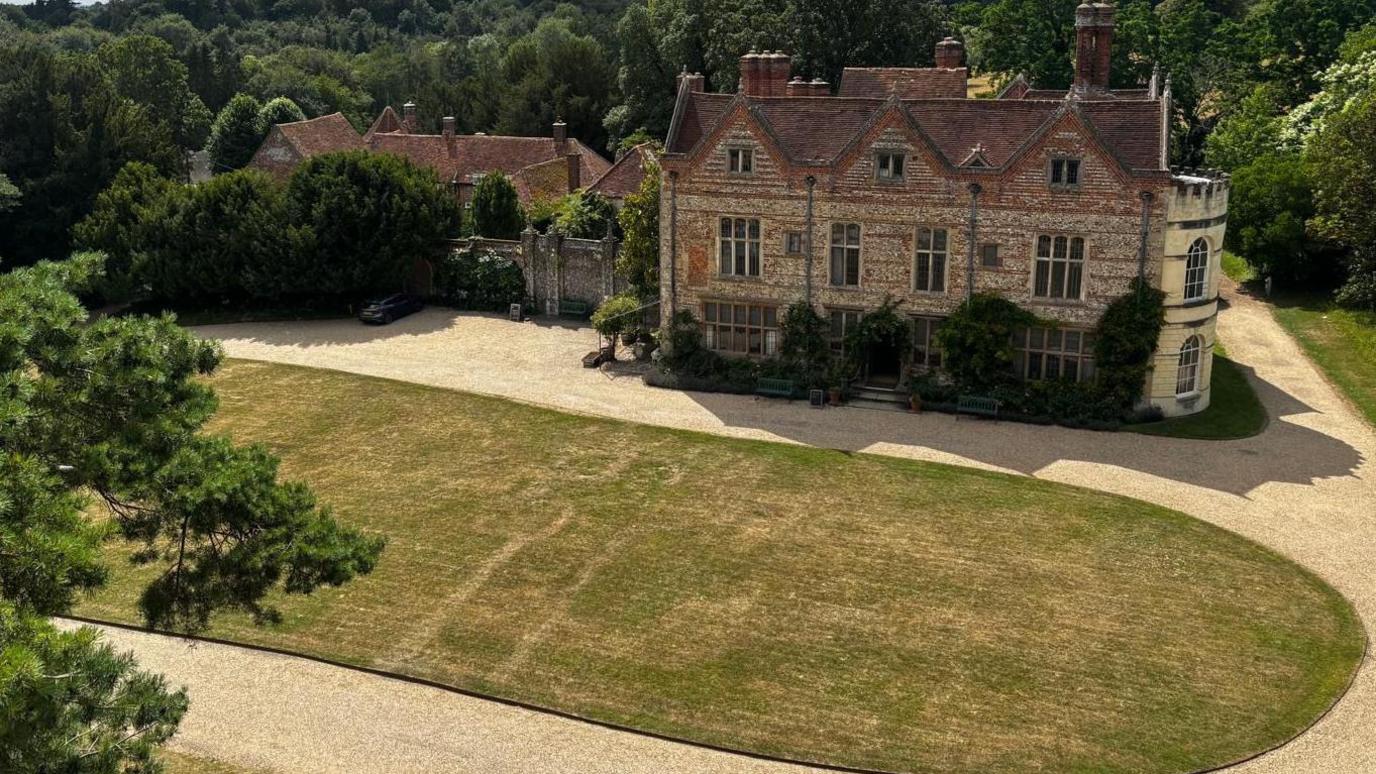
Elsewhere in Oxfordshire, the weather has also revealed the outline of some lost buildings at Greys Court - near Henley-on-Thames.
The parch marks show a range of 16th century buildings which had once stood on the National Trust property's Oval Lawn.
Archeological enquiries at the site in recent years have discovered that the outlines belonged to a long, narrow building which once stood on the lawn and linked two sides of a medieval courtyard.
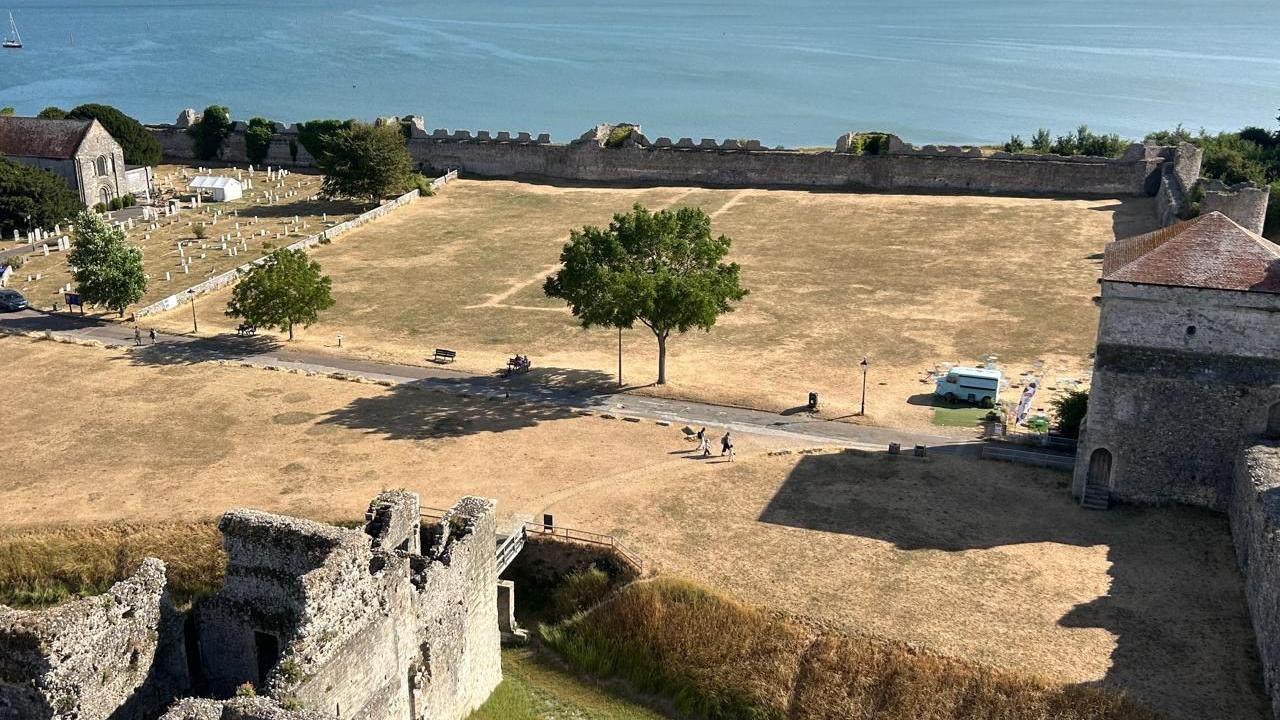
Meanwhile, at Portchester Castle in Hampshire, the warm conditions have led to parch marks revealing the outline of a Tudor storehouse.
English Heritage, which runs the castle, said the storehouse was believed to date from between 1489 and 1540.
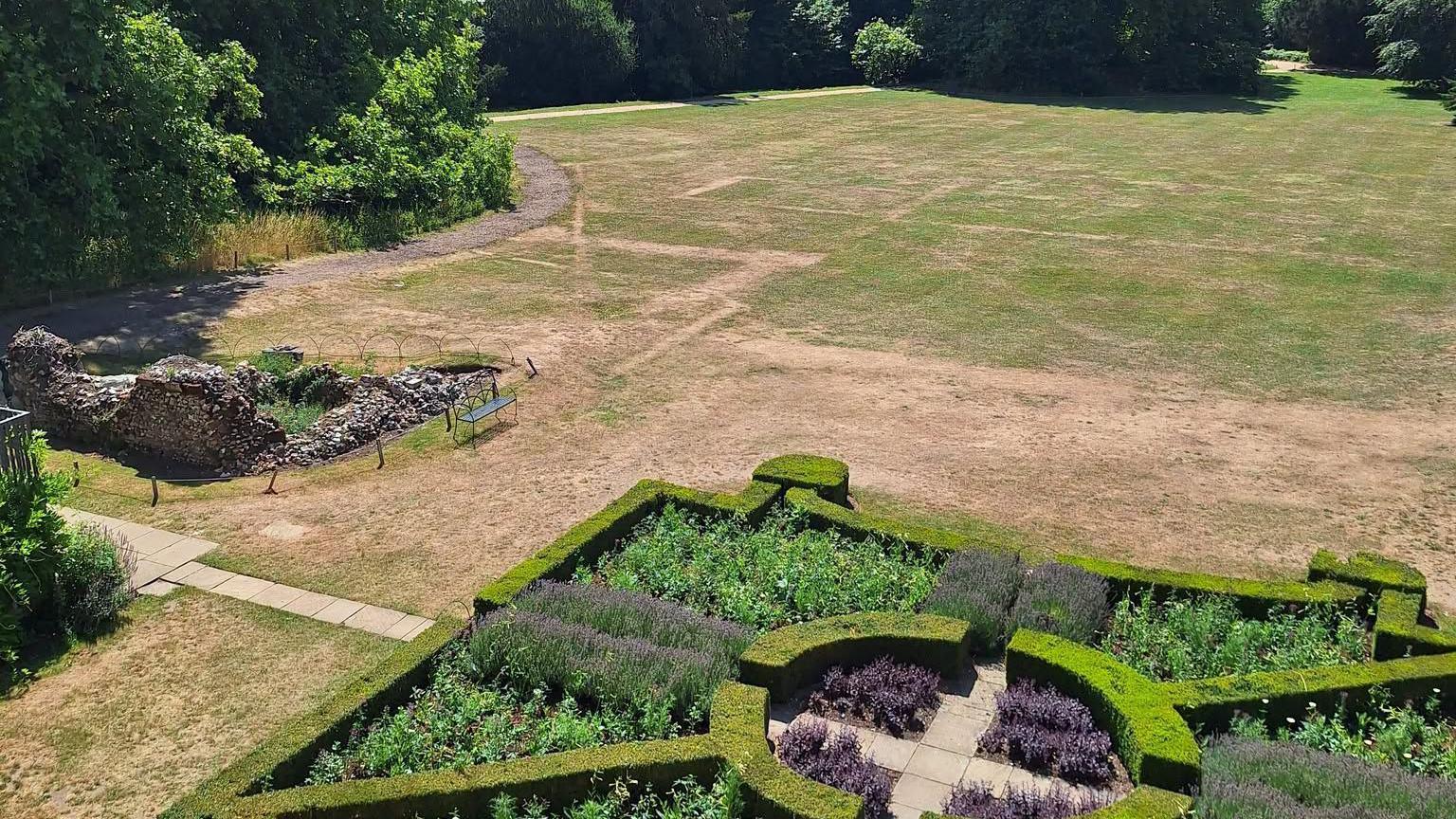
Mottisfont, near Romsey, has also experienced similar marks this summer - uncovering the remains of 13th and 16th century wall foundations.
The National Trust said the walls were the "buried remains of monastery buildings including a cloister and various other buildings, as well as later Tudor alterations".
Archaeologist James Brown said the outlines were "intriguing glimpses into the oldest history of buildings known" at Mottisfont.
"We have carried out some geophysical surveys but the buildings have never been dug so their secrets remain hidden except for these rare moments when their outlines appear in the lawns," he added.