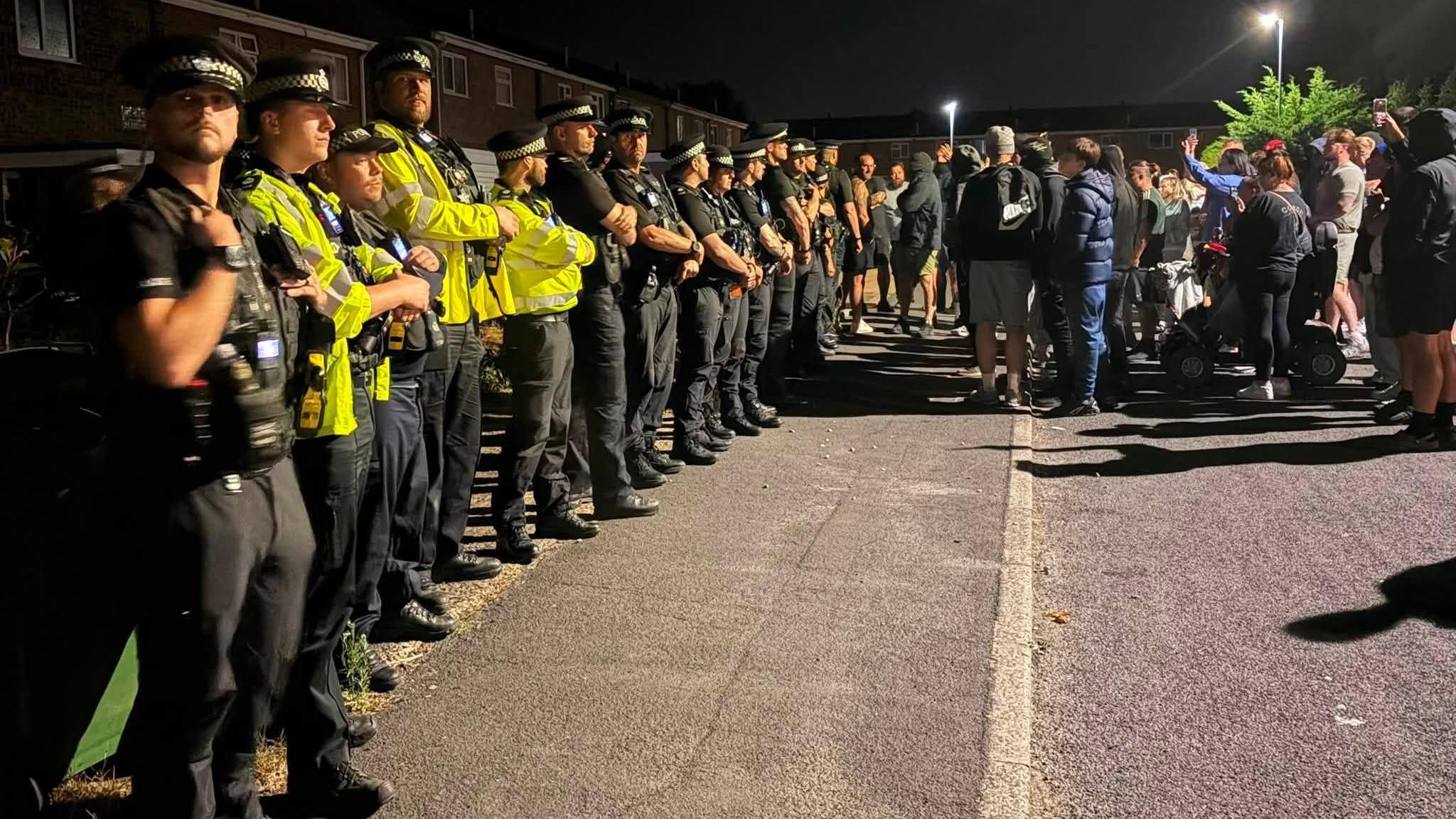
It is normally a quiet residential street but on Wednesday night, Clover Way erupted.
Residents later described their shock at seeing hundreds of people converging on an address where they believed asylum seekers were being housed.
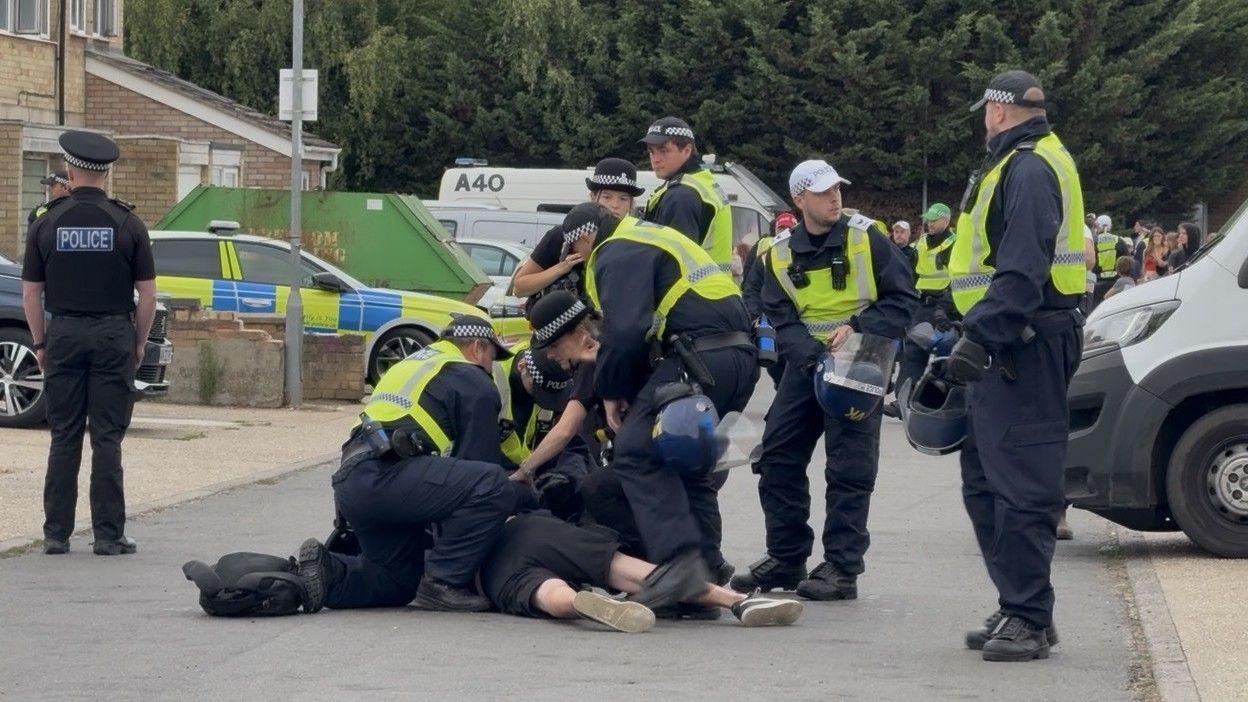
Two police officers were taken to hospital, including one who had been bitten, and there were arrests on suspicion of offences including public order, harassment and possession of an offensive weapon.
Andy Symonds, the chair of the Norfolk Police Federation, said Friday night had been "much calmer", although "a number of people" had been dispersed using powers from Section 35 of the Anti-Social Behaviour, Crime and Policing Act 2014.
"We are on watch for tonight, it's the weekend. We will be dispersing people from the area," he told the BBC.
One neighbour, who did not wish to be named, said there were dozens of police officers and riot vans in the area earlier in the week.
She estimated there were at least 200 protesters, many of them youths wearing hoodies.
"I went to bed at about half past nine when I heard someone shout 'We don't want them here'," she said.
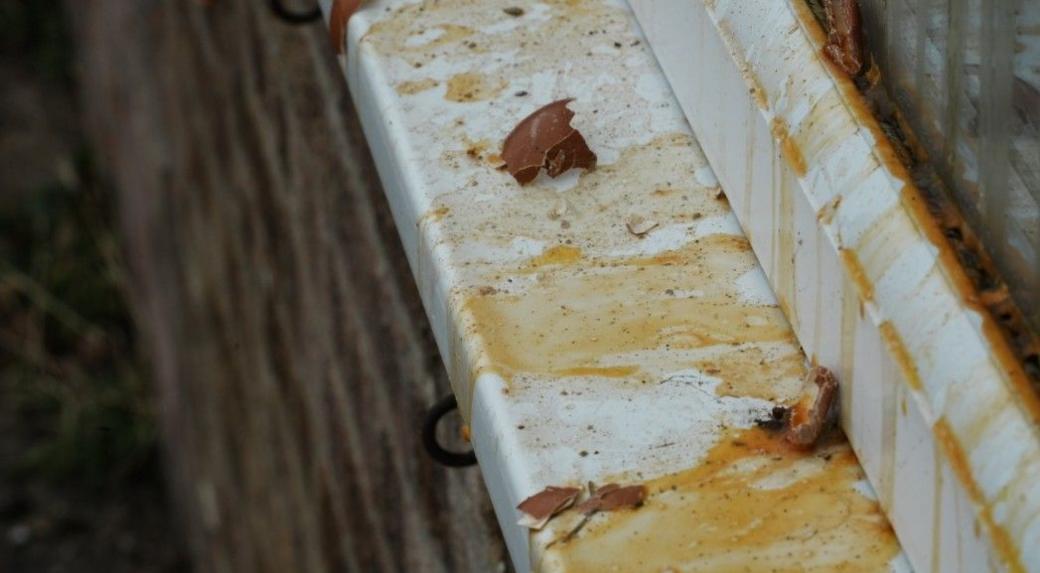
Things had "got a bit out of hand", with eggs thrown at the house and police vans being stoned, she said.
By 01:00 BST, police had separated the protesters into two groups and slowly pushed them to each end of the road.
"I don't feel safe in this town any more," the woman told the BBC.
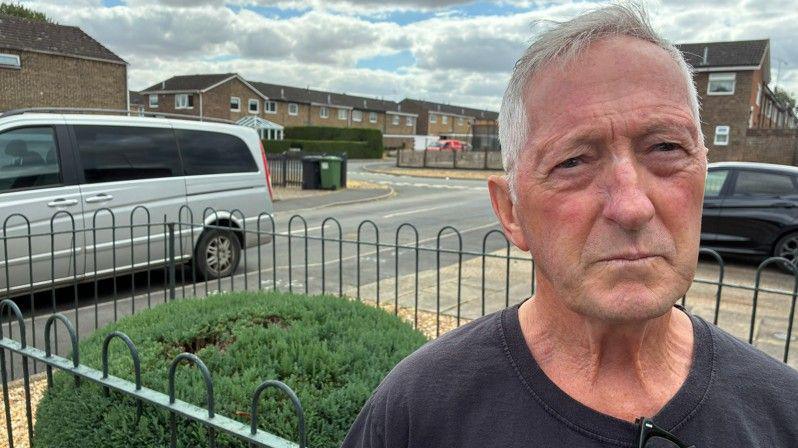
From where he lives on the road opposite, Ray Thompson could see "youngsters standing there with hoods on and covering their faces".
He described how the local community felt frightened by the tensions.
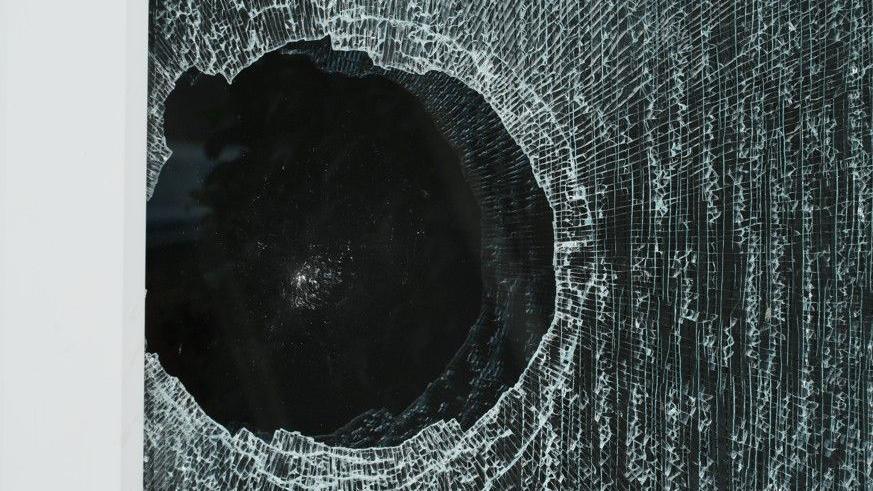
The front window of a house was almost completely covered in broken eggs and an upstairs window was smashed, with rocks strewn across the road.
Locals say the property had been recently converted, with some claiming it had become a 10-bedroom house in multiple occupation (HMO).
The BBC has been unable to confirm this and there was no answer at the door on Thursday.
The trouble at Clover Way was the largest of the public order incidents police attended.
All the locations were at properties which people believed were housing asylum seekers.
People from the immediate area gathered after police arrived to respond to an incident.
One woman described it as "the community coming together".
Tensions had risen recently over proposals to use RAF Barnham, a former air base just over the border in Suffolk, as asylum seeker accommodation. The plans came up repeatedly when the BBC spoke to townspeople.
What really rankled, they said, was that there had been no consultation about placing migrants at the base – or in the town.
"We've been ignored," one local resident said.
The government said the base plans were at an early stage and there would be engagement with the local community should they proceed.
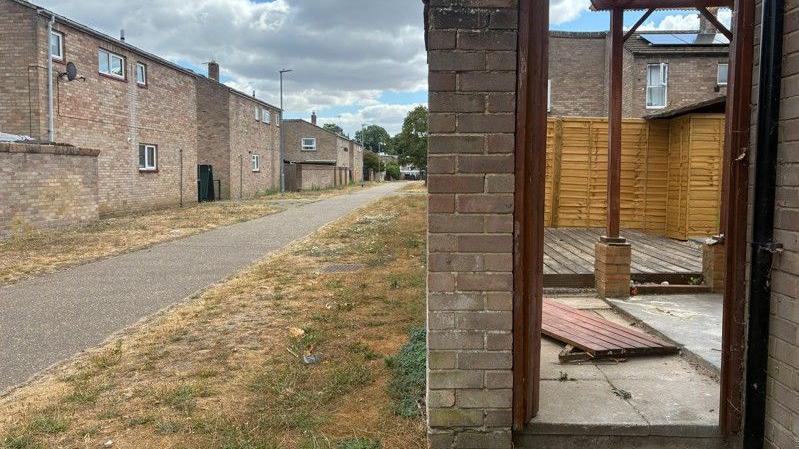
About a mile (1.5km) away from Clover Way is Elm Road.
A broken window could be seen at one house that was targeted on Tuesday and Wednesday nights.
According to police, a smaller group of individuals entered a property and forced out the resident – stealing their mobile phone.
A couple who live nearby, who did not want to be identified, said they had been told it had been converted into asylum-seeker accommodation.
"We heard a load of commotion at about one-ish in the morning [on Wednesday], then the police came and moved them on," they said.
"Then last night [Wednesday], stones got thrown at the house."
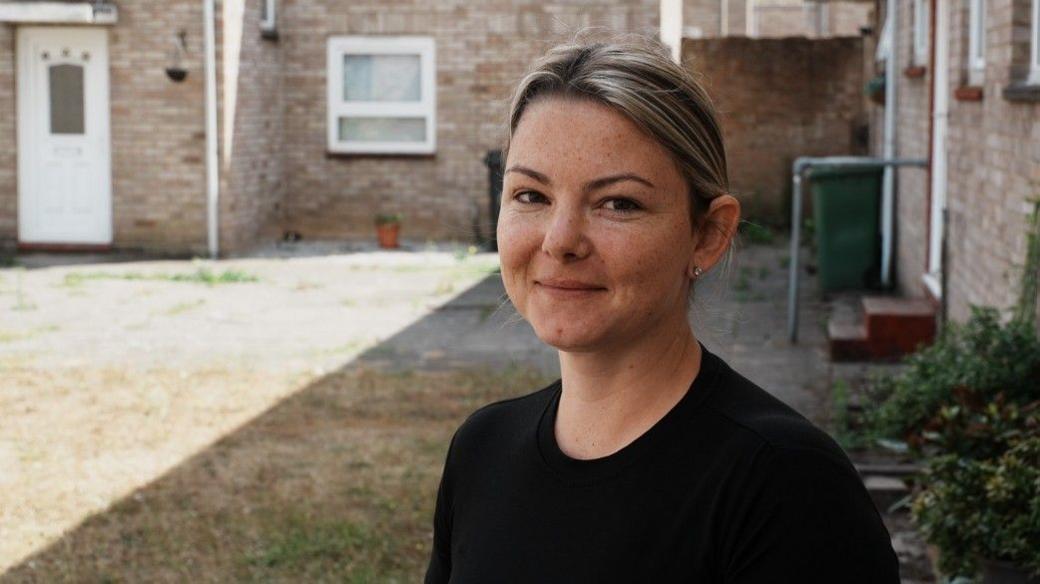
At the nearby St John's Way estate, the houses are arranged in circular terraced blocks with large courtyards.
On the corner of one is a house that protesters believe was home to five asylum seekers.
According to Norfolk Police, there were reports that a group of people, who did not live at the address, were "attempting to get inside and smashed a window, and damaged a fence panel and letterbox".
"A resident of the same property reported a group of between 30 and 50 people trying to get into the house," the force added.
Eyewitnesses described police drones buzzing in the area.
More stories of interest:
A crowd of about 100 people were gathered outside, said neighbour Chelsea Goodwin, but she said she did not see any disorder.
Her objection to the arrivals is that "you don't know who they are".
"I don't feel safe having undocumented illegal immigrants here," she said.
"If it was a family with kids and they were trying to get away from some war-torn country, then that's fine," the mother-of-two added.
"But it's a just group of middle-aged men."
Her perception, which we heard from numerous locals, was that women and children were not safe because of "cultural differences".
She did not specify which culture she had concerns about.
The property is now empty, with locals reporting that the occupants were escorted out by the police.
Once again, the BBC was unable to confirm who these individuals were - or where they came from.
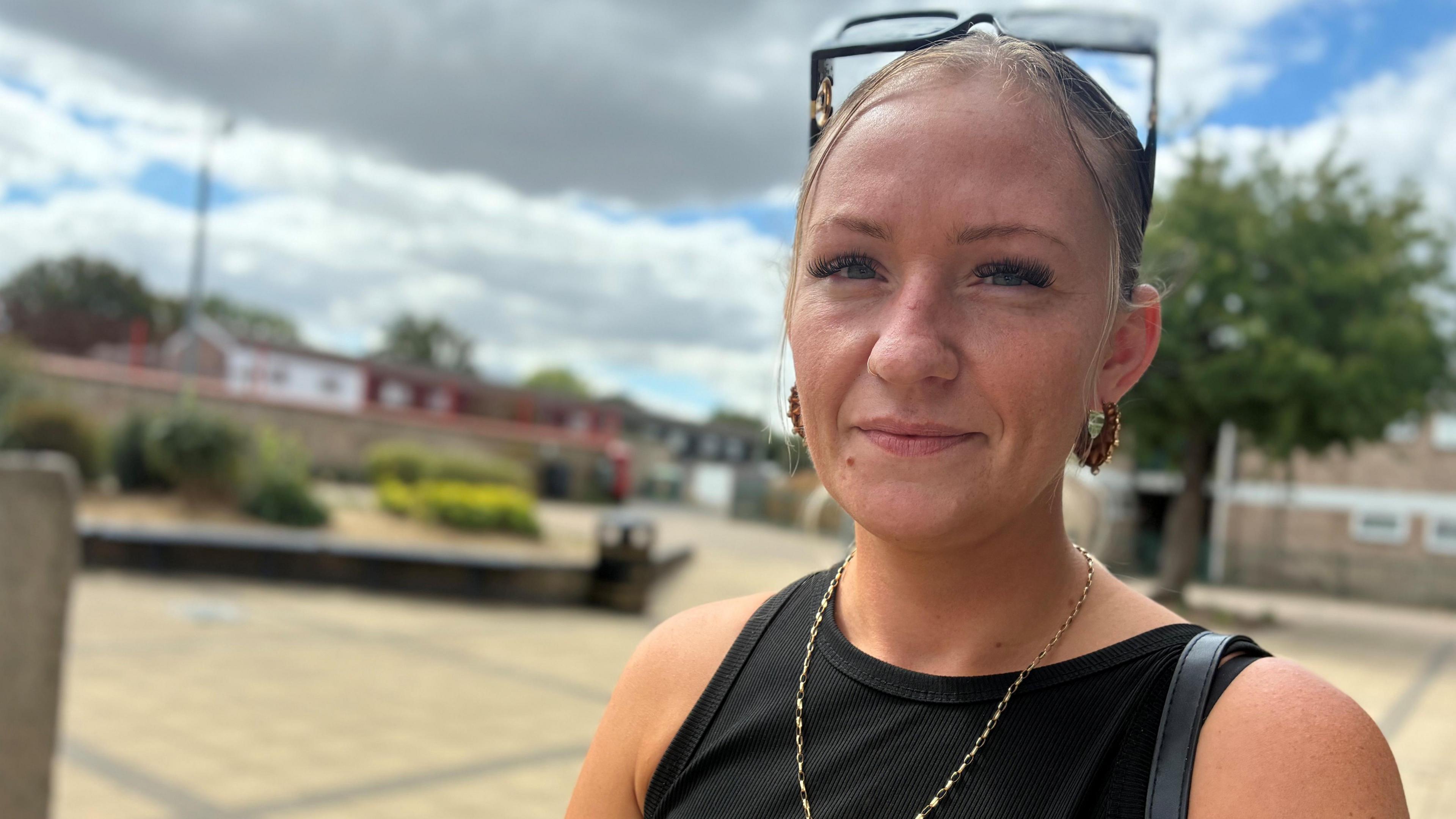
Another estate resident, Shannon McCubbin, said: "I saw a group of residents and a community that has come together. We made a stand and we made our voices heard for once."
She added that she believed asylum seekers were getting housing at the expense of locals.
This complaint was echoed by a number of people the BBC spoke to, including Debbie Ives, who also lived close to St John's Way.
"These men are coming in illegally and they're being housed and given everything they need, yet we've got single women with children sofa-surfing," she said.
As of March 2026, there were 40 asylum seekers living in Breckland, the district containing Thetford, according to government figures.
This is less than half the average for a UK council with asylum seekers in non-hotel accommodation, if calculated as a share of its population.
There are currently 740 people on Breckland Council's social housing waiting list.
According to the authority, a Home Office contractor, Serco, is taking on leases in the area on the open market to accommodate asylum seekers.
"This is entirely separate to housing and providers used by Breckland Council to meet local housing need," a spokesman said.
"Accommodation for asylum seekers does not impact the availability of homes for those on the council's housing register or in need of emergency or temporary housing."
How many people are in asylum accommodation?
An asylum seeker is someone who wants to be in the UK because they say they cannot live safely in their own country due to persecution or violence.
The government must house an asylum seeker if they cannot financially support themselves while their claim is being considered. There were 93,653 people in asylum accommodation as of March 2026.
About 22% of those people, 20,885, were in hotels. These are used when there is not enough shared housing available, such as houses of multiple occupation (HMOs) or former military sites.
The government has pledged to stop the use of hotels by 2029.
More people are in hotels across the south of England than elsewhere in the UK, while HMOs are more common in the north of England and Scotland.
Numbers of asylum seekers in hotels by council area
A modern browser with JavaScript and a stable internet connection is required to view this interactive
Type in a postcode or the name of a local council below to see how many asylum seekers are housed in the area
How many people apply for asylum in the UK?
A total of 93,525 people applied for asylum in the UK from April 2025 to March 2026. This was down by 12% on the same period in the previous year.
Most people who arrive in the UK by small boat claim asylum, but they were only 42% of all asylum seekers from April 2025 to March 2026.
How big is the asylum backlog?
It can take years for the government to decide whether someone should be granted asylum.
In March 2026, 48,758 people - across 35,744 asylum applications - were waiting for an initial decision. The number of people awaiting an initial decision was down by 55% on the previous year.
As of March 2026, a further 87,450 refused asylum applications were part of a second backlog, waiting the outcome of an appeal in the courts. This was up by 72% on the previous year.
Together, these initial decision and appeal cases form the government’s total asylum applications backlog, which it has pledged to clear.
Refugee status was granted in about 39% of asylum decisions made by the Home Office from April 2025 to March 2026.
About 39% of asylum appeal cases concluded between April 2025 to March 2026 resulted in a previous refusal decision being overturned.
In 2019, the Home Office replaced a previous scheme with seven Asylum Accommodation and Support Contracts (AASCs).
According to the National Audit Office, Serco covers the Midlands and East of England and is worth an estimated £3.5bn over 10 years.
By December 2024, about 20,000 people were being accommodated by it.
Serco said it could not comment on the number of asylum seekers or their locations in Thetford "for safety reasons".
A spokesman added: "We've been working closely with the Home Office and police to ensure that appropriate safeguarding measures are in place. Such measures are under constant review, and we will continue to monitor the situation."
The company said it consulted with councils which were given the opportunity to assess whether an address was suitable.
Norfolk Police's Assistant Chief Constable Julie Dean, who is overseeing the force's response to the disorder, said: "We will always facilitate and support the right to peaceful protest, and we recognise that people may hold strong views and feelings about issues.
"However, no matter how strongly those views are held, there is no place for violence, intimidation or criminal behaviour."
Terry Jermy, the South West Norfolk Labour MP who represents Thetford, also condemned the violence.
"Following these incidents, many local residents from diverse backgrounds have been in touch with my office sharing fears for their safety," he said.
"I am proud to be British and my British values compel me to respect the rule of law and due process."
A government spokesperson said: "The concerns of communities are central to our immigration reforms.
"That is why we are working with local authorities and others to exit asylum hotels and house asylum seekers in basic accommodation, including ex-military sites. Five military sites are either in use or being explored.
"We have already seen results. The population of asylum seekers in hotels has fallen by 35% in the last year and by 63% from the peak of 56,000 in 2023. Overall asylum costs have already fallen by nearly £1bn since the general election."
Do you have a story suggestion for Norfolk? Contact us below.
Get in touch
Follow Norfolk news on BBC Sounds, Facebook, Instagram and X.