
A decade ago Northern Ireland's health service was likened to a "burning platform" - where there was such urgent pressure that "standing still is no longer a viable option".
The man who described it that way, Prof Raphael Bengoa, published a 2016 review that was supposed to change the way Northern Ireland does healthcare.
His proposition was practical but ambitious: that a system under relentless pressure could not simply treat more patients, run similar services in different hospitals and spend more money.
The name Bengoa came to represent something that Northern Ireland's health service desperately needed: the possibility of improvement and change.
A shift in emphasis was needed, he said, towards prevention, integration and keeping people well in the community, which would require the support of GPs.
But 10 years on, hospital waiting lists, access to GPs and the state of social care suggest the job is far from finished.
While political parties say they continue to support the Bengoa ethos, with an election looming next year some actions suggest differently.
The man himself is back in Northern Ireland for a fourth time.
Speaking to BBC News NI he said there was no reason why Stormont politicians could not embrace transformational change to bring about a world-leading health service.
"They have to agree there is something that is above their political parties and that is what happened 10 years ago," he said.
"The most important green shoot 10 years ago was the political parties getting together and agreeing and putting a budget in place to support the plan.
"It would be great to see that consensus happening again with a budget that runs over three years to allow for long-term planning."
Bengoa also said the role of GPs was critical if the new neighbourhood health model - to deliver more care in the community - is to be successful.
He said GPs were key to prevention and reducing pressure on hospitals and that their role in that must be recognised.
What did Bengoa recommend?

Notably his review tackled controversies that had been stifling transformation for years and, remarkably, it got five political parties to sign up and buy into making change happen.
Bengoa argued that the system was too focused on hospitals and buildings.
He said that Northern Ireland could not sustain every specialist service at every hospital and that some services should be consolidated into one hospital site.
How much change has there been since 2016?
A decade later, it is clear that the health service is finally moving some services around.
What is also visible is the degree of public and political concern that amalgamating certain services should not happen.
Politically, things have never been so toxic.
Political intervention over Emergency General Surgery being consolidated in the Antrim Area Hospital and removed from Causeway Hospital triggered the resignation of former Health Minister Mike Nesbitt.
Other examples include removing services from South West Acute Hospital (SWAH) to Altnagelvin - and, more recently, potentially Daisy Hill's maternity services to Craigavon.
The public, especially in rural areas, have voiced their concerns that they are being short-changed and that lives are at risk - people power, as seen in recent weeks, is affecting decision making.
Without a doubt, the transformation has fallen well short of the ambition set out by Bengoa and, without a current budget, severe challenges remain.
What has happened in NI since the report?
Since 2016 Stormont has collapsed not once but twice and the Covid pandemic arrived, which overwhelmed an already strained system.
While the pandemic set the system back by three years, many argue that it was not the pandemic that hijacked progress but instead politics and politicians.
A growing older population with increasingly serious health problems also means change is not straightforward.
However, there have been improvements in areas such as emergency department waits, and some elective waiting lists have begun to fall.
But overall Northern Ireland continues to have the worst hospital waiting lists and all the health trusts are still missing official waiting time targets including in cancer.
The neighbourhood model scheme, which is just starting, has already seen about 2% of budget being moved from hospitals and shift into the community.
For instance, that funding will be felt in community palliative care services where people can die at home instead of in hospital.
According to health officials the single digital record system Encompass is making the system a lot more efficient when it comes to appointments and patient records.
What is the impact on patients?

Marie Holland is 69 and has arthritis in both hips.
She recently had her right hip replaced and is waiting on the second hip operation.
Marie was an urgent referral in 2025 and said that compared to others she is lucky she has been treated quickly and it has made a fantastic difference to her life.
"Oh, it's brilliant. For the first week or so it was painful but after that I have been great - I have been on a cruise and more mobile," she said.
"The only thing is I need the second hip done and that is holding be back. But this right hip is brilliant."
However, in simple terms, it is difficult to argue that Bengoa's transformation has delivered the health service envisaged in 2016.
The review's central diagnosis - that Northern Ireland needed fundamental reform to make healthcare sustainable - remains highly relevant, while implementation has been incomplete.
The department itself says the programme has made progress but that significant work remains.
What do GPs say?
Bengoa argued that GPs should be integral to change but according to those doctors that has not been the case.
Dr Ursula Mason from the Royal College of General Practitioners Northern Ireland said Northern Ireland needs more GPs.
"In order for it to be easier for patients to see their GP we need more GPs and in order that for to happen we need more investment," said Mason.
"There is a simple equation, we have had falling number of GPs - in 2016 there were over 350 practices, now there are 305 and we have a rising patient population.
"If we want to turn that tide, investment is the key to unlocking it."
Mason said she supported the neighbourhood model.
"In order to enact Bengoa we will need to see sustained investment in general practice, because in order to take patients out of the hospital and move care into the community we need a workforce who can deliver that and that workforce is GPs."
What do health experts think?
Social policy Prof Deirdre Heenan said the Bengoa report was still viable provided it was matched by political will.
"If it isn't you might as well bin it," she said.
"It's absolutely pointless to have a report telling us what we need to do if we are refusing point blank to implement it.
"It is a good report, it remains important, but it's useless if we do not have the political will and the political courage to make these decisions," she said.
Prof Mark Taylor, a senior surgeon and one of the five members of the 2016 Bengoa expert panel, who is leading the waiting list initiative, said the healthcare system, including the health trusts are working a lot more as one.
But he said that while some waiting lists are beginning to improve there is a lot more work to be done.
Who is Raphael Bengoa?
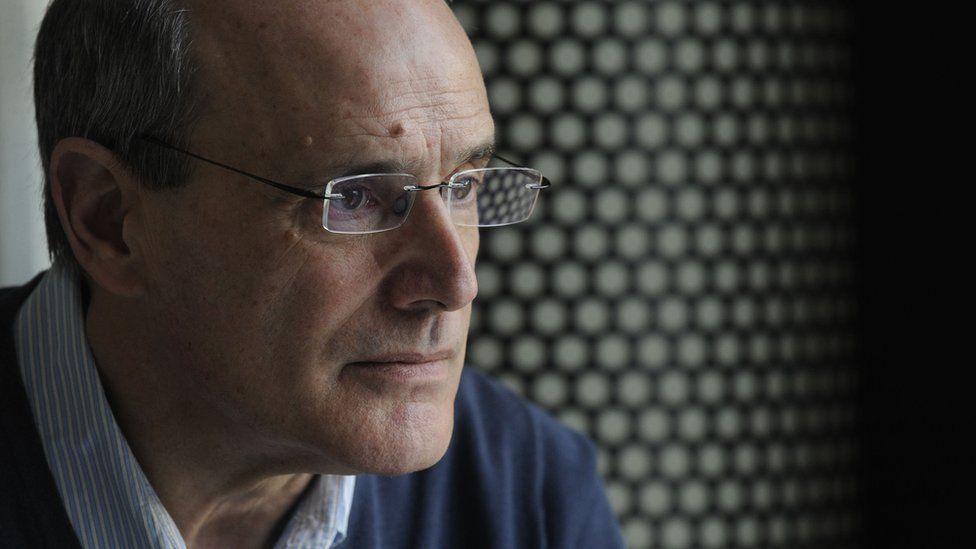
Bengoa is a Spanish doctor and health policy expert who worked for the World Health Organisation (WHO).
He became health minister in Spain's Basque government where he was involved in reshaping the regional health service.
Local health officials felt those qualifications armed him with the medical and political savvy to chair an expert panel examining how the local health system should change.