I knew Mohamed Tahlil as a gentle pirate who oversaw a team of guards during the first months of my life as a hostage in 2012. I had travelled to Somalia to report on the outbreak of modern piracy off the coast. On the 10th day, along a dusty road near Galkayo, in the centre of the country, I was kidnapped by pirates. For the next two and a half years, I was a hostage.
I spent most of my time on a thin, sweat-soaked foam mattress on the floor of a dusty room. The dim concrete prison houses changed, but the filth and the circumstances didn't. Sometimes my captors moved me into the Somali savannah – where we camped in the open and slept on the ground – and for a six-month stretch, I was held on a hijacked tuna vessel, where I joined 28 fishers from east Asia who had been captured about three weeks before I was placed on board. (They had captured me on land, but they were a pirate gang, organised to capture ships at sea.) In each location, pirate guards would sit around with AK-47s and listen to the radio, or else chew khat, a narcotic plant.
Tahlil was a skinny, almost cheerful man who spoke little English and swept the junk-littered yard of his unfinished prison house with a grandmotherly calm. When he came into my room, he would give me his snaggletoothed smile and teach me a few Somali words (for "sun", "cloud" and so on). He carried rifles but never threatened to shoot me. Tahlil did not seem particularly tough – he would cook and wash dishes alongside lower-ranking guards – but he commanded respect. I thought of him as a low-ranking guard leader in the vast school of clan pirates in central Somalia, who ranged from foot soldiers to a handful of top bosses, warlords who travelled with armed escorts. Tahlil said the men who had captured me were the "bad group", while he and his guards were the good group. He promised to keep me safe in "his" house until the real pirates negotiated the ransom. I heard this kind of thing all the time in Somalia.
The "bad group" of rougher and fiercer guards was led by a squat man with rotten teeth named Ahmed Diriye. I had understood Tahlil and Diriye as team leaders of the "good" and the "bad" – so it surprised me when, one day, I saw both men squeeze into the front seat of a crowded SUV to visit some random part of the Somali bush, laughing and joking in the seat like old friends. It would be years before I understood how wrong my impression of Tahlil had been.
During my years in captivity, I was usually kept alone. I was beaten on multiple occasions. I saw a friend of mine being tortured. I was frightened most of the time. I was also livid – at my captors, and at myself, for getting kidnapped.
For two separate periods I had access to a short-wave radio, and I could listen to whatever programming came into range. One day, on the BBC World Service, I heard a story about Abraham Lincoln. He supposedly gave a speech during the US civil war in which he referred to southerners as fellow human beings who were simply in error. A Yankee woman criticised his meekness and wondered if southerners were not mortal enemies of the union, who ought to be destroyed. "Why, madam," Lincoln replied, "do I not destroy my enemies when I make them my friends?"
I resisted this story at first. I wasn't interested in edifying tales of secular saints. I lived through most of my days in a state of quiet fury.
In September 2014, after 977 days as a hostage, I finally walked free. Two months later, back home in Berlin, I received a Facebook message. It began: "hello michael i am ur friend mohamed". The author was Tahlil.
Had it come from any other pirate, I would have dumped this message in the digital garbage can. But I was curious what Tahlil could want. He wrote: "I am happy u r out of bondage" and wished me a "happy and joyous life". The message raised my temper. He was trying to ingratiate himself with me, to dissociate himself from the "real" pirate gang, and pretend we were all OK. After 32 months of horror he still thought I would believe his fairytale about "good" and "bad" pirates in Somalia.
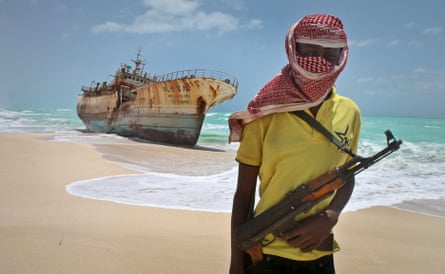
I did not lash out. I wanted information. During the sporadic, long-running conversation that followed, I asked Tahlil to shore up my memories and correct my sometimes blurred impressions of the most squalid phase of my life. He gave names. He sent pictures. He answered questions, not always honestly. He helped me research a book about the ordeal, The Desert and the Sea, which took two years to write.
Of course, Tahlil did want something. He must have known that asking for cash wouldn't work, since my family, friends, benefactors and various magazines I'd worked for had together sent $1.8m in ransom money to Somalia to have me released. But in the spring of 2015, he asked to come to the US. "I live in constant fear," he wrote, "and I have no one to help me … I am left with only two options: to flee the country illegally or to continue living this way."
At the time, the FBI had an open investigation into my kidnapping, and I had informed them about my ongoing online conversation with Tahlil. I was not about to help him immigrate. But it did sound as if he might cooperate with the government. So if I were to help Tahlil come to the US, it would be to help the FBI arrest him upon arrival. For a journalist it's no small thing to participate in an operation with the feds, but when the pirates took me hostage, they converted me from a journalist to a kidnapping victim, and I felt that the ethical line had already blurred.
I was conscious that Tahlil was not the most important man to throw in jail. On the other hand, piracy is organised crime, and I hoped that a smaller boss, under pressure of evidence, might cough up dirt on his higher-ups. I wanted the right people to be punished. But I knew it was a gamble, in both practical and moral terms.
The FBI set up an operation to lure Tahlil to New York, where he would be arrested. "If you have second thoughts about all this," one agent told me in the fluorescent-lit Manhattan field office one afternoon, "just let us know." He meant that once Tahlil was arrested, any question of punishment or forgiveness would be out of my hands. The FBI would have a case to prosecute, and my one-time jailer would be subject not to my sense of right or wrong, but to US law.
In the summer of 2018, the FBI made covert arrangements for Tahlil and flew him to New York City, where he expected to stay in a hotel for two weeks. There was no promise of payment, but I helped lure him with a fake story about the hotel and "final factchecking" on the book. He, in turn, acted vague about his purposes in America. He seemed to vacillate between hope and despair. He would regularly check in to see if his visa and plane ticket were ready. Sometimes he would say he wondered whether he might get arrested. But he never seemed too interested in seeing me. I think we lied to each other for weeks.
On 10 August 2018, when he landed at JFK airport, the FBI arrested Tahlil. The agents said he seemed genuinely surprised. I hoped he would accept a plea and help the Bureau arrest one of the top pirate bosses, such as Mohamed Garfanji. Garfanji was an infamous figure in the state of Galmudug who had tortured my friend Rolly Tambara, an elderly hostage from Seychelles, by dangling him from a tree by his ankles and beating him with a bamboo cane. Garfanji also threatened to sell me to the terrorist group al-Shabaab. I have not forgiven him.
By November, three months after his arrest, Tahlil had still not cooperated, and I was having profound second thoughts. If the full weight of the US government came down on the shoulders of a seemingly gentle and low-ranking boss like him – and no one else's – the whole operation would seem pointless and cruel. In late 2018, the New York Times published a short article about the case. "I'm not as happy as you might imagine that he's in jail", I told the journalist.
In the comments beneath the article, readers wondered whether I had "Stockholm syndrome". Some people could not understand how a former hostage could wish anything short of savage vengeance on his captors. He must be hypnotised; he must be traumatised; he must be out of his mind.
But forgiving your captors is not the same thing as "Stockholm syndrome". Not even close.
In my first few months as a hostage, my companion in captivity was Rolly Tambara, a 69-year-old fisher with tattoos on his forearms and a dry but unwavering sarcasm. He spoke English in a French-inflected island pidgin. He knew how to be a hostage, having been at it three months longer than me. At this point in my captivity I was still charged with a hair-trigger rage, and he would try to calm me down. Whenever our guards acted in an arbitrary or cruel manner, he mumbled, ironically: "We are the devil, Michael. And they are like God."
He was right. The first thing a criminal needs to clarify once he has you under his violent control is that he is right, and you, by definition, are wrong. As hostages, we lived in a world turned on its head, and the consequences of rejecting its hierarchy could be lethal. "Within a matter of hours, the hostage is treated like an infant and has a kind of regression to infantile emotions," the influential psychiatrist Frank Ochberg has said. "They can't eat, they can't talk, they can't use a toilet, they can't move without permission. To do it risks death and they accept the feeling that 'this is the giver of life just like my mother was'."
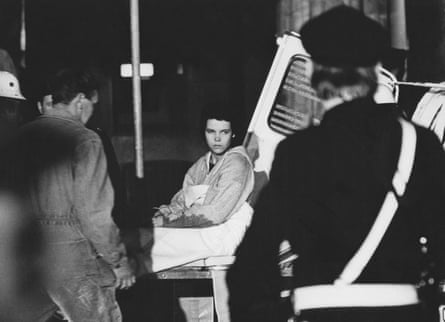
Ochberg was talking about Stockholm syndrome. The term has its origins in a six-day hostage standoff that followed a failed bank robbery in Sweden in 1973. The robber, Jan-Erik Olsson, took several employees hostage at a bank in Stockholm, using a knife and a submachine gun. He demanded freedom for an incarcerated friend, a great deal of money and a Ford Mustang for a getaway car. One captive was a 23-year-old stenographer named Kristin Enmark, who seemed to empathise with him from the start. The Swedish authorities met most of Olsson's demands within a day. By this point, Olsson had been joined by a friend; when he asked if they could drive away with two hostages – to reduce the chances of the cops shooting him dead – the answer was no. Enmark, during a phone call from inside the bank to Swedish prime minister, Olof Palme, said that she and another woman genuinely to leave with Olsson and his friend in the Mustang. "We are more afraid of the policemen than these two boys," she told a journalist in another phone call from the bank.
Enmark seemed angrier with her own government than with her kidnappers. This posture mystified both Swedish authorities and the general public. But a psychiatrist named Nils Bejerot – who had worked as a negotiator for the Swedish government – told journalists that all the hostages suffered from a syndrome that led victims to stick up for their abusers. He called it "the Norrmalmstorg syndrome" after the bank's location on Norrmalmstorg Square. To the rest of the world it became "Stockholm syndrome".
It wasn't until the following year that the term took hold in the US and beyond. Patty Hearst, the 19-year-old granddaughter of the newspaper tycoon William Randolph Hearst, was taken from her Berkeley apartment by a far-left gang called the Symbionese Liberation Army (SLA). Two months later, Hearst appeared on a bank surveillance video as "Tania", threatening customers during an afternoon heist in San Francisco. "Up, up, up against the wall, motherfuckers!" she hollered. People wondered if the privileged daughter of a rich American publishing family had lost her mind. Was she brainwashed? Acting under duress? Had she started to work the SLA? (She had.) Did she have Stockholm syndrome?
After Hearst's arrest in September 1975, a famous defence lawyer named F Lee Bailey took up her case. He wielded the term "Stockholm syndrome" to keep her out of jail. It didn't work in the courtroom, but she went free after 22 months because of a commutation by President Carter. Bailey's headline-making arguments in the Hearst case are the main reason that people all over the world know the phrase "Stockholm syndrome". But it's never been listed in the Diagnostic and Statistical Manual of Mental Disorders, because evidence for it has never been clear enough for a formal definition.
Whether or not the term is valid, there is no dispute that the pressures on a hostage's mind are real. Humans can have any number of reactions to absolute rule – rebellion, peacemaking, sympathy, obedience, rage – and no single response is "wrong" in a short-term crisis. Hostages who fall in love with their persecutors, convert to another religion, or identify with a gunman's delusional notion of the world all give up their sense of self out of self-preservation. The mental strain has to resolve itself somehow.
What helped deliver me from my overwhelming sense of murderous anger, after more than two years in Somalia, was something I heard on the shortwave radio. It was a homily by Pope Francis about forgiveness. I was suffering not just from feelings of outrage, but also from a self-lacerating guilt about my own mistakes, which had led me to this miserable existence. I lived with a recurring urge to grab one of the Kalashnikovs and shoot either the pirates or myself. "How many of us perhaps deserve condemnation!" said the pope, adding that a person's sins were like the stars at night. "We look at the sky, so many stars, but when the sun comes in the morning with so much light, the stars are no longer seen."
This homily woke up a dormant Catholicism within me – not the whole system of belief, but a living river of feeling. I did not have road-to-Damascus conversion, and I wasn't about to sit down with the pirates for an earnest chat about guilt and reconciliation. But after thinking about the pope's homily for a few days I noticed how bitterness and anger were acts of will, like suffering itself, and how a slight step backwards, an unhooking of the mind, could let in a flood of mercy and light. I did it in silence. But I found that this mental shift made it easier to smile at the guards in the morning when they delivered a Thermos of oversweet tea and unlatched the steel shutters on my window. Whatever else I was condemned to suffer, I came to see that rage and self-pity were not mandatory aspects of the sentence.
When people ask if that isn't just a "version of Stockholm syndrome", I argue it was the opposite: to forgive a persecutor helps your sense of self. It isn't the same as adopting a false view of the world, or identifying with enemy interests. It's a cool-headed resolution that dissolves the need for vengeance.
In retrospect, Enmark understood how strange her state of mind must have seemed to others. When the bank robber came up with the bright idea of shooting another hostage through the leg – promising not to hit any bone – Enmark tried to convince the hostage that it might turn out fine. ("But Sven, it's only in the leg," she said.) In an interview many years later, she pointed out that she was in a situation where "all your values, the morals you have, change in some way". But in a matter of days she had found a working survival mechanism. It's worth noting that in spite of the criminal's lunatic threats, no one died in this standoff. Enmark found the right tone to handle an erratic, narcissistic gunman for almost a week.
When it was over, the gunman couldn't believe was the captive, sentenced to a decade in jail. "It was the hostages' fault," he later complained. "They did everything I told them to do. If they hadn't, I might not be here now. Why didn't any of them attack me? They made it hard to kill."
In February 2019, six months after they had picked up Tahlil at JFK, the FBI arrested a Somali-American citizen named Abdi Yusuf Hassan in the frozen parking lot of a Starbucks in Minneapolis. In Somalia, he held a formal title, minister of interior of the state of Galmudug, where I was kidnapped and held. Hassan had lived between the US and Somalia for years.
The FBI believed Hassan had made off with about $250,000 of the ransom money that had been paid to release me. After that, he had retreated to Minnesota, which left the pirate bosses in Somalia to argue about the remaining cash. (Five ranking bosses died in a shootout over the ransom after I was gone.) I pieced this story together in vague outline when I wrote The Desert and the Sea, but after Hassan's arrest in Minneapolis, and particularly after the trial of Tahlil and Hassan, I started to see there were whole dimensions of my case that I knew nothing about.
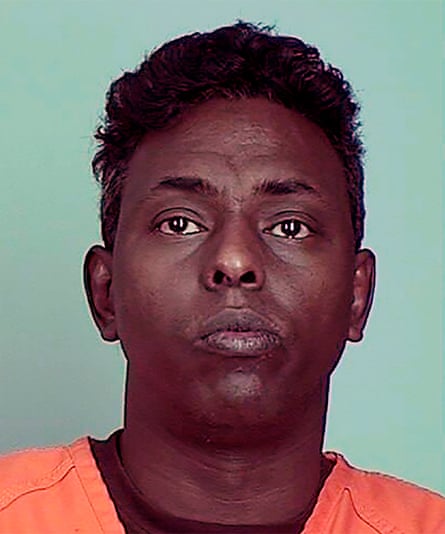
Both men were charged with conspiracy to kidnap an American, "terrorism" (in the sense that I was threatened with death in Somalia) and related firearms offences. Neither accepted a plea deal. They each faced 30 years or more, against a mountain of damning evidence.
I had rebuilt my life in Berlin and California, and I was anxious to get the trial over with. It should have run for two weeks in the spring of 2020, but Covid and other unexpected troubles delayed things until February 2023. By the time it finally came around, I was sick of hearing cliches about pirates as "protectors of the Somali coast", and I wanted to see some semblance of official justice.
In court, Tahlil looked well-fed and wore a Covid mask. Hassan had grey in his hair. My job on the witness stand was to tell the story of my captivity as I remembered it, from start to finish. The defence objected a handful of times, first at my constant use of the word "seems" or "I had the impression …" and then, sharply, at a comment I mumbled into the microphone: "A lot of this is impressionistic." All I meant was that it was difficult to know absolute facts in Somalia while I navigated that world as a hostage, without my glasses. But the judge agreed that I should stick to facts, rather than trying to interpret them for the jury.
It was cathartic to tangle with defence teams on the witness stand. A lawyer for Tahlil, Steve Lynch, spent part of his cross-examination asking me about guards at Tahlil's house. "The dozen or so men who were in the house," he said, "some of these men did not appear to have military training; is that right?"
"It was always hard to tell about military training with the guards," I said, trying not to use Lynch's own word "appear".
"But some of them seemed to be, you know, people who were fishers – right?" he suggested. I felt a bolt of outrage, because the pirates I met were overwhelmingly fishers trying to protect their livelihoods. That was propaganda, repeated by well-meaning journalists in the west from the moment pirates had made headlines in 2005. In the 1990s and early 2000s it had an element of truth, but by the time they were hijacking oil tankers and cargo ships, pirate gangs no longer consisted primarily of poor fishers defending the Somali coast from illegal fishing vessels. They were clan soldiers with Kalashnikov training – poor men who needed jobs, certainly, but still members of brutal organised criminal networks.
I leaned into the microphone and said, low and clear, so no one in the courtroom would miss it: "Absolutely not."
"Let me ask you this," he said. "Did some of the people who were there … did they seem to be relatively simple people?"
"They were clan soldiers," I said.
Not what the defence wanted to hear. Other witnesses echoed this point during the two-week trial: most pirates were clan soldiers, not simple fishers. The witnesses were Somali spies, informants from the ranks of local Galmudug police or the pirate network itself. One key witness told the court that Tahlil was more sophisticated than the cheerful guard leader he had played around me. In fact he was a captain in the Somali army, the witness said, and he ranked as a mid-level boss in the pirate network.
After the trial, as I read the 2,000-page court transcript, Tahlil came into focus. He'd spent a surprising amount of time on the hijacked tuna vessel, out of my sight. The ship, called the Naham 3, was a long-line tuna vessel run by owners in Taiwan and Oman. It had been hijacked in open water near Seychelles, more than 700 miles from Somalia. (Territorial waters for any nation reach 12 miles out.) The ship was 50 meters long and had a vast maze of fish freezers in the hull, which, according to witness testimony, Tahlil had converted to an armoury. "Tahlil was responsible for collecting all those weapons at the end of the guards' shifts and locking them overnight in the ship's freezer," said one US prosecutor, Gillian Grossman, in her summation, "which the pirates used as a sort of makeshift gun locker. Tahlil controlled access to those weapons. He was the only one with the key."
Remarkable. This mass of information shifted my impression of him. I no longer thought of my skinny, mild-mannered Facebook informant as a minor boss. If he stashed weapons in the freezer hold, he was involved in the Naham 3 case, too. I doubt he had hijacked the ship, just as he hadn't physically kidnapped me – but as an armourer he was responsible for all the pirates' weapons, and in that sense he was also partly responsible for the long captivity of the 28 fishers held hostage on the ship. Twenty-six of them were finally released in 2016, having spent nearly five years as hostages. Two died in captivity.
It also turned out that Tahlil and Hassan were friends, although I had never seen them together. The feds had a binder full of Facebook correspondence and phone calls between them. The defendants called each other "brother" and "my friend". But Tahlil seemed to acknowledge his own lower rank by using "minister" and "my respected leader".
My urge to forgive Tahlil eroded like a salt statue in the rain. Not that anger or vengeance rushed back; but I was less interested in showing grace. The released fishing crew members that I spoke to had little interest in forgiveness. One Filipino, Arnel Balbero, wrote to me that he hoped "all of the pirates are put in jail … Because of them there's a lot of dreams in life broken."
As for Hassan, it came out in court that he owned a home in Galkayo just down the road from one of my prison houses. According to a pair of Somali witnesses, it was a hideout and a meeting point for some of the highest-ranking pirates I encountered. Alongside his work as the long-distance interior minister for the state of Galmudug, in his capacity as a local landlord Hassan found a way to profit from my presence in the neighbourhood by renting a house to my kidnappers.
I expected to hear some kind of plausible counter-narrative in court about Tahlil and Hassan. It never came. Both men argued that they had infiltrated the pirate gang with some hope of giving me comfort or helping me escape. If that were true, why had they not aided the FBI, never mind the prosecution team? Why did Hassan own a house in Galkayo that was full of ranking pirates? And how did Tahlil come to work as an armourer, responsible for every Kalashnikov I saw, every grenade launcher, every machine gun?
The Somali witnesses said Tahlil had reached out to me on Facebook because the top pirate bosses had paid a final, insulting compensation of $8,000 for his armoury services. He had felt stiffed. So he messaged me in 2014 and began to help me with my book, dreaming about a new life in the US. That made sense. I still felt a measure of pity for him that I didn't feel for Hassan. I had learned some illuminating facts from Tahlil and convinced him to board a plane. After I absorbed the evidence against him, the Tahlil in my mind had become a less hapless, more calculating man, but I didn't think he deserved a minimum sentence of 30 years.
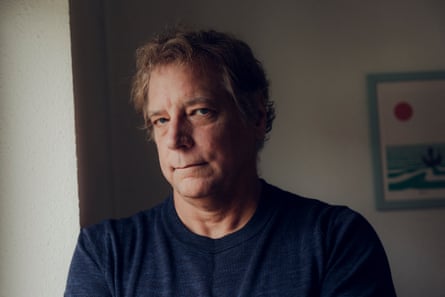
Getting these punishments "right", whatever that meant, felt important for the same reason that forgiveness on the floor of a filthy prison house had felt liberating. It was a form of agency. I had lost my desire for revenge, but not for justice. But, by this point, justice was out of my hands.
People talk blithely about closure, as if a criminal case in a bland federal courtroom can bring peace to the victim of a violent crime. I don't think it can. You have to find peace on your own. The US Department of Justice did a tremendous job in prosecuting my captors, but psychological comfort wasn't part of the deal.
On the day of his sentencing, in late 2024, I read out a terse letter for Tahlil in court. I asked Judge Allyne Ross to hand him less than 30 years if she could. "I know what it is to be held against my will," I said. "I also learned mercy in Somalia as a means of survival … This is not the same as forgetting what happened."
Tahlil gave a speech insisting on his innocence, insisting (still) that he had wanted "to help Michael". Ross listened to everything. At last she handed out two 30-year sentences. Tahlil's would have been lower if a minimum of 30 on one firearms charge were not strict law in New York state. For Hassan, given the weight of evidence, the 30-year sentence was "appropriately severe", she said, "in contrast to Tahlil's".
Another of my captors, Bashko, had been arrested in 2021, this time by FBI agents and local police in Djibouti, a nation north-west of Somalia. He was sent to the US, where he faced similar charges in New York – involving conspiracy to kidnap, terrorism and firearms – but pleaded guilty for a lighter sentence.
I first became aware of Bashko as a lean and clever young gunman on the Naham 3 who wrapped his head in flamboyant turbans to keep the sun off. He was good-humoured and smart, a ground-level guard from start to finish. For two years, he guarded me almost every day with his Kalashnikov, sitting cross-legged on the floor of a given prison house. We used to hold long, sometimes entertaining conversations in fractured English and Somali during our sweltering prison-house afternoons. Our worldviews rarely lined up – he justified my captivity with the most violent, infidel-phobic verses of the Qur'an – but we had lively arguments.
If the poverty trap applied to any pirate I met, I believe, it applied to him. He did not fit the desperate-fisher profile, but he'd signed on as a foot-soldier because he was poor and had few other options. Bashko faced a sentence ranging from zero, or time served, to 25 years, and I saw no reason for him to spend a third of his life in jail. So I wrote a letter to the judge, emphasising his low rank.
"His willingness to talk and joke also made my captivity easier," I wrote. "He ordered samosas for me as a snack. He mediated between me and more aggressive guards, and he sometimes arranged for me to sleep without chains. Once, in a fit of temper, I flushed the keys to those chains down the toilet, which I think caused him a little trouble."
Bashko was sentenced in the fall of 2023. The judge gave a long assessment of the case. "There is a word for the inhumanity of Mr Moore's kidnappers, all of them, leaders and followers," said Judge Paul Engelmayer. "The word is 'evil'. We don't use that word often in courthouses, and we don't use it often in criminal sentencing. It is reserved for the worst of the worst crimes. It fits here."
He went on to say that my letter was not the final word. "A court can never subcontract its determination of the just sentence to a victim, whether the victim seeks vengeance or mercy." But the letter perhaps had some effect. Engelmayer slashed Bashko's maximum sentence from 25 years to 12 and a half.
I couldn't be at the hearing in New York, but I was told that Bashko was agitated in the courtroom – and that he wanted to give me a "postcard". His lawyers would be sending it to me, I learned. I was away at the time, and for a couple of weeks I imagined Bashko's message would be a screed about how I had ruined his life.
When I returned home, I found a thick envelope, not a postcard. I opened it with some trepidation. It was a handcrafted greetings card with no language at all, no English or Somali, just a sliding pop-up contraption made of pink and white paper, which, when you opened it, unfolded into an eloquent flower.
After his trial, Bashko was moved to Leavenworth federal correctional institution in Kansas, and I tried to visit him while writing this essay. The bureaucratic system was sluggish and unresponsive, but we did manage to speak on the phone.
Bashko's voice was deeper than before, and his English was now strong. He thanked me for writing to Engelmayer. "I know you were helping me, for real, Michael. I want to say I'm sorry … Bashir from 10 years ago? He's different, for real. Before, I knew nothing. You remember?"
"I remember."
"God bless you. Everything is good now," he said.
It was strange, but he sounded excited, even happy.
"I can't hate the jail. I know what I did before," he said. "I did bullshit."
I raised my eyebrows. In Somalia he had been full of doctrinaire, self-righteous religious beliefs. It sounded as if, in prison, he had arrived at some deeper revelation. "I told the judge: 'I'm guilty.' I say: 'If you give me 30 years, I don't care. If you give me 15,' that's what I told him. I said: 'Judge, I did wrong. I'm sorry.'"
He had no chance of remaining in the US after his prison term. He wasn't angling for anything in return. He was serious.
"Thank you, Bashko. You sound like a new man."
"Your family, everything is good, right?" he said.
"My family is good right now, thank you."
"I hope you can forgive me, please."
I hesitated. I'd grown so used to hearing confessions for this period in my life that I had no idea what to say. A forgiveness that had been completely personal, inward – a form of self-liberation – turned shy in the face of a spoken request. But the piece of mail he had sent was still on my sideboard; in fact I could see it from where I sat with my phone.
"Well, yeah," I said at last. I cleared my throat. "Yes, Bashko."
"Thank you, Michael Scott Moore."
It cost me nothing to grant. I thought about Lincoln and his vaporised enemies. For the first time, I felt something had shifted out in the world – something beyond my own life had transformed because of this halting, doubting, uncertain trajectory of forgiveness I had been writing about for years – and it was more powerful, in its effects, than any project of vengeance.
Support for this article was provided by a grant from the Pulitzer Center.