plead guilty. I have loved and used the streets of London all my life, as a cyclist, driver and pedestrian. Touch wood, I have done so without accident, blemish or insurance claim. Yet now I find myself perpetually on the wrong side of the law. Regulation has become bureaucratic and chaotic.
When I try to drive at the authorised speed of 20mph on many through roads, I am hooted at and overtaken by vans, cars, coaches and buses. And when I sit dutifully on my bike at a traffic light, I am jostled by swarms of cyclists riding through on red, furious at being treated as if they were car drivers.
As for pedestrians, walking on many pavements is like taking a ride on the dodgems. Riders of ebikes and e-scooters ignore bans and expect everyone to move out of the way.
I normally approve of anarchy. There is too much regulation everywhere. The great Dutch traffic engineer Hans Monderman boldly advocated "shared space" in cities. He wanted kerbs, road markings and traffic signals minimised and replaced by "human discipline". All road users should navigate urban space by watching out for each other all the time. Monderman is virtually unknown in Britain, but principles similar to his were trialled with success in London's Exhibition Road and Seven Dials. His counterintuitive ideas have been applied with remarkable success across northern Europe, with accidents falling. In 2023, 45% of Copenhageners cycled to work or school.
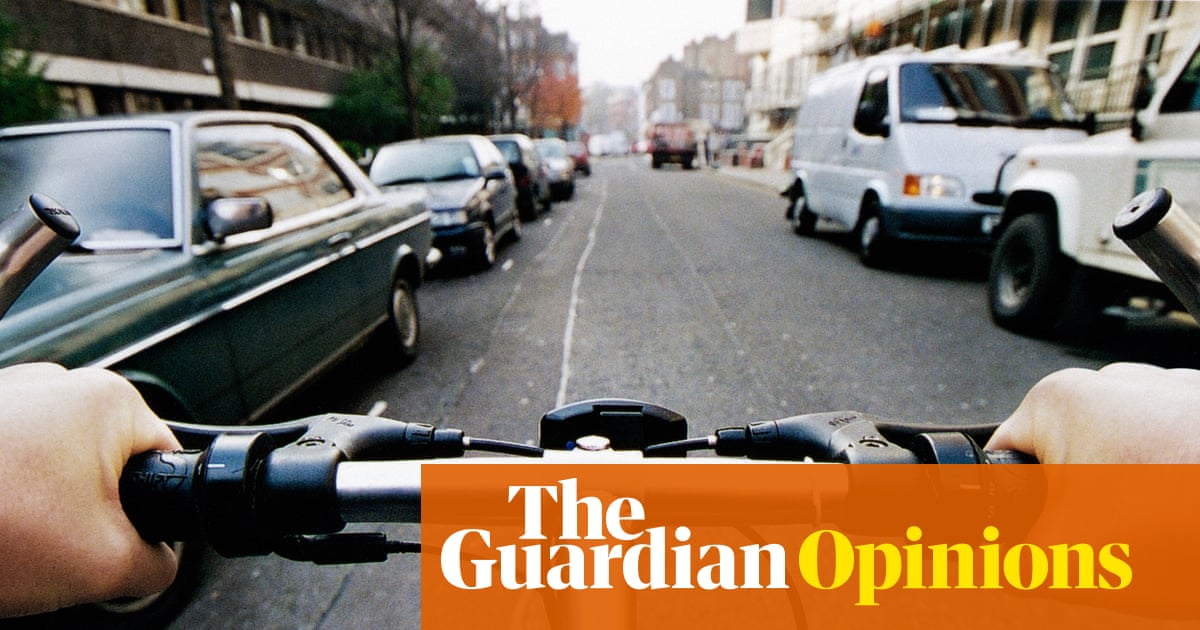
As a lifelong cyclist I admit to finding a certain exhilaration in riding a bike. I avoid main thoroughfares but like snaking through streets crammed with traffic, finding shortcuts through alleys and mews. But the essence of cycling is to keep moving. Hence I have to admit to sometimes doing what many London cyclists do at red lights. That is, look carefully, follow Monderman and "share" any unoccupied road space ahead by riding on.
Traffic lights can now be rendered sensitive to queues waiting at them, and change sooner to green to allow buses through. Earlier this year, a policy director for the bike hire company Lime said he wanted lights to give priority to cyclists "to improve rider behaviour and encourage more people to cycle". This makes sense. For the time being, at pedestrian crossings, cyclists should probably just get off at a red light and cross on foot.
Investment in London's cycle network is enabling more people to travel by bike, with the strategic cycle network now 352km long, up from 90km in 2016. It is impressive that this network was created by the same London planning authority that, 50 years ago, thought the answer to traffic planning was to build a gigantic Motorway Box.
Certainly cycling in any city is risky. The only truly safe speed is zero. But all cyclists will have their own "risk thresholds" – and the risk is largely up to them. The Highway Code's "rules" for cyclists are near hilarious. They boil down to two words: take care.
My argument is less true when applied to ebikes, I admit. These clearly do not work in shared space, whatever Monderman might have said. Electric Santander and Lime bikes may have transformed journey times: except for the simplest train ride, they can be the fastest means of travel across town. But this comes at a price. Ebikes litter public streets with tips of abandoned machines; convenience is the mother of shambles. It cannot go on and technology must ensure bikes are properly parked.
Ebikes now come in all shapes and speeds. It is astonishing that the sleek Freesky Alaska, with its 250W engine, can be treated as if it was just another manual pedal bike. To my mind, it is blatantly a motorbike. When a delivery driver on one careers past me in Hyde Park, I wonder if I took a wrong turning. These machines must be put on the roadway where they belong.
London used to be unique among great cities in being an enjoyable place to drive. It is no longer that. The bicycle has replaced that pleasure with a new freedom – but like all freedoms, it is one that craves intelligent regulation.