ana Nusseibeh is in Britain this week, attempting to present herself as a potential future UN secretary general, and shift the focus from her past as a United Arab Emirates diplomat who denied the country's role in arming a militia accused of war crimes and genocide in Sudan's four-year civil war.
It is a high-risk strategy that involves meeting ministers, MPs, academics and holding a public event with the UN Association.
Labelled by many British NGOs and others as an apologist for war crimes, Nusseibeh is presenting herself as a skilled diplomat with the network to put the UN back at the centre of mediation, development and human rights.
"These are very geopolitical times," she said in an interview. "You need a geopolitical secretary general, because the fact is these geopolitical ruptures are not going away. These fissures in the international system are not going to dissolve any time soon."
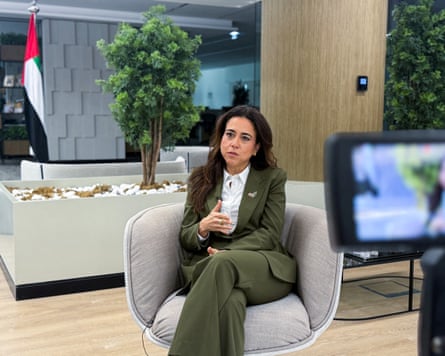
Nusseibeh had a setback last Friday, when three permanent members of the UN security council, China, France and the UK, all voted to "discourage" her candidature. The UN's electoral system requires that she secure nine positive votes from the 15-strong security council, and no discouragement from the permanent five (P5) before being recommended to the UN general assembly.
She has the backing of the US and Russia, and thinks her cause is not lost. "Sometimes, the use of the veto is tactical. Sometimes, it's a holding position, sometimes it's a leveraging position. There are a number of different theories".
The centre of the resistance to Nusseibeh's candidacy is probably London, and specifically the Foreign Office, the penholder on Sudan at the UN, and this may explain the UK political blitz.
When questioned about her role in Sudan, she asked that her candidacy be seen in the round, highlighting her role in forcing humanitarian aid into Gaza, her support for Afghan women and promoting interfaith tolerance.
"Like every candidate, I come from somewhere, but the independence of the incoming secretary general is the key to their credibility.
"I've taken a leave of absence from my role in [the] UAE government in order to independently campaign for this role. But I think that if I was secretary general, Sudan would be the litmus test of success for any incoming secretary because it's such a horrific humanitarian crisis."
The war in Sudan, which erupted in April 2023 after a power struggle between the military and the Rapid Support Forces, has displaced more than 14 million people and created one of the world's worst humanitarian crises. Multiple regional powers, including the UAE, have backed different local proxies since the beginning of the conflict in an attempt to win influence and strategic resources.
The UAE has long been accused of supporting the RSF in Sudan, a charge repeatedly denied by Nusseibeh, who has publicly disputed the findings of UN investigators.
A UN panel of experts suggested last month that the UAE had supplied crucial support to the RSF.
Asked if she regretted dissembling during her time as a diplomat, by denying the UAE had armed the RSF, or her personal role in challenging the UN reports critical of the UAE, Nusseibeh said she regretted that "the Sudanese civil war had continued for so long".
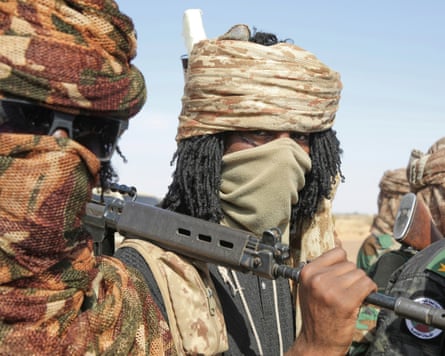
Nusseibeh added: "But I don't think saying that is enough for the Sudanese people and the people in the surrounding countries where they've also felt the impact of this war, or for the victims of sexual violence and in this conflict, the atrocities committed in El Fasher without accountability, and the use of chemical weapons against the civilian population; all of these are a litany of suffering that has been inflicted on the Sudanese people."
Asked if the UAE had been supplying weapons to the RSF in a breach of a UN embargo, she replied: "I'm aware of the allegations. I haven't read the last UN panel of experts report, but I'm not going to comment as I'm no longer a UAE official. In this campaign, I am a secretary general candidate.
"As secretary general, I would fully back the findings of all UN panel of experts reports and I'm aware that I think several countries have been mentioned in various reports."She later added: "I would call out countries that are supplying arms to any of the parties, including those in the RSF … this needs a process that requires accountability for atrocities that have been committed. That it needs to be a process primarily led by the Sudanese people."
Nusseibeh said she was willing to take risks to mediate and to put UN values, expertise and its development toolkit at the centre of disputes. Her analysis of contemporary diplomacy was that the world had descended into a default setting of non-cooperation, and the UN needed to restate the case for collaboration between nations as being in the self-interest of everyone.
The UN had been missing from too many conflicts, she argued, and she would set up a mediation board to try to use the full UN toolkit, ranging from confidence-building measures to development to secure peace. "What's missing is this idea of a secretary general that is a strategist and a mediator-in-chief that is looking at the sort of the blips on the dashboard of conflict and saying, 'How do we deploy to have maximum impact for most effective use of resource and cost?' Because resources are not going up, they're going down. I mean, we're looking at, since 2010, 40% increase in military spending. So we're using a lot of hard power as countries and systems to deter, but it's not actually working."
That would require some prioritisation at the UN – it has 4,000 different open mandates.
Her intelligence and skills as a diplomat are not in question. However, her track record over Sudan is.
One critic said: "It is a very smart strategic play by the UAE that seeks autocratic capture, and then the asset-stripping of the UN and its standards. The UAE would end the UN's role on climate. It would be a catastrophe."
The next security council vote is on Monday. By then some of the backmarkers may have dropped out of the race. The diplomats of the P5 may also be clearer on the flexibility of their mandates, in which case the papal conclave may finally produce white smoke.