
A jury is to hear the inquest into the death of an 18-year-old who died from meningitis B (MenB), and look at whether her death was "preventable", a coroner has ruled.
Megan Draper, from Pontypool, Torfaen, died in October last year from meningococcal type B meningitis, weeks after starting a physiotherapy course in Bournemouth.
At a hearing in Bournemouth, coroner Brendan Allen said there would be a jury inquest "as a matter of law" because Draper died of a notifiable disease, meaning health professionals must inform local health teams of suspected cases.
He said the inquest would look at whether Draper's "death was preventable".
"It's a matter of law, if there is reason to suspect someone died of a notifiable disease then it's mandatory, and I am satisfied this inquest must be heard with a jury," he said.
Allen said the scope of the inquest would cover Draper's contact with the NHS 111 service, the triage carried out at Royal Bournemouth Hospital, her out-of-hours treatment, and her admission to Southmead Hospital in Bristol.
Allen asked for Dorset Healthcare University NHS Foundation Trust, which operates the non-emergency NHS 111 service in the area, to provide a statement covering Draper's call and its call-handling procedures.
Expressing condolences to Draper's family, Allen said the inquest would begin on 19 July 2027.
Draper's mother, Helen Draper, previously described her daughter as "sporty, gregarious, outgoing, really charismatic and chatty", adding that she "loved being around people".
"She had this zest for life that was compelling. We were in awe of her."
Alongside the National Union of Students, her parents also called for a vaccine or booster to be made available to young adults on the NHS.
What is meningitis B (MenB)?
Meningitis is an infection of the protective membranes that surround the brain and spinal cord.
There are several types, and meningitis B can be very serious.
It can affect anyone, but is most common in babies, young children, teenagers and young adults.
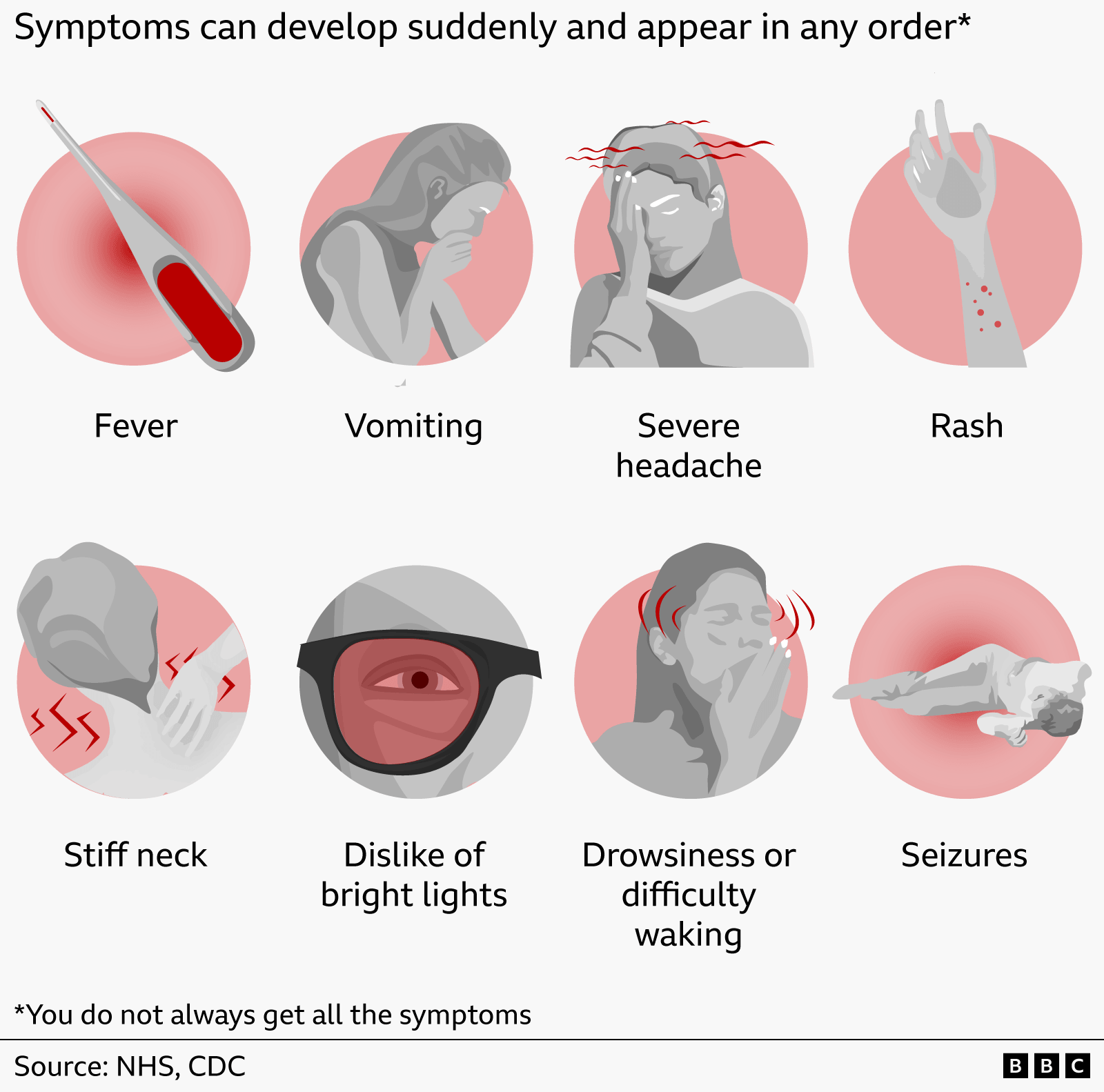
Meningitis is caused by different types of bacteria, viruses, fungi, and other pathogens, and major bacterial strains include meningococcal types A, B, C, W, X and Y.
Viral meningitis is the most common and least serious type, while bacterial meningitis can be serious and potentially life-threatening if not treated. The NHS said bacterial meningitis was"rare".
It can affect anyone, but is most common in babies, young children, teenagers and young adults.
It can cause life-threatening septicaemia, and result in permanent damage to the brain or nerves.
Symptoms include a severe headache, high temperature and a rash.
About one in four people who survive are left with long-term problems, such as amputation, deafness, epilepsy and learning difficulties.