"There were parents dropping their children off and then heaving from the smell," says Liz Thompson, 45, who runs Blessings Nursery in Bradford, West Yorkshire.
During the recent heatwaves, the smell from an illegal waste dump on Midland Road, just metres from the nursery, became so unbearable that staff had to keep the doors and windows shut and the children couldn't play outside.
"It smelled like dead people, like really bad rotten food. It was horrible," she says.
The smell, which lingered for weeks, started to impact Thompson's business, with prospective parents put off from enrolling their children at the nursery. "It was embarrassing," she says.
The situation Thompson faced is far from a one-off. The Environment Agency received 10,238 reports of suspected waste crime in England in 2025.
Yorkshire is a particular hotspot, with a new heatmap showing 1,068 reports in 2025, second only to the West Midlands, where a record 1,542 reports of waste crime were filed. These figures are probably underestimated, with just 27% of waste crimes thought to be reported.
It's a problem that particularly exercises the public and it's striking that in one of his first moves as prime minister, Andy Burnham visited the Midland Road waste dump, declaring that the "days of making easy money out of waste are over".
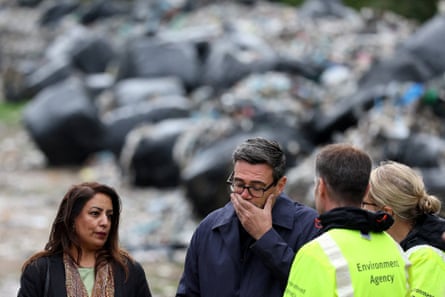
The dump, which first came on to Bradford Council and the Environment Agency's radar in June after reports of foul smells, had been building for months. HGVs had been entering the site in the dead of night and early hours, with a large excavator unloading and dumping thousands of tonnes of waste.
"There are really clear signs that this is linked to organised criminality," says the Environment Agency's area environment manager, Ben Hocking. Waste crime is profitable for the criminals involved, but costly for the public; approximately 20% of the waste in circulation in England is managed illegally, at a cost to the economy of about £1bn a year.
The clean-up is particularly expensive. Burnham has earmarked three illegal sites where waste needs to be removed: Power Station Road, on the Isle of Sheppey, Kent; Aymer Close, in Runnymede, Surrey; and Midland Road. But Hocking estimates the cost to the taxpayer of cleaning up the Midland Road site alone will be upwards of £250,000. The cost of cleaning up the Hoads Wood illegal waste dump in Kent came to £15m.
"The aim is to recoup the costs through the courts, but whether that will be possible for this site remains uncertain," says Hocking. Criminal investigations are still taking place.
As part of Burnham's plans to tackle waste crime, Tracy Brabin, the mayor of West Yorkshire, will be appointed to take a new region-led approach to the problem.
"We are cracking down on the criminals behind it and giving the Environment Agency the tools it needs to go further and faster," said the environment secretary, Angela Eagle.
But just how well equipped mayoral authorities and the Environment Agency are to tackle organised criminality at this scale remains up for debate, with the House of Lords recently accusing the agency of "incompetence" when it comes to waste crime.
"We could always do with more funding," says Hocking, "but we're also looking to be more effective with the people that we have. We are really looking to get a better intelligence picture of what's happening and where."
With no set timeline for when the clean-up of the Midland Road waste dump will begin, one woman who works at a nearby youth centre but asked to remain anonymous worries that more hot weather could bring more devastating smells.
"It was really hard for us to work," she says. The centre had to cancel its youth cooking and exercise classes because the flies and smell made working unbearable.
"Whoever did this wasn't thinking about the local people and how it's affecting them and their businesses," she says. "It's really unfair. Whoever dumped this waste needs to be held responsible."