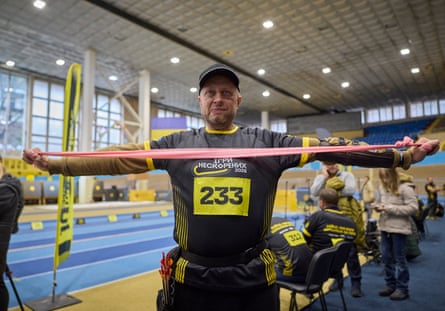
t took a little longer than expected for the 100 or so archers to begin competing inside the large Soviet-era velodrome arena at MoD SKA in Lviv (built for the 1980 Moscow Olympics, it is Ukraine's only indoor cycling track) on the first day of trials for the team that Ukraine will send to next year's Invictus Games in Birmingham. The delay gave competitors a little extra time to stretch and practise. Coaches paraded up and down the line, giving some last-minute advice on strategy and technique to the waiting men and women facing down their targets.
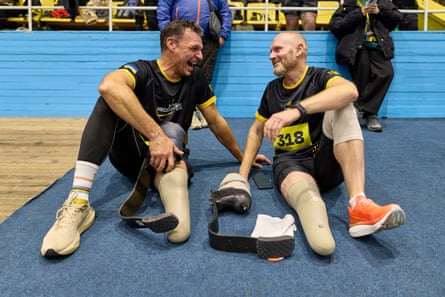
It has been almost two years since the last Invictus Games. All the while, the war with Russia has continued relentlessly, with an ever-mounting number of wounded military personnel. After four years of war, Ukraine now has more than 2 million veterans, including 1.4 million people with combatant status. At least 11% of registered combatants live with service-related disabilities, the equivalent of more than 154,000 people.
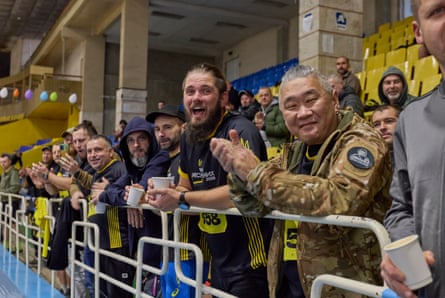
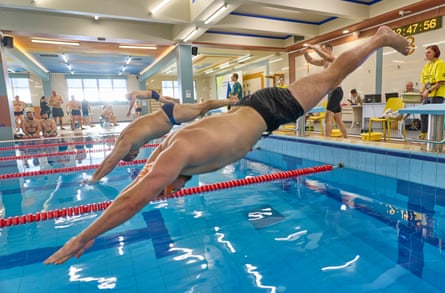
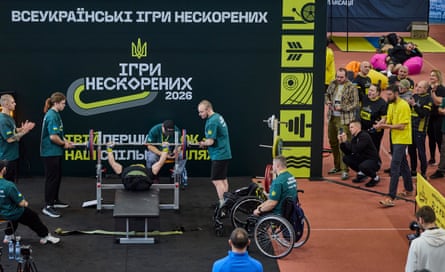
More than 400 of Ukraine's wounded, injured and sick personnel have come from around the country to compete, in the hope that they may be able to represent their country at the Invictus Games next July, when it returns to the UK for the first time since the inaugural games were held in London in 2014. On the first day of trials, the hopeful sportsmen and women line up, ready to draw their bows. Family and friends cheer from the blue and yellow seats circling the arena. The words Citius, Altius, Fortius (Faster, Higher, Stronger) are displayed above.
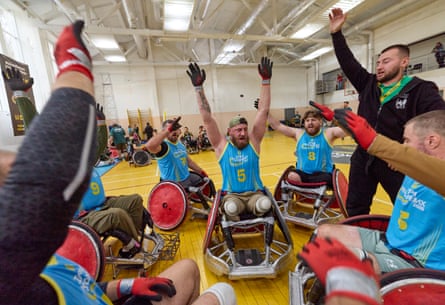
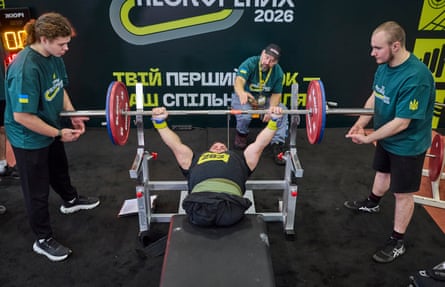
"The scale of need in Ukraine is immense, and these trials are only one part of a much wider response. Recovery cannot wait for the war to end, and it is vital that wounded, injured and sick service personnel and veterans have opportunities to rebuild their lives now," says Rob Owen, chief executive of the Invictus Games Foundation.
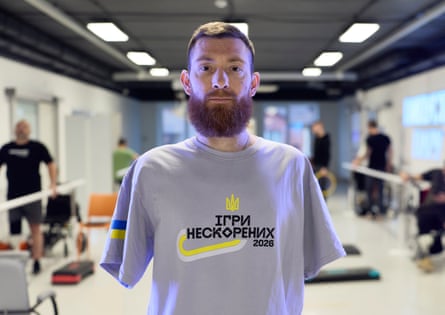
When Artem stepped up to the archery shooting line at the Invictus Games trials, he was taking part in his first-ever sporting competition.
The 31-year-old marine, from Mykolaiv in southern Ukraine, worked as an engineer and electrician before joining the military. He enlisted in summer 2022 after experiencing shelling and shortages of water and electricity in his home city.
During a difficult withdrawal from the Pokrovsk area, his unit came under mortar fire, and Artem was seriously wounded and lost both arms. His fellow soldiers applied tourniquets, but enemy drones delayed their evacuation.
Artem walked about 3 miles before a comrade pulled him another mile in a shopping cart. It took 12 hours to reach a casualty stabilisation point. His injuries resulted in high amputations of both his upper limbs.
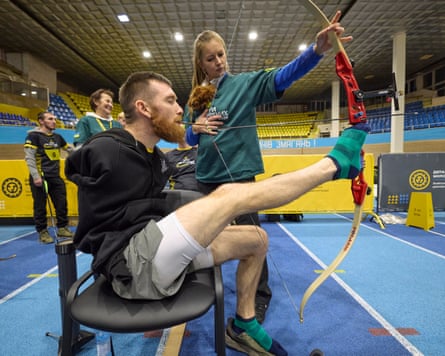
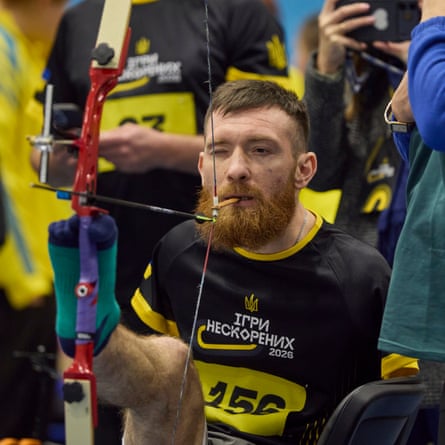
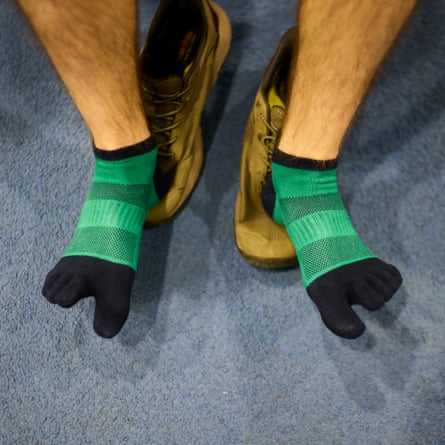
While undergoing intensive prosthetic rehabilitation in Lviv, Artem discovered archery. He initially had doubts about whether to enter. "I wasn't sure how well I would do, but my coach convinced me that the Invictus Games aren't about results, they're about the community," he says.
After treatment in Dnipro and Lviv, Artem continued his recovery at the Unbroken Centre and the Superhumans Centre. He has undergone further operations and therapy, and is now working with specialists on fitting and learning to use prosthetic arms. He is also beginning to rethink his future, including the possibility of teaching.
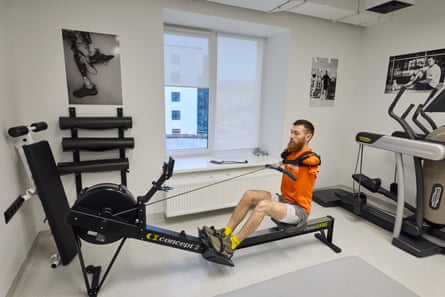
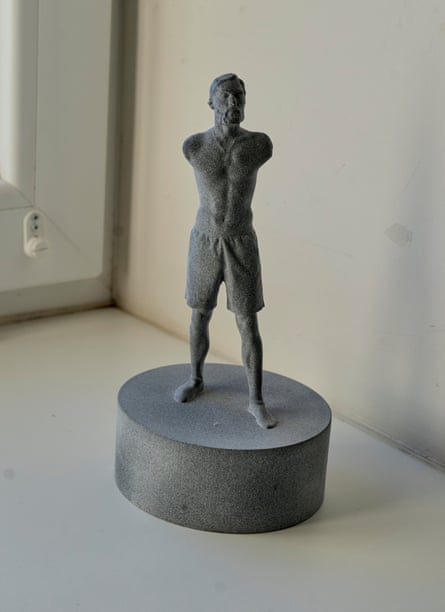
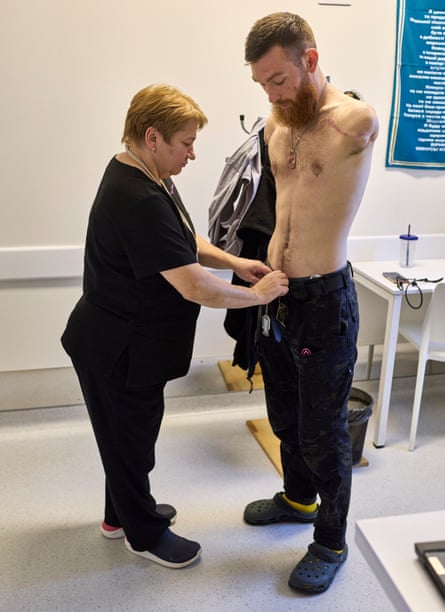
Now hoping to represent Ukraine at Birmingham 2027, Artem wants to encourage other injured veterans to discover what is possible.
"I want to share my experiences and perhaps inspire others to see that, even in the most difficult circumstances, you can achieve things people might think are impossible."
Support from friends, other veterans and his coach helped him settle his nerves and enjoy the experience. He says the emphasis on community, rather than results, changed how he understood the games. For him, sport is part of the ongoing recovery process, not simply a route to a medal.
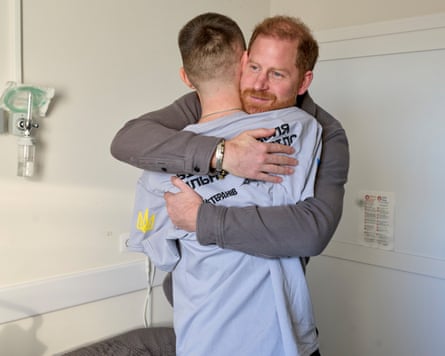
The Duke of Sussex made a surprise visit to Lviv during the team trials to watch some of the sporting action and meet members of the Invictus community. During his stay, Prince Harry dropped in on Artem at his rehabilitation facility to hear first-hand his inspiring story of recovery.
"I was very unsure about the result I would show, but my coach convinced me that these games are not about the result, they are about the community. What helped me show a good result the most was the philosophy of the Invictus Games, that we are not here for the result. We are here simply to enjoy it," says Artem.
"So even gathering the courage, the fact that I still registered and that I was selected, that was already a victory for me: just to step up to the shooting line and shoot.
"To share my experience, to share my stories, and perhaps to inspire someone by my example, that even in such difficult situations one can take on things that others consider impossible.
"Now I feel confidence in myself that I can do many other jobs. I can work at the computer, I can do some public speaking. I am even now thinking about teaching."
Volunteering to the military in 2022, Volodymyr ended up serving in the 8th Regiment of the Special Operations Forces. He was shot in 2024 during combat duties. But his brothers-in-arms could not reach him for 13 hours because the apartment block he was in was next to another residential building "filled to the brim with the Russians".
They eventually rescued him, with one soldier carrying him on his shoulders. Volodymyr has a tattoo depicting himself being carried to safety by one of his comrades, who was later killed in action.
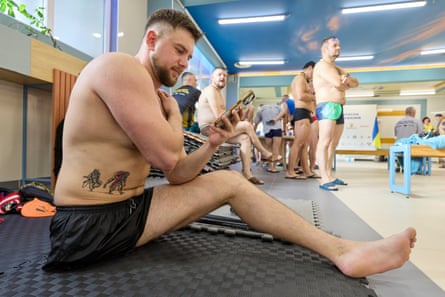
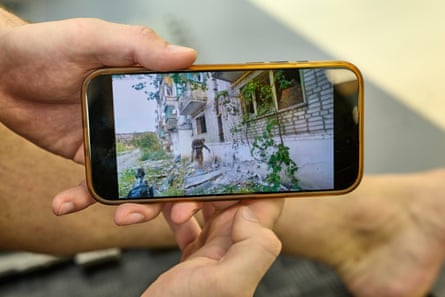
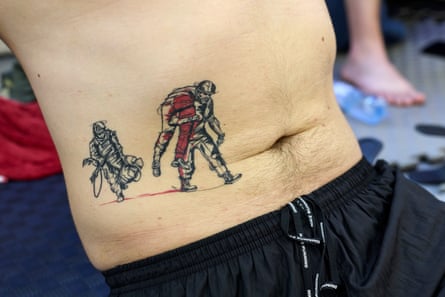
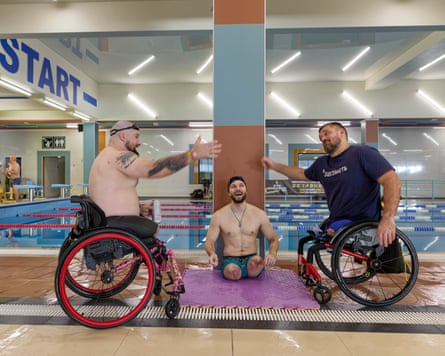
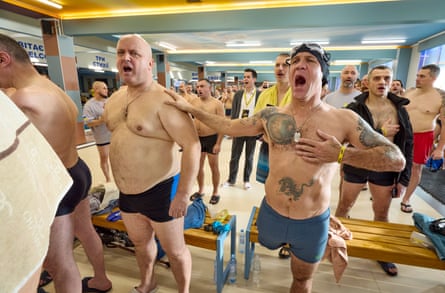
As I wandered around the edges of the swimming pool, I came across a man resting while looking at his phone. I noticed a tattoo on his waist and knelt for a closer look. "That's me", he said, "being carried to safety by my brother-in-arms". Volodymyr told me his story and handed me a video on his phone recorded by another soldier as he was carried over the shoulder to safety. The image on his tattoo is an exact match to the one playing on the video.
This is Volodymyr's first time taking part in the Invictus Games.
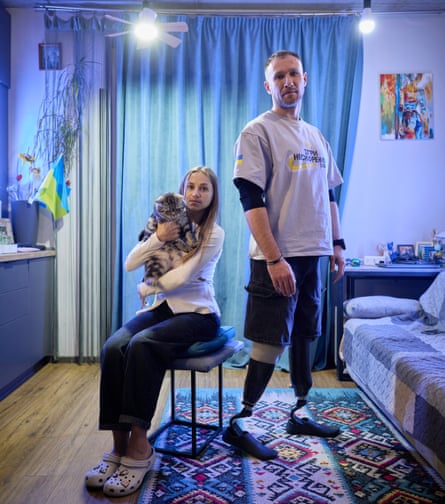
Oleksandr, 38, joined the Ukrainian army in 2023 after the birth of his daughter. Born in Russia's Far East region to a Russian father and Ukrainian mother, he grew up in Lviv. Before the war, he had worked leading sightseeing tours across Europe and later as an IT project manager.
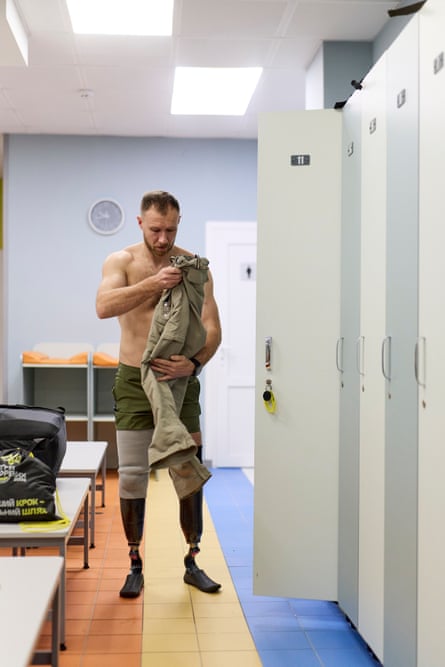
On 1 October 2024, an artillery shell struck his dugout near Toretsk in eastern Ukraine. Despite severe injuries to his legs, he applied a tourniquet and crawled out. His right leg was amputated below the knee; doctors later advised that his left leg would also need to be amputated.
"I had an image in my head: I'm walking with my daughter – and I didn't care that I'd have a prosthetic leg, I'm going to be fine."
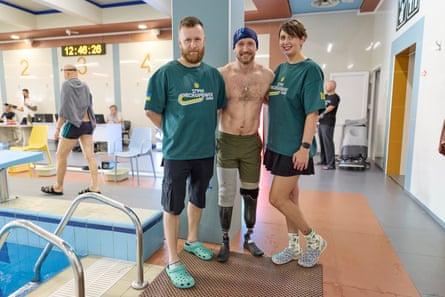
His wife, Mariia, and their daughter travelled to be with him in hospital just two days after the strike and supported him as he moved between hospitals.
A visit from another soldier living independently after an above-knee amputation helped Oleksandr imagine a future beyond his injuries. "He had his business, he was independent, and he could simply … live. This made me understand that everything will be OK in the end."
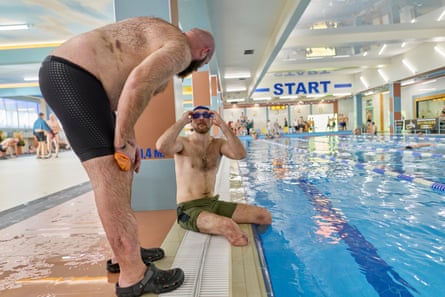
Having benefited from the encouragement of fellow injured veterans, he now hopes to offer that same support to others through Invictus.
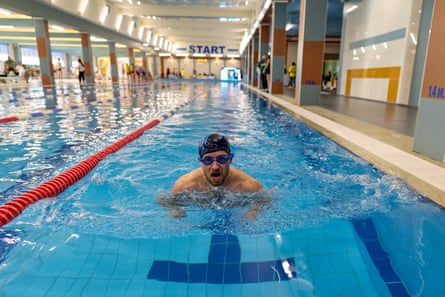
Oleksandr heard about Invictus during his rehabilitation and entered the national selection trials in Lviv in November 2026, taking part in indoor rowing, swimming and sitting volleyball. Sport had already become a regular part of his recovery, and the trials gave him a chance to meet and learn from other service personnel and veterans.
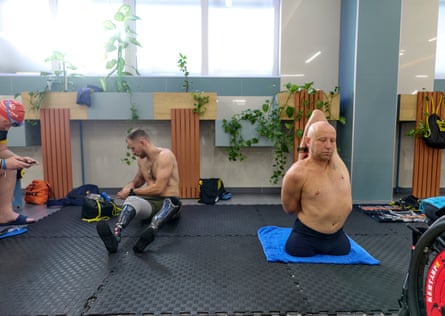
Oleksandr hopes his own experience can offer encouragement to people at an earlier stage of recovery, just as another injured veteran once encouraged him. For him, the value of the Invictus Games is not only competition but the opportunity to share experiences, build relationships and remain active beyond the games.
"I can even be of some use to other participants, perhaps I can share my experience a bit … and, of course, I can learn myself since this is a very cool community that has been proving time and time again that sports do help in the recovery."
Maria says: "He's got the strength, the enthusiasm to cheer others up, and he does it properly, and not just for the sake of it. And he's also a cool dad, a nice dad. A nice husband. A strong person overall."
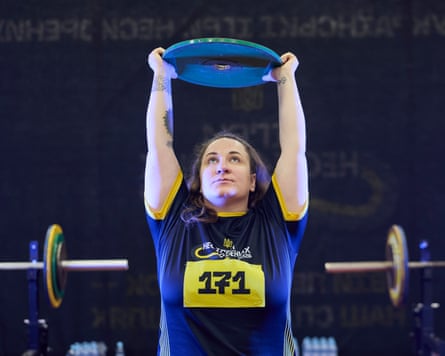
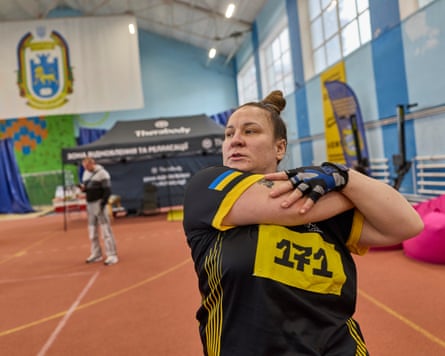
Not everyone's injuries are visible. Many participants have suffered psychological trauma, leaving them to navigate severe mental health issues. Liana joined the military at the age of 20, after the Maidan protests in 2014. She remains on active duty as a chief sergeant in the Ukrainian military, having previously served as a crew commander and squad leader.
Her years of service have had a lasting impact on her health. In 2022, she survived a mortar attack in which a fellow soldier was killed and another wounded. A tree fell on her head during the strike. She has experienced concussions, minor shrapnel wounds and other health conditions that can make it difficult to exercise.
Liana first took part in the Invictus Games national selection process in 2024. Although she was not selected, the experience inspired her to keep training. That progress was interrupted when Russian bombardment forced her to move, and the demands of military service left little time for sport. Returning to the trials in Lviv in November 2026 offered a chance to reconnect with others, take a break from the pressures of service and rediscover that motivation. "That's exactly why I came here: to get that boost of energy again. To prove to myself that I'm still capable-regardless of my weight or the health issues I've developed," she says.
Liana is also passionate about raising awareness of women serving on the frontline and the impact of injuries that are not always visible.
The Invictus Games has given her motivation to stay active and the chance to meet other wounded service personnel and veterans. Watching competitors with amputations achieve remarkable results in powerlifting moved her to tears, and inspired her to set a personal target of bench-pressing 100kg.
But it is what happens beyond the trials that matters most to her. Through people she met in Lviv, Liana has been introduced to a sports group in the Sumy region, where she is currently serving. She now has local contacts who could help her continue training when she returns to her unit. She also hopes to encourage other serving personnel to make time for sport and benefit from opportunities to recover while the war continues. "Now I've met these people, and I know that when I go back, I can continue training there," she says.
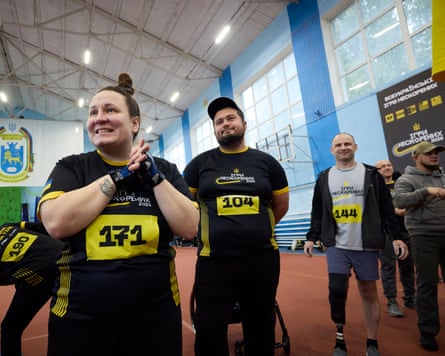
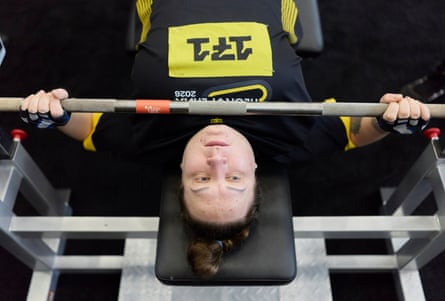
"Back when I spent a year on the frontlines, the main goal was simply to arrive alive and get out alive. You'd stay in your position for weeks at a time, shifts could last three days, or even 10, 12, or 20 days. I want to shift society's understanding: it's not just men who suffer, and it's not just visible injuries that warrant respect."
She says the Invictus trials were "another chance to 'reset', to step away from my usual environment and the daily hassles of my service and to see the people I'd met back in 2024".
Liana adds: "I was moved to tears. I was just so inspired by what I was witnessing. I realised: if they can do it, then, in theory, I can too."
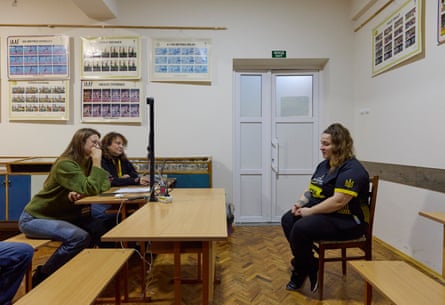
"The sessions are optional for those who have already participated in the games, and also who have come here just to do sports. But if you want to be selected for the Invectus Games in Birmingham, then you should have this session with the psychologist.
"My goal is to make it through the coming year and keep training … It's not about competing against anyone else, it's about competing against myself. Plus, it's a great form of rehabilitation, it gives them a chance to reset after being on the frontline."
Expanding support
For participants such as Artem, Oleksandr and Liana, the games provide a chance to reconnect with others, discover new interests and take another step forward in their recovery journey.
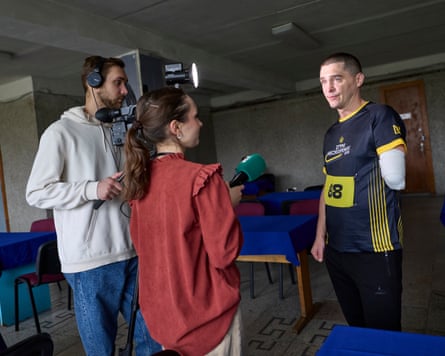
The experiences of these athletes reflect the foundation's wider work in Ukraine, from supporting adaptive sport activities and developing coaches and rehabilitation specialists, to expanding recovery opportunities in communities across the country. This includes supporting the development of community-based adaptive pickleball, helping veterans become instructors and establish local sporting activities.
More than 50 organisations have been created by members of Ukraine's Invictus community, helping to expand opportunities and support for veterans.
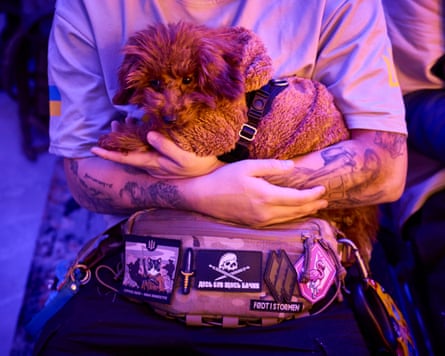
The event reflects the remarkable growth of the Invictus movement in Ukraine. From just 15 competitors at the country's first involvement in the Invictus Games in 2017, the community has grown to more than 2,000 veterans and serving personnel, with Ukraine preparing its largest-ever team of 60 competitors for Birmingham 2027.
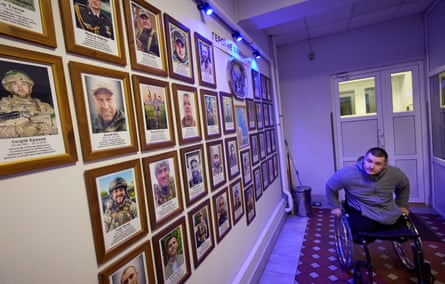
But the trials are just one part of a much wider effort to support recovery through sport. While the war continues, the Invictus Games Foundation is working alongside Ukrainian partners to create opportunities throughout the year, helping service personnel and veterans rebuild confidence, connect with others and participate in sport, whether or not they are selected for the games.