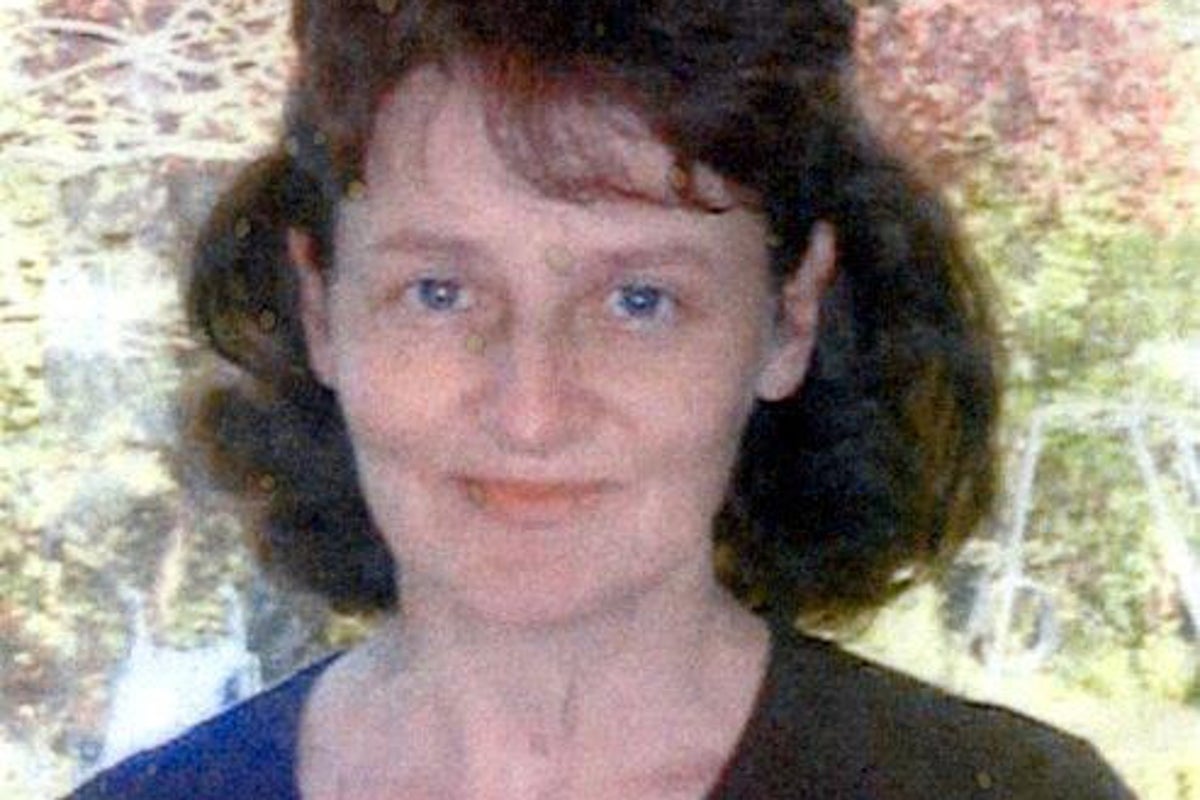
The family of Linda Razzell, who was murdered by her estranged husband Glyn, has said his decision not to reveal the location of her mother’s body for more than 20 years means “there is no peace for us”, after the High Court scrapped the Parole Board’s decision to release him on licence.
Catherine Razzell said on Friday her father was “continuing to do our family harm” and was “actively choosing to be controlling and abusive from within prison” after murdering mother-of-four Mrs Razzell in Wiltshire in 2002.
Glyn Razzell was jailed for life with a minimum of almost 16 years in 2003 for the killing, with the Parole Board deciding in April he could be released on licence.
The Ministry of Justice referred the case to the High Court seeking to have it reversed, with Mrs Justice Cheema-Grubb quashing the decision on Friday after finding Razzell was “fundamentally dishonest” and “continues to withhold information that he could deliver up”.
In a statement following the ruling, Catherine Razzell said the decision was a “relief” to her and her family, and that her father’s continuing decision not to disclose the location of the remains was “cruel”.
She said: “By choosing to withhold the only information that could provide us with some comfort and closure, and preventing us from being able to hold a funeral for our much-loved mother, he is clearly demonstrating he is still abusive – retaining power over the situation and prioritising his narrative, where he can deny killing her, despite being found guilty and given a life sentence.
“To our knowledge, he is of sound mind and knows what he is doing, so there is no reason for him to be released while he is still actively choosing to be controlling and abusive from within prison.
“However, it is important to recognise that while we welcome the decision made today, part of my father’s abuse is that, as a family, we have to go through this process.
“As well as experiencing the most devastating loss of my mother, 24 years later we are still in court trying to keep the rest of our family safe from a man who is continuing to do our family harm.
“None of us want my father to die in prison; what we want is for him to acknowledge what he has done, show remorse and tell us where our mother’s body is so that we can finally lay her to rest.
“There is no peace for us until that happens.”
Razzell, of Crewkerne, Somerset, has always denied being responsible for the killing and opposed the bid to block his release at a hearing earlier this week.
He was previously denied parole three times from 2019, with a Parole Board panel finding in 2023 that he “does not want to lose his desired status of being a ‘wrongly convicted murderer’”.
In its April decision, a Parole Board panel said it had “serious doubts” about Razzell’s honesty and that there was a “very significant” risk in the context of relationships.
But it continued this risk was “not imminent” and that Razzell would comply with licence conditions as he was “strongly motivated not to return to custody”.
The Parole Board also considered Helen’s Law, named after Helen McCourt, who vanished on her way home from work in 1988.
The law requires the Parole Board to take into consideration a killer’s refusal to disclose where they hid their victim’s body.
The MoJ can refer a Parole Board’s decision to release a prisoner to the High Court if it believes the release would undermine public confidence in the parole system, and the court must be satisfied that imprisonment is no longer necessary for the protection of the public.
Mrs Justice Cheema-Grubb said in her ruling that Razzell’s refusal to disclose the location of Mrs Razzell’s body had caused “profound anguish”, which “suggests an inability or unwillingness to appreciate the impact upon the other victims”.
She also said he had shown “inherent vulnerabilities” including a “need for control” and “problems dealing with challenge or criticism”, and had a “propensity to violence against women” which meant he remained a danger.
She said: “Given his failure to carry out any substantive risk reduction work, he is, as far as internal controls go, the same man he was when he killed Linda, and that is relevant to risk.”
Frank Mullane, the chief executive of the charity Advocacy After Fatal Domestic Abuse, which supported Ms Razzell, said the case “has tested the real-life impact of Helen’s Law” and sent an “important message”.
He said: “The process of seeking justice can be a continuation of the abuse, and it can be exhausting and relentless.
“No other family should have to go through this.”
An MoJ spokesperson said: “Linda Razzell’s murder was a horrific crime and our thoughts remain with her friends and family.
“Public protection is our number one priority which is why we welcome the High Court’s decision to block the release of this offender.”