London's £2.7 billion live music boom: How concerts are fueling a record summer

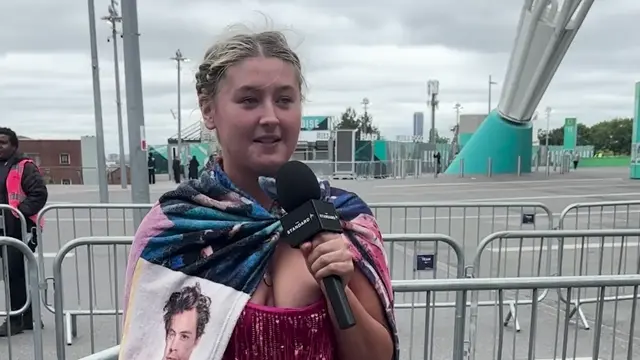

This is proving to be a record-breaking summer in London. For the obvious reasons — the blue sky and scorched earth you can see out of every window — but also for the capital’s ability to attract the world’s biggest musicians and, with them, massive audiences.
Open-air live concerts are booming. Harry Styles completed a mammoth run at Wembley (literally and physically — he’s been doing laps around the stage), while Bad Bunny made history as the first Latin-American artist to headline a London stadium (a phenomenal step up from the last time he played in London, at O2 Kentish Town Forum). Just about everyone seems to be staying on for multiple nights, including Bruno Mars, Luke Combs and BTS, who all played a minimum of two nights at their respective stadiums. And that’s to say nothing of the park events: British Summer Time in Hyde Park was full to bursting, while the many manic days of Victoria Park’s All Points East festival are still left to come.
Ticketmaster owner Live Nation said its nearly 300 shows in London will host 3.1 million fans this summer. By no means all of them are in the grandest locations — 44 per cent are in club and grassroots spots. Dominating, though, are the stadiums, part of the reason why London is the undisputed world champion of large-scale live music events. Put simply, thanks to football, we have more top-rated outdoor venues than any other comparable city. Plus, despite what is often said, we have excellent transport links and hotel rooms.

The sheer breadth of genres is also not replicated anywhere else — from heavy metal-themed Metalfest in Camden to Arabic-focused Mahrajan at Crystal Palace Bowl. One senior music executive told the Standard that in her time in the industry she had never seen such “globalisation as there is on offer in London right now”.
Not to be outdone, indoors, the O2 Arena (20,000) is having its busiest August on record, with 16 sell-out shows including Ariana Grande performing her only concerts outside North America this year with a 10-date run. Olivia Dean will have played six performances, and Lily Allen three.
British Airways ARC in Olympia is the new venue on the scene that’s bolstering London’s prowess. The AEG-run, 3,800-capacity theatre has opened with Self Esteem and next month features a five-night residency from Van Morrison.
Some 10.5 million fans will head to festivals and open-air events this summer, many of them in London. That is an 18 per cent increase on 2025. By contrast, the Premier League had a 15 million attendance over the entire 2025/6 season. With an estimated £122 extra spend per fan on top of the ticket price — including on hotels, pubs, restaurants, travel and shops — that is a huge economic boost to the UK from music in only a few months.
In this version of the “gig economy” — as opposed to the zero hour contract kind — the Mayor of London’s office estimates this year’s summer shows will attract 7.5 million visitors and bring in around £2.7 billion in revenue to the capital. “It shows why London is the undisputed capital of music and will provide a huge boost to our economy, as we build a better London for everyone,” said Mayor Sadiq Khan.
Yet, all the theory suggests live music should be joining the list of industries to be currently suffering. Some ticket prices for the biggest events can be eye-wateringly steep (Harry Styles standing tickets ranged from £144.65 to £279.45), not to mention the price of food and drink inside the venue. These are the charges the punters face. On their side, the promoters and venues must cover all manner of expenses and satisfy ever more onerous health and safety and environmental concerns. Luckily for them, demand is thriving.

Pubs, restaurants and shops may be wilting from lack of custom but not live music, where people’s appetite seems insatiable. Part of the reason for the decline of those sectors is thought to be behind live music’s contrasting buoyant health. While online shopping and entertainment have wrought devastation on the high street and changed lifestyle patterns, that very fixation with screen time has benefited live entertainment.
One music promoter explained that “everybody spends so much time on their screens, on mobiles and lap-tops, that it induces loneliness. They want the togetherness, the coming together that a concert offers”.
This executive said they saw it writ large at last year’s run of Oasis shows. “Everyone was dressed the same, with their bucket hats and T-shirts. They were all signing along, in unison. It was cross-generational — parents, children, even grand-children, as one. There was a connection you don’t get anywhere else, apart from, say, going to a football match — which is why football gets such big crowds. It was like going to some sort of mass religious experience.”
“People might drop the weekends away or dinners out but not a once or twice a year concert”
It’s also authentic. It’s not subject to the trickery of AI or CGI. The genuine article is singing and playing, right there, in front of your eyes. While set lists may be repeated, each show is unique, with its own twists and variations, unscripted incidents and atmosphere.
As for the cost, seeing someone’s favourite falls into the “treat” category. Yes, times are tough and uncertain; yes, the cost of living keeps on rising. No, they won’t scrap a one-off, possibly once in a lifetime, opportunity to attend a concert by a person or band they adore. “They want to prioritise live entertainment,” said a music boss. “They might drop the weekends away or dinners out but not a once or twice a year concert.”
If anything, they said, live music was benefiting from the period we’re in. They likened it to the Roaring Twenties, as the world recovered from the ravages of war. Then, as now, advances in tech — in those days automobiles, moving pictures and radio — played a part, contributing to what was also known as the Jazz Age for music and dancing.

On prices, it’s true that some tickets cost the earth. But insiders say they are for the best seats; there are always more reasonable ones to be had. They argue, in fact, that if inflation is factored in, ticket prices have fallen over the past 10 years. “Nothing beats a good live experience, be it in an 80,000-capacity stadium or a 400-capacity club,” said Denis Desmond, chairman of Live Nation UK & Ireland. “Some shows are now much bigger and costs overall are far greater. While VIPs can be expensive, prices overall are generally down from where they were.”
London is having a great summer in more ways than one.