'Moment of urgency' for London as climate change threatens capital's treasured parks

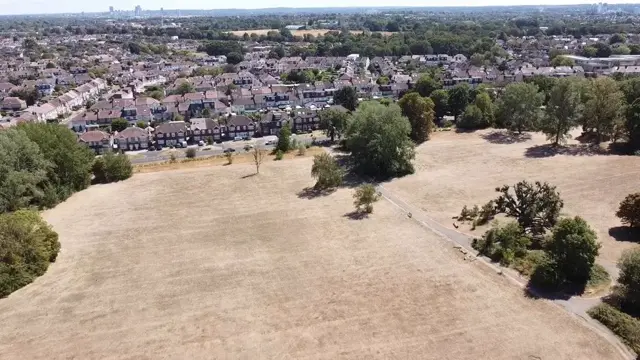

London's treasured historic green spaces are under increasing threat from climate extremes, a report warns.
The Royal Parks, Kew and Chiswick House and Gardens are among the capital's popular outdoor amenities already hit by increasingly extreme weather caused by climate change, according to the National Lottery Heritage Fund and Historic England report.
They warn green spaces are already being affected by paths and drainage systems not fit for current conditions, trees lost to drought and high winds, and potential loss of entire groups of plants to diseases affecting box, ash, sweet chestnut and oak.
The report says historic parks and gardens across the UK employ more than 32,000 people and contribute £2.9billion to the UK economy each year from international visitors alone.
But they are increasingly vulnerable to damage from harsher, more widespread drought, intense rainfall, more severe storms and pests which can thrive in warmer conditions.
The warning was sounded as heat health alerts come into force at the start of the fifth heatwave of the year, with almost three-quarters of England now in drought.
From 9am on Tuesday, heat health alerts issued by the UK Health Security Agency (UKHSA) are in place across England until Friday evening.

Highs of 32C and 35C are expected in London on Wednesday and Thursday, according to the Met Office.
Amber heat health alerts have been issued for most of England including the South East.
The Environment Agency (EA) said 71.3% of England is experiencing “flash drought”, as a dry start to August followed the country’s driest July on record.
The National Lottery Heritage Fund and Historic England report, which drew on interviews, surveys and analysis, found many park and garden managers are unprepared for the severe impacts of climate change – with staff wanting increased advice and guidance and warning a lack of funding is stopping them implementing changes.
And while all sites are responding in practical ways where they can, for example prioritising actions that will help adapt to climate change, they warn they are spending more time on emergency responses and maintenance.
Sites are taking actions such as altering the range of plant species, to make them more resilient, and reducing the reliance on vulnerable plants.
The report, which aims to be a snapshot of a sector that covers 2,800 gardens, parks and cemeteries across the country, also warned smaller sites are some of the most vulnerable as they often depend on a single owner or very small management team, and have limited ability to fund and plan adaptation work.

It also identified differing threats across the country, with those in the South East mainly concerned about drought stress and trees dying, while those in the north are seeing heavy rainfall, flooding and storm damage, and those in the south west are being hit by both extremes.
Drew Bennellick, head of land, seas and nature policy at the National Lottery Heritage Fund, said: “It’s clear our historic parks, gardens and cemeteries are facing unprecedented challenges due to climate change, and without urgent guidance and advice, many of these precious landscapes will suffer and change beyond recognition.
“As an organisation we are known for saving historic buildings, but the natural landscapes they sit in are equally, if not more, vulnerable to the shifts we are seeing in our climate, and equally as valuable.”
Erika Diaz Petersen, principal national landscape adviser at Historic England, said: “Historic parks, gardens and cemeteries are important places for people, plants and wildlife, treasured by local communities and visitors, and crucial resources at the heart of our green infrastructure.
“However, we have seen how they are increasingly under threat from climate change impacts."

Rosie Fyles, head of gardens at Chiswick House and Gardens, warned the gardens are “scorched”.
She said: “The reality is that our ability as gardeners to minimise the negative effects, particularly on our 1,800 trees, is quite limited.
“My role now is to plan intelligently and make the right informed decisions for the next 300 years, gathering as much advice and resources as I can to do so.”
Darren Share, director of parks at the Royal Parks, said the driest July on record and consecutive heatwaves showed it “is a moment of urgency” as he said a united approach and shared guidelines would help vital historic landscapes in the face of a changing climate.
He added: “The Royal Parks is focused on creating climate-resilient parks for future generations by taking decisive action now.
“This includes diversifying tree and plant species; using adaptive and innovative horticultural approaches; providing more shade and cool areas during hot weather; improving water management so that we are not reliant on mains water; and pursuing our ambition to eliminate all greenhouse gas emissions from our direct operations by 2030.”