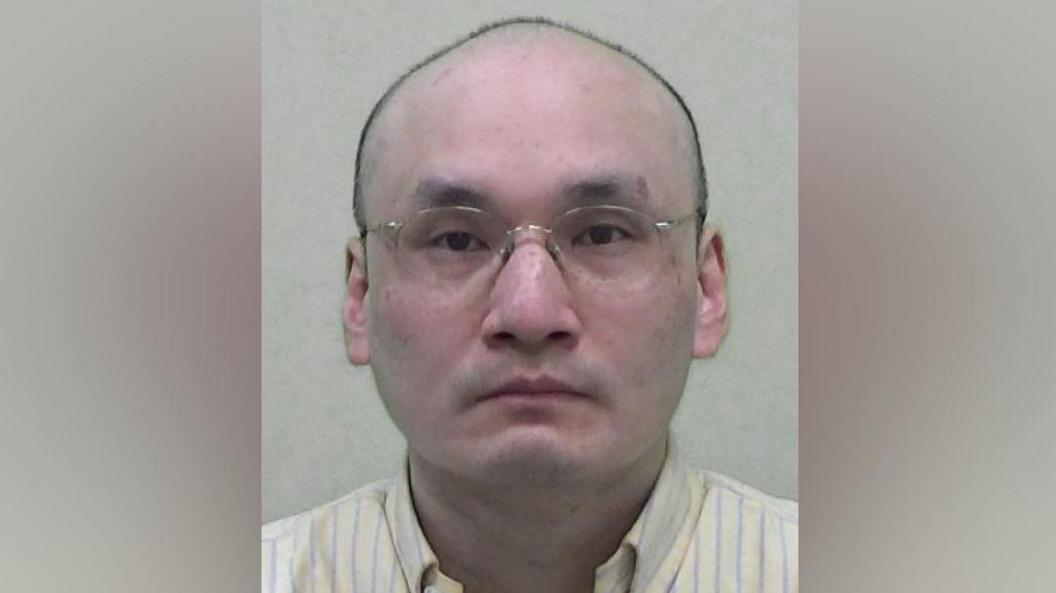
Prosecutors say it was "lucky" no-one was killed by a murderous GP's attempt to fatally poison his mother's partner in a row over a will.
Thomas Kwan, 55, sent Patrick O'Hara bottles of alcohol laced with thallium, but when that failed to kill him he went in disguise to the victim's Newcastle home and injected him with a toxin under the pretext of giving a Covid jab.
Kwan, who lived in Ingleby Barwick and worked in Sunderland, was jailed for more than 31 years for the injection murder attempt and will be sentenced next year for the bottle poisonings after he lost his bid to withdraw his guilty plea.
Chris Atkinson of the Crown Prosecution Service (CPS) said he had never known a case like it.
Details of the earlier poisoned bottles plot emerged on the opening day of Kwan's trial for the injection scheme.
On 3 October 2024, Peter Makepeace KC told jurors detectives investigating Kwan's murderous attempt on 22 January that year discovered details of a second scheme to kill O'Hara, who the GP wanted to eradicate from his mother's will.
Makepeace told Newcastle Crown Court officers found documents on his computer showed Kwan had a "back-up plan" to send contaminated bottles of alcohol to O'Hara from a fictitious gentleman's drinking club, but the scheme was never enacted.
Hearing the opening, O'Hara's daughter realised her father had actually received bottles, with her partner Torquil Gundlach falling ill after drinking from one of them.
That was the spark for the second investigation, Atkinson told the BBC.
Detectives immediately went to O'Hara's home and found two bottles, one of whisky and the other of vodka, found to be contaminated with "highly toxic" thallium, the prosecutor said.
Traces of thallium at "unusual levels" were also found in both victims, Atkinson said, with prosecutors concluding Kwan had sent up to 21 packages to his victim since September 2022.
Although Kwan set up email addresses with false details to hide the source of the drinks, police were able to link the bottles to the doctor through the courier services he used.

Atkinson said it was not known if all the bottles he sent were "adulterated with thallium", but it "would have made sense" for Kwan to send a number of uncontaminated drinks to "lull people into a false sense of security".
"I don't know of another case like it," Atkinson said. "Prosecutions of poisonings are incredibly rare.
"To have one offender who has repeatedly tried to poison the same person and used different substances and changed the method of delivery in order to try and kill their victim, I've not heard of another case like it."
He said it was "definitely very lucky" no-one was killed, adding the contaminated drink could easily have been shared with other people.
"Thomas Kwan could never have known how many people he was actually going to poison," Atkinson said.
He said the second murder attempt and existence of poisoned bottles still in "circulation" might never have been found but for the "good fortune" of O'Hara's daughter hearing the prosecutor in court and "recognising what was being said".
Atkinson said Kwan would have been in court at the first trial knowing "all along" the tainted bottles were still "sat there waiting for somebody to drink" and potentially die, yet he "never said a word about it".

Kwan had sought to vacate his guilty pleas to the second attempted murder charge and to inadvertently poisoning Gundlach, claiming he made a "false confession" under "duress" from his legal team after being "misled" by his barristers.
After hearing Kwan give evidence for more than three and a half hours on Thursday, Mr Justice Cotter KC resolutely rejected all of Kwan's claims, saying his arguments were "utterly fanciful" and his legal team had acted "entirely" properly throughout.
The judge said prosecutors initially believed the poison bottle plan was "embryonic" and "abandoned in favour of the more direct injection route", which Kwan had seeded with the victim by sending faked NHS letters and text messages.
But when it emerged the victim had been sent "unsolicited bottles", it was realised Kwan had been carrying out the so-called "back-up" plan, the judge said.
It undermined Kwan's claims the injection attack was a spur of the moment act while suffering poor mental health and instead added credence to prosecutors' claims there was a "deliberate and well thought through plan to poison" his victim, Cotter said.
Kwan used a "quite inventive and devious method" to send the bottles, the judge said.
The ways the doctor later sought to "resile" himself from documents he had signed confirming his "unequivocal" guilt were "both unimpressive and unattractive", Cotter said.
"He pleaded guilty," the judge said, "because he was guilty".
Rejecting his bid to vacate the plea, Cotter told Kwan: "Everything that could possibly be said and more has been said on your behalf today, I just didn't accept it."
Follow BBC North East on X, Facebook, Nextdoor and Instagram.
Get in touch
Do you have a story suggestion for BBC North East & Cumbria?