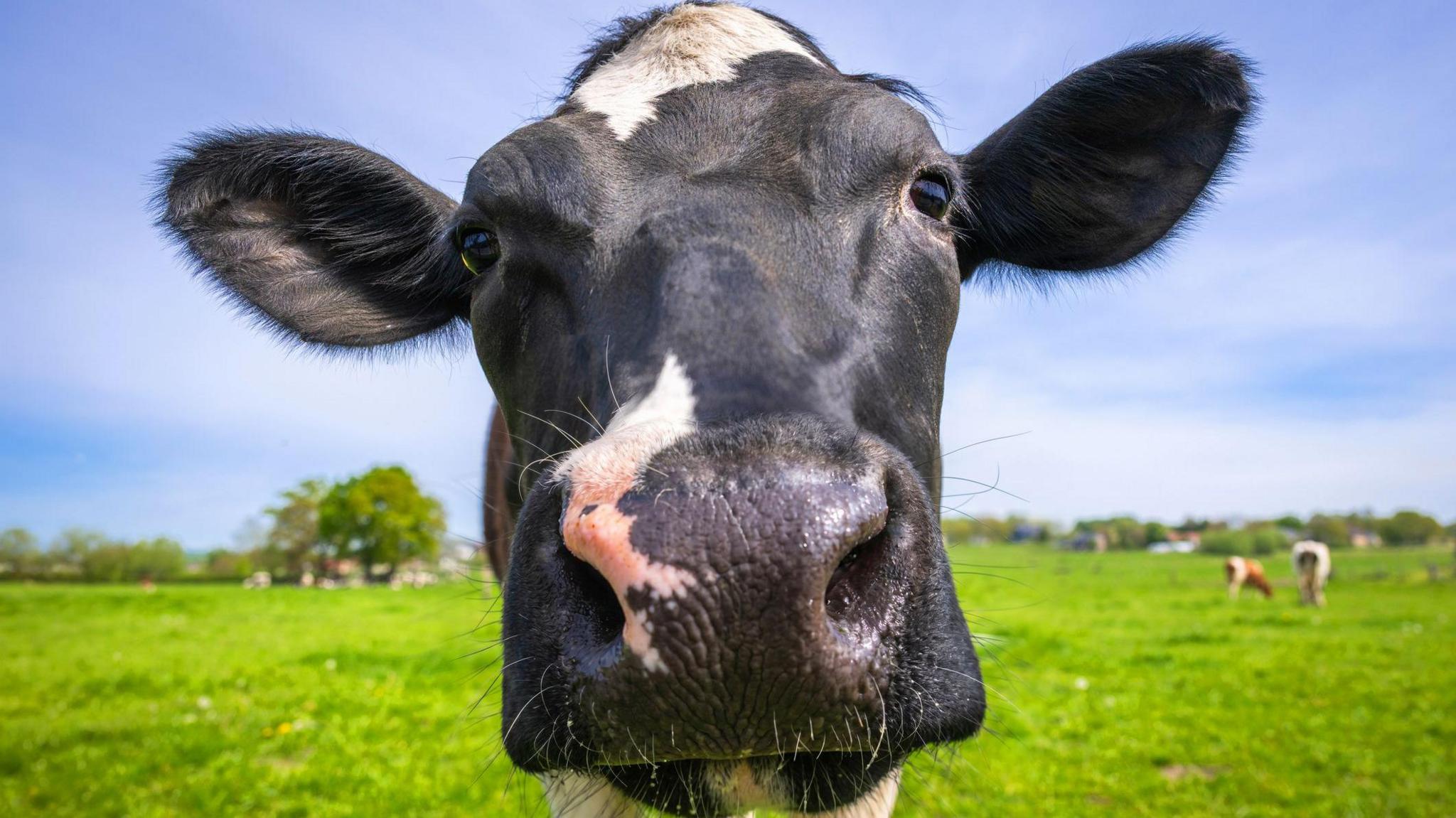
A case of Bovine Spongiform Encephalopathy (BSE) has been confirmed in a cow on a farm in Dumfries and Galloway.
The infection, often called mad cow disease, was identified as a result of routine testing and is an isolated case.
The animal did not enter the human food chain and Food Standards Scotland said there was no risk to human health.
It is the first case of classical BSE to be reported in Scotland since 2024.
The Scottish government said the animal had been destroyed and tests were being carried out to establish the cause.
Agriculture Minister Jim Fairlie said: "The fact we identified this isolated case so quickly is clear proof that our surveillance system for detecting this type of disease is working effectively.
"I want to thank the animal's owner for their diligence.
"Their swift action allowed us to identify and isolate the case immediately, minimising its impact on the wider industry."
History of BSE
There have been a handful of cases of BSE in the UK in the last decade, including one in Ayrshire in 2024.
But in the 1980s there was a massive outbreak that led to high-risk offal being banned for human consumption.
Many people feared eating food, like burgers, as a result.
A number of countries stopped importing meat from the UK, a ban China only reversed in 2018.
The epidemic reached a peak in 1992 and 1993 when there were 100,000 confirmed cases. In total, it is estimated 180,000 cattle were affected.
In a bid to stop the disease, 4.4 million cattle were slaughtered.