The Houthis this morning have just also issued a warning to travellers and airlines to stay away from Saudi airports following yesterday's attack.
It's the first public message from the group since Saturday's deadly assault.
Houthi military spokesman Yahya Saree said Mecca and Medina – the holiest cities in Islam - were excepted but the other Saudi airports and airspace "are exposed to targeting and constitute a theatre of operations for our forces".
He warned the public to "take our warning seriously" and also claimed that "Saudi Arabia bears responsibility for any failed interceptions".
The Gulf state has been asking the US and other Western allies for more missile interceptors since the fighting escalated.
Saree ended his post by saying his group is pursuing: "airport for airport, siege for siege, and escalation for escalation" until they achieved their goals.
All week the Houthis have been striking the main airport in the Saudi capital as Saudi Arabia has increased strikes on Houthi territory in Yemen. The Houthi-run health ministry says 91 Yemenis have been killed and 168 injured in the past five weeks due to Saudi-led attacks. It said 60% of those killed were women and children.
This week, the Saudi-led coalition backing the Yemeni government forces launched a major counter-offensive to try and push back the rebel group who've rapidly seized and gained territory since September.
The Houthis have taken over islands in the Bab al- Mandab strait and also staked positions along the Red Sea, tightening their grip on the crucial passageway through which Saudi Arabia, a top oil exporter, had been diverting flows as the Strait of Hormuz remains shut off.
Saturday's incident comes amid an escalation of missile strikes by Yemen's Iran-aligned Houthis on the kingdom. The airport has already been attacked twice this week, leaving four people dead and others wounded, and badly damaging an aircraft.
The Houthis have repeatedly attacked Saudi airports, oil facilities and tankers after a truce in their long-running war with Yemen's Riyadh-backed government unravelled in July.
The attack came as forces allied to the UN-recognised government in Yemen claim to have mounted a successful offensive to retake the Bab al-Mandab strait from Houthi rebels, but accounts vary as to whether the push has been repelled.
The Houthi's foreign ministry in Yemen has also put out a statement being carried by Houthi media.
They threatened again that continued Saudi military action in Yemen would lead to an even stronger response. Echoing what military spokesman Saree said earlier in his airport warning – they said their actions were guided by reciprocity.
"Unless the Saudi enemy stops its aggression and interference in Yemen, worse is yet to come, God willing," the ministry said in statements carried by Houthi-run Al Masirah television.
As I reported earlier- the Houthi attacks on the Saudi capital's airport this week have come as the Saudi-backed, UN-recognised government in Yemen has been launching a counter-offensive to retake the Bab al-Mandeb strait from the Houthis – with the outcome unclear. More on that in a bit.
The Houthis are waging a war to remove Saudi influence from Yemen, and have been mounting missile attacks on Riyadh in support of this objective.
Why else has the US been reluctant to intervene so far in Saudi Arabia's fight?
The Houthis have repeatedly attacked Saudi airports, oil facilities and tankers after a truce in their long-running war with Yemen's Riyadh-backed government unravelled in July.
Saturday's attack might change things but Donald Trump has been reluctant so far to help out Saudi Arabia for several reasons, as my colleague Patrick Wintour explains:
The US has its hands full and its munitions stocks are empty due to the war in Iran.
Ahead of the midterms, Donald Trump does not want to launch another forever war.
After bombing the Houthis for 50 days in spring 2025, he struck a bilateral ceasefire with the Houthis – a deal that excluded Israel.
He has twice rejected Saudi pleas that the fate of the strait is a matter for the world.
An American citizen was among the 12 killed in the airport attack yesterday. For weeks now there's been speculation over whether the US will join Saudi Arabia in carrying out air strikes against the Iran-backed Houthis in Yemen.
When fighting recommenced last month with the Houthis, Saudi Crown Prince Mohammed bin Salman had reportedly called Donald Trump to request military assistance. The US president committed only military intelligence and targeting help rather than send war planes.
On Saturday, following the deadly airport attack, Trump was asked by reporters if the US would take a more active position and join in the Saudi strikes.
"We may. We're going to look at it. We just found out about the recent attack, so we'll make a decision. We move very quickly," he said.
He later said he also planned to speak with Saudi Arabia's leader.
Asked again by reporters if the U.S. might get involved, Trump responded, "We'll find out."
The fighting between Saudi Arabia and the Houthis in Yemen this past month have marked a new front in the Iran war, further driving up global oil and fuel prices as Saudi Arabia is the world's top oil exporter and had been delivering its output through the Red Sea which has seen shipping attacks by Iran's ally in recent weeks.
The US is now in the seventh month of the war it began against Iran in February, and across American states gasoline prices have surged 47%.
Trump's approval rating has also dropped from 41% in Feburary to 37%- his lowest level yet ahead of the midterm elections next month.
There's been a strong condemnation of this morning of the Houthi's deadly strike on Saudi Arabia's largest airport. Global leaders say attacks on civilians must stop.
UN Secretary General Antonio Guterres said he was "deeply shocked" by Saturday's strike.
"Attacks on civilians and civilian infrastructure are a violation of international law. These attacks must cease immediately," he said.
Meanwhile EU chief Ursula von der Leyen said the European Union stands "in solidarity with Saudi Arabia", noting the "murderous attack on civilians" as a "dangerous escalation" in the wider war.
These "attacks by Iran's proxies are pushing the region into a spiral of violence. They are destabilizing crucial global transport and energy nodes with shockwave sent through the world," she said.
The EU as a bloc has not sent any direct military aid to Saudi Arabia since fighting recommenced with the Houthis last month. The Saudis have asked France and Germany directly for aid but the European powers haven't commited.
This morning UK Defence Secretary Wes Streeting said Houthi attacks on civilian sites "is one of the reasons why the UK is providing support to Saudi Arabia in the form of air defences and air-to-air resupplying".
Meanwhile in the Middle East region, , which neighbours Saudi Arabia, warned this morning that the attack endangered "regional security and stability".
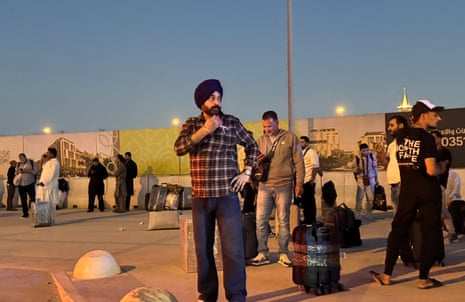
As you can expect, passengers have been avoiding Saudia Arabia's main international airport since the major attack yesterday.
King Khalid remains closed today. It remains to be seen if operations will continue at other Saudi airports.
The Houthis earlier in the week had warned commercial airlines "for the last time" about the consequences of flying into Saudi airspace, noting it was a theatre of fighting.
Several airlines have previously suspended flights during the past month as the Iran War has expanded to this new front. Air India, FlyDubai, Lufthansa Group and Pakistan International Airlines had all temporarily paused their routes into Riyadh and other Saudi cities.
The Houthis this morning have just also issued a warning to travellers and airlines to stay away from Saudi airports following yesterday's attack.
It's the first public message from the group since Saturday's deadly assault.
Houthi military spokesman Yahya Saree said Mecca and Medina – the holiest cities in Islam - were excepted but the other Saudi airports and airspace "are exposed to targeting and constitute a theatre of operations for our forces".
He warned the public to "take our warning seriously" and also claimed that "Saudi Arabia bears responsibility for any failed interceptions".
The Gulf state has been asking the US and other Western allies for more missile interceptors since the fighting escalated.
Saree ended his post by saying his group is pursuing: "airport for airport, siege for siege, and escalation for escalation" until they achieved their goals.
All week the Houthis have been striking the main airport in the Saudi capital as Saudi Arabia has increased strikes on Houthi territory in Yemen. The Houthi-run health ministry says 91 Yemenis have been killed and 168 injured in the past five weeks due to Saudi-led attacks. It said 60% of those killed were women and children.
This week, the Saudi-led coalition backing the Yemeni government forces launched a major counter-offensive to try and push back the rebel group who've rapidly seized and gained territory since September.
The Houthis have taken over islands in the Bab al- Mandab strait and also staked positions along the Red Sea, tightening their grip on the crucial passageway through which Saudi Arabia, a top oil exporter, had been diverting flows as the Strait of Hormuz remains shut off.
Saturday's attack was the third launched on the Saudi capital's main airport this week- with the missile making it past Saudi air defences to strike terminals 3 and 4 of King Khalid airport where hundreds of passengers were awaiting domestic flights.
The attack killed at least 12 people and injured 309 at last count, say Saudi officials.
The dead include four Saudi citizens, two Bangladeshi nationals, a Palestinian, a US citizen, an Egyptian, a Jordanian, a Syrian and a Sudanese.
A projectile also fell near the King Fahd international airport in Dammam, according to the Saudi-led coalition fighting the Houthis.
The Dammam airport has been an important alternative to Riyadh amid the recent spate of attacks.
Good morning and welcome to our live coverage of rapidly unfolding events in the Middle East.
After attacking Saudi Arabia's main international airport on Saturday in strikes which killed at least 12 people and injured 309, the Houthis have issued another message this morning about the kingdom's airports.
In response to the Houthi's assault – the deadliest in Saudi Arabia in over a decade – US President Donald Trump has said Washington may join the Saudis in carrying out air strikes against the Iran-backed group in Yemen.
Trump said: "We may. We're going to look at it. We just found out about the recent attack, so we'll make a decision. We move very quickly."