
A Muslim woman who was abused on a bus in west London for wearing a niqab has said that she is subjected to Islamophobic abuse on a daily basis in the capital.
"Spitting, barging, pushing. It happens to me every single day," says 21-year-old Salsabil.
"We kind of convince ourselves that this is something we have to tolerate rather than report."
A spokesperson for the Metropolitan Police said that "no community in London should have to endure intimidation or abuse" and the force was "committed to tackling all forms of hate crime".
Salsabil said she was travelling home from central London on 31 July when she was verbally abused because of her niqab, a veil for her face that leaves the area around the eyes clear and is worn with a headscarf.
"He was swearing at me for the way I'm dressed," Salsabil said.
"I went to go sit down and this passenger stopped me, again, very aggressively, telling me that I'm not welcome with this veil on my face, that this is terrorism, this is not religion.
"He said that if I refuse to take off my veil that he will take it off for me."
Salsabil said the man threatened to kill her, and another passenger intervened and became embroiled in a punch-up with the man.
She said he was the only passenger who came to her defence.
"I genuinely thought that I was going to be seriously injured," she said. "I felt so alone.
"I'm so grateful for the passenger who did step in and defend me."
'I haven't felt safe in the past year'
She added: "This happens to me really often. If I reported every single incident, I think I would probably just live at the police station."
Salsabil explained that she chose not to report the incident to the Metropolitan Police, after she previously reported an Islamophobic hate crime and officers "were quite dismissive about it".
She said: "A lot of women do report incidents like this and they are dismissed, and being dismissed is very demotivating to ever approach the police again.
"I was born and raised in London and I've always felt safe... but I think recently, for the past year, I haven't felt safe, especially going out on public transport," Salsabil added.
"We should never justify abuse based on how someone dresses," she said. "If a woman chooses to wear the hijab or the niqab, or doesn't choose to wear any religious clothing, she should never feel unsafe."
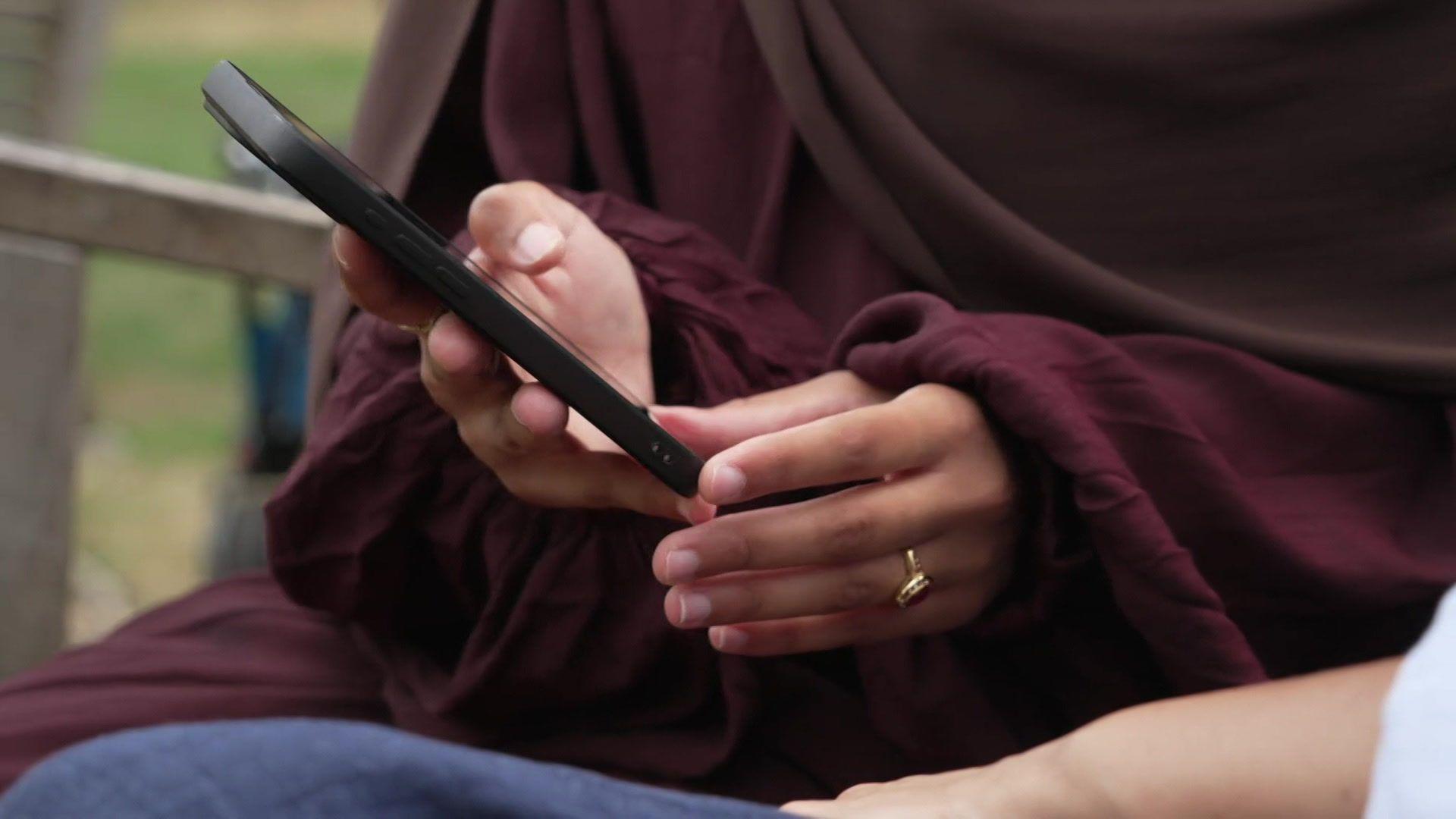
Siwan Hayward, Transport for London's (TfL) director of security, policing and enforcement, said she was "appalled" by the video of Salsabil being abused on the bus.
"No-one should ever have to fear or experience abuse when using our network," she said.
"We are urgently looking into this incident and encourage anyone who experienced or witnessed this incident to contact the police."
A spokesperson for the Met Police said they were aware of the video and were making efforts to contact the victim, and urged witnesses to report the incident to force.
Both TfL and the Met said they took a zero-tolerance approach to anti-Muslim hatred.
Data collected by the Met Police showed that reported faith hate crime rose by 25% in London over the past year, and there was a 31% rise in reported Islamophobic offences.
London's victims commissioner, Andrea Simon, said she did not believe Salsabil's experience was a "one-off".
"We have to be very concerned that this is something that's affecting particularly those who might be visibly identifiable by clothing as being Muslim or being of a faith background," she said.
"It's really concerning to hear that someone who was subjected to this kind of behaviour felt that they weren't able to report what had happened to them to the police, because they lacked confidence that anything would be done about it."