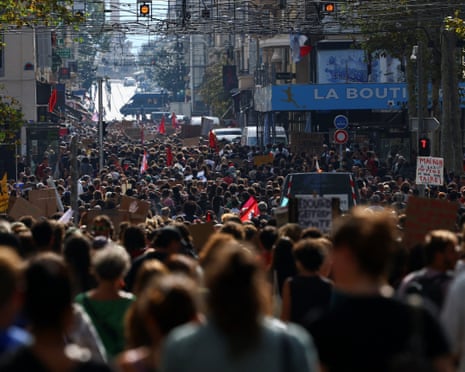
Some 90,000 people are believed to be taking part in this morning's demonstrations, according to official estimates reported by the French media.
But a reminder that the main Paris march is not even under way yet.
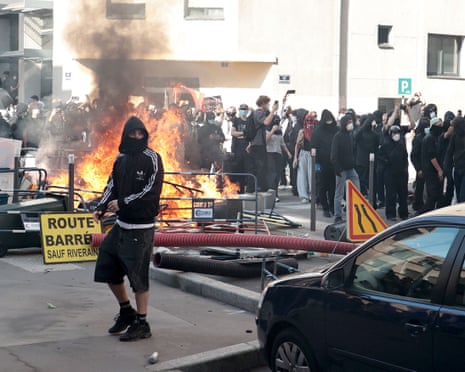
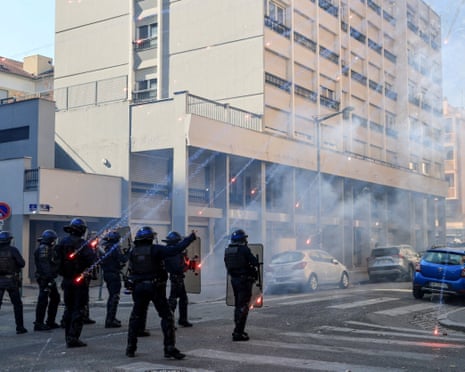
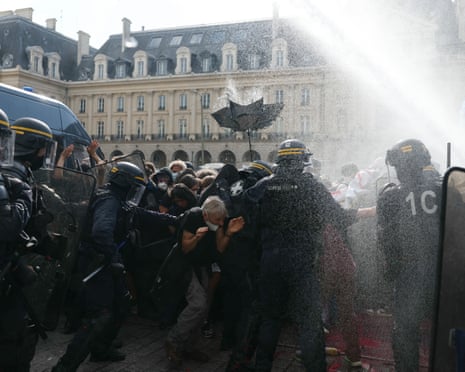
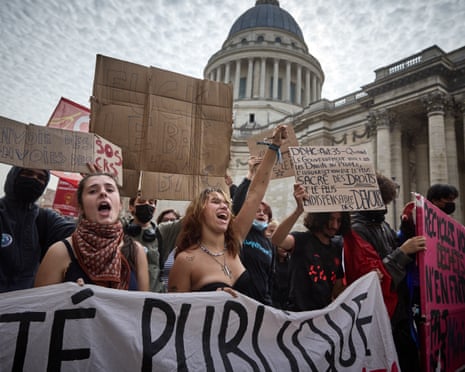
There were also some reports of clashes with police, including in and . Two teenage girls were injured in (Seine-Saint-Denis), BFMTV reported.
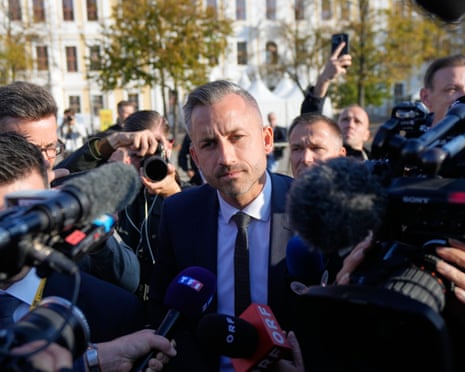
AfD's Rausch is now delivering his acceptance speech, talking about his journey from being a local politician in his home region to this moment, as he pledges to be the president of the entire state, and not serve just the interests of his party.
He clearly seeks to reassure lawmakers that he will now seek to antagonise anyone, and will protect the rights of the minority to criticise the decisions of the majority, present alternatives, and fully exercise its parliamentary rights, and the same procedural rules will apply to all parties.
Let's see how this goes.
But he also briefly strays into broader political points, as he says "the era of political firewalls should be a thing of the past."
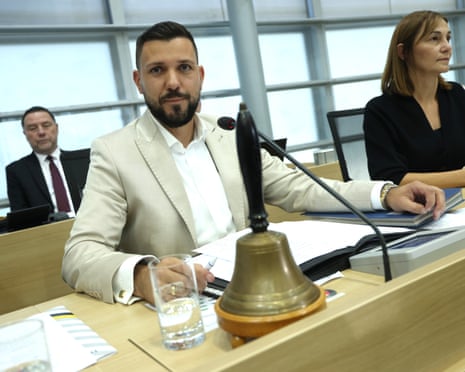
The Alternative für Deutschland lawmaker Tobias Rausch has been elected as the president of the state parliament in Saxony-Anhalt.
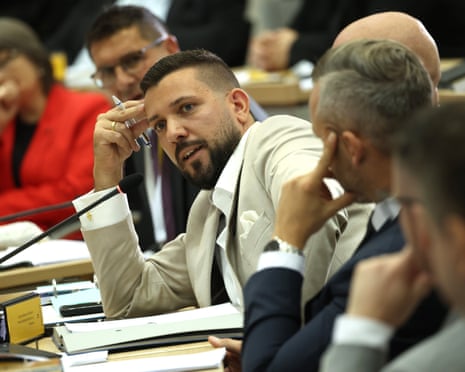
48 votes in favour, 29 votes against, and five abstentions.
That's a curious result: AfD and BSW have 44 votes, so who else voted with them?
Rausch will be the first time a far-right party has held such a high position in postwar Germany.
Remember: the AfD in Saxony-Anhalt is classified as a "confirmed extremist" organisation by domestic intelligence.
During an earlier debate, AfD's Saxony Anhalt Ulrich Siegmund attracted attention by drinking from a coffee mug three teardrops and an inscription reading "Leftist tears" on it.
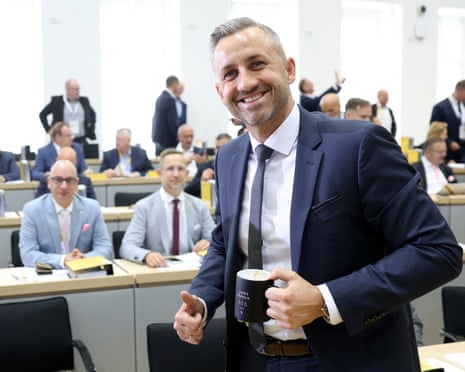
We are also waiting for the results of the vote for the next president of the state parliament in Saxony-Anhalt, where the far-right Alternative für Deutschland is expected to take the top job, in postwar first.
The vote count is now under way, after lawmakers cast their votes.

Outside, large crowds gathered to protest against the normalisation of the AfD in German politics.
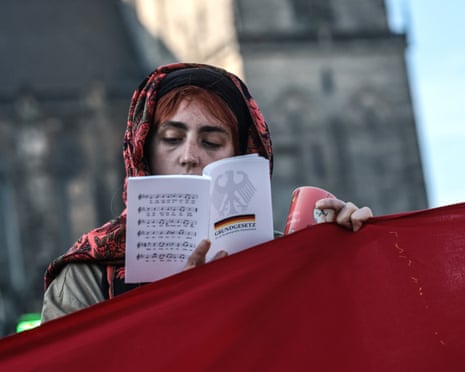
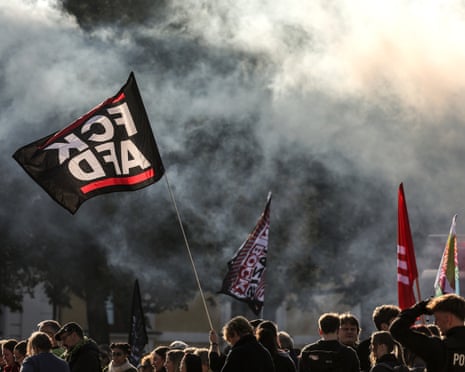
The result should be announced any moment now.
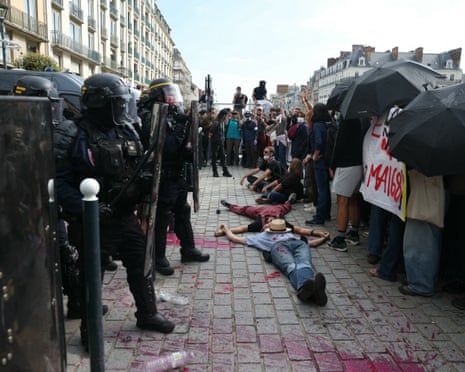
Back to France, the French human rights watchdog has called on the government to "strengthen dialogue with young people and guarantee the exercise of their rights," as it expressed concern about "the disproportionate use of force and procedural abuses" by the police.
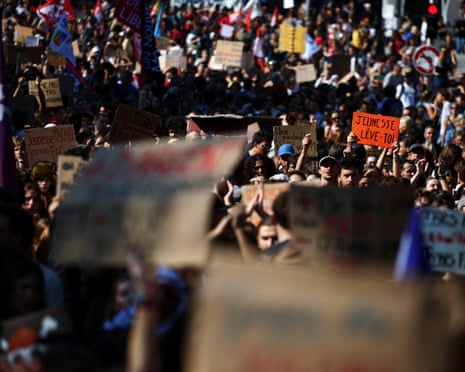
In a statement, the French National Consultative Commission on Human Rights said that "freedom of expression and freedom of peaceful assembly" are fundamental rights, and any move to constraint them "only deepens the distrust between law enforcement and the students."
"It is upon public authorities to urgently restore channels of communication and dialogue with the student movement, representative organisations, and the entire educational community," it said.
The CNCDHF also called for "restraint" on the side of police, saying any response to unrest "must remain targeted, necessary, proportionate" and taking into account the nature of the protesting group.
Meanwhile, Belgian particle physicist Francis Halzen has been awarded this year's Nobel prize in physics.
Born in Belgium, the 82-year-old scientist is affiliated with the University of Wisconsin-Madison in the US, AP said.
The award was given to him "for decisive contributions to the IceCube Neutrino Observatory and the discovery of high-energy neutrinos of astrophysical origin," the award-giving body said.
The IceCube Neutrino Observatory is located at the Amundsen-Scott South Pole Station in Antarctica, with a network of sensors under the Antarctic ice.
The winners of the Nobel physics prize are selected by the Royal Swedish Academy of Sciences and receive a prize sum totalling 12 million Swedish crowns ($1.2m), which is shared among the winners if there are several.
The chemistry Nobel prize will be awarded on Wednesday, the literature prize on Thursday, and the peace prize – on Friday.
AP noted comments from France's interior minister Laurent Nuñez, who defended the government's muscular response to protests, despite a growing list of gruesome injuries to young protesters blamed on police riot-control weapons.
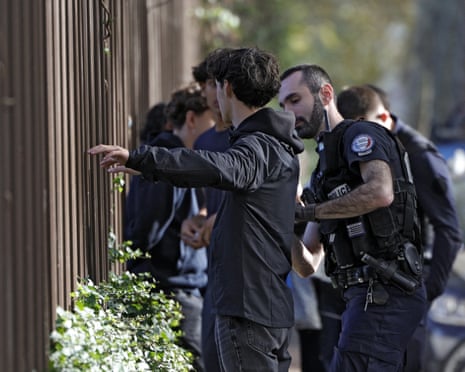
The latest was Monday, with a 15-year-old who lost a hand, seemingly ripped off by a police stun grenade.
Nuñez insisted the police response to the protests has been proportionate in "almost all cases."
The widespread use of arrests, teargas and riot-control weapons against teenagers is fuelling defiance and angering some parents and teachers.
Officers have made more than 6,100 arrests, and 715 officers have been injured, Nunez said.
But Le Figaro is reporting that some business owners are not too sure about whether today's protests will remain peaceful, with some of them choosing to board their shops up .
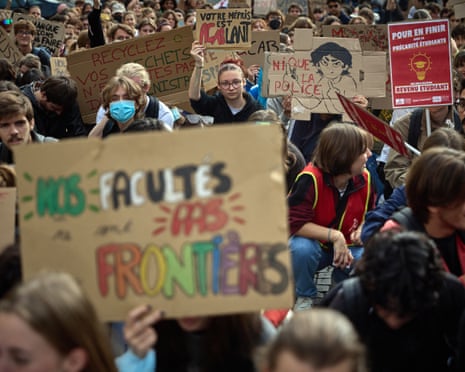
Back to France, the protests are gathering pace, with the students union claiming that 1,800 high schools are disrupted today, on their "day of mobilisation" as trade unions and parents joined students outside schools.
Around 200,000 are provisionally expected to join today's demonstrations, BFM TV reported.
Early protests are now under way in …
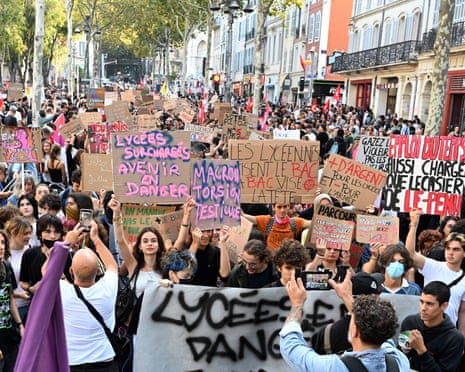

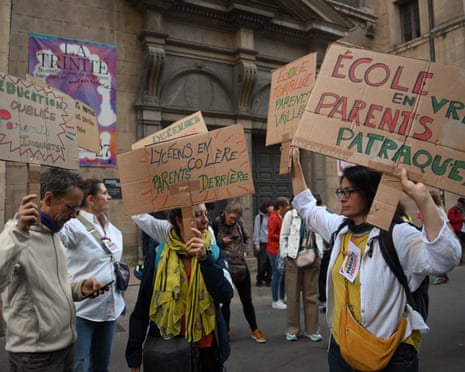
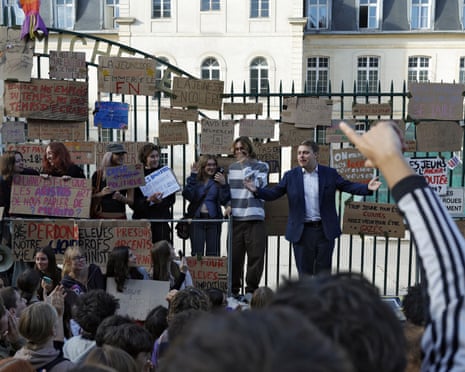
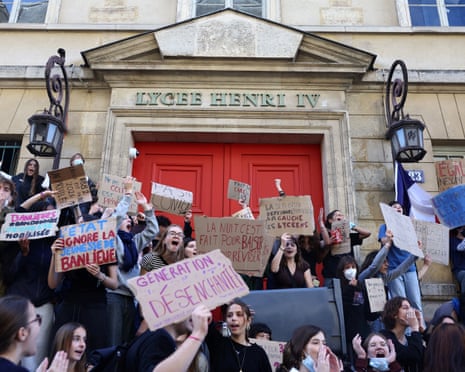
French media are reporting the first signs of tension in Paris and Lyon, though the vast majority of protests across the country remain largely peaceful so far.
We are also getting a bit more on the situation in Bulgaria (9:53).
In a brief update to the media I just listened to, Bulgaria's caretaker prime minister Rumen Radev confirmed that around 3am two merchant vessels were attacked by "air and maritime" drones, with one ship sinking, and the other one suffering fire some 70 miles east of the city of Byala, within Bulgaria's exclusive economic zone on the Black Sea.
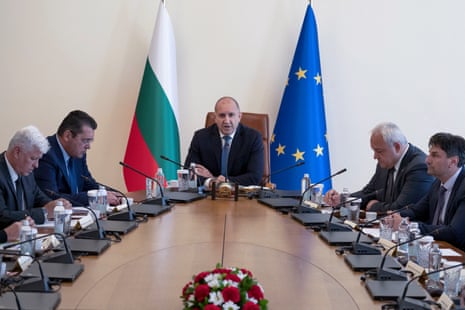
The crew of the first vessel is missing, but 18 people were rescued from the other ship, with two people suffering injuries. Eleven members of the crew are Turkish, with the remaining seven – Indian.
Radev called the incident "absolutely unacceptable," and "a flagrant violation of international maritime law."
It is not know what the first vessel was carrying, but it was headed north to Romania, Radev said. The other one had a cargo of wheat, heading south.
Radev said the incident only confirms the need to urgently end the war in Ukraine, as "all rules of international law are being flouted, and civilian vessels are being attacked."
The arrests have now been confirmed by the German federal prosecutor's office (10:27).
In a statement, the prosecutors said the former BND chief Hanning was arrested on suspicion on the gathering of state secrets, attempted treason, and espionage, with his associate, Manfred D., facing "aiding and abetting attempted treason and espionage."
The prosecutors say that at some point in early 2010, five years after leaving the BND, Hanning commissioned D. to keep delivering "valuable information" from the spy agency "in exchange for payment" to his private consulting.
Over the years, D. is believed to have delivered "nearly two thousand documents," many of which were classified and prepared exclusively for the internal use of the agency.
In one case, Hanning used the information provided to prepare "an analysis for an employee of a foreign intelligence service," without naming the country.
The two men will appear before the judge today and tomorrow.
We are getting some big news from Germany.
the former head of Germany's BND foreign intelligence service, has been reportedly arrested on suspicion of espionage, sources told German news agency dpa.
His arrest was also reported by several other German media, including Bild, the Süddeutsche Zeitung, Handelsblatt.
Media reports say prosecutors allege Hanning, whose tenure spanned between 1998 in 2005, bought secret information from a former employee of the foreign intelligence agency BND and intended to sell it on as part of his consulting activities.
A former BND official, who worked there until 2026, was also arrested as part of the investigation, according to reports.
Bild is reporting that the charges are believed to include espionage, treason and spying for a foreign power. The newspaper said he worked as a consultant for clients globally, and had "connections to Russia and China, including government agencies there."
Meanwhile in France, prime minister Sébastien Lecornu has called for "peaceful gatherings" on the day of mobilisation, as he ordered his ministers to look into meeting the students' leading demands, Reuters and AFP reported.
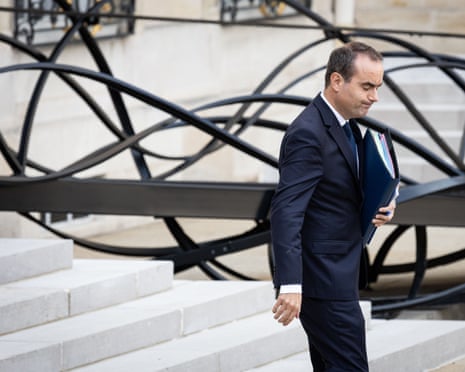
Those include ensuring absent teachers are replaced, reviewing the length of the 8am to 6pm school day and the need for longer lunch breaks.
The government would also look at repairs needed to ageing school buildings, said Lecornu, who demanded ministers send in their first proposals by the end of October. But finding spare cash will likely be difficult.
French education minister told broadcaster France Info that he was focused on responding to the demands, but warned that the student movement was "infiltrated" by "ultra-violent elements," causing unnecessary violence.
Over in Bulgaria, I am following the emergency response to an incident in the Black Sea with two ships have reportedly been hit by drones of unknown origin in the country's economic zone.
Two merchant ships have been affected in an incident off the coast. At least 18 people were evacuated from one of the ships, local media reported, with growing fears about the crew of the other vessel.
The specialist site Maritime.bg provisionally named both ships, which it said operated under the flags of Togo and Palau.
Bulgarian caretaker prime minister Rumen Radev will shortly chair an emergency meeting this morning, which could give us a bit more detail on what happened. I will keep an eye on his comments.
Bulgarian president is also changing her schedule as a result of the incident.
In Germany, newly elected state lawmakers in Saxony-Anhalt will gather for the first time in the parliament building in the state capital Magdeburg to elect a speaker, with the AfD's candidate Tobias Rausch expected to win.
It would be the first time a far-right party has held such a position in postwar German history, AFP noted.
The meeting is expected to get in just over an hour.
Several activist groups have called for protests to urge other parties not to co-operate with the AfD, which in Saxony-Anhalt is classified as a "confirmed extremist" organisation by domestic intelligence.
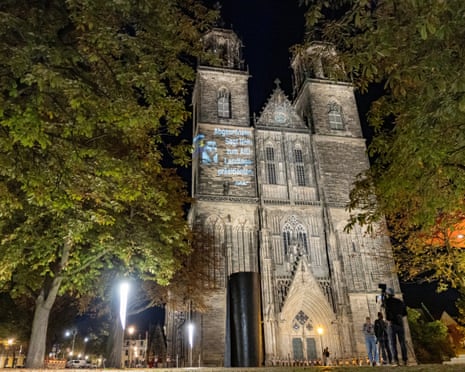
The AfD's leader in Saxony Anhalt, has said he hopes to be elected as state premier by December, which would be another first for the party, AFP said.
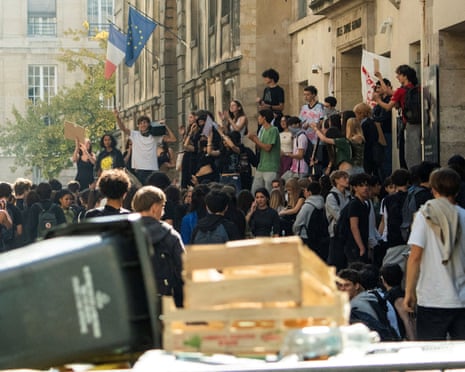
Large-scale protests are expected across France today, as high school student groups and trade unions take part in a "day of mobilisation" as they continue demonstrations against what they say are dilapidated and understaffed schools.
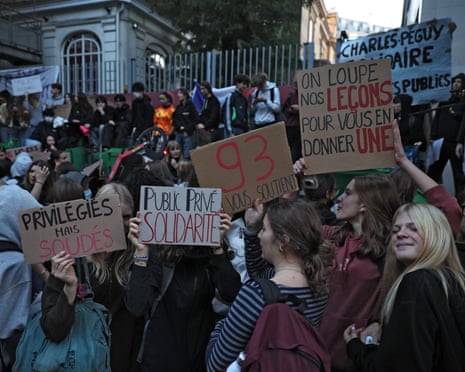
After a week of student protests, thousands of trade unionists, teachers, public sector workers and parents' groups are expected to join marches of support in cities and towns across France.
The main protest, in Paris, is set to get under way in the early afternoon.
On Tuesday, teaching was disrupted at nearly 600 out of 3,700 lycees and 32 universities, according to preliminary data. Over 5,000 people have been arrested since the start of the protest last week.
Demonstrations have escalated in recent days, with growing blockades and violent clashes with police – as campaigners accuse officers of a heavy-handed response to the protests.
Elsewhere, I will keep an eye on Germany, where the state parliament in Saxony-Anhalt is set to elect its speaker today, expected to be from the far-right Alternative für Deutschland.
Two cargo ships were struck by drones in Bulgaria's economic zone in the Black Sea. Any details on potential casualties are not available as search and rescue operations continue, local media reported.
There are also some other stories in , and elsewhere, so we will no doubt be busy… I will bring you all the latest from across Europe here.
It's , it's here, and this is .
Good morning.