Three months before last week's devastating floods, experts from China and Nepal met in Kathmandu, Nepal's capital, on 27 May to discuss the risk of disasters in the border area and to coordinate on how best to monitor and respond to hazards such as floods, according to the Reuters news agency.
The participants called for joint risk-reduction measures, including inventories of glacial lakes and hazard mapping, but two Nepali officials told Reuters they did not receive as much information as they wanted from China on glacier risks and water levels after the meeting.
Now, a rapid hazard assessment of the Nepal-Tibet disaster prepared by HiRISK, comprised of a group of scientists that produce risk data in the High Mountain Asia region and create guidelines for policymakers, said there were "pre-event indications" of the avalanche, raising more questions about the effectiveness of disaster preparedness.
The assessment was prepared by HiRISK on 28 August, according to ABC News (Australia), which first reported the findings. Jakob Steiner, a co-author of the report and a geoscientist with the University of Graz who has researched lake bursts in Nepal, told the outlet that early warning systems for construction workers were "very weak".
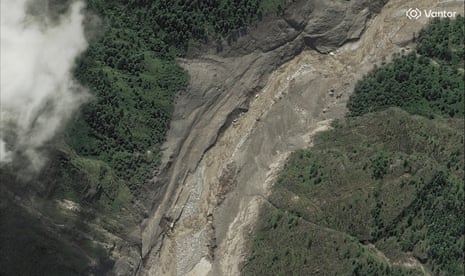
The HiRISK report noted that no early warning system for glacier-related hazards had been established in the affected area.
"Given the rapid speed of the initial avalanche, warning time from conventional … systems would have been minimal and likely insufficient for successful evacuation at the Nepal-China border check point at Rasuwagadhi (Gyirong Port)," it said.
"Further downstream, with warning times of 10 minutes or more, comprehensive and well-capacitated systems could have saved a significant number of lives."
It is unclear what data – if any – China had before the disaster of the conditions of the glaciers in the area, especially those lying outside its borders.
The Himalayan region faces severe risks from future glacial floods, an assistant secretary-general at the UN has warned.
The Nepal-Tibet floods have overrun hydropower facilities, knocking out about 10% of Nepal's power capacity. There are now fears that entire riverbanks where millions of people live might become effectively uninhabitable.
"Technology cannot move fast enough to prevent loss along these massive river systems that catch the overflow of the glacier lakes," Kanni Wignaraja told the Reuters news agency.
Researchers identified 47 potentially dangerous glacial lakes in Nepal, China and India in 2020 – but the real figure is now thought to be significantly higher.
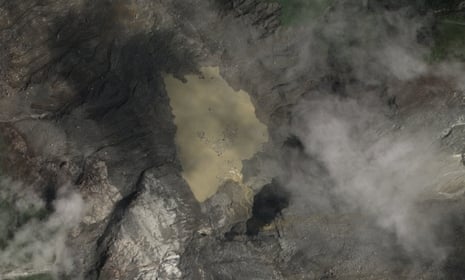
The population at risk "goes into the millions", Wignaraja said, citing updated data compiled by the United Nations Development Programme and partner organisations in June.
Last week's catastrophic flooding was triggered when parts of a glacier near the Langtang Lirung mountain peak collapsed and fell to the valley floor, unleashing a landslide that sent a flood wave down the Trishuli River.
Glacier lake outbursts happen when melting glacier water accumulates behind a natural barrier, with pressure eventually resulting in a break or overflow that sends a flash flood downstream.
Both threats are on the rise, UN officials say, as the climate crisis accelerates glacier melt in the region, loosening rocks and putting more pressure on glacier lake barriers.
In a relief response situation report published today, Nepal's disaster risk reduction and management authority (NDRRMA) said the majority of deaths – which include recovered human remains – occurred in Chitwan, about 100 miles downstream from the region worst hit by the flash floods and mudslides, followed by Nawalparasi East, Nawalparasi West, Nuwakot and Gorkha. The NDRRMA said 1.6 million people were affected from the floods across districts.
"3,702 households, comprising a population of 14,461 remain isolated in the two most severely affected local levels (Gosaikunda and Amachhodingmo Rural Municipalities, Rasuwa), with road connectivity, electricity, and communication services disrupted for up to six days since the incident, severely limiting access to essential services, supplies, and emergency assistance," the situation report read.
It said unidentified bodies are being kept at 21 hospitals across various districts, adding that 2,740 people received medical treatment from Nepal's army following Wednesday's massive flash food.
In terms of infrastructural impact, the NDRRMA said 41 bridges were washed away in the floods and bridges damaged, while health facilities and schools were "fully damaged". In Nepal's Nuwakot district, 1,267 houses have been reported as "fully damaged" and 1,253 as "partially damaged".
As police in buried dozens of bodies in multiple trenches, Nepal's disaster agency said that 1,003 deaths had been counted there, with 3,916 people missing, including 583 foreign nationals.
The 1,003 figure given here is seven lower than the death toll provided by Nepal's foreign ministry spokesperson earlier today (see this post).
In its latest update, China reported 16 deaths and 546 missing, including 261 foreigners.
In the capital , crowds lined up to search for their missing relatives, posting photographs on a long wall outside a hospital in the fading hope of finding them alive.
Debu Sapkota, a 58-year-old driver, came to post photos of his 83-year-old mother-in-law and her granddaughter who went missing in the town of Trishuli Bazaar after being swept away by last week's surge.
A warning alert sounded, but the elderly woman was "too old to run", he told AP. "Her granddaughter was helping her escape, but both were swept away."
Sapkota said he no longer has "any hope that they survived", after witnesses saw them being carried away by the torrent.
"I am here hoping to find their bodies," he said, holding up photos of the two missing women dressed in traditional clothes.
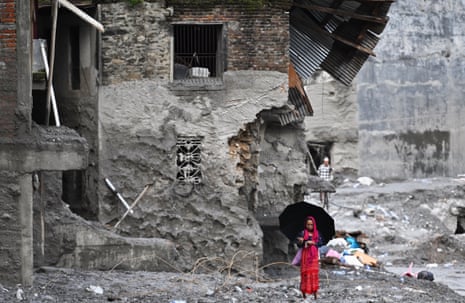
Here is footage filmed using a drone in the village of , Nepal, that shows damaged houses and shops, while roads remain covered in thick mud.
Local people have been using heavy machinery to clear the debris-covered streets and rescue efforts are continuing across the country.
"No siren can outrun a mountainside collapsing in seconds," says Prof Anjal Prakash, from Flame University in India. He blames a lack of political will to fight the climate crisis and to plan infrastructure for the devastating flood in Nepal and Tibet.
Nepal's mountains have been sending warnings for a decade: thinning glaciers, retreating snowlines, permafrost turning to slush under roads and hydropower plants . We didn't lack the science, as researchers have tracked this decline for 50 years. We lacked the political will to act on it.
Early warning systems are being sold as the fix, but no siren can outrun a mountainside collapsing in seconds. The real failure sits upstream, in land-use decisions that pushed settlements and infrastructure onto riverbanks our ancestors deliberately avoided, and in a global economy still burning the fossil fuels that are cooking these glaciers from the inside out.
Every villager who watched that valley disappear paid for emissions decisions made thousands of kilometres away. Until governments treat the Himalayas as a climate frontline rather than a postcard backdrop, Rasuwa won't be the last name we're forced to memorise.
Simon Stiell, the UN's climate chief, said:
For years, scientists and local communities have been warning that the Hindu Kush Himalayas are at huge risk from climate change. We also know a warming climate, driven by humanity burning colossal amounts of coal, oil and gas, is making tragedies like this one, and so many others around the world, much more likely, frequent and severe, with vulnerable communities often hardest hit.
But the solutions to global heating are equally clear – especially a faster global shift from fossil fuels to renewables and more investment in climate resilience.
Among Nepal's list of the missing are 592 foreigners, including tourists who had come for mountain trekking and Hindu pilgrims seeking spiritual peace at Tibet's sacred Mount Kailash, from countries such as India, the US, UK, Australia and Canada.
Relatives abroad have been requested to undergo DNA profiling at an authorised laboratory and to "send a soft copy of the DNA profile to Nepal police's official email address".
In some of Nepal's flood-affected areas, hundreds of unidentified bodies have already been buried because they are decomposing and there is no room left in hospitals or morgues.
At the police hospital in Kathmandu on Tuesday, more than 100 people were waiting to have their blood sampled.
Among them was Prakaiti Jurnj. Her mother was still missing, but the family had been able to identify her father's body from a photograph on the wall outside the teaching hospital, where images of the deceased have been posted in an effort to identify the victims.
"Both my father and mother, they were in the village in Nukawot. They were both swept away by the flood," she said. "We haven't heard from them since Wednesday. We found my father's body; my brother saw the photo on the wall." You can read more here:
Nepal last week turned down foreign involvement in general search and rescue but said it needed specialised services and advanced technological support in areas such as life-detecting machines, large refrigerators and pre-fabricated bridges.
Aid worth more than $42m has poured into the country and Nepal is now working with experts from other countries to help with rescue operations.
But the apparent hesitance to accept immediate foreign help has come under scrutiny as the damage and scale of the disaster increasingly comes into view.
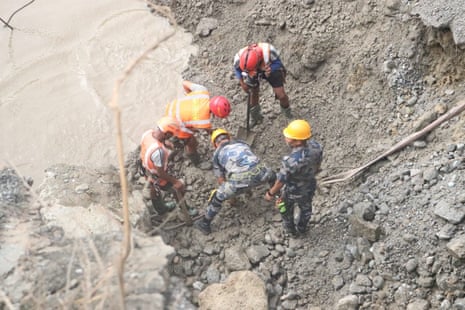
Speaking to NPR, Bhim Gautam, chief executive officer of the Independent Power Producers Association of Nepal, said his country lacks "technology, equipment and expertise" to carry out effective rescue operations at hydropower projects.
"Our expertise is only in dealing with small flooding. We have never faced a situation like this before," Gautam told the outlet, adding that his industry's leaders had to "pressure the government" to allow in foreign rescue workers, a claim that we have not been able to independently verify.
"Late last week, the government approved rescue teams from China, India and Australia to come," Gautam said. "But it is so late now."
Lok Bahadur Chhetri, spokesperson for Nepal's foreign ministry, has been holding a press briefing on the floods, providing updates on the search efforts and scale of the disaster. Here are some of the main points from what he said:
-
The national priority is to save lives, locate the missing, rescue survivors and provide urgent relief to those affected.
-
More than 21,000 personnel from Nepal's army, police and armed police forces are engaged in search and rescue, relief and evacuation operations while the government coordinates with its neighbours and the international community, which is providing vital equipment and expertise.
-
1,010 bodies have been recovered, about 4,000 people are missing and more than 11,800 people have been rescued, including about 324 foreign nationals.
-
Approximately 590 foreign nationals from 39 countries remain missing – these figures continue to be updated.
-
Specialised tunnel rescue teams are working to find those feared to be trapped in tunnels at hydropower sites along the Trishuli River including at the Chilime, Langtang and Upper Trishuli 3A sites.
Nepal's prime minister Balendra Shah said that the disaster highlighted the need for action to combat the climate crisis.
"This incident has indicated that the risks we face in the Himalayan region are increasing with climate change," Shah said in a social media post on Monday night.
"Therefore, this region must be alert, and at the same time, it is time for us to strongly raise the issue of disasters caused by climate change before the international community."
China's foreign ministry spokesperson Guo Jiakun said China's second batch of relief supplies for Nepal was expected to ship today, including drones, DNA testing and water purification equipment.
Chinese DNA testing experts will also help Nepal identity bodies, he said. Beijing has said it will continue to "strongly support" Nepal's disaster relief efforts and safeguard the two countries' common interests.
An estimated 43,000 women and girls in Nepal are in urgent need of humanitarian assistance following the flood disaster last week, according to Christine Arab, UN Women regional director for Asia and the Pacific, who has been at a press briefing in Geneva.
Arab said women are running out of food, and safe water to drink, while facing exclusion from decisions that will shape their recovery even though they are likely to pick up more unpaid care work in the home.
She also highlighted how disasters increase the risk of trafficking, exploitation and gender-based violence while shrinking the availability of protection services for the most vulnerable.
"When there are no separate or safe latrines, adequate lighting or privacy, women and girls can face risks simply when using the toilet, bathing, sleeping, or moving around after dark," Arab said.
"Women in the worst-affected areas tell us that food is their most urgent priority right now. Before the floods, women in Nepal were more likely to eat least and to eat last in their families, with serious consequences for their own health, particularly those who are pregnant or breastfeeding," she added.
Three months before last week's devastating floods, experts from China and Nepal met in Kathmandu, Nepal's capital, on 27 May to discuss the risk of disasters in the border area and to coordinate on how best to monitor and respond to hazards such as floods, according to the Reuters news agency.
The participants called for joint risk-reduction measures, including inventories of glacial lakes and hazard mapping, but two Nepali officials told Reuters they did not receive as much information as they wanted from China on glacier risks and water levels after the meeting.
Now, a rapid hazard assessment of the Nepal-Tibet disaster prepared by HiRISK, comprised of a group of scientists that produce risk data in the High Mountain Asia region and create guidelines for policymakers, said there were "pre-event indications" of the avalanche, raising more questions about the effectiveness of disaster preparedness.
The assessment was prepared by HiRISK on 28 August, according to ABC News (Australia), which first reported the findings. Jakob Steiner, a co-author of the report and a geoscientist with the University of Graz who has researched lake bursts in Nepal, told the outlet that early warning systems for construction workers were "very weak".
The HiRISK report noted that no early warning system for glacier-related hazards had been established in the affected area.
"Given the rapid speed of the initial avalanche, warning time from conventional … systems would have been minimal and likely insufficient for successful evacuation at the Nepal-China border check point at Rasuwagadhi (Gyirong Port)," it said.
"Further downstream, with warning times of 10 minutes or more, comprehensive and well-capacitated systems could have saved a significant number of lives."
It is unclear what data – if any – China had before the disaster of the conditions of the glaciers in the area, especially those lying outside its borders.
At least 11,814 people have been rescued so far, according to Nepalese authorities.
Emergency crews are using aircraft to reach stranded communities in areas where roads and bridges have been destroyed by the flooding and landslides.
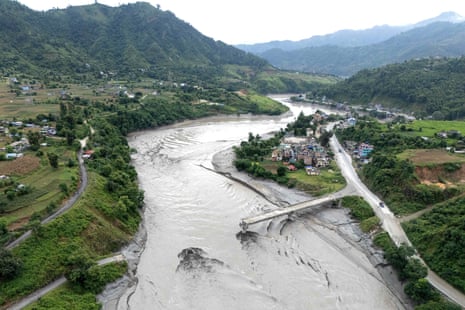
Nepal's tourism department published a list of the names of the people still missing, as of Sunday evening, after the catastrophic flooding in the district of Rasuwa, one of the worst-hit provinces in Nepal. It said there were 164 people from Nepal that remain unaccounted for and 25 from China.
It said a total of 583 foreigners were missing, with the highest number from India (183), followed by the US (64) and then Malaysia (55). There are 33 people from the UK that have been identified as missing.
Beijing's state media reports that 16 people died in Tibet, with 546 missing, but advocacy groups have accused China of heavily underreporting the death toll from flooding in border regions with Nepal, raising questions about Beijing's official account of the scale of the disaster.
The Red Cross estimates that more than 93,000 people have been affected by the disaster, heightening fears that the climate crisis is destabilising the geology of mountain and polar regions.
The Nepali prime minister, Balendra Shah, said the flood was an "unprecedented and devastating natural disaster" and that it was difficult to compile a complete assessment of the damage.
The flood was "caused by glacier instability under the long-term effects of global warming", China's state-run CCTV reported, saying it was a "new and prominent feature of cryosphere disasters" on the Tibetan plateau.
Two Nepali officials said China had not shared much information on glacier risks and water levels after a meeting to strengthen cooperation earlier this year, and they feared that could hamper future disaster preparedness.
You can read more in this story by my colleagues, Cait Kelly and William Christou, here:
The death toll from the catastrophic flooding in Nepal and China has passed 1,000 as of Tuesday morning, officials said, with authorities reportedly burying hundreds of unidentified victims after the flood disaster overwhelmed morgues.
Nepal's disaster agency said in an update on Tuesday that 987 had been counted there, with 3,916 people missing, including 583 foreigners.
Chinese authorities, in their latest update on Sunday, reported 16 deaths and 546 still missing.
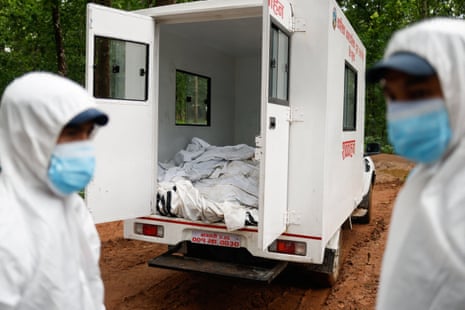
The initial 72 hours after a disaster are viewed as critical to a rescue operation and there are fading hopes that the missing will be found alive.
Rescue efforts nonetheless persist, but have been complicated by challenging terrain, persistently high flood waters and difficult weather.
The devastating floods occurred last Wednesday when a huge section of a glacier in the Himalayas came loose and crashed on to the valley floor in Nepal's Langtang national park, unleashing a massive wall of water and mud that rushed down rivers and valleys.
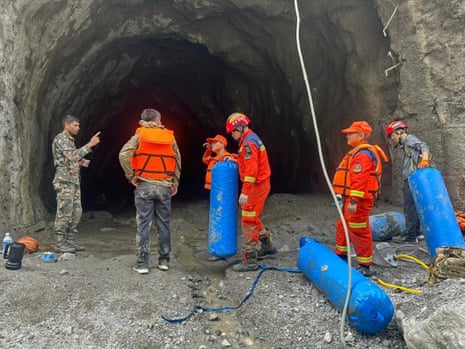
Much of the rescue efforts are now focused on trying to reach the 900 or so missing hydropower workers, hundreds of whom are feared trapped in the tunnels and underground areas of 12 hydropower projects in Nepal.
"A large amount of debris has been deposited and that is posing us a big challenge to open the tunnels," the Nepal army spokesperson Raja Ram Basnet told the Reuters news agency on Monday.
About 250 people were rescued from the Upper Trishuli hydroelectric project over the weekend, and army engineers began blasting operations at the site to rescue another 42 workers thought be missing, as my colleague notes in this story.
Many people are feared to still be trapped in the sprawling network of mud-filled tunnels at hydropower sites along the Trishuli River, which flows through central Nepal.