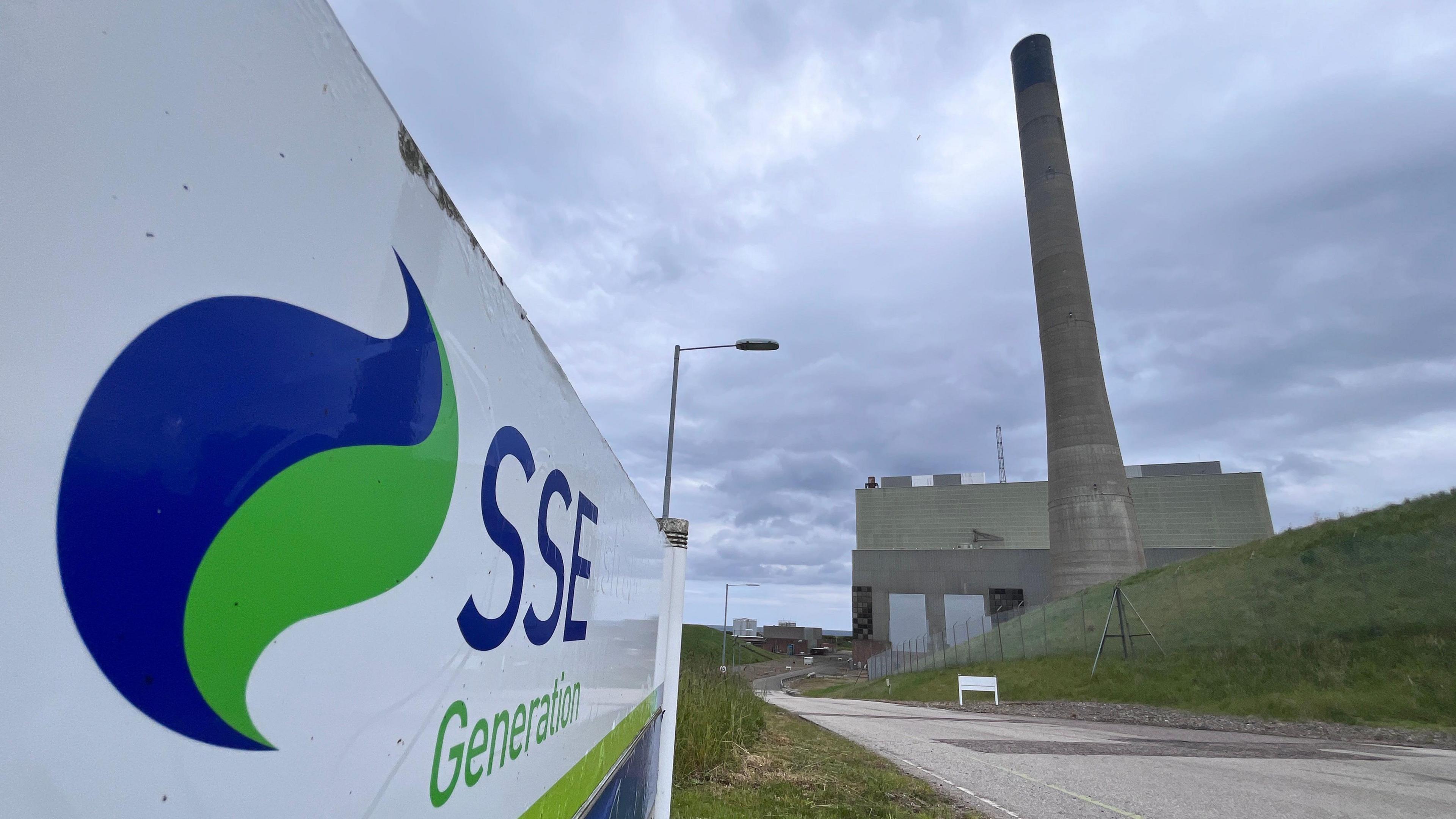
The Scottish government has given its consent for the construction of a controversial new gas-fired power station at Peterhead.
The scheme, by SSE and Equinor, will generate about 900 megawatts of electricity and includes provision for carbon capture.
Environmental group Friends of the Earth Scotland insist the decision locks Scotland into a dependence on fossil fuels.
But supporters say new carbon capture technology could slash emissions from the new site by more than 90%. SSE said its delivery was contingent on progress with the Scottish carbon capture cluster.
The application for the power station was consented on the same day that Holyrood debated the issues of climate change and climate justice.
The current Peterhead facility has been generating electricity for more than four decades but it is now the last in Scotland to burn fossil fuels.
SSE has previously said it intends to replace this site with the new 'Peterhead 2' - though climate campaigners have raised concerns that both facilities will continue operating together.
North East Scotland Green MSP Maggie Chapman said the existing gas-powered station was "Scotland's largest source of climate pollution".
She added that "instead of tackling that and reducing its impact, the government has decided to expand it".
The decision was also condemned by campaign group Uplift.
A spokesperson said: "Our high dependency on expensive gas is what's driving our energy bills up and leading to millions of people facing impossible choices this winter.
"So, it is inconceivable why the Scottish government would want to lock ourselves into 30 more years of it."
The Scottish government previously said a decision would be taken "following consideration of the application information, consultation responses and representations made by members of the public".
Finlay McCutcheon, managing director of SSE Thermal, said: "This is an important milestone for a project which has the potential to provide the flexible, low-carbon electricity needed to support a renewables-led energy system while creating and sustaining good jobs in the north-east of Scotland."