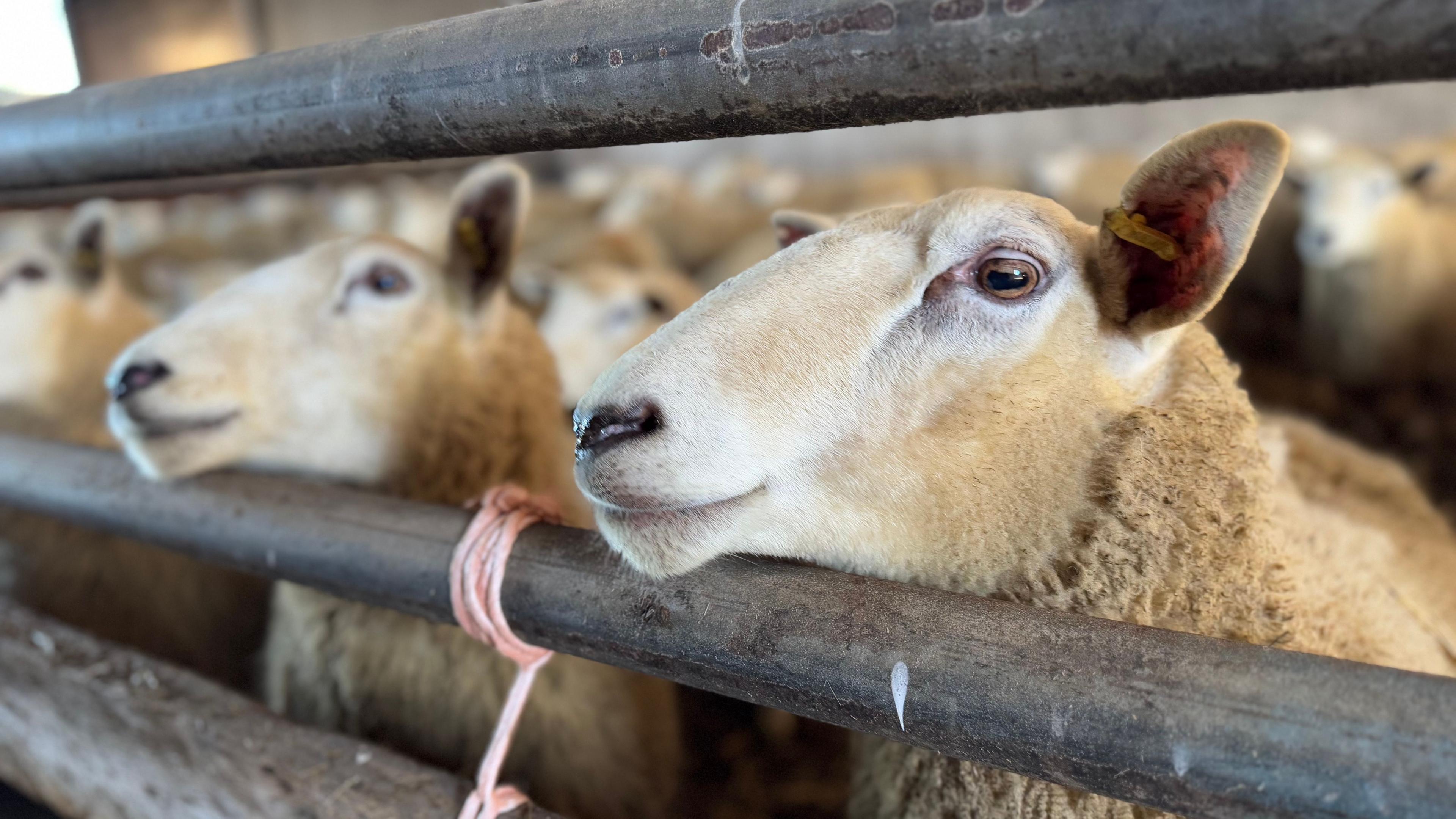
Two more sheep have been infected with the bluetongue virus in the south of Scotland, bringing the total number affected to eight.
Latest figures released by the UK government showed the two new bluetongue serotype 3 (BTV-3) infections were found in sheep on two different farms.
Both premises were tested following reports of suspicious clinical signs.
The news came after temporary restrictions were introduced on the movement of animals in Dumfries and Galloway to prevent the spread of the potentially deadly virus.
A number of farms across the southwest of Scotland have recorded cases after the outbreak began in Creetown earlier this month.
Experts believe strong winds blew a plume of virus-spreading midges into Scotland from England.
The latest figures showed 19 new cases of BTV-3 were confirmed in England on Friday in Devon, Cornwall, Herefordshire and West Yorkshire.
Of these, 16 cases involved sheep, three involved cattle and one was a mixed farm.
Four new cases of BTV-3 in sheep were confirmed in Wales on Friday. All cases were in sheep.
The latest restrictions mean all those animals susceptible to the virus - predominantly sheep, cattle and goats - can only be moved under licence.
There will also be more surveillance and testing of animals nearby.
In addition, susceptible animals travelling from anywhere in Scotland to the restriction zone in place across the rest of the UK must return to Scotland on the same day to minimise the risk of the disease spreading.
From 10 September, susceptible livestock that are being moved from elsewhere in the UK into Scotland will need to be vaccinated - apart from livestock returning under the same-day rule.
BTV-3 does not affect people or food safety, but it causes a high rate of death in infected sheep and fertility problems in infected cattle.
Symptoms include nasal discharge, redness and swelling of the lips, nose and muzzle, lameness or reluctance to stand, a decrease in milk production and diarrhoea in cattle.
Scotland's Deputy Chief Veterinary Officer urged farmers to continue order vaccines for the virus, despite warnings of shortages.
Jesus Gallego Garnica told BBC Radio Scotland that doing so would allow manufacturers to know how much vaccine to make.
He said the new restrictions one movement of animals may have to continue for a while.