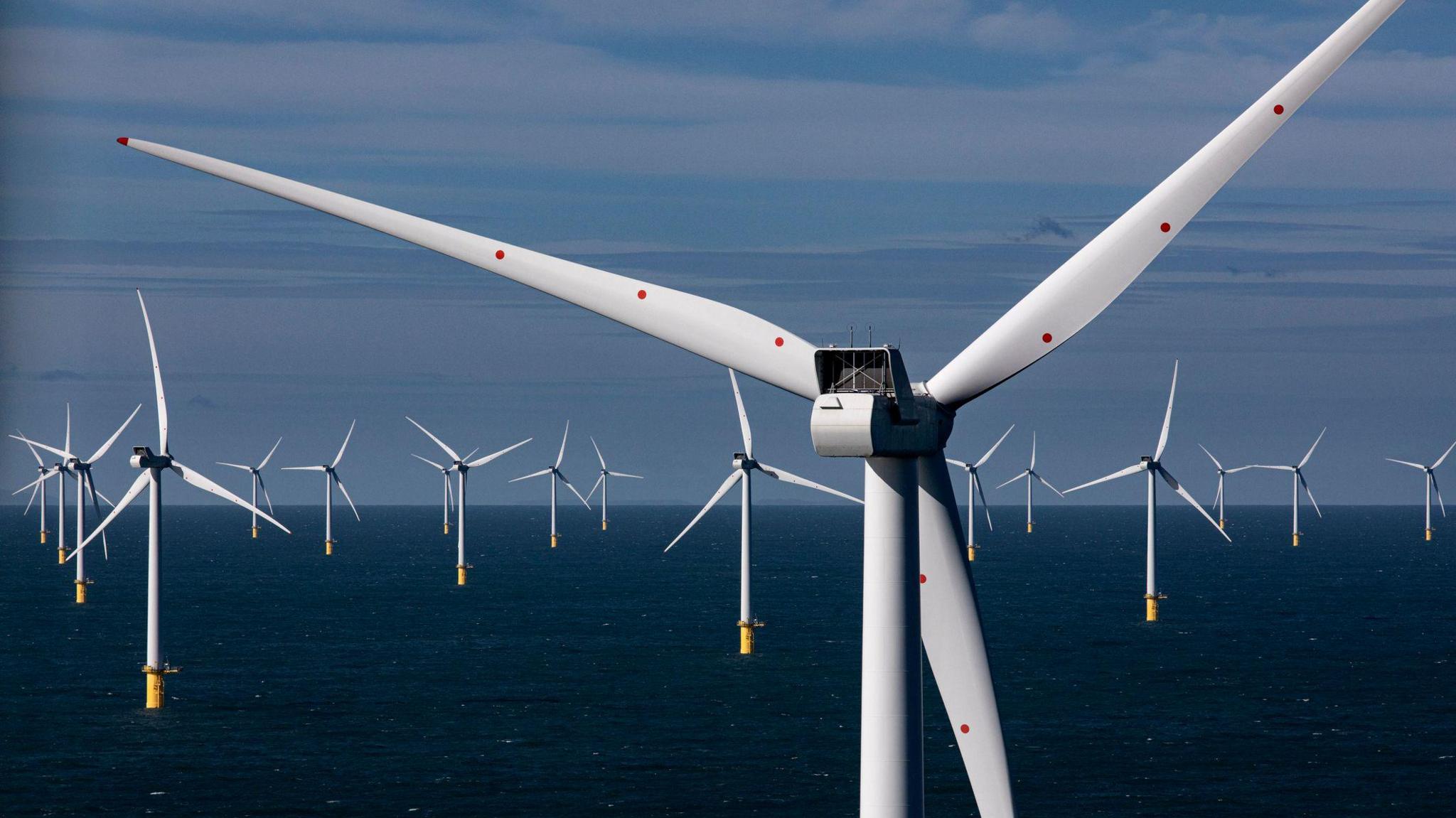
The Scottish government has approved plans for a 67-turbine floating offshore wind farm at a site about 39 miles (63km) from Peterhead in Aberdeenshire.
Developer Fred Olsen Seawind said its 1GW Muir Mhòr project could generate enough electricity annually for more than a million homes.
Generation could start in the early 2030s.
The Scottish government said its consent came with a number of conditions, including a requirement for measures to reduce potential impacts on fishing and seabirds.
The Scottish Fishermen's Federation has criticised the decision, saying the wind farm was proposed for an area of important fishing ground.
Public Service Reform Secretary Ivan McKee said Muir Mhòr had "significant potential" to strengthen Scotland's energy security and create jobs.
He added: "Tackling climate change and reaching net zero is a key priority for the Scottish government, with renewable energy at the heart of this."
Martha Lovatt, senior development and consents manager for Muir Mhòr, said: "Today's decision is the culmination of years of intensive environmental assessments, technical work, and constructive engagement with local communities, marine stakeholders, and industry partners.
"Throughout this journey, we have listened carefully, taken all feedback on board, and designed a project that balances the need for renewable energy generation with genuine respect for our coastal and marine environment."
'Spider's web of lines'
The Scottish Fishermen's Federation's chief executive Elspeth Macdonald said the Scottish government's decision was a "serious blow" to the fishing industry.
She said: "They are asking fishing businesses to trust that post-consent mitigation will work when our past experience at other sites shows this does precious little to reduce the impacts on fishermen.
"These impacts need to be fully addressed as part of the consenting process, not left as an afterthought."
Macdonald said the turbines would need "massive anchors and a spider's web of mooring lines".
She added: "What will look like open water from the wheelhouse will in fact be criss-crossed by lines and cables below the surface, making fishing impossible."