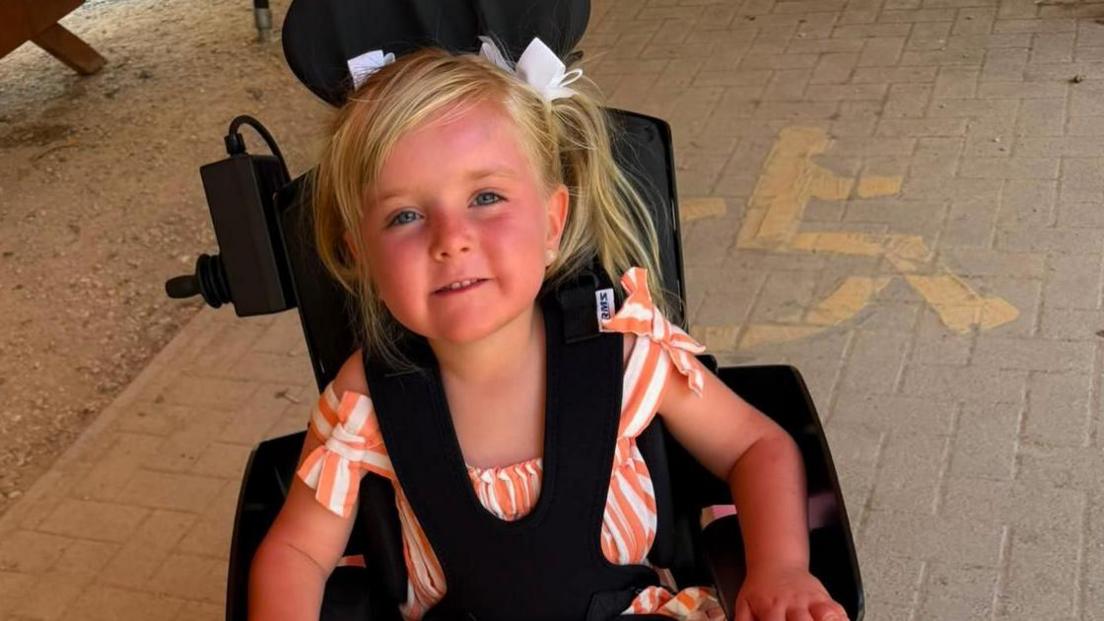
Parents of children with a rare genetic condition say they fear Wales is being left behind as other parts of the UK introduce routine screening for newborns.
After widespread campaigning, including by former Little Mix star Jesy Nelson, testing for spinal muscular atrophy (SMA) will happen in England and be trialled in Scotland but not in Wales.
Warren Davies, whose three-year-old daughter Ophelia-May has SMA type 2, said it felt like the Welsh government was "playing god because they have the opportunity to effect change and they are choosing not to".
The Welsh government said it had followed UK National Screening Committee (NSC) guidance that had not recommended routine newborn screening for SMA.
Newborn screening for SMA is also not in place in Northern Ireland.
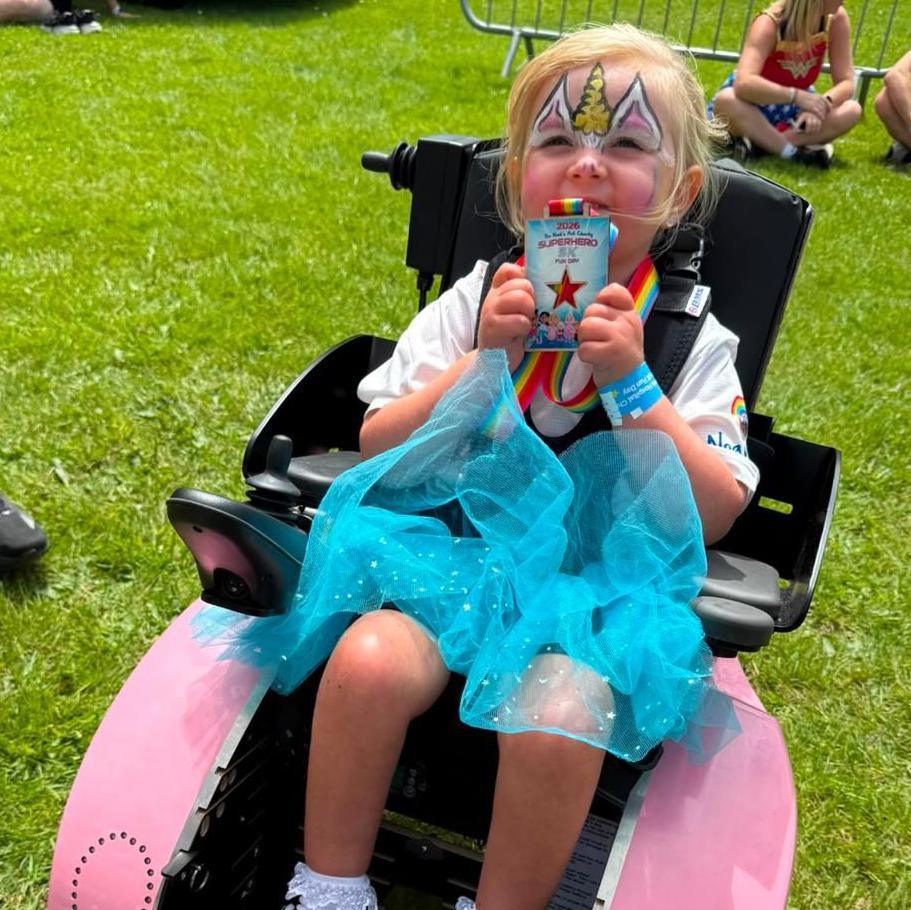
SMA causes muscle weakness and gets progressively worse over time - there is no cure, but there are medicines and other treatments to manage the symptoms.
There are several types of the condition, and it affects everyone differently, with life expectancy varying from person to person.
Most types are caused by an altered gene being passed to a child by their parents and blood tests can be used to confirm a diagnosis.
Nelson spoke out about her twin daughters' diagnoses, saying Ocean Jade and Story Monroe would "probably never walk".
She described the announcement of routine testing being rolled out in England as "a victory".

Ophelia, from Hirwaun, Rhondda Cynon Taf, was born in September 2022 and her dad said it was a "normal birth" and she was "healthy".
At about six months old, her parents began noticing "physical delays" including a decrease in her neck strength and her feeding deteriorating.
"The message we had all the time was 'she will catch up at some point'," Warren said.
Eventually, during a meeting with Ophelia's paediatrician, Warren and his partner Rhiannon asked for a second opinion and were referred to Noah's Ark Children's Hospital in Cardiff.
The team there requested an SMA blood test "immediately" and Ophelia was diagnosed in February 2025.
"It was a late diagnosis, she was nearly two-and-a-half," said Warren, 36, who works in children's social services.
"Data shows, if they are diagnosed at an earlier stage, medication outcomes are greater."
Ophelia was kept in hospital for tests for nine days, after which she began a daily oral medication that "maintains muscle cells from degenerating".
"So if she started that medication earlier, she might not have lost muscle function," he said.
Since Ophelia's diagnosis, the family has joined hundreds of others across the UK in campaigning for SMA to be added to the NHS newborn heel-prick blood spot test for all babies.
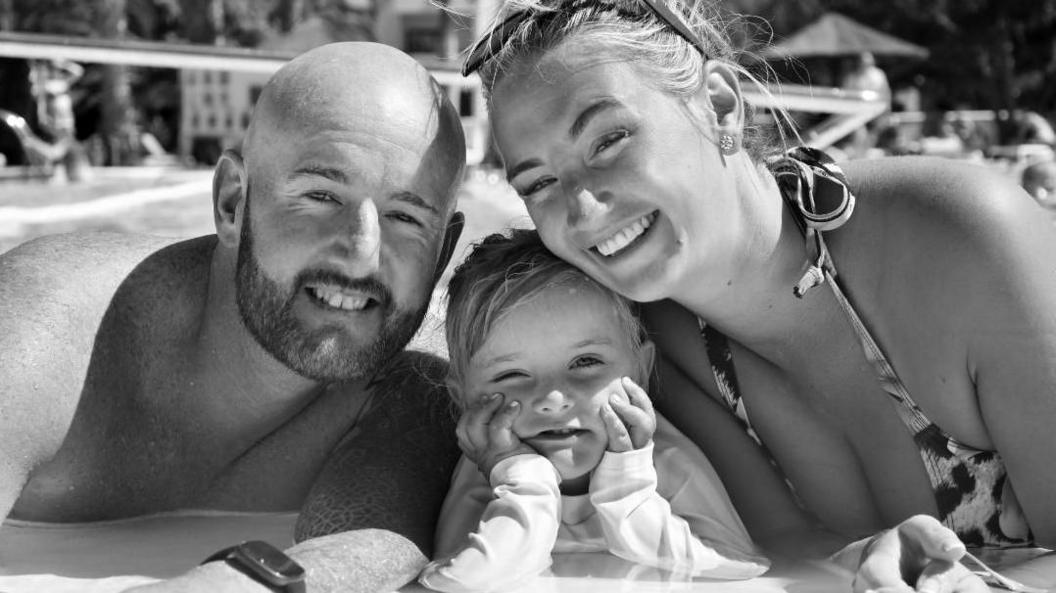
"We cannot change Ophelia's story or life, but we can use Ophelia's case to effect change for other families," said the father-of-two.
"We have had nothing from the Welsh government. Not one person in government has thought 'let's go and speak to these families'.
"The government is there to support us and support Wales, and they're not. We've been let down."
He added the success of Nelson's campaigning was "great", but should not have been needed.
"There are hundreds of families [affected] in the UK and it had to take Jesy Nelson's celebrity status to escalate things.
"That left a sour taste in a lot of people's mouths... it's disheartening that a first-world country has to have that. Why is that the case?"
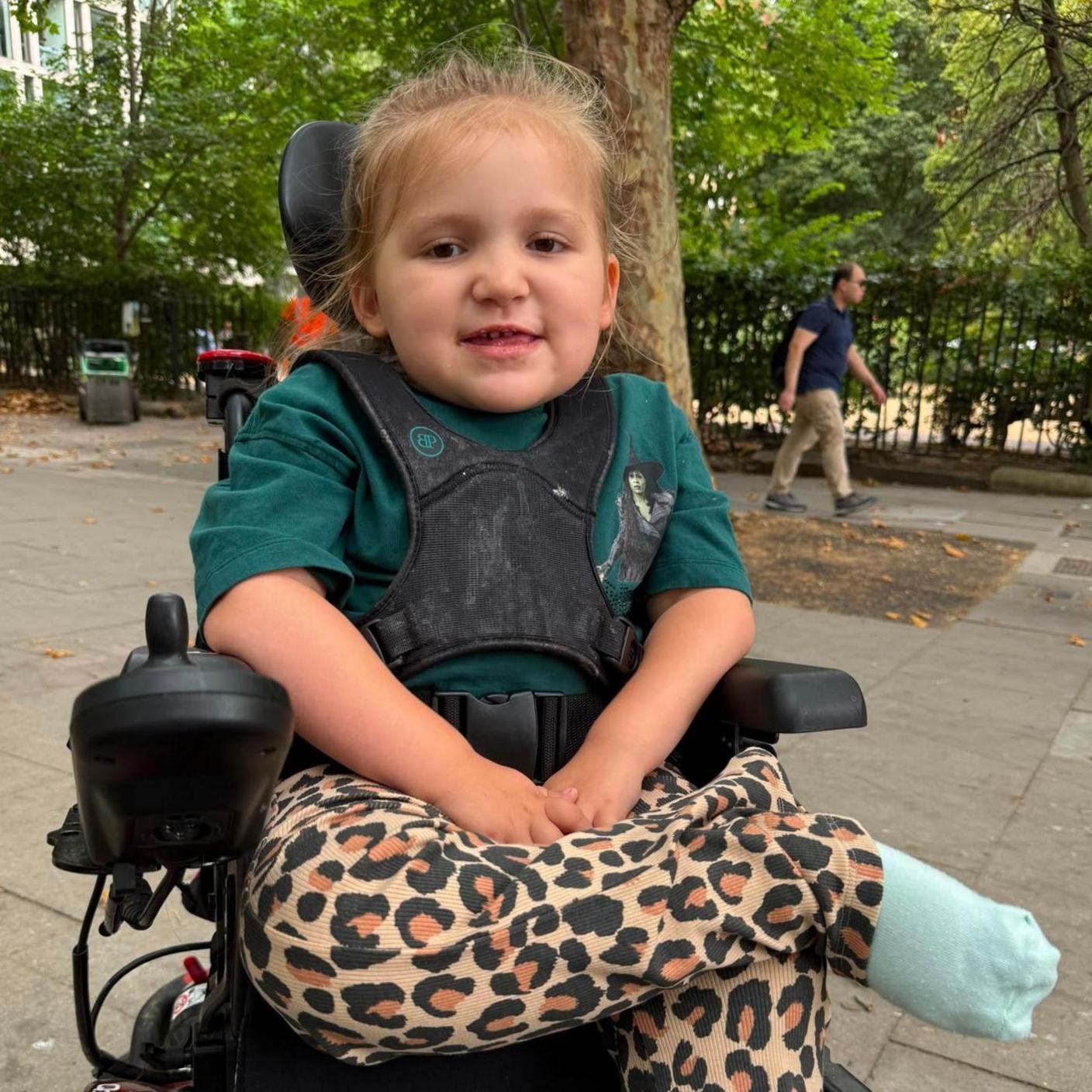
Dani-Rae Brown, from Blackwood, Caerphilly county, was diagnosed with SMA when she was one, but started showing symptoms from seven months.
Her dad Charlie felt earlier detection could have given her a chance of walking, as he had seen "a big difference" since she had a one-off gene therapy infusion in Bristol.
"The treatment really does work," he said.
Charlie, 29, said he was "very happy" about the decision to screen in England and Scotland.
He added that it could mean a "last generation" of children with SMA dealing with mobility, breathing and eating issues in those countries.
"But I'm sad and jealous for Wales," he said.
"It's just silly, when you can see the evidence. Getting the treatment at the right stage is very important to children's development.
"Wales should not be left behind. We should not have any more children being symptomatic. We have the ability to stop it in its tracks before it even starts."
He added it was "bittersweet" that it took "a celebrity having a child with SMA to get to where we are" and felt that is what it would take for change in Wales.
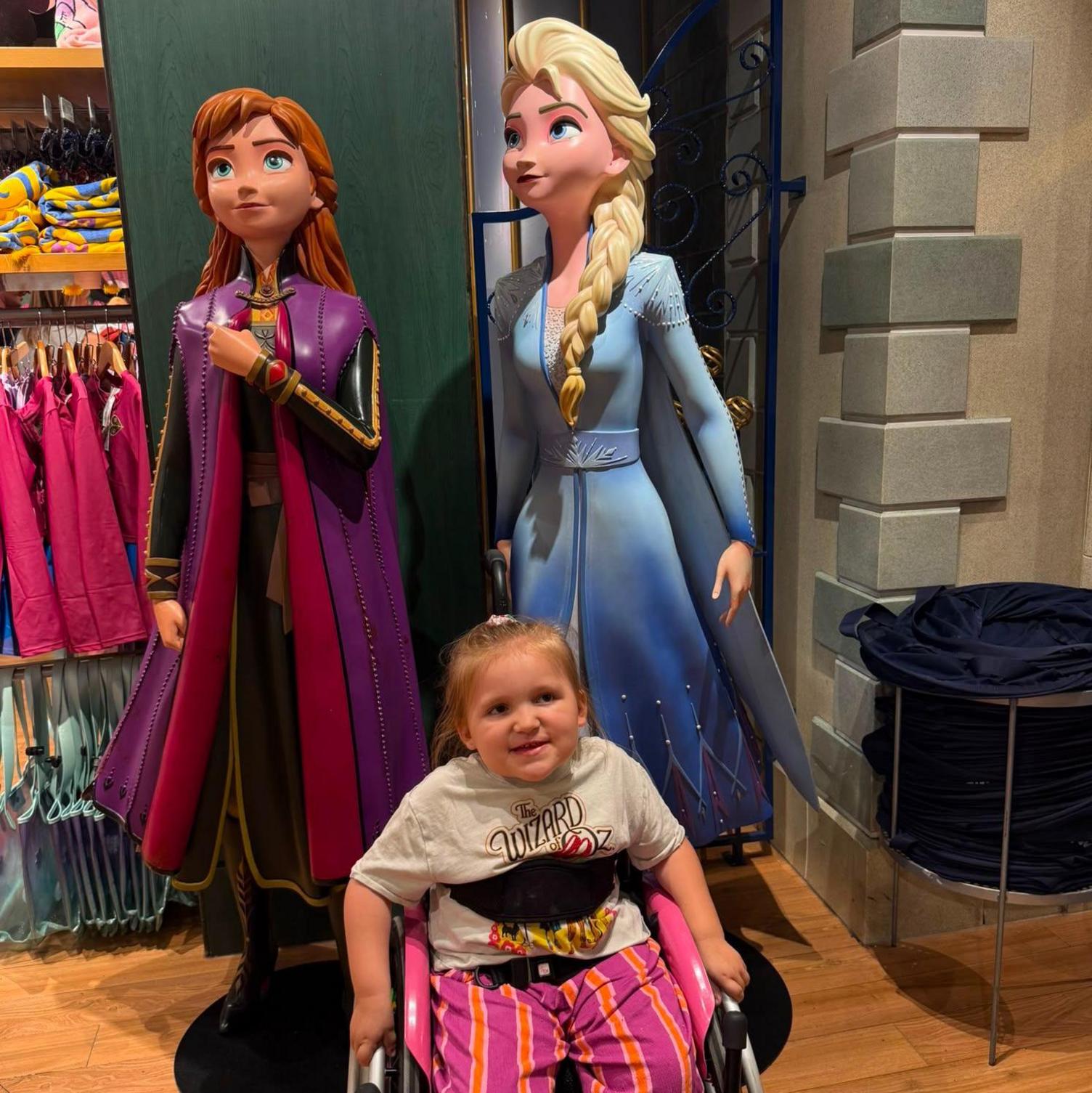
Warren and Rhiannon have been fundraising for private physiotherapy and hydrotherapy sessions for Ophelia.
Warren said he understood "the NHS is stretched" but felt his daughter being provided with just one 45-minute physiotherapy session per month was "absurd".
Rhiannon is also training to be a paediatric nurse, inspired by her daughter.
Ophelia is predominately a wheelchair user and has needed adaptations at home.
"There's a lot of things she can't do, which hinders her... but she knows no different. She is so positive, happy, jovial," said Warren.
"As parents, the initial shock was devastating, but we are now seeing Ophelia flourish."
The Welsh government described SMA as "a devastating diagnosis" and urged parents or carers with concerns about their child's development to speak to their GP or health visitor.
"The in-service evaluation in England will help inform a recommendation from the UK NSC whether screening for SMA should be included as part of the newborn blood spot screening programmes across the UK," it added.
"If the advice changes, we will of course consider any future recommendations from the committee."