My journey into the world of storico ribelle began with a shared passion for photography and the mountains. A close friend of mine lives in the Orobie Alps. He loves the mountains and the natural environment that surrounds him, and we share the same passion for photography. When I finally went to visit him, I discovered a way of experiencing the mountains that was very different from the one I knew growing up in the Apennines, where I come from.
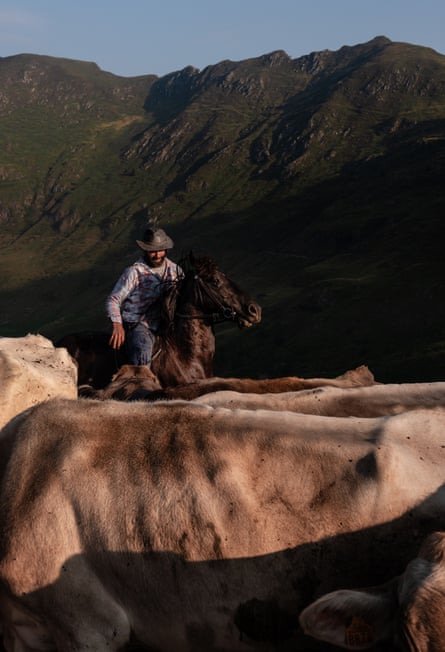
What struck me was not only the landscape, but the relationship people still have with it. Here, I discovered a world where the mountain is not simply a place to visit or explore, but a place to live and work. A world where cheese is still a tradition rather than an industrial product, and where the rhythms of the seasons, the animals and the daily work of the – the mountain herders – are still deeply connected.
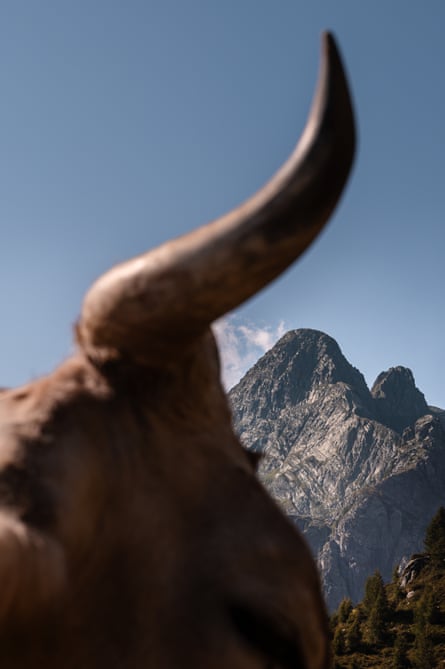
There was a poetry in this way of life that immediately inspired me. Waking before sunrise, milking, making cheese, moving with the animals and working until darkness: there was almost no separation between life and work.
I felt compelled to photograph this world. I wanted to tell the story of people who continue to choose a demanding way of life in a time when agriculture is increasingly industrialised and traditional knowledge is disappearing.
In the Orobie Alps, cheese is inseparable from the landscape that gives it life. Steep pastures, stone shelters and seasonal migration have shaped a rural culture for centuries. Animals move with the seasons, milk follows them, and cheese becomes a way of preserving a way of life.
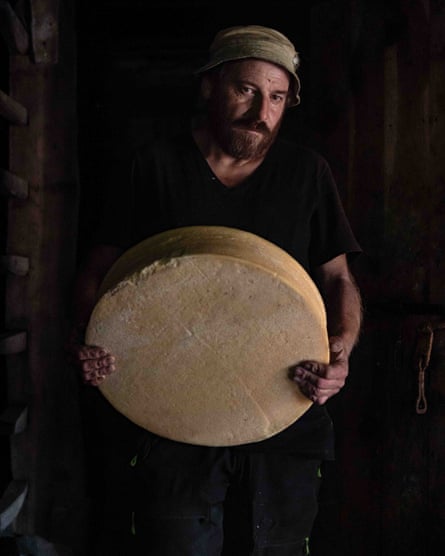
Storico ribelle was born from this tradition – and from a decision to defend it. For generations, bitto cheese was made in small Alpine dairies and exchanged locally for essentials such as grain and salt. During summer, herders moved their animals progressively higher, following the pastures. Along the routes, simple stone shelters – were used for milking and transforming fresh milk into cheese. The wheels were taken to mountain cellars, or , where they could mature for years.
In 1996, the introduction of the bitto DOP (protected designation of origin) brought new regulations. Some producers considered the requirements incompatible with the traditional Alpine system they wanted to preserve. They chose to continue making cheese according to their own methods, outside the DOP. Eventually, a new name emerged: storico ribelle, or historic rebel.
The name reflects resistance, but the deeper story is one of continuity: preserving a relationship between livestock, pasture, milk, cheese and mountain life. That relationship can still be found across Val Gerola, Valtellina and Val Brembana.
At Alpe Pedena, Oreste Pedrelli, 56, has spent the last 10 years herding. He has been making cheese since he was eight, learning the craft from his grandparents. At Alpe Ancogno Soliva, Carlo Duca works with his brother Luigi. Their cheese is renowned for its extraordinary ageing potential, with some wheels maturing for up to 10 years.
At about 2,000 metres, Trona Vaga is the highest storico ribelle Alpine pasture. Manuele, born in 1988, runs the pasture with his partner, Erica, who came to cheesemaking from a completely different background. She studied languages and taught herself the craft as an adult.
Their stories reveal that tradition can be inherited, but it can also be chosen. This is particularly important among a younger generation. Michele Sassella, 15, continues the practice with his mother and sister in memory of his father, Alfio, who dedicated his life to protecting mountain breeds, natural farming rhythms and Alpine biodiversity.
Davide Peregalli, 16, has spent his summers at Alpe Vesenda since he was eight. Gioele Pedercini, 17, has already completed three summer seasons as an Alpine herder while studying agriculture. Valentina, 20, brings another perspective: with a degree in agricultural studies, she is the young cheesemaker at Alpe Orta Soliva.
They represent a generation that is not simply inheriting tradition, but deciding whether it has a future.
That future is fragile. Climate change is already affecting the tradition: scarce rain, increasingly violent storms, and pastures turning yellow even at high altitude. At the same time, increasingly demanding regulations make small-scale cheesemaking more expensive and labour-intensive. Yet the work continues.
Quality here comes with an extraordinary human cost. It means waking before sunrise, working throughout the day and going to bed after sunset. Every hour follows the animals. Milking, often by hand, is followed by transforming fresh milk into cheese. There is little distinction between work and life.
Storico ribelle represents more than a product. It is the result of pasture, animals, knowledge and time – and of people willing to resist the disappearance of a world.
The rebellion began with a choice not to follow a prescribed system. Today, its future depends on another choice: whether a new generation will continue to climb the mountain, care for the animals, make the cheese – and keep alive a way of life that exists almost nowhere else.