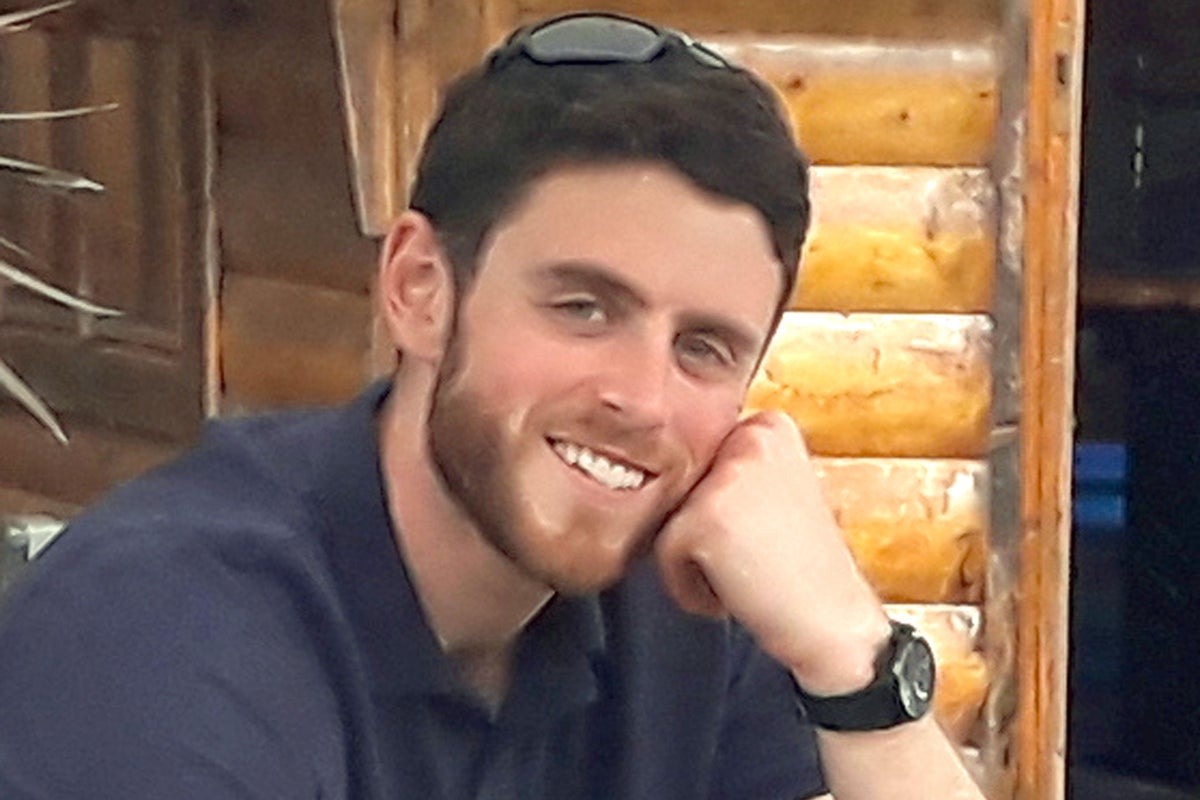
PC Andrew Harper’s killers will remain in prison after the prime minister announced changes to the early release scheme that will keep anyone convicted of unlawful killing behind bars.
Andy Burnham said “hundreds” of people will be excluded as part of the changes, including prisoners convicted of historic child sex offences or manslaughter.
The prime minister previously promised to do “everything possible” to ensure Albert Bowers and Jessie Cole were not released under the scheme designed to ease prison overcrowding.
Extra prison space will now be created by deporting foreign offenders and ending indefinite jail terms, whichhas relentlessly campaigned on for more than two years.
Mr Burnham said: “I know how strongly people feel about this issue. I understand the concern and anger because I share it.
“That’s why I took action during my first weeks as prime minister to block some of the very worst in society being released before they should.
“We moved quickly to block vile criminals who commit rape, sexually abuse children and groom vulnerable young people.”
He continued: “But I always said I wanted to do more. We will now not only be keeping offenders serving time for indecent assault locked up, but also those in prison for manslaughter and death by dangerous driving.
“This means that the awful criminals responsible for the killing of PC Andrew Harper will not have their sentence shortened.”
He said he “couldn’t have pushed the system any further” as he confirmed changes to the prison early release scheme.
Prisoners convicted of manslaughter, indecent assault and death by dangerous driving will now be exempt from the scheme, designed to ease pressure on the prison system – and Mr Burnham said he can now look victims “in the eye”.
He told BBC Breakfast: “I can look them in the eye now and say, I have turned over every stone, working with the Justice Secretary, over the summer, we have worked hard to look at everything.
“But at this point in time, there is no further that we can go without risking new offenders coming through the court system.
“Those guilty of the most serious offences, not being able to be sent to prison because the prisons are full, and I can’t allow that situation to arise either.”
He told the programme around 1,000 prisoners will remain in prison because of his initial changes, while “hundreds more” will stay behind bars because of the extra exemptions he announced on Sunday.
The prime minister had ordered a review of the changes to the Sentencing Act, which is being undertaken by justice secretary Alex Norris and is set to be published when parliament returns from summer recess this week.
However, after the move some voiced concerns over a continued lack of spaces in prisons. Prisons in England and Wales are operating at 98 per cent.
Andrea Coomber, chief executive of the Howard League told : “All it will take is something like a serious riot or public disturbance and any capacity will be gone. It is just too close to the bone and the government will be left with very little room to manoeuvre.”
Meanwhile, Dame Nicole Jacobs, the domestic abuse commissioner for England and Wales, told she feared victims of domestic abusers would feel unsafe following their early release. “While it’s good to see more dangerous offenders exempt from this scheme, I remain deeply concerned about the number of abusers who will still be eligible for early release,” she said.
Mr Burnham’s intervention came after it emerged that Bowers and Cole could be released halfway through their 13-year sentences as part of the previously-announced scheme.
They were passengers in the car that dragged PC Harper down a country road after he got caught in a strap attached to the vehicle as they fled the scene of a quad bike theft in Sulhamstead, Berkshire, in 2019.
PC Andrew Harper’s mother said she is “grateful” her son’s killers will not be released early, but they “are only back at where we were to start with”.
Debbie Adlam told BBC Breakfast: “It’s a really mixed bag of emotions, though, because on the one hand we are glad, but we’ve been brought through the mill, and we are only back at where we were to start with. You know, go back a few months, this is where we were – so we’re not making any headway or anything. We are just literally fighting to get back to where we were.
“I just hope that what Andy Burnham says there, that they will be going into a further overhaul over the next few years – it really needs to happen for our sakes.”
She said she hopes there is a way to increase sentences in the justice system “because our country seems to be going downwards”.
Asked if she thinks the country is getting it wrong, if a sentencing says that a particular crime gets 10 years then the person gets out at half or two-thirds, she said: “I really think we’re getting it wrong. When you look at what starting point we had for our sentences in this case, they started off as a decent amount, really, and then they were sliced away and sliced away, and the years came off for various things.
“You know, we’re actually feeling, I think most public would say to you, ‘I feel like we’re going downhill as a country, and I think it needs some serious work’.”
Aileen O’Connor, the chairwoman of Thames Valley Police Federation said: “PC Andrew Harper made the ultimate sacrifice for the job that he loved, serving communities, serving society.
“His killers should never have been considered for early release. It remains shocking that they were.”
Paul Williams, acting deputy national chair, said: “The voice of policing and the policing family across the country has been heard loud and clear.”
Mr Norris is expected to reveal full details of the latest changes when parliament returns on Tuesday.
Mr Burnham’s scrapping of Imprisonment for Public Protection (IPP) sentences could now mean thousands of people stuck in prison will finally be given a release date.
The controversial open-ended punishments were given to offenders considered a significant risk to the public between 2005 and 2012.
has campaigned for the past two years alongside the families of those affected to call for all IPP prisoners to have their sentences reviewed. Despite 96 people taking their own lives in custody after losing hope of release, successive governments have refused.
Among those trapped inside are Leroy Douglas, 43, who has served almost 20 years without release for street robbery of a mobile phone, Abdullahi Suleman, 42, who is still in jail 20 years after he was handed an IPP for a laptop robbery and Shaun Anton Lloyd, 39, who has been hauled back to prison four times and served 12 years for two street robberies committed when he was 18.